ADAS Calibration in Arizona & Florida
Get professional ADAS calibration after windshield replacement with Bang AutoGlass. We help Arizona and Florida drivers protect camera-based safety features like lane alerts, collision warnings, and adaptive cruise control with mobile service, OEM-quality materials, and a lifetime workmanship warranty on every replacement.
Do you need it?
When ADAS calibration is required
If your vehicle has a camera behind the windshield — lane-keeping, automatic emergency braking, adaptive cruise — that camera is aimed through the glass. Move the glass, and the aim moves with it. Calibration is required:
- After any windshield replacement on a camera-equipped vehicle (most 2018-and-newer)
- After work on the camera, radar, or their mounts
- When a lane-keep or collision-warning light appears after glass work
Manufacturers require recalibration after windshield replacement on camera-equipped vehicles. We recalibrate to factory spec — done right alongside your glass service.
Protecting the camera behind your windshield
Advanced Driver Assistance Systems, commonly called ADAS, are the safety technologies built into many modern vehicles to help drivers detect hazards, maintain lane position, reduce collision risk, and respond more quickly to changing road conditions. These systems may include forward collision warning, automatic emergency braking, lane departure warning, lane keep assist, lane centering, adaptive cruise control, automatic high beams, blind spot alerts, pedestrian detection, and other camera- or sensor-based safety features. NHTSA describes these technologies as driver assistance features, not replacements for the driver, meaning the driver remains responsible for steering, braking, accelerating, and monitoring the road at all times.
For drivers in Arizona and Florida, ADAS calibration is especially important after windshield replacement because many vehicles have a forward-facing camera mounted near the rearview mirror. When a windshield is removed, replaced, or reinstalled, the camera’s position, angle, view, mounting bracket, or optical path can change. Even a small shift can affect how the system reads lane markings, detects vehicles, identifies pedestrians, or responds to traffic ahead. General Motors, for example, states that a service point calibration or learn procedure is critical whenever a front-view windshield camera or sensor is removed and reinstalled or replaced, or when a windshield is removed and reinstalled or replaced.
Bang AutoGlass provides mobile auto glass service for drivers across our Arizona and Florida service areas, helping customers get back on the road with convenient scheduling, OEM-quality materials, and professional installation practices. Most windshield replacements take about 30–45 minutes to complete, followed by about 1 hour for the adhesive to dry before the vehicle is ready to drive. We also offer next-day appointments whenever available, and every replacement includes a lifetime workmanship warranty for added confidence.
What Is ADAS Calibration?
ADAS calibration is the process of checking and aligning your vehicle’s cameras, sensors, and related safety systems so they can accurately read the road after service. Depending on the vehicle, calibration may involve specialized scan tools, calibration targets, measuring equipment, diagnostic software, road testing, or manufacturer-specific procedures. I-CAR notes that ADAS systems often require post-repair calibration or aiming, and that access to OEM information, proper scan tools, special tools, and test drives following manufacturer parameters may be required.
When your windshield is replaced, the goal is not only to install new glass. The goal is to restore the vehicle’s visibility, structural seal, camera view, and safety system performance as closely as possible to manufacturer expectations. That is why ADAS calibration should never be treated as an optional add-on when the manufacturer requires it. It is part of doing the job correctly on many late-model vehicles.
Why Windshield Camera Calibration Matters
The windshield is more than a piece of glass. On many newer vehicles, it is part of the safety system environment. A forward camera may look through a specific area of the windshield to monitor lane markings, vehicles, pedestrians, traffic signs, lighting conditions, and the distance between your vehicle and objects ahead. NHTSA explains that lane departure warning systems use a camera to detect when a vehicle is veering out of its lane, while forward collision warning systems use sensors to monitor speed, distance, and traffic ahead.
If the camera is not calibrated correctly after windshield service, safety features may respond late, respond incorrectly, provide false alerts, fail to alert, or become unavailable. Some issues are obvious because a warning light appears on the dash. Other problems may not be obvious right away, especially if the system does not detect a fault but is still not reading the road as accurately as intended. That is why a proper ADAS service process matters.
When Do You Need ADAS Calibration?
You may need ADAS calibration after windshield replacement, windshield removal and reinstallation, collision repair, suspension work, wheel alignment, bumper repair, camera replacement, sensor replacement, dashboard warning lights, or any repair that changes the position or view of an ADAS camera or sensor. Exact requirements vary by year, make, model, trim, and installed equipment. The safest answer is always to check the vehicle-specific manufacturer procedure.
Common ADAS Features That May Be Affected
Many ADAS features depend on cameras, sensors, or radar units working from precise angles and positions. Depending on your vehicle, calibration may affect systems such as:
- Forward collision warning, automatic emergency braking, pedestrian automatic braking, adaptive cruise control, lane departure warning, lane keep assist, lane centering, traffic sign recognition, automatic high beams, rain/light sensing features, and other camera-based driver assistance systems.
These features are designed to support safer driving, especially when road conditions change quickly. IIHS-HLDI reports that safety benefits from technologies such as automatic emergency braking, lane departure prevention, and high beam assist grow as multiple systems are bundled together.
Static vs. Dynamic ADAS Calibration
ADAS calibration is not the same for every vehicle. Some vehicles require static calibration, some require dynamic calibration, and some require both. The correct method depends on the manufacturer’s procedure.
Static ADAS Calibration
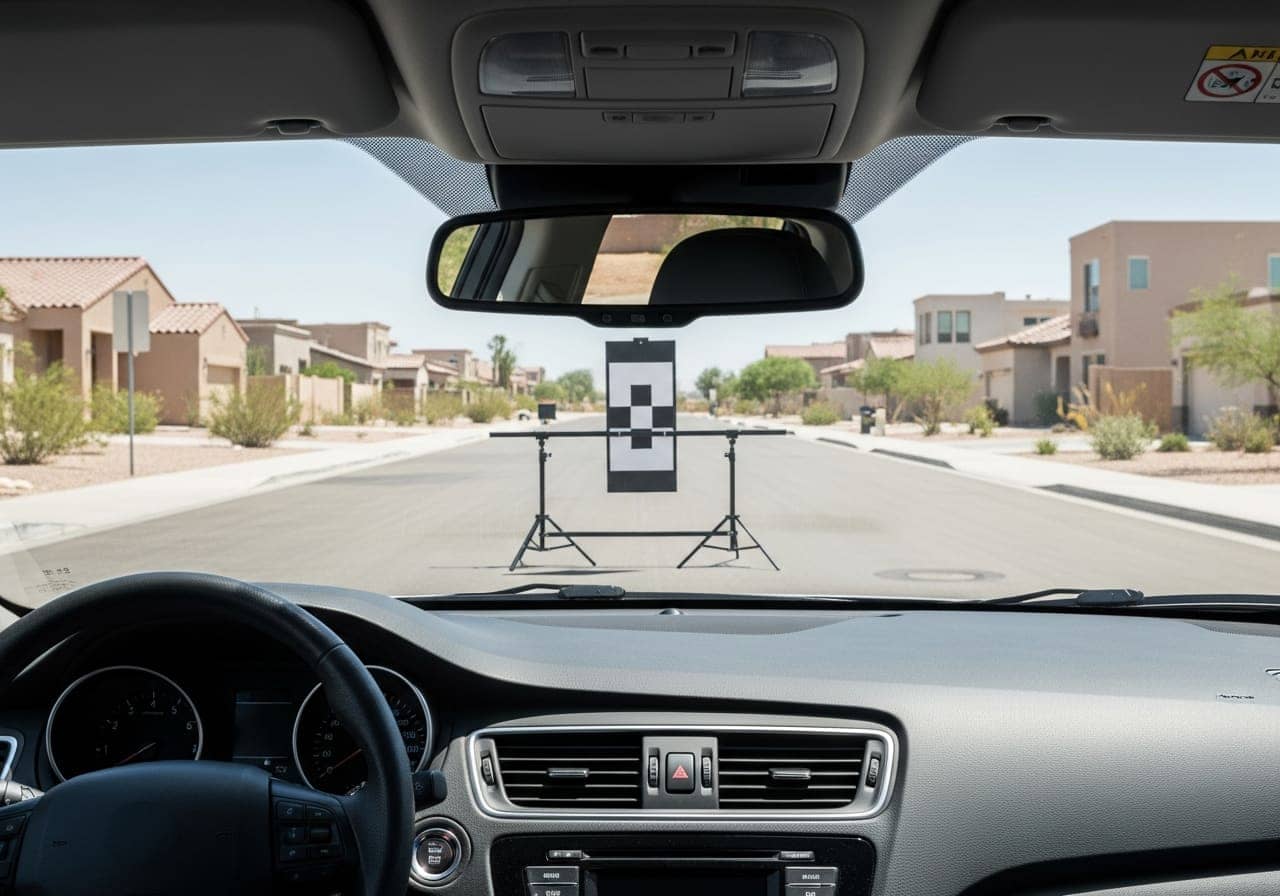
Static calibration is usually performed while the vehicle is parked in a controlled environment. The technician may use exact measurements, level flooring, target boards, lighting requirements, diagnostic equipment, and vehicle-specific setup steps. Static calibration can be very precise, but it requires the right space, tools, and conditions.
Dynamic ADAS Calibration
Dynamic calibration is usually performed while the vehicle is driven under specific conditions. The vehicle may need to be driven at a certain speed, on roads with clear lane markings, in suitable weather, and with the scan tool monitoring the calibration process. This type of calibration depends heavily on real-world road conditions.
Dual Calibration
Some vehicles require both static and dynamic procedures. That means the system may need an initial setup with targets and then a road procedure to complete the calibration. Because requirements vary, Bang AutoGlass focuses on identifying the correct process for your vehicle instead of guessing or using a one-size-fits-all approach.
ADAS Calibration After Windshield Replacement
If your vehicle has a camera mounted near the windshield, calibration may be required after the windshield is replaced. The Auto Glass Safety Council’s Automotive Glass Replacement Safety Standard says glass products should be compatible with ADAS when affected by glass replacement, and that recalibration equipment should be specifically designed for calibration when the vehicle manufacturer requires it. The standard also says calibration should use an OEM-approved system or procedure, or an equivalent procedure supported in writing by the equipment manufacturer.
This matters because the replacement windshield must support the vehicle’s safety features. The glass, camera mounting area, brackets, adhesive system, and installation process all play a role. Bang AutoGlass uses OEM-quality materials and professional installation practices so your replacement is handled with attention to fit, safety, and long-term performance.
Mobile ADAS Calibration and Mobile Windshield Service
Bang AutoGlass is built around convenience. We provide mobile service so you do not have to spend your day sitting in a shop waiting room. For many customers, that means we come to your home, workplace, fleet location, or another approved service location to complete the glass replacement.
Because ADAS requirements vary by vehicle, some calibration procedures may be completed mobile while others may require specific environmental conditions, road conditions, or equipment setup. Our goal is to help you understand what your vehicle needs, complete the service correctly, and avoid skipping a calibration step that may be required for your safety systems.
ADAS Calibration in Arizona
Arizona drivers deal with intense sun, heat, freeway construction, gravel, desert dust, and monsoon weather. ADOT reminds drivers that Arizona monsoon season brings extreme weather including heavy rains and dust storms, and that dust storms can quickly reduce highway visibility.
Those conditions make a clear windshield and properly functioning safety systems especially important. A small chip can spread quickly in Arizona heat, and a damaged windshield can interfere with visibility. If your vehicle has ADAS technology, replacing the windshield may also mean recalibrating the camera that supports lane alerts, forward collision warning, adaptive cruise, or braking assistance.
Arizona also has important insurance rules related to glass coverage. Arizona law requires insurers writing private passenger automobile insurance with comprehensive coverage to offer, at the insured’s option, complete coverage for repair or replacement of damaged safety equipment without regard to a deductible. Coverage depends on your policy selection, so Arizona drivers should confirm whether they selected full glass coverage or a zero-deductible glass option.
Arizona Drivers Should Not Delay ADAS Service
If your windshield damage is in the driver’s line of sight, near a camera area, spreading across the glass, or affecting your ADAS system, it is best to schedule service quickly. Bang AutoGlass offers next-day appointments whenever available, mobile service, and a lifetime workmanship warranty with every replacement, giving Arizona customers a convenient path from damaged glass to a safer, clearer view.
ADAS Calibration in Florida
Florida drivers face heavy rain, humidity, glare, dense traffic, storms, and low-visibility conditions. The Florida Department of Highway Safety and Motor Vehicles warns that severe weather can increase the potential for dangerous driving situations and reminds drivers to turn lights and wipers on during rain. FLHSMV also notes that smoke, fog, and heavy rain can lower visibility, and recommends keeping the windshield and headlights clean to reduce glare and improve visibility.
In that environment, windshield clarity and ADAS accuracy both matter. A camera looking through a damaged, distorted, or improperly installed windshield may not perform the way the vehicle manufacturer intended. After windshield replacement, calibration helps restore the camera’s view and supports the systems designed to assist with lane position, braking alerts, forward monitoring, and other safety functions.
Florida also has a strong windshield insurance rule for drivers with comprehensive coverage. Florida Statute 627.7288 states that deductible provisions in a motor vehicle insurance policy providing comprehensive coverage or combined additional coverage do not apply to windshield damage. Coverage details, claim approval, and calibration billing can vary by carrier and policy, so it is always smart to confirm the full claim process before work begins.
Our ADAS Calibration and Windshield Replacement Process
Bang AutoGlass makes the process simple for drivers who need windshield replacement, ADAS calibration, or both. First, we identify the vehicle and confirm whether it has a forward-facing camera or ADAS features that may be affected by the windshield. Next, we review the type of glass needed, the installation requirements, and whether calibration is required based on the vehicle’s setup. Then we complete the mobile windshield replacement using OEM-quality materials and proper adhesive practices.
Once the glass is installed, the adhesive needs time to cure before the vehicle is driven. Most replacements take about 30–45 minutes, and the adhesive needs about 1 hour to dry. After that, the required calibration path is completed or coordinated based on the vehicle’s manufacturer procedure. The result is a cleaner windshield, a professional installation, and a service experience designed around both convenience and safety.
Why Choose Bang AutoGlass for ADAS Calibration?
Choosing an ADAS calibration provider is about more than price. You want a team that understands modern auto glass, follows proper procedures, communicates clearly, and does not treat safety technology like an afterthought. Bang AutoGlass offers mobile service, next-day appointment availability when scheduling allows, OEM-quality materials, and a lifetime workmanship warranty on every replacement.
Our service is built for busy drivers in Arizona and Florida who need fast, professional, and convenient auto glass help without sacrificing quality. Whether your vehicle needs windshield replacement, windshield camera calibration, or guidance on whether calibration is required, Bang AutoGlass is here to help you move forward with confidence.
Schedule ADAS Calibration or Windshield Replacement Today
If your windshield was recently replaced, your ADAS warning light is on, your vehicle has a camera behind the rearview mirror, or you are not sure whether your car needs calibration, schedule with Bang AutoGlass today. We provide mobile auto glass service across our Arizona and Florida service areas and help drivers protect their visibility, safety systems, and peace of mind.
With next-day appointments available whenever possible, most windshield replacements completed in 30–45 minutes, a 1-hour adhesive dry time, OEM-quality materials, and a lifetime workmanship warranty on every replacement, Bang AutoGlass makes ADAS calibration and windshield replacement simple, professional, and convenient.
What happens at your appointment
From booking to drive-away
- 1
Book — new appointments 24/7
Any time, by phone, text, or the form. Next-day availability in most areas; installs run Mon–Sat, 8am–6pm.
- 2
We verify your coverage, free
Before any work, we confirm exactly what your policy covers, then file the claim start to finish and bill your insurer directly. All insurance companies are accepted.
- 3
Mobile install at your location
Home, work, or roadside — most jobs take 30–45 minutes.
- 4
ADAS recalibration when your vehicle needs it
If a camera sits behind the glass, we recalibrate it to factory spec as part of the job.
- 5
Lifetime workmanship warranty
Every install is guaranteed for as long as you own the vehicle.
Cost & coverage
What does ADAS calibration cost?
There’s no honest flat price — the cost depends on:
- Your vehicle's make, model, and year
- Whether the manufacturer specifies static, dynamic, or both calibrations
- Whether calibration is bundled with a windshield replacement or booked on its own
The better question is what youpay — and with insurance, it’s often $0. Arizona insurers must offer zero-deductible full glass coverage (A.R.S. § 20-264), and Florida comprehensive coverage waives the deductible for windshield replacement (Fla. Stat. § 627.7288 — windshield only). We verify your coverage free before any work, file the claim start to finish, and bill your insurer directly — all insurance companies accepted. More on how glass insurance works, or the state specifics for Arizona and Florida.
General info, not legal or insurance advice — coverage varies by policy. We confirm your exact coverage free before any work.
Glass quality & warranty
OEM-quality glass, guaranteed for as long as you own the car
Calibration isn't a glass part — it's precision work. Static calibration aims the camera at manufacturer targets set at measured distances while the vehicle is parked; dynamic calibration completes the process on a road drive at set speeds. Your manufacturer specifies which your vehicle needs — some need both — and we calibrate to that factory spec.
And every install carries the Bang lifetime workmanship warranty — if a workmanship issue ever shows up, we make it right, for as long as you own the vehicle.
What’s included with your ADAS Calibration
- Required after most windshield replacements
- Keeps lane-assist and auto-braking accurate
- Performed by trained technicians
- Done right alongside your glass service
Auto glass services
ADAS Calibration — common questions
How much does ADAS calibration cost?
It depends on your vehicle and whether it needs static, dynamic, or both calibrations. When calibration is part of an insured windshield replacement, we include it in the claim we file — and we verify your coverage free before any work. General info, not legal or insurance advice — coverage varies by policy. We confirm your exact coverage free before any work.
Do I need ADAS calibration after windshield replacement?
If your vehicle has a windshield-mounted camera — lane-keeping, automatic emergency braking, adaptive cruise — the manufacturer requires recalibration after the glass is replaced. Most 2018-and-newer vehicles carry one.
Can you calibrate in the same visit as my windshield?
Yes — calibration is done right alongside your glass service whenever the vehicle allows it, so you don't need a second appointment.
Do you come to me?
Yes — we're mobile-only. Home, work, or roadside across 200+ cities in Arizona and Florida. There is no shop to visit.
What's the difference between static and dynamic calibration?
Static calibration aims the camera at manufacturer targets set at measured distances while the vehicle is parked; dynamic calibration completes the process on a road drive at set speeds. Your vehicle's manufacturer specifies which one it needs — some vehicles need both.
Do you file the insurance claim for me?
Yes — we verify coverage free before any work, file the claim start to finish, and bill your insurer directly. All insurance companies are accepted.
What kind of glass do you use?
OEM-quality glass matched to your exact make and model — and every install is backed by a lifetime workmanship warranty for as long as you own the vehicle.
Can I skip calibration after a windshield replacement?
Not safely. An uncalibrated camera can misread lane markings or misjudge distances, which affects lane-keeping and automatic emergency braking. If the vehicle needs it, we calibrate to factory spec as part of the job.
ADAS Calibration guides
Straight answers about adas calibration — what to expect, how insurance works, and how to keep your glass in top shape.
Jun 10, 2026
Does a Rock Chip Repair Require ADAS Calibration?
A resin chip repair never moves your windshield or its camera bracket, so calibration is not required and should not be billed. The exception is a chip inside the camera's viewing area, which most manufacturers treat as a no-repair zone.
Read articleMay 14, 2026
Static vs. Dynamic ADAS Calibration: What's the Difference?
Static calibration aims the forward camera at a measured target board with the vehicle parked; dynamic calibration uses real lane lines at speed. Here is which one your vehicle needs, why the automaker decides and not the shop, and how Arizona heat and Florida storms change the job.
Read articleMay 7, 2026
7 Events That Trigger ADAS Calibration (Not Just Windshield Replacement)
Windshield replacement is the best-known trigger for ADAS calibration, but six other events move your sensors just as far out of alignment. Here is the full list, how to tell whether your vehicle is affected, and what Arizona heat and Florida storms change about the procedure.
Read articleApr 23, 2026
Buying a Used Car? Here's the ADAS Calibration Check You Need
Most used cars with a replaced windshield were never recalibrated, and the dash usually never says so. Here is the five-minute glass inspection to run before you sign, and the one document to ask the seller for.
Read articleADAS Calibration — cities we serve
4.8★ on Google · 350+ reviews from AZ & FL drivers
“I needed my windshield replaced and they made the entire process easy. Bang AutoGlass is the best!”
“Top-notch auto glass service. They handled my windshield replacement quickly and professionally.”
“Bang AutoGlass made my windshield replacement simple from start to finish.”
Ready for ADAS calibration?
We come to you across Arizona and Florida — often $0 with insurance. New appointments 24/7 · Installs Mon–Sat 8am–6pm · Hablamos español.
We reply within minutes during business hours.