Mobile ADAS Calibration After Windshield Replacement in Arizona & Florida
After a camera-equipped windshield is replaced, its forward camera can point off target even when no dashboard warning appears. You get the required ADAS calibration during the same visit, restoring the aim used by lane keeping, automatic emergency braking, adaptive cruise control, and forward collision warnings.
- Camera re-aimed after replacement
- Misalignment may show no warning
- Static, dynamic or both
4.7 on GoogleMobile across 200+ cities in Arizona & Florida
What Your ADAS Calibration Includes
Book ADAS calibration with your windshield replacement, and these eight benefits are included in the service — not added later or sold as upgrades.
How Mobile ADAS Calibration Fits Your Windshield Visit
Your vehicle, windshield and camera setup are confirmed before work begins. The replacement and required camera calibration are then completed in one coordinated visit, followed by the instructions you need before driving.
ADAS Calibration Need
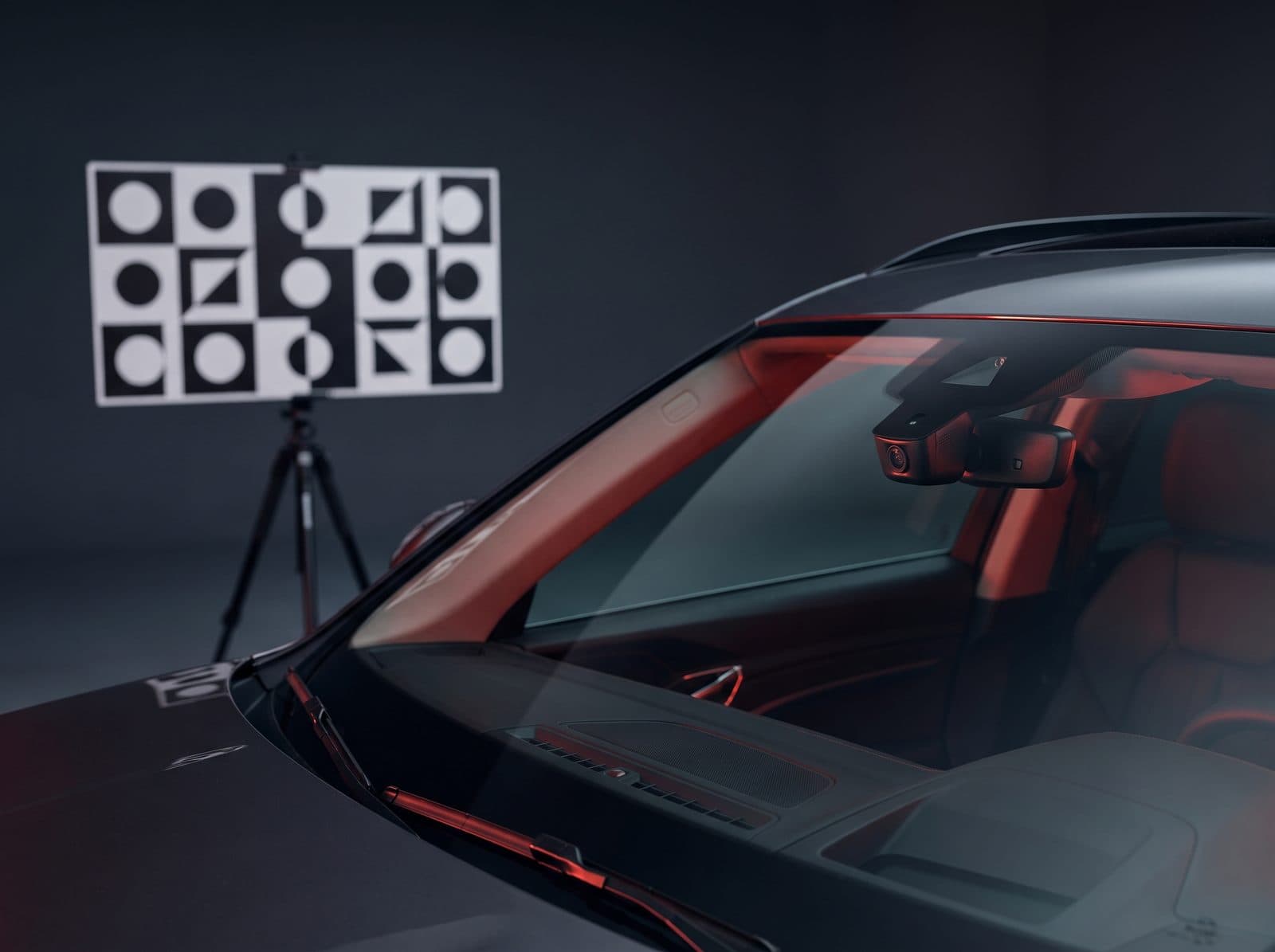
Your camera sits behind the mirror and is bonded to the windshield, so replacing that glass can create the need for vehicle-specific ADAS calibration.
Book Calibration Appointment
You book ADAS calibration for the same mobile visit as your windshield replacement, rather than being sent to a dealer; a typical job takes 30–45 minutes.
Vehicle-Specific Calibration
Your technician calibrates the ADAS camera for your exact vehicle configuration using static targets, a dynamic road drive, both, or an initialization, adding roughly 15–30 minutes when required.
Final ADAS Check
You get a final check after the vehicle-specific calibration; a dashboard warning light staying off alone does not prove your camera is aimed correctly.
Schedule An ADAS Calibration Appointment In Arizona And Florida
After windshield replacement, calibration helps the camera interpret the road as designed. Send your request so our team can identify the required procedure for that driver-assistance system and arrange the appointment.
“Great company to work with! Super efficient on helping my with my cracked windshield and they even follow up with making sure it’s held up well over the year! Definitely recommend!”
What Will Insurance Cover, And What Affects Your ADAS Quote?
There is no honest flat price for ADAS calibration. Your quote depends on the vehicle, the required calibration method, and whether it is paired with windshield replacement. Insurance treatment varies too, so we verify your exact coverage before any work.
Vehicle Details
Your vehicle’s make, model, and year determine the required calibration setup.
Calibration Method
Your manufacturer may specify static, dynamic, or both calibration types.
Calibration Need
Your quote reflects whether calibration is needed; it is included with windshield replacement.
Arizona Coverage
- What state law changes
- Arizona law requires insurers writing comprehensive private-passenger coverage to offer optional full-glass coverage without a deductible; that statute addresses glass, not separate ADAS calibration coverage.
- What depends on your policy
- Your election of full-glass coverage and whether ADAS calibration is included with replacement — or covered alone — depend on your policy and insurer.
- What we verify, free
- Bang AutoGlass verifies your windshield and calibration coverage at no charge before any work, then bills the insurer direct when covered.
Florida Coverage
- What state law changes
- Florida removes the comprehensive deductible from a covered windshield claim. For policies issued or renewed on or after July 1, 2023, it also voids post-loss glass-benefit assignments, including for ADAS calibration.
- What depends on your policy
- If calibration is part of a covered windshield claim, the waiver applies to that claim. Standalone calibration coverage still depends on your policy.
- What we verify, free
- Bang AutoGlass verifies whether windshield replacement and ADAS calibration are covered together at no charge before any work begins.
Will Using Insurance For ADAS Calibration Raise My Rate?
Glass claims are filed under comprehensive coverage, not as at-fault losses. How a carrier treats any claim at renewal — including pricing, discounts, and underwriting — varies by insurer and policy. Only your insurer or agent can answer for your policy. Bang AutoGlass verifies coverage at no charge before any work.
Find Mobile ADAS Calibration That Comes To You
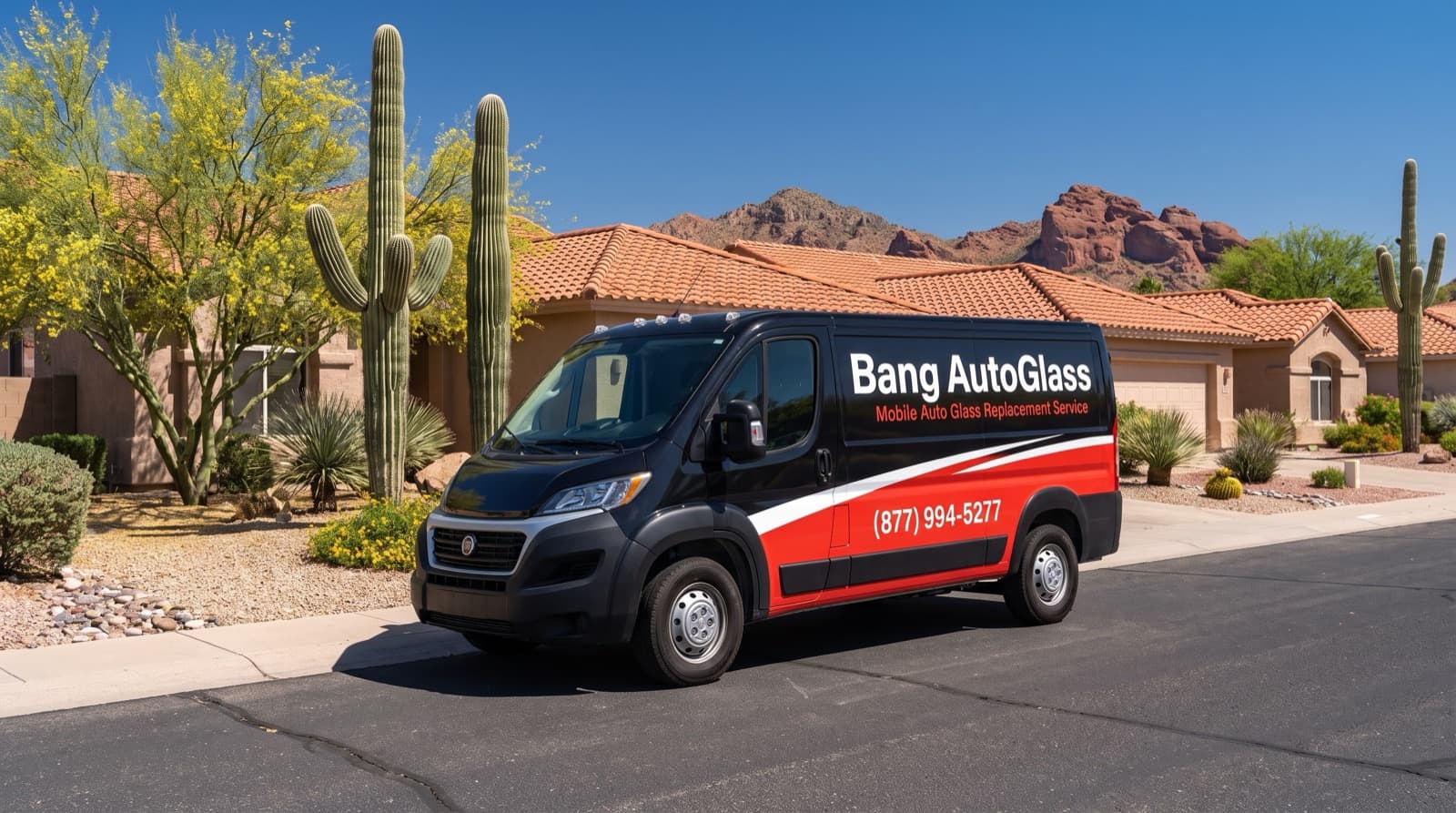
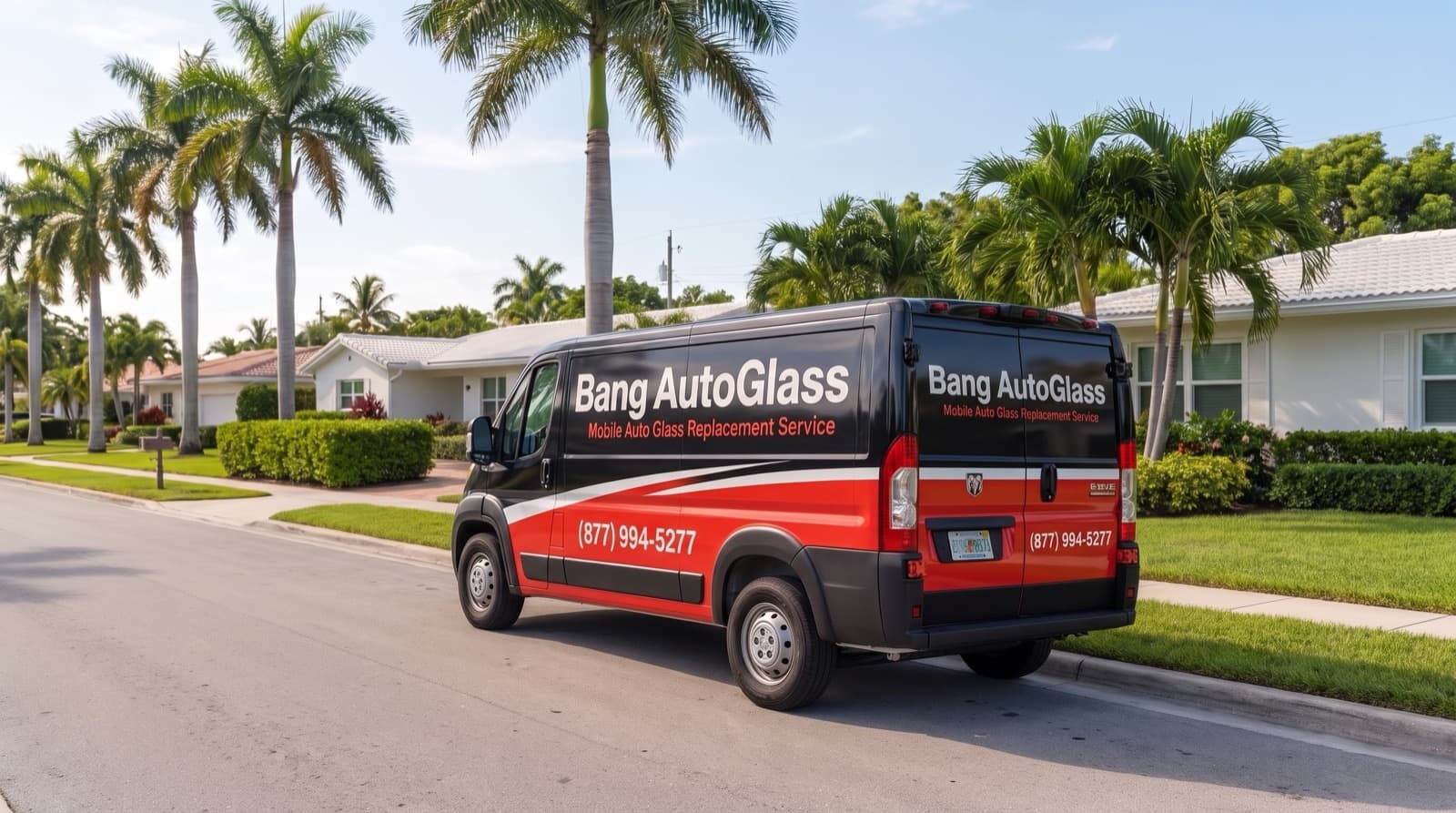
Bang AutoGlass brings windshield replacement and required camera calibration to drivers across 200+ cities in Arizona and Florida. Use the live city links below to check where mobile ADAS calibration is available near you.
ADAS Calibration By Vehicle Make
Your vehicle make helps determine the camera calibration procedure, including whether static targets, a road drive, or both are required after windshield replacement. Use the links below to find ADAS calibration information for your make.
ADAS calibration — common questions
Does my car need ADAS calibration after windshield replacement?
Yes, if your vehicle has a forward camera mounted to or behind the windshield. Replacing the glass changes the camera’s physical position, even when the camera itself is reused, so the manufacturer’s procedure calls for recalibration. Calibration restores the specified aim for advanced driver assistance systems such as lane keeping, forward collision warning, automatic emergency braking, and adaptive cruise control.
How can I tell if my windshield has ADAS?
Look behind the rearview mirror for a camera housing facing the road. Your vehicle may also list features such as lane departure warning, lane keeping, forward collision warning, automatic emergency braking, or adaptive cruise control. Because trim levels differ, Bang AutoGlass uses your make, model, and year to confirm whether the windshield-mounted camera requires calibration.
Can ADAS be misaligned without a dashboard warning?
Yes. A windshield-mounted camera can remain powered and show no dashboard warning even when its aim changed during glass replacement. Lane keeping, collision warning, automatic braking, or adaptive cruise may still appear available while reading lane position or distance incorrectly. A clear dashboard is not proof that calibration was completed or that the camera matches the manufacturer’s specified aim.
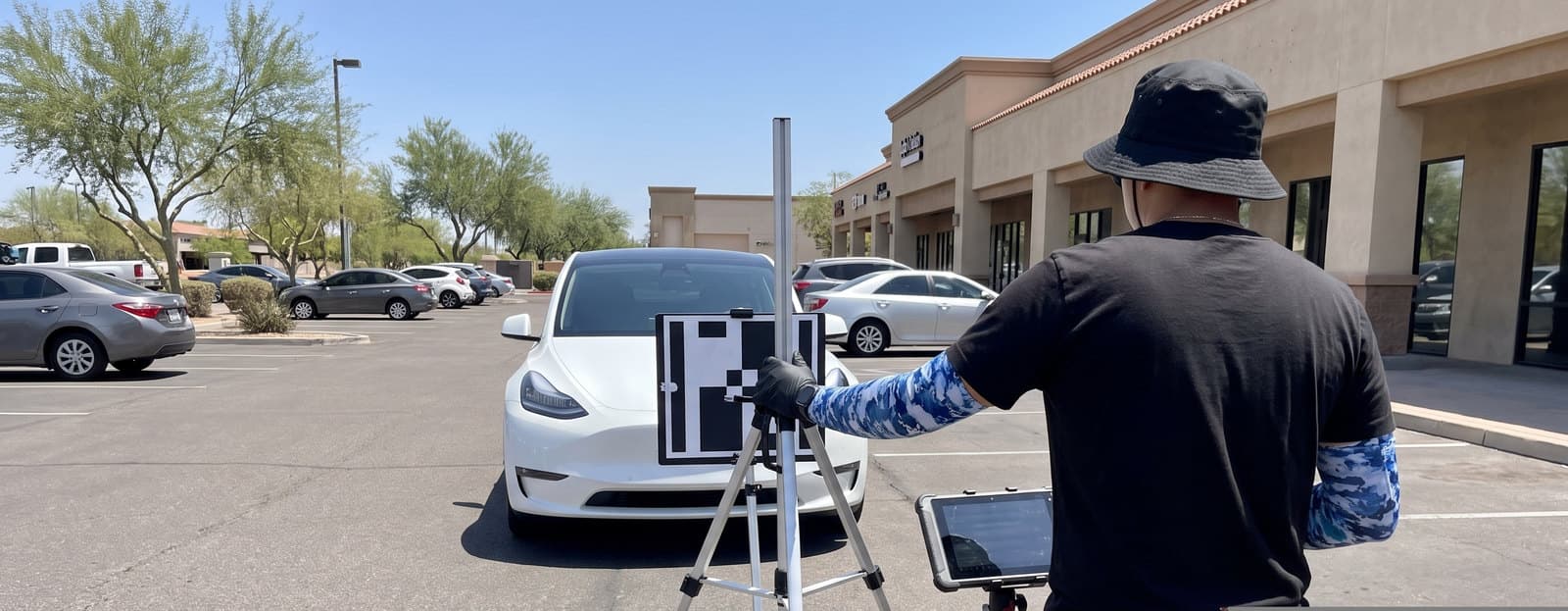
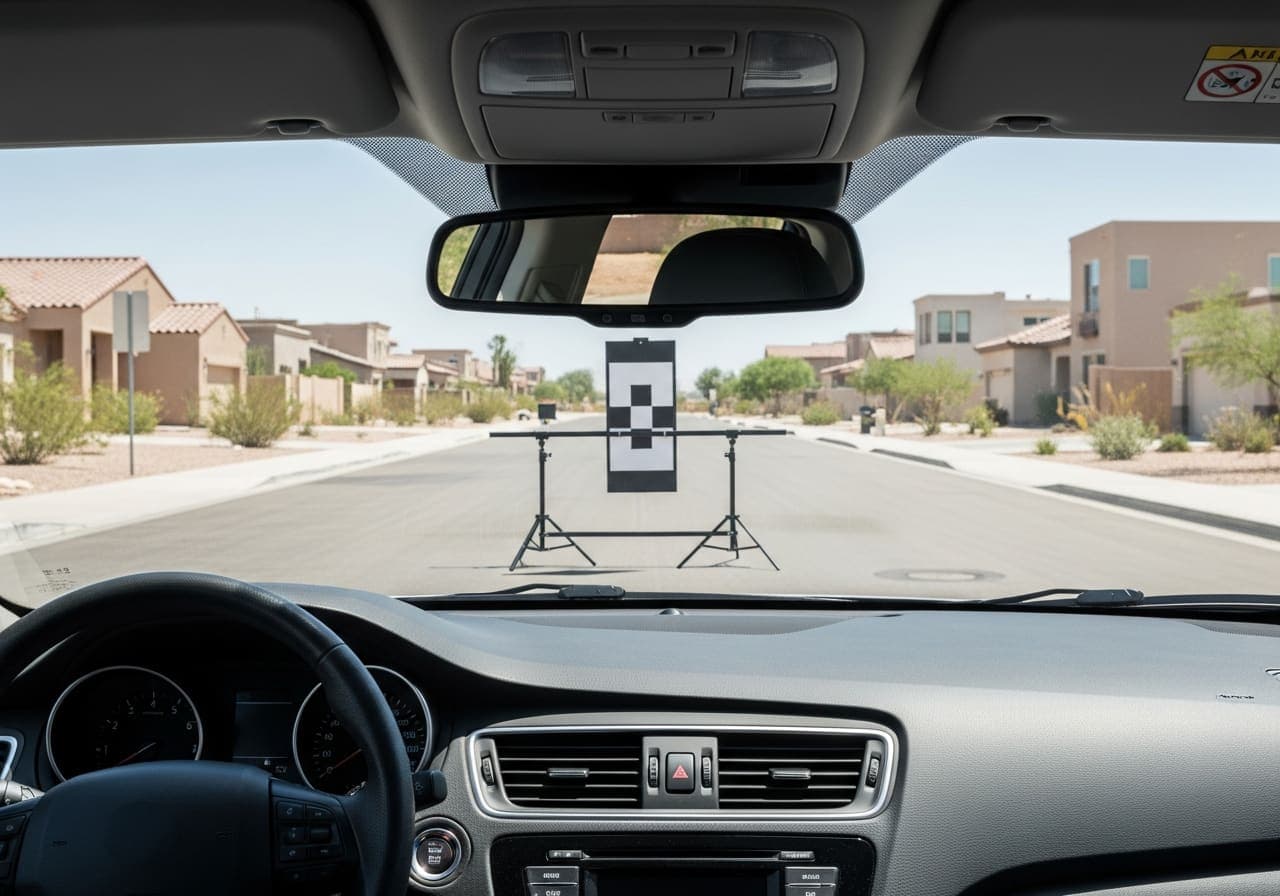
What’s the difference between static and dynamic calibration?
Static calibration uses manufacturer-specified targets positioned at measured distances while the vehicle remains parked. Dynamic calibration uses a prescribed road drive at specified speeds and conditions so the system can complete its aiming procedure. Some vehicles require one method, while others require both. Bang AutoGlass follows the procedure specified for your vehicle’s make, model, and year.
Can I recalibrate my windshield camera myself?
No. ADAS camera calibration requires a vehicle-specific procedure, measured target placement and/or prescribed road conditions, plus scan equipment to start and verify the calibration. It is not a dashboard reset or settings-menu task. Incorrect setup can leave the camera aimed wrong even when no warning appears, so calibration should be completed with the specified equipment and procedure.
How long does ADAS calibration usually take?
The time depends on whether your vehicle needs static calibration, a dynamic road drive, or both. Target setup, vehicle positioning, road conditions, and the manufacturer’s procedure can change the appointment length. Bang AutoGlass confirms the required method and expected timing when you book. When calibration accompanies windshield replacement, both services are scheduled for the same visit.
Can calibration happen during the same windshield replacement visit?
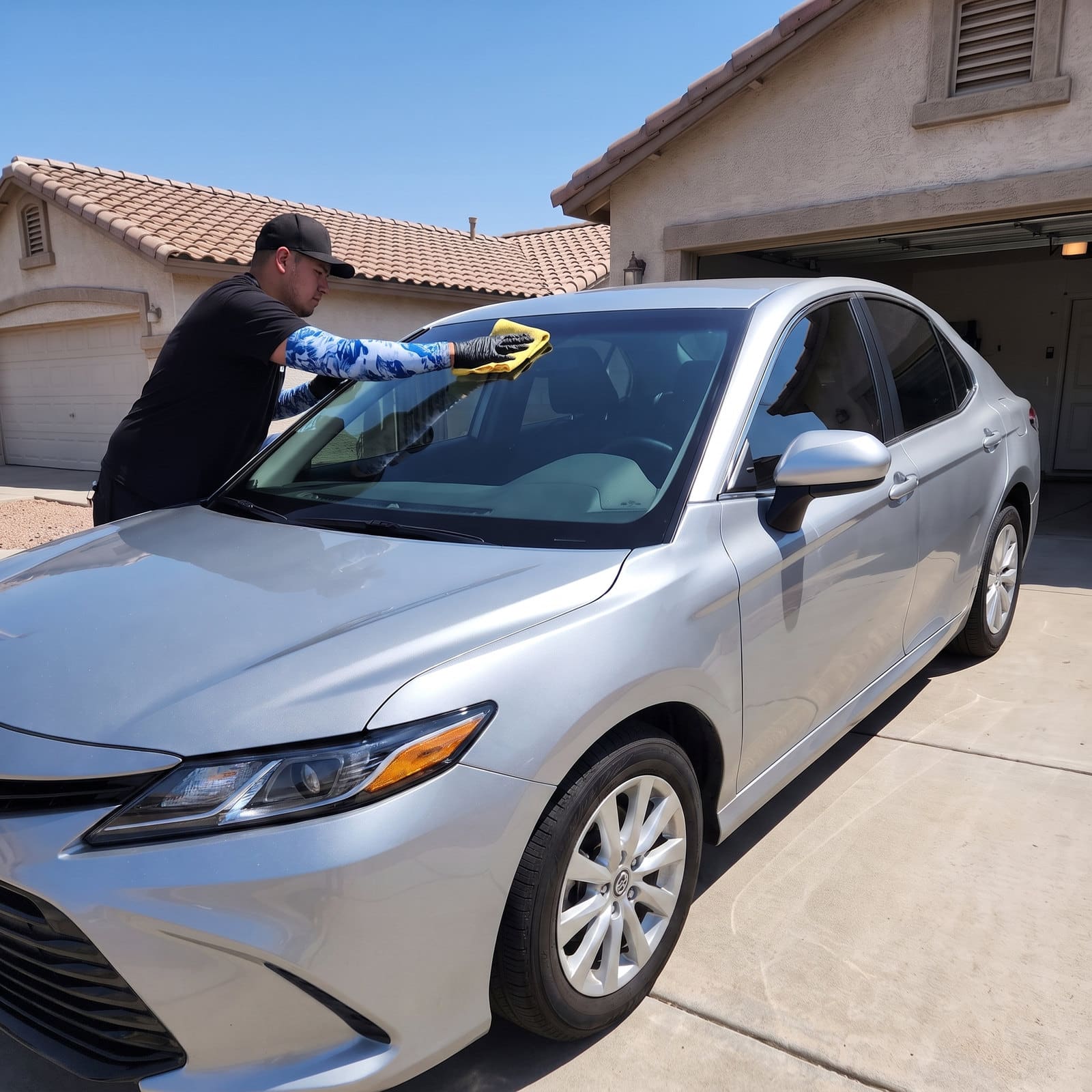
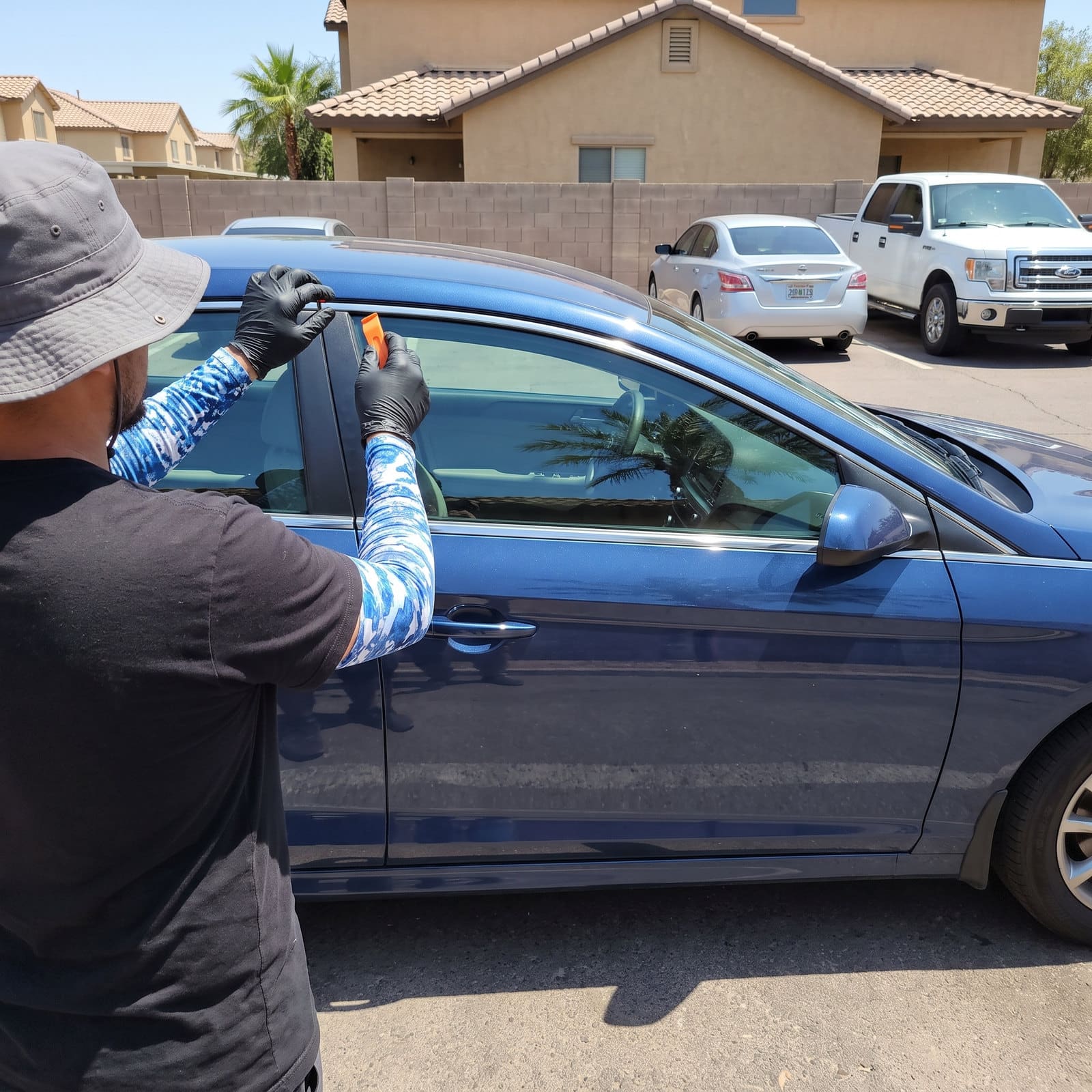
Yes. Bang AutoGlass completes the required ADAS calibration during the same scheduled mobile visit as your windshield replacement, so you do not need a second appointment at a dealership. The technician installs the OEM-quality glass, then performs the static calibration, dynamic calibration, or both procedures specified for your vehicle before the service is completed.
Can you calibrate after another company replaced my windshield?
Yes. Bang AutoGlass can book ADAS calibration as a standalone service when the windshield was replaced previously or by another provider. We use the vehicle’s make, model, and year to identify whether its forward camera needs static calibration, dynamic calibration, or both. Tell us when the glass was replaced and have your vehicle details ready when booking.
Find The Glass Service You May Still Need
These seven services cover windshield and other glass replacement, mobile service, and business vehicles. If your windshield still needs replacement, another pane is damaged, or a second vehicle needs glass, choose the service that fits.
Ready for ADAS calibration?
We verify coverage before any work · OEM-quality glass · Next-day in most areas · Lifetime workmanship warranty.