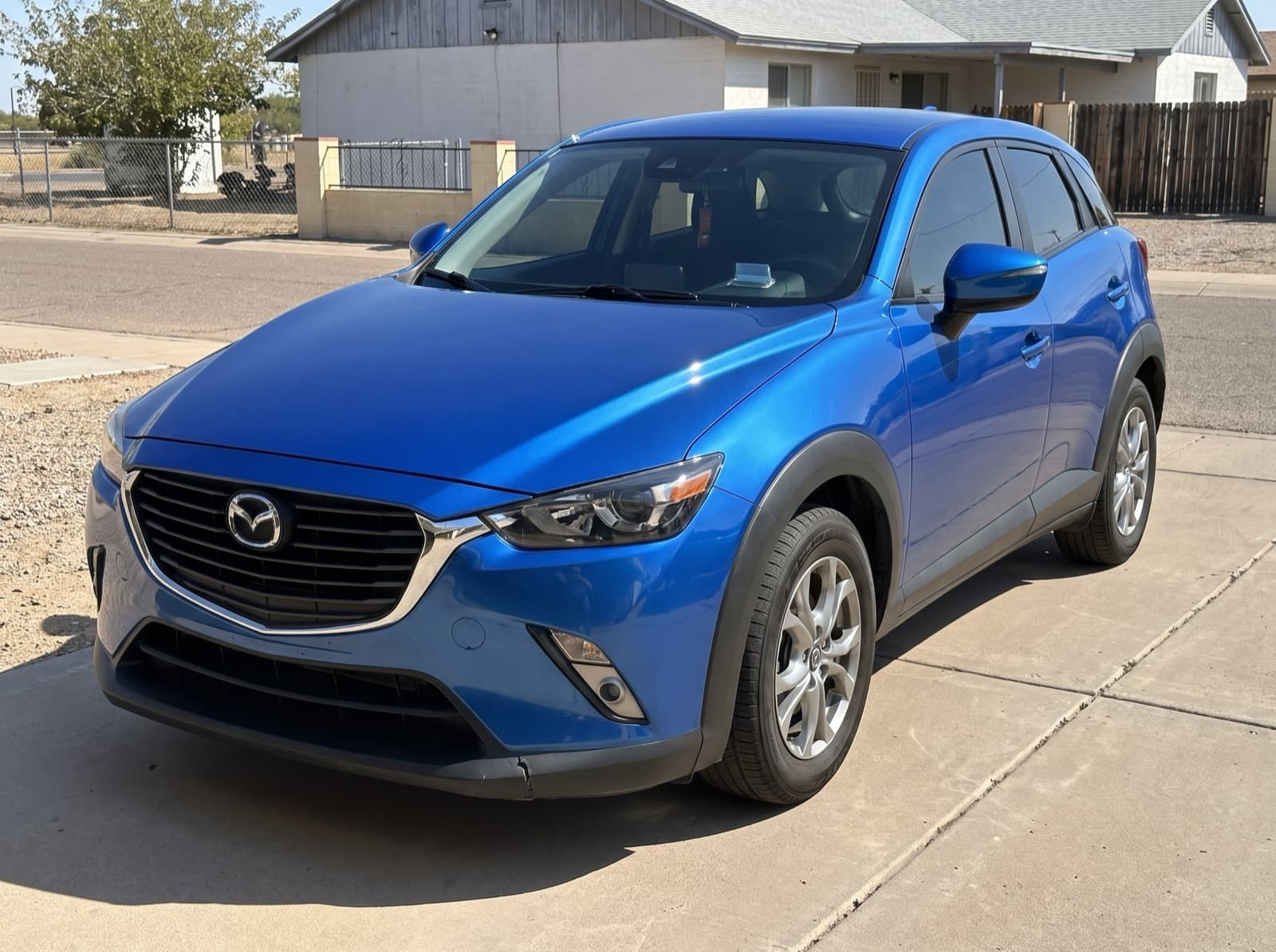
Modern Mazda vehicles are engineered with some of the most sophisticated driver assistance technology on the road today, all wrapped under the i-ACTIVSENSE banner. From the Mazda3 to the CX-90, these systems rely on a network of cameras, radars, and sensors mounted in and around the windshield to keep you safe. When that windshield is replaced — or when these sensors are otherwise disturbed — Mazda ADAS calibration becomes essential. At Bang AutoGlass, we specialize in mobile Mazda windshield replacement paired with the precise ADAS recalibration your vehicle requires to keep every safety feature performing exactly as Mazda engineered it.
ADAS stands for Advanced Driver Assistance Systems, and calibration is the process of realigning and reprogramming the camera and sensor systems that power those features. On a Mazda, the most critical component is the Forward Sensing Camera (FSC), typically mounted behind the rearview mirror at the top of the windshield. This camera works alongside the millimeter-wave radar in the front grille to monitor lane markings, traffic signs, vehicles ahead, pedestrians, and other obstacles. Even the smallest shift in camera angle — a fraction of a degree — can throw the entire system off, which is why Mazda ADAS calibration must be performed by trained technicians using OEM-approved procedures.
Mazda's i-ACTIVSENSE is the umbrella name for the brand's full suite of active and passive safety technologies. It's the system responsible for warning you when a car drifts into your blind spot, slowing the vehicle when it senses an imminent collision, and even keeping you centered in your lane on long highway drives. These features rely on data fusion between the FSC, radar units, and ultrasonic sensors. When any of these inputs is misaligned, the entire i-ACTIVSENSE system can behave unpredictably or shut down entirely, illuminating warning lights on your dash and disabling key safety functions.
The Forward Sensing Camera is the cornerstone of nearly every windshield-related ADAS function on your Mazda. Mounted high on the inside of the windshield, the FSC reads lane lines for Lane Departure Warning and Lane-Keep Assist, scans for vehicles to feed Smart Brake Support and Mazda Radar Cruise Control, identifies traffic signs for Traffic Sign Recognition, and senses oncoming headlights for High Beam Control. Because the camera looks through the glass, even a new windshield with slightly different optical properties can affect calibration. This is why Mazda specifically requires FSC aiming any time the windshield is removed and reinstalled or replaced.
There are several common scenarios where Mazda ADAS calibration is required, and skipping calibration in any of them puts your safety systems — and your passengers — at unnecessary risk.
This is the most common reason customers come to Bang AutoGlass for Mazda calibration. Mazda explicitly states that FSC aiming must be performed whenever the windshield is replaced or even temporarily removed. Whether you've cracked your glass from a highway rock chip or a tree branch, the moment that windshield comes out, the camera's reference point shifts. Recalibration is mandatory to restore the camera's view of the road and re-enable every i-ACTIVSENSE feature your Mazda relies on.
If the FSC itself or any related radar or sensor is replaced — perhaps due to a malfunction or accident damage — calibration is non-negotiable. The new camera or sensor has no idea where your vehicle's centerline is, how high it sits, or which direction is straight ahead until it's properly aimed and programmed back into the i-ACTIVSENSE network.
Even a minor front-end fender bender can shift the position of bumper-mounted sensors or the millimeter-wave radar behind the Mazda grille. Likewise, suspension changes, alignment adjustments, or anything that alters ride height can change how the FSC sees the road. Many Mazda owners are surprised to learn that calibration may be needed after a wheel alignment or bumper replacement, but it's part of returning the vehicle to factory-correct safety performance.
Your Mazda's safety suite is more interconnected than most owners realize. A single misaligned camera can compromise multiple features at once. Here are the major i-ACTIVSENSE systems that rely on accurate FSC and radar calibration:
When even one of these features fails because of a miscalibrated camera, you lose a layer of the safety net Mazda engineered around you. That's why we never deliver a vehicle without verifying that calibration was completed correctly and that no fault codes remain.
Not all Mazda ADAS calibrations are the same. Depending on the model year, trim, and specific systems installed, your Mazda may require static calibration, dynamic calibration, or in some cases a combination of both. Understanding the difference helps you know what to expect from the service.
Static calibration is the procedure Mazda officially calls "FSC Aiming." It's performed with the vehicle parked on a perfectly level surface in a controlled environment. Calibration targets are placed at precise distances and angles in front of the vehicle — and for certain Mazda models, three sets of targets are required to complete the procedure. A factory-grade scan tool communicates with the camera while it captures the target patterns, allowing the system to learn its exact orientation relative to the road. Static calibration demands a clean, well-lit, level space with enough room around the vehicle, which is why Bang AutoGlass technicians arrive fully equipped to handle this process on-site at your home, office, or other location.
Dynamic calibration involves driving the Mazda at specific speeds on roads with clearly visible lane markings for a set duration while a scan tool monitors the camera and radar as they learn from real-world inputs. Mazda outlines exact conditions for this procedure, including minimum and maximum speeds, weather conditions, and the type of roadway required. Some Mazda models — especially newer CX-30, CX-50, and CX-90 vehicles — may require a combination of static aiming followed by a dynamic drive cycle to fully complete the calibration.
Almost every modern Mazda equipped with i-ACTIVSENSE benefits from professional calibration after any windshield work. Here's how it breaks down across the lineup.
The Mazda3 sedan and hatchback have offered i-ACTIVSENSE technology for years, with newer models including the full Forward Sensing Camera and radar package. Whether you drive a base trim Mazda3 with Smart Brake Support and Lane Departure Warning or a Premium Plus model with the full ADAS suite, calibration is required after windshield replacement to ensure every system performs to factory spec.
The CX-5 has been one of Mazda's most popular SUVs, and it comes standard with Blind Spot Monitoring, Smart Brake Support, and Mazda Radar Cruise Control on virtually every trim. The CX-50, Mazda's adventure-oriented crossover, includes a similarly robust safety package. Both vehicles require FSC aiming after windshield work, and Bang AutoGlass handles the entire process from glass replacement to final calibration in a single mobile appointment.
The three-row Mazda CX-9 and its successor, the Mazda CX-90, come equipped with the most comprehensive list of i-ACTIVSENSE features Mazda offers, including 360-degree camera monitoring, Cruising and Traffic Support, and advanced lane-centering. These larger SUVs often require longer and more precise calibration procedures due to the number of integrated systems. Our technicians are fully trained on the latest CX-90 calibration requirements.
The compact Mazda CX-30 packs nearly the same safety technology as its larger siblings, while even the sporty MX-5 Miata offers select i-ACTIVSENSE features. Regardless of which Mazda you drive, if your vehicle has lane departure warning, adaptive cruise control, or automatic emergency braking, it has a Forward Sensing Camera that needs recalibration after windshield service.
Our process is designed to make Mazda ADAS calibration as seamless and stress-free as possible. Here's how it works from start to finish:
Calibration isn't a luxury or an upsell — it's a safety necessity. Mazda specifically warns that an uncalibrated FSC can lead to features that "fail to function" or "may function in an unintended manner." That second possibility is especially concerning, because it means your Mazda could brake when it shouldn't, fail to brake when it should, or steer your vehicle off course at exactly the wrong moment.
Driving a Mazda without proper ADAS calibration after a windshield replacement is comparable to driving with a misaligned steering wheel — only worse, because the systems intended to keep you out of an accident are themselves operating on bad data. Lane-Keep Assist could pull you toward a lane line instead of away from it. Smart Brake Support might trigger phantom braking on the highway or miss a real obstacle entirely. Mazda Radar Cruise Control could misjudge the distance to the car ahead. The risks aren't theoretical — they're well-documented across the automotive industry.
Beyond safety concerns, an uncalibrated Mazda will typically illuminate one or more warning lights on the instrument cluster, including the master warning light, an i-ACTIVSENSE warning indicator, or specific lane departure and cruise control alerts. These warnings won't go away on their own — they can only be cleared once proper calibration has been completed and verified with a scan tool.
One of the biggest advantages of choosing Bang AutoGlass is that you don't have to drive your Mazda anywhere to get the work done. Our mobile service brings the shop to your driveway, parking lot, or workplace.
We come to you with everything needed to replace your Mazda's windshield and complete a full ADAS calibration on-site. Our service vans are stocked with OEM-quality glass for popular Mazda models, urethane adhesive, FSC calibration targets, and the diagnostic scan tools needed to interface with your vehicle's i-ACTIVSENSE system. There's no trip to a dealership, no waiting room, and no shuffling rides between family members or coworkers — just professional service where it's most convenient for you.
Most Mazda windshield replacements take 30 to 45 minutes from start to finish, followed by a one-hour adhesive cure time before the vehicle is safe to drive. ADAS calibration is then performed as part of the same appointment, and we typically wrap everything up in a single visit. Next-day appointments are available, so you don't have to wait days or weeks to get back on the road with a properly calibrated Mazda.
The glass and components used in your Mazda windshield replacement directly impact whether ADAS calibration will succeed. We use OEM-quality glass that matches the optical specifications, frit patterns, and camera mounting positions of the original Mazda windshield. Using inferior glass can cause the FSC to read distorted lane lines or fail to calibrate at all. Combined with high-grade urethane adhesive and proper installation technique, our OEM-quality materials give your Mazda the foundation it needs for a perfect calibration the first time around.
Mazda ADAS calibration is typically covered under comprehensive auto insurance policies as part of a windshield claim. If you haven't filed your claim yet, our team is happy to walk you through the process. We don't file claims on your behalf, but we'll provide all the information you need — including a written estimate, photos, and documentation of the calibration requirements — so you can submit the claim quickly and confidently. Most major insurance carriers recognize ADAS calibration as a necessary part of any modern Mazda windshield replacement and process these claims smoothly.
Every Mazda windshield replacement and ADAS calibration we perform is backed by a lifetime workmanship warranty. That means if anything ever goes wrong with our installation — from a leak around the seal to an issue tied to our calibration work — we'll make it right at no cost to you, for as long as you own the vehicle. We stand behind our work because we know how much trust you're putting in us when you let us touch your Mazda's most critical safety equipment.
When your Mazda needs a windshield replacement, you can't afford to cut corners on ADAS calibration. The i-ACTIVSENSE technology built into your Mazda is only as reliable as the calibration behind it. Bang AutoGlass offers mobile Mazda windshield replacement paired with full ADAS calibration, next-day appointments, OEM-quality glass, and a lifetime workmanship warranty — everything you need to get back on the road safely and confidently. Reach out today using the contact information at the top of this page or fill out our quick form to schedule your Mazda ADAS calibration service.