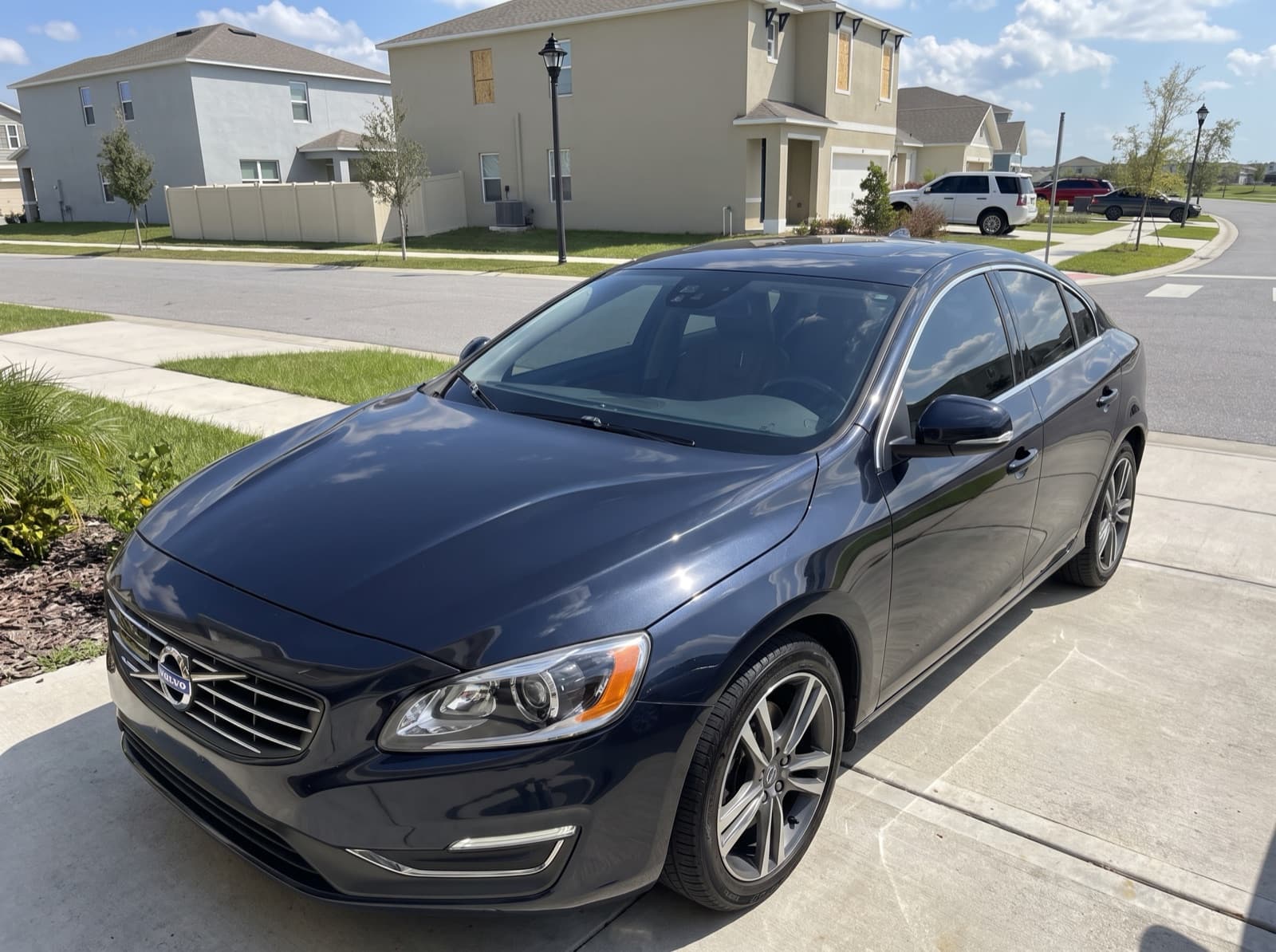
When you drive a Volvo, you're driving one of the safest vehicles on the road. Decades of engineering breakthroughs have made the brand synonymous with driver protection, and modern Volvos take that legacy even further with an advanced suite of cameras, radar units, and sensors mounted directly to the windshield. That technology powers everything from City Safety automatic emergency braking to Pilot Assist semi-autonomous driving. The catch is that every one of those systems depends on millimeter-perfect alignment, and the moment your windshield is removed, that alignment is gone. Volvo ADAS calibration is the precise, manufacturer-required process of restoring it. At Bang AutoGlass, we specialize in mobile Volvo windshield replacement and ADAS recalibration, performed on-site with OEM-quality materials and backed by a lifetime workmanship warranty.
Volvo ADAS calibration is the procedure used to realign the forward-facing camera, radar sensor, and Active Safety Domain Master (ASDM) module after the windshield has been removed, replaced, or even slightly disturbed. The ASDM is the brain that coordinates Volvo's safety systems, and it sits at the top center of the windshield, behind the rearview mirror. When the glass is replaced, that camera assembly must be unbolted, reseated against the new windshield, and recalibrated against precise reference targets so the car interprets the world correctly again. Without proper calibration, your Volvo's most advanced safety features are operating on outdated reference data, which Volvo Car U.S. LLC has officially stated is unacceptable.
Volvo bundles its driver-assistance technologies under the IntelliSafe umbrella, and nearly every feature in that suite is camera-dependent. IntelliSafe represents one of the most tightly toleranced ADAS packages in the industry, and a camera that is off by even a single degree can translate into several feet of error at highway speeds. That means a Volvo with an uncalibrated camera may brake too late for a pedestrian, follow too close to the car ahead, or drift outside its lane during Pilot Assist. Calibration restores the geometric reference the camera needs to perform exactly the way the engineers in Gothenburg designed it to.
The forward camera sits inside the ASDM housing behind the windshield, paired with a radar unit that handles distance and closing-speed measurement. Together they feed data to the vehicle's central control modules, which decide when to brake, when to steer, and when to alert the driver. Because the windshield itself is part of the camera's optical path, even small differences in glass thickness, curvature, or seating angle change what the camera sees. That is exactly why Volvo's official position statements require recalibration of the camera and radar unit any time the windshield is removed.
A new windshield is never installed in the exact same micro-position as the old one. Sealants cure at slightly different rates, the urethane bead sits a hair thicker or thinner, and the camera bracket reseats with a fraction of a degree of variance. None of that matters when you are talking about plain glass. It matters enormously when you are talking about a camera that is making braking decisions at 70 miles per hour.
Volvo Car U.S. LLC publishes a position statement that is unusually direct: calibration of the camera and radar unit, the ASDM, is required after windshield replacement on any Volvo equipped with the system. The same document warns that adhesives and glass that do not meet Volvo's stringent specifications may compromise the safety system, which is why we only install OEM-quality glass and use manufacturer-approved urethane that meets Volvo's bonding tolerances. Volvo also requires a post-repair scan to confirm that no fault codes remain after the work is complete, and we perform that scan as a standard part of every job.
Skipping calibration is one of the most common ways uninformed glass shops put Volvo owners at risk. The car may appear to drive normally for a few miles, but the consequences show up the moment a real-world hazard appears. A miscalibrated forward camera might recognize a pedestrian a foot farther away than they actually are, which means the City Safety system applies the brakes a foot too late. Pilot Assist may hug the right or left lane marker, Lane Keeping Aid may pull the wheel at the wrong moment, and adaptive cruise control may misjudge following distance. Many uncalibrated Volvos throw persistent dashboard warnings and "Driver Support System Unavailable" messages that will not clear until proper recalibration is performed.
Almost every camera- and radar-driven safety feature in your Volvo depends on calibration being correct. These are the IntelliSafe functions most commonly affected by a windshield replacement:
City Safety is Volvo's flagship collision-avoidance system, and it relies entirely on accurate camera and radar input. The system uses the forward camera to identify pedestrians, cyclists, large animals, and other vehicles, then triggers automatic braking when a collision is imminent. After windshield replacement, calibration is the only way to guarantee City Safety reacts at the exact distance Volvo's engineers calibrated it for.
Pilot Assist is Volvo's semi-autonomous driving feature, and it is one of the most camera-dependent systems in the entire IntelliSafe stack. The camera reads lane markings, traffic, and the path ahead while the radar tracks the vehicle in front. Uncalibrated cameras frequently cause Pilot Assist to drift toward one side of the lane, brake unexpectedly, or refuse to engage at all.
Lane Keeping Aid uses the forward camera to monitor lane markings and gently steer the vehicle back into its lane if you drift. Even a fractional camera offset can cause the system to misread lane position, resulting in unnecessary steering interventions or no intervention at all when one is needed.
While BLIS uses primarily side and rear radars, post-replacement diagnostic scans on Volvo vehicles often reveal that BLIS communication or initialization codes need to be cleared after camera work. Our scan-and-verify process catches and resolves these issues before we leave your driveway.
Adaptive Cruise Control uses radar to maintain a set following distance, with the forward camera confirming what the radar is seeing. A poorly calibrated camera can cause the car to follow too close, accelerate too aggressively, or fail to slow down for stopped traffic.
Volvo's Road Sign Information uses the forward camera to read speed limit signs and display them in the driver information cluster. After windshield replacement, an uncalibrated camera commonly misses signs entirely or shows the wrong speed limit.
Volvo specifies two calibration methods, and the right one depends on your model year, trim, and ADAS configuration. Some Volvos require static calibration, some require dynamic, and some require both performed in sequence.
Static calibration is performed in a controlled environment using precisely placed targets at specific distances and heights in front of the vehicle. The vehicle must be level, the tires properly inflated, the fuel tank at a specified level, and the targets aligned to the millimeter. We use OEM-grade calibration targets and Volvo-approved diagnostic procedures so the camera locks onto a perfect reference point.
Dynamic calibration is performed by driving the vehicle under specific conditions, typically on a well-marked road at a consistent speed range, with the diagnostic tool connected. The camera learns its position from real-world lane markings, traffic signs, and the road environment. Many modern Volvos require a dynamic drive cycle after static calibration is complete to fully finalize the system.
Several recent Volvo models, especially those with Pilot Assist and the latest version of City Safety, require both static and dynamic calibration. Our technicians look up the procedure for your specific VIN before we begin, so the work is done right the first time and your IntelliSafe systems are fully functional before we hand the keys back.
Virtually every Volvo built within the last decade carries a forward-facing camera that must be recalibrated after windshield replacement. Here is a quick orientation by body style.
The XC40, XC60, and XC90 are among the most ADAS-heavy vehicles Volvo produces, and all three rely heavily on the windshield-mounted camera for City Safety, Pilot Assist, and Lane Keeping Aid. The XC90 in particular often runs the latest IntelliSafe firmware and requires the most thorough recalibration of the three.
The S60 and S90 share much of their ADAS hardware with their SUV siblings, including the ASDM module behind the windshield. Both sedans require calibration any time the glass is replaced, and the S90 typically requires a slightly longer static target alignment due to its longer hood.
Volvo's wagons and Cross Country variants use the same camera and radar architecture as the sedans. Owners of Cross Country models sometimes assume the raised ride height changes the procedure, but the calibration tolerances remain the same and we adjust target heights accordingly during static calibration.
Volvo's growing EV lineup, including the EX30, EX90, and C40 Recharge, uses an updated generation of cameras and sensors. The EX90 in particular features one of the most advanced ADAS suites Volvo has ever offered, and proper recalibration after windshield replacement is non-negotiable for these vehicles.
Every Volvo ADAS calibration we perform follows a strict, manufacturer-aligned process. Here is exactly what happens when we arrive at your home, office, or job site:
Before we touch the glass, we connect to your Volvo's diagnostic port and document every active and stored fault code. This protects you and us by establishing a clear before-and-after record of your ADAS health.
We install OEM-quality glass selected to match your Volvo's exact part specification, including any acoustic, heated, HUD, or rain-sensor features your original windshield had. Most replacements take 30 to 45 minutes from start to finish, followed by a one-hour cure time before the vehicle is safe to drive.
The ASDM and camera assembly are reattached using factory hardware and torque specifications. The one-hour adhesive cure window matters here because the camera's optical reference is partially defined by the windshield's final cured position; calibrating before the urethane sets would produce inaccurate results.
Once the glass and camera are fully set, we run the static or dynamic calibration procedure your model requires. After calibration is complete, we perform a final diagnostic scan to confirm there are zero active fault codes and that every IntelliSafe feature is reporting nominal.
A typical Volvo windshield replacement takes 30 to 45 minutes of physical install time, followed by one hour of adhesive cure before the vehicle is safe to drive. ADAS calibration adds additional time on top of that, with static calibrations typically running 45 to 90 minutes and dynamic calibrations requiring an additional road test of 15 to 30 minutes depending on traffic and road conditions. We schedule each appointment with enough time to do the job right rather than rushing the calibration. Most Volvo owners are back on the road the same day, and our next-day appointment availability means you rarely have to wait long to get scheduled.
Volvo windshields are more expensive than standard windshields because of the integrated camera mount, acoustic interlayers, heating elements, and HUD compatibility many models include. The good news is that most comprehensive auto insurance policies cover ADAS calibration as part of a windshield replacement claim.
We do not file insurance claims on your behalf, but we assist you through the entire process so you know exactly what to say and what to ask for. We will help you gather the information you need, including your VIN, the specific ADAS features on your Volvo, and the calibration requirement from Volvo's official position statement. Most insurers approve the calibration once they understand it is a manufacturer requirement, not an optional upgrade.
Some insurance carriers will try to steer Volvo owners toward the cheapest possible glass to keep the claim cost down. We use OEM-quality glass that meets Volvo's stringent optical and structural specifications, which is the only category of glass that supports proper camera calibration. We are happy to explain to your adjuster why OEM-quality glass is the right call for an ADAS-equipped Volvo.
Volvo ADAS calibration is a precision job, and not every glass shop is equipped to do it right. Here is what sets our team apart.
We are a fully mobile auto glass and ADAS calibration service, which means you do not have to take time off work or drive a vehicle with a cracked windshield to a shop. We bring the glass, the tools, and the calibration equipment directly to your home, office, or job site.
Every Volvo windshield replacement and ADAS calibration we perform is backed by a lifetime workmanship warranty. If anything related to our installation ever fails, we make it right at no cost to you.
We know a broken windshield does not fit neatly into your schedule, which is why we offer next-day appointments for most Volvo ADAS calibration jobs. You can typically be back in a properly calibrated Volvo within 24 hours of calling us.
We use OEM-quality glass, manufacturer-approved urethane adhesives, and factory-spec hardware on every Volvo we touch. Combined with our calibration expertise, that is how we deliver work that looks, feels, and performs exactly the way your Volvo did the day it left the factory.
If your Volvo needs windshield replacement, you also need ADAS calibration. The two are inseparable on any modern IntelliSafe-equipped vehicle, and getting them done together by a team that understands Volvo's tolerances is the difference between a safe car and a car that only looks safe. Reach out to Bang AutoGlass today to schedule your mobile Volvo ADAS calibration appointment. We will bring the glass, calibrate the camera, restore your IntelliSafe systems, and back the work with a lifetime workmanship warranty.