Aston Martin Quarter Glass Replacement
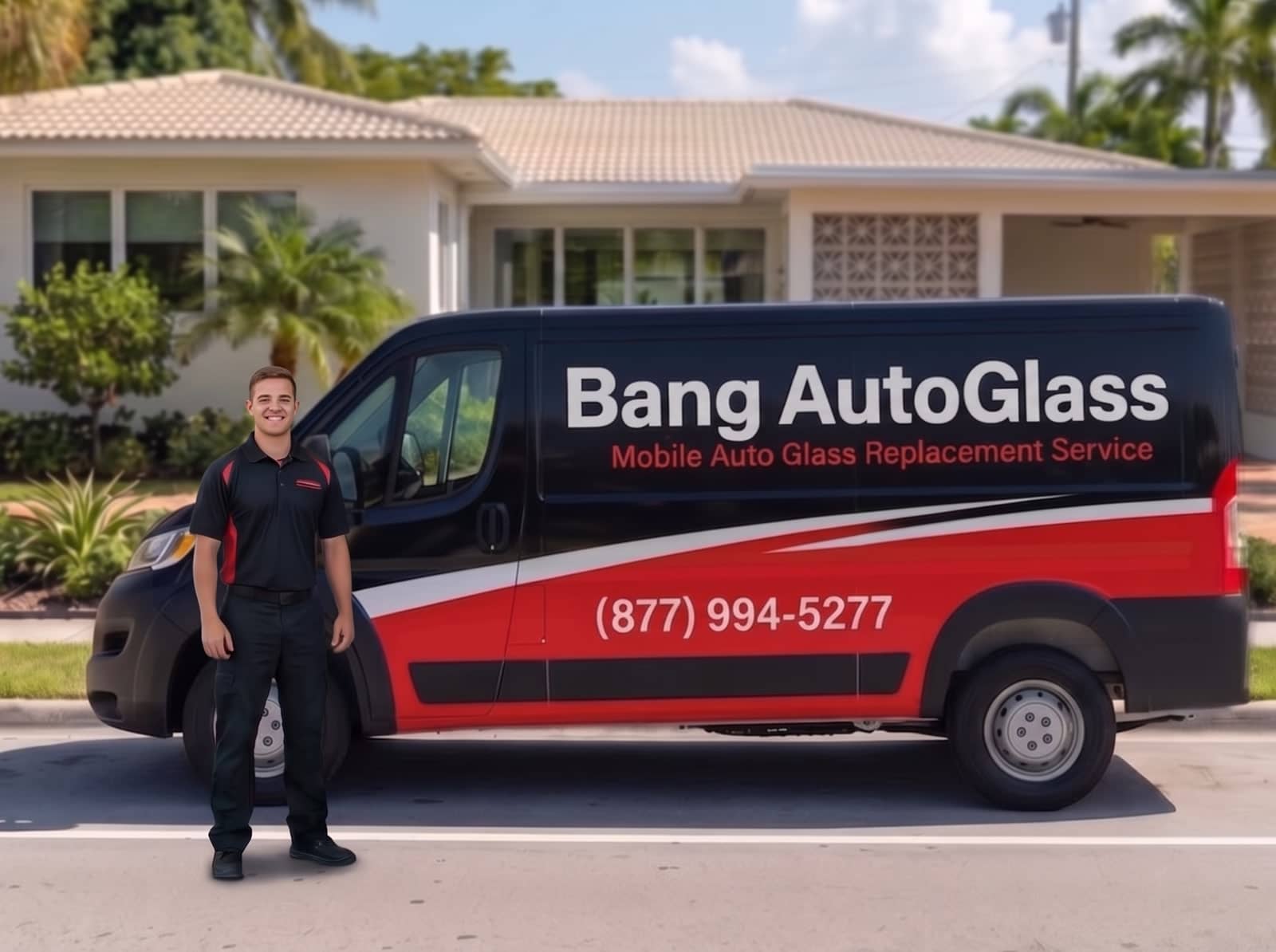
Bang AutoGlass replaces Aston Martin quarter glass on DB11, DBX, and Rapide using OEM-quality tempered safety glass set in fresh urethane for a flush, factory-matched fit. Mobile service across Arizona and Florida includes careful trim work, exact alignment, and a lifetime workmanship warranty.
Aston Martin Quarter Glass Replacement: Expert Mobile Service for Luxury British Sports Cars
When the precision-engineered quarter glass on your Aston Martin cracks, shatters, or develops a stress fracture, you need more than a standard auto glass shop. You need a specialist who understands that every panel on a hand-built British sports car is part of an integrated design language, and that even a small piece of glass like the quarter window plays a critical role in the structural integrity, acoustics, and aerodynamic profile of the vehicle. At Bang AutoGlass, we provide professional Aston Martin quarter glass replacement using OEM-quality materials, backed by a lifetime workmanship warranty, and delivered through a fully mobile service that comes directly to your home, office, garage, or private collection.
This page is your complete guide to Aston Martin quarter glass replacement, covering the specific glass characteristics of models like the DB11, DBS Superleggera, Vantage, DBX, Rapide, and the iconic DB9, along with our replacement process, insurance claim assistance, warranty coverage, and what to expect when you book a next-day mobile appointment with our team.
Understanding Quarter Glass on Your Aston Martin
What Is Quarter Glass and Where Is It Located?
Quarter glass is the smaller fixed window typically positioned behind the rear doors on sedans, near the C-pillar on coupes, or as a small forward triangular pane near the A-pillar mirror area on some models. On Aston Martin vehicles, quarter glass is rarely just a functional pane; it is sculpted, curved, and tinted to match the flowing silhouette that defines the marque. Whether it is the elegantly tapered rear quarter window on a DB11 coupe, the subtle vent glass on a Vantage, or the larger fixed pane on the DBX SUV, the quarter glass is engineered to integrate seamlessly with the body lines while contributing to cabin visibility and noise insulation.
Why Aston Martin Quarter Glass Is Different
Aston Martin uses bespoke glass that is engineered with specific thickness ratings, acoustic interlayers, UV-rejecting tints, and curvature profiles unique to each model and trim level. Unlike commodity vehicles where quarter glass is largely interchangeable across years, Aston Martin glass is often model-year specific, hand-fitted at the factory, and bonded with high-strength urethanes that demand professional removal and reinstallation. Replacing this glass correctly requires an installer who understands how the panel interacts with the surrounding bodywork, the headliner, and the often-hidden trim clips that hold the surrounding moldings in place.
Aston Martin Models We Service
Aston Martin DB11 Quarter Glass Replacement
The DB11 coupe and Volante feature a beautifully curved rear quarter window that sweeps into the C-pillar, contributing to the car's grand tourer profile. Replacing DB11 quarter glass demands careful trim removal around the rear shoulder line and a precise bond to maintain the wind-tunnel-tested aerodynamic seal. Whether your DB11 has the V8 or V12 powertrain, our technicians arrive prepared with model-specific tools to handle the job without disturbing the surrounding paint, leather, or Alcantara headliner.
Aston Martin Vantage Quarter Glass Replacement
The current and previous generation Vantage coupes use compact rear quarter glass panels that frame the rear shoulder. Earlier Vantage models, including the V8 Vantage and V12 Vantage, have their own distinct glass dimensions. Our team identifies the correct OEM-quality replacement for your VIN to ensure the curvature, tint level, and acoustic properties match factory specifications.
Aston Martin DBS and DBS Superleggera Quarter Glass
The DBS Superleggera flagship grand tourer features a dramatically sculpted rear quarter window that defines the rear three-quarter view. Because the DBS uses carbon fiber body panels, the urethane bonding surfaces require extra care during preparation. We use carbon-safe primers and follow Aston Martin-recommended adhesion protocols to protect the carbon weave underneath.
Aston Martin DBX Quarter Glass Replacement
As Aston Martin's first SUV, the DBX and DBX707 introduce a larger rear quarter glass profile suited to the taller body. Replacement requires accessing trim through the rear door jamb and headliner edge. Our mobile setup handles DBX quarter glass jobs in your driveway without needing to bring the vehicle to a shop.
Aston Martin Rapide and Lagonda Quarter Glass
The four-door Rapide and ultra-rare Lagonda sedans feature multiple quarter glass panels, including small forward vent glass near the A-pillar and larger fixed panes behind the rear doors. Each requires its own removal procedure, and our technicians are trained on the specific clip locations and bonding patterns for these low-production models.
Classic and Heritage Models
We also support quarter glass replacement on heritage Aston Martin models including the DB9, Virage, Vanquish, and earlier V8 Vantage variants. For these vehicles, we source OEM-quality glass that matches original factory dimensions and provide the kind of careful, low-pressure handling these collector-grade cars deserve.
Common Causes of Quarter Glass Damage on Aston Martin Vehicles
Aston Martin quarter glass damage can happen in many ways, and understanding the cause helps inform both the replacement approach and any preventive guidance we offer afterward. The most frequent reasons we are called for an Aston Martin quarter glass replacement include the following:
- Road debris strikes from passing vehicles, particularly on highways where small rocks deflect off truck tires
- Vandalism or attempted break-ins, where the smaller, less-laminated quarter glass is sometimes targeted because it is easier to defeat than the main door glass
- Thermal stress fractures caused by extreme temperature swings, which can be particularly damaging to curved glass that already carries internal stress from the manufacturing process
- Garage or driveway impacts from objects, sports equipment, or even falling tree limbs
- Settling or flexing damage on older vehicles where body movement over time stresses the bonded glass perimeter
- Aftermarket tinting failures where prior installations introduced micro-scratches that eventually propagated into larger cracks
Regardless of the cause, our process is the same: assess the damage, identify the correct replacement glass, schedule a convenient mobile appointment, and restore your Aston Martin to its original appearance and integrity.
The Bang AutoGlass Aston Martin Replacement Process
Step One: Initial Consultation and VIN Verification
When you contact us, we start by gathering your Aston Martin's VIN, model year, and trim. This allows us to identify the exact quarter glass specification for your vehicle, including any optional acoustic glass packages or tint variations that may have been factory-installed. We then provide a transparent quote that includes parts, labor, and any necessary moldings or clips.
Step Two: Scheduling Your Next-Day Mobile Appointment
We understand that Aston Martin owners value their time, and we have built our service model around getting your vehicle handled quickly. We offer next-day appointments for most Aston Martin quarter glass replacements, and our fully mobile service means our technician comes to your location with all equipment, tools, and the correct OEM-quality glass already on the truck. Whether you keep your Aston Martin at home, in a private garage, or at your office, we can perform the replacement on-site.
Step Three: Preparation and Glass Removal
Upon arrival, our technician inspects the surrounding bodywork, photographs the existing trim alignment, and protects nearby paint and interior surfaces with low-tack tape and panel covers. The damaged glass is removed using cold-knife or wire-out methods chosen to protect the pinch weld and surrounding paint. On carbon-bodied models, we use additional protective steps to prevent any abrasion to the composite surface.
Step Four: Surface Preparation and Bonding
The bonding surface is cleaned, primed with the correct manufacturer-specified primer, and prepared with a fresh bead of high-modulus urethane adhesive rated for OEM-grade structural performance. The new quarter glass is then carefully set into place using suction tools and alignment guides to ensure the gap reveal matches the factory specification on all sides.
Step Five: Final Inspection and Cure Time
Most Aston Martin quarter glass replacements take approximately 30 to 45 minutes to complete. After the glass is set, we recommend allowing one hour for the adhesive to cure before driving the vehicle. During this cure window, you can review the work with your technician, ask any questions about aftercare, and receive your warranty documentation.
OEM-Quality Materials for Aston Martin Quarter Glass
We use OEM-quality glass for every Aston Martin replacement we perform. This means the glass meets or exceeds the original factory specifications for thickness, curvature, optical clarity, acoustic damping, and UV protection. The result is a replacement that looks, feels, and performs identically to what came on your Aston Martin from the factory in Gaydon, but at a more accessible price point than dealership-only glass orders.
Why OEM-Quality Matters on a Luxury Vehicle
On a vehicle as engineered as an Aston Martin, glass is not just a window. It is part of the noise-vibration-harshness package that gives the cabin its hushed character at speed. It contributes to the rigidity of the body shell. It manages solar load and protects interior leather and wood veneers from UV degradation. Substandard glass can introduce wind whistle, optical distortion, and reduced UV protection, all of which detract from the Aston Martin ownership experience. By insisting on OEM-quality materials, we preserve the integrity of what makes your car special.
Adhesives and Hardware
Beyond the glass itself, we use premium urethane adhesives, factory-matched moldings, and replacement clips wherever the originals are damaged or distorted by the removal process. We never reuse compromised hardware.
Insurance Claim Assistance for Aston Martin Owners
How We Help With Your Claim
Aston Martin quarter glass replacement is often covered under the comprehensive portion of your auto insurance policy, though your normal deductible still applies in Florida, since the waiver under Fla. Stat. 627.7288 covers windshield replacement only. Arizona drivers who elected their insurer's optional zero-deductible glass coverage may pay nothing on quarter glass. We help assist you in filing your claim with your insurance carrier, walking you through the process, explaining what information you need to provide, and ensuring the claim is submitted with all the right details about your specific Aston Martin model and the glass being replaced.
We help you with the insurance claim from start to finish and make the process as smooth as possible. Insurance claims are personal contracts between you and your carrier, and you remain in control of the process. What we do is make sure you understand each step, provide the documentation and quotes your insurer needs, and coordinate with the adjuster once the claim is open.
What to Have Ready
Before contacting your insurance company, we recommend having your policy number, your Aston Martin's VIN, photos of the damage, and a description of how the damage occurred. We can provide an itemized quote and any supporting documentation the insurer requests.
Lifetime Workmanship Warranty
Every Aston Martin quarter glass replacement we perform comes with a lifetime workmanship warranty. This means that for as long as you own the vehicle, we stand behind the installation. If you ever experience a leak, wind noise, trim issue, or bonding failure that stems from our work, we will return and make it right at no additional cost.
What the Warranty Covers
Our lifetime workmanship warranty covers any defect in the installation itself. This includes urethane bonding integrity, trim and molding alignment, and any leaks attributable to our work. The warranty travels with you, not with the vehicle, so if you keep your Aston Martin for decades, the protection stays in place the entire time.
What the Warranty Does Not Cover
Like any warranty, it does not cover subsequent damage from new impacts, vandalism, or environmental events. If your Aston Martin sustains new glass damage in the future, we are still happy to help, but it would be a new replacement rather than a warranty claim.
Why Choose Bang AutoGlass for Your Aston Martin
Specialized Experience With Luxury Vehicles
We have built our reputation on careful, detail-oriented work, and luxury vehicles like Aston Martin demand exactly that approach. Our technicians treat each car as an irreplaceable piece of engineering and craftsmanship, and we take the extra time required to do the job correctly.
Convenience of Mobile Service
You do not need to trailer your Aston Martin to a shop, sit in a waiting room, or hand the keys to a stranger at a drop-off counter. Our mobile service brings the work to you, in your driveway, your private garage, your office parking lot, or wherever you keep the car. This is particularly valuable for owners of garaged collector vehicles that are rarely driven on public roads.
Fast Turnaround
Next-day appointments are standard for us. With replacement times of 30 to 45 minutes and a one-hour adhesive cure window, you can have your Aston Martin back to fully serviceable status the day after we arrive.
Transparent Pricing
We provide clear, upfront quotes before any work begins. There are no surprise fees, no upsells once we arrive, and no pressure tactics. The price we quote is the price you pay.
Caring for Your New Quarter Glass
After your Aston Martin quarter glass replacement, there are a few simple steps to ensure the urethane bond reaches full strength and the new glass stays in perfect condition for the long term.
- Wait the recommended one hour before driving the vehicle to allow the urethane to develop initial structural strength.
- Avoid high-pressure car washes for the first 24 to 48 hours so the bond can complete its full cure cycle without disruption.
- Leave any tape or trim retainers in place for the period recommended by your technician, typically a few hours to overnight.
- Avoid slamming doors during the first day, as the resulting cabin pressure spike can stress a freshly bonded panel.
- Inspect the area after the first rainstorm to confirm there are no leaks, and contact us immediately if you have any concerns so we can address them under warranty.
Service Area and Booking Your Appointment
Bang AutoGlass operates as a fully mobile service, which means we travel to your location rather than requiring you to come to ours. Aston Martin owners across our service region rely on us for everything from windshield work to quarter glass, door glass, sunroof, and back glass replacement, all delivered with the same level of care and quality.
To book your Aston Martin quarter glass replacement, contact us through the form at the top of this page or by phone. Provide your Aston Martin's year, model, VIN if available, and a description of the damage, and we will respond quickly with a quote and a next-day appointment offer.
Final Thoughts on Aston Martin Quarter Glass Replacement
Replacing the quarter glass on an Aston Martin is not a routine job, and it should not be treated like one. The combination of bespoke glass dimensions, premium body construction, and the high standards of Aston Martin ownership demand a specialist approach. At Bang AutoGlass, we deliver that approach through mobile convenience, OEM-quality materials, expert installation, transparent insurance claim assistance, and a lifetime workmanship warranty that gives you peace of mind for as long as you own the car. When you trust us with your Aston Martin, you are choosing a service built around the values that make these vehicles special in the first place: craftsmanship, attention to detail, and a commitment to doing things the right way every single time.
Aston Martin Quarter Glass Replacement — common questions
What is Aston Martin quarter glass replacement?
Quarter glass is the small fixed window between the rear door and rear window on your Aston Martin. When cracked or shattered, we replace it with OEM-quality tempered glass backed by a lifetime workmanship warranty, all at your location.
How long does quarter glass replacement take?
The replacement itself takes about 30-45 minutes to complete. The adhesive then needs time to set — about an hour is typical, and your technician confirms the exact safe drive-away time. Plan for about 1.5-2 hours total at your location.
Does comprehensive insurance cover Aston Martin quarter glass damage?
Yes, quarter glass damage is typically covered under comprehensive auto insurance. We help you file or start your claim, and depending on your policy and state, you may pay nothing out of pocket if your deductible is waived or covered.
Why choose mobile service for my Aston Martin quarter glass?
Mobile service brings a fully-equipped technician to your home, work, or roadside. You get the same OEM-quality materials and workmanship as a shop without the hassle of driving and waiting—we come to you in Arizona or Florida.
Where we do Aston-Martin auto glass
Bang AutoGlass is a mobile auto glass company serving Arizona and Florida. We don't have a shop you drive to — we come to your home, your job, or wherever the car is sitting, with next-day appointments in most areas. In Arizona that means the whole Valley — Phoenix, Mesa, Scottsdale, Chandler, Gilbert, Tempe, Glendale and out to Tucson and Prescott. In Florida we cover Tampa Bay, Orlando and Miami, from St. Petersburg and Clearwater across to Kissimmee, Winter Park and Fort Lauderdale.
Browse every city we serve in Arizona and Florida, or read how coverage works under Arizona's glass statutes and Florida's § 627.7288.
Mobile auto glass — cities we serve
4.8★ on Google · 350+ reviews from AZ & FL drivers
“I needed my windshield replaced and they made the entire process easy. Bang AutoGlass is the best!”
“Top-notch auto glass service. They handled my windshield replacement quickly and professionally.”
“Bang AutoGlass made my windshield replacement simple from start to finish.”
Need Aston Martin Quarter Glass Replacement?
We come to you across Arizona and Florida — often $0 with insurance.
We reply within minutes during business hours.