Ram ADAS Calibration
Bang AutoGlass coordinates Ram ADAS calibration after windshield service so Adaptive Cruise Control, Forward Collision Warning, Lane Departure Warning, and Blind Spot Monitoring read targets correctly on Ram 1500, 2500, 3500, and ProMaster. Arizona and Florida mobile, warranty-backed.
Ram ADAS Calibration: Complete Guide to Recalibrating Your Truck's Advanced Safety Systems After Windshield Replacement
Modern Ram trucks are some of the most technologically advanced pickups on the road, packed with Advanced Driver Assistance Systems (ADAS) that depend on precisely aimed cameras and sensors mounted to your windshield. The moment that windshield is removed or replaced, those safety systems must be recalibrated to factory specifications. Whether you drive a Ram 1500, Ram 2500, Ram 3500, Ram ProMaster, or Ram ProMaster City, proper Ram ADAS calibration is not optional after windshield replacement — it's a critical safety requirement that determines whether your truck's forward collision warning, lane departure warning, adaptive cruise control, and automatic emergency braking systems will function as engineered. At Bang AutoGlass, we provide mobile Ram ADAS calibration service that comes directly to your home, office, or jobsite so you can keep your truck on the road without disrupting your day.
What Is Ram ADAS Calibration?
Ram ADAS calibration is the precise process of realigning and reprogramming the forward-facing camera, radar sensors, and related safety modules in your Ram truck so they accurately interpret the road ahead. ADAS — short for Advanced Driver Assistance Systems — relies on a constellation of cameras and sensors that work together to monitor traffic, lane markings, pedestrians, and obstacles. Even the smallest misalignment of just one degree can throw the camera's field of view off by several feet at highway distances, which means a system that is supposed to brake your truck automatically before a collision could fail to detect the obstacle at all, or worse, trigger phantom braking on an empty road.
Why Ram Trucks Require ADAS Calibration After Windshield Replacement
The forward-facing camera in nearly every modern Ram truck is mounted directly to the inside of the windshield, typically behind the rearview mirror in a housing that connects to the lens. When a Ram windshield is removed and replaced, the camera is detached, the mounting bracket is disturbed, and the optical pathway through the new glass is slightly different from the original. Even if the technician installing the windshield uses OEM-quality glass with the same optical clarity as the factory unit, the camera must be recalibrated to learn the exact geometry of its new position. Skipping this step is one of the most common mistakes drivers and shops make, and it leaves the safety systems either inoperative or — even more dangerously — operating on incorrect data.
The Role of the Forward-Facing Camera in Ram Safety Systems
The forward-facing camera mounted to your Ram's windshield is the eyes of your truck's safety suite. It reads lane markings to keep you centered, recognizes traffic signs, detects vehicles and pedestrians in your path, and feeds visual data to the engine and brake control modules that decide when to warn you or intervene. On most Ram 1500 DT, Ram 2500, and Ram 3500 trucks, this same camera also coordinates with the front radar sensor behind the grille to enable adaptive cruise control and automatic emergency braking. After windshield replacement, both the camera and its relationship to the radar must be verified through Ram ADAS calibration.
Ram ADAS Features That Depend on Proper Calibration
Ram trucks come equipped with one of the most comprehensive safety packages in the half-ton and heavy-duty pickup segments. Every one of the features below depends on a properly calibrated forward camera, and every one of them is at risk if Ram ADAS calibration is skipped after windshield work:
- Forward Collision Warning Plus with Active Braking, which detects vehicles and pedestrians ahead and can automatically apply the brakes
- Adaptive Cruise Control with Stop and Go, which maintains a set distance from the vehicle ahead and can bring the truck to a complete stop in traffic
- LaneSense Lane Departure Warning Plus and Lane Keep Assist, which reads painted lane lines and applies gentle steering correction
- Automatic High Beam Headlamp Control, which dims your headlights for oncoming traffic
- Traffic Sign Recognition, which reads posted speed limits and other road signs
- Drowsy Driver Detection on equipped models, which monitors lane behavior for signs of fatigue
- Surround View Camera systems, which often include front camera coordination with the windshield-mounted unit
Forward Collision Warning Plus and Active Braking
Ram's Forward Collision Warning Plus is one of the most safety-critical systems in your truck. When properly calibrated, it can detect a slowing or stopped vehicle ahead, alert you with audible and visual warnings, and apply the brakes if you fail to respond. After windshield replacement, miscalibration can cause the system to either fail to detect real threats or apply phantom braking — both of which are unacceptable risks.
Adaptive Cruise Control with Stop and Go
Ram's Adaptive Cruise Control uses both the windshield camera and the front radar to maintain following distance. A miscalibrated camera will cause inconsistent following distances, jerky acceleration and braking, and in some cases the system will refuse to engage at all, throwing a service warning on your dash.
LaneSense Lane Departure Warning and Lane Keep Assist
LaneSense reads painted lane markings through the windshield camera and provides corrective steering input if you begin to drift. Even a slight calibration error can cause the system to wander, oversteer, or completely lose track of lane lines on curves and crests.
Automatic Emergency Braking and Pedestrian Detection
The pedestrian detection component of Ram's safety suite uses the windshield camera to identify human shapes in your path. Proper Ram ADAS calibration ensures the system can recognize pedestrians at the correct distance and trigger braking when needed.
Static vs. Dynamic Calibration for Ram Trucks
Ram trucks can require static calibration, dynamic calibration, or both depending on the model year, trim level, and equipped safety package. Understanding the difference helps explain why proper Ram ADAS calibration takes time and specialized equipment.
Static Calibration Explained
Static calibration is performed with the truck parked in a controlled environment using manufacturer-specified targets placed at precise distances and angles in front of the vehicle. The scan tool guides the camera through a learning process while it focuses on these targets. Static calibration requires a level floor, controlled lighting, adequate space in front of the truck, and exact measurements based on the specific Ram model and trim.
Dynamic Calibration Explained
Dynamic calibration is performed on the road, with the technician driving the Ram at specified speeds — typically between 25 and 45 miles per hour depending on the system — on roads with clear lane markings. The scan tool monitors the camera's data in real time as it learns to interpret real-world lane lines and traffic patterns.
When Ram Requires Dual Calibration
Many Ram 1500 DT, Ram 2500, and Ram 3500 trucks equipped with the full safety and security group require both static and dynamic calibration to fully restore ADAS functionality. The static portion teaches the camera its physical geometry, and the dynamic portion validates that the system reads the road correctly at speed.
Ram Models That Require ADAS Calibration After Windshield Replacement
Ram 1500 ADAS Calibration
The Ram 1500 DT (2019 and newer) and the Ram 1500 Classic DS body style both feature windshield-mounted forward cameras when equipped with the Safety Group or Advanced Safety Group packages. Ram 1500 ADAS calibration is required after any windshield replacement on Big Horn, Lone Star, Laramie, Rebel, Limited Longhorn, Limited, and TRX trims that include forward collision warning, adaptive cruise control, or LaneSense features.
Ram 2500 ADAS Calibration
Ram 2500 heavy-duty trucks equipped with the Safety Group package include forward collision warning, adaptive cruise control, and LaneSense — all of which depend on a properly calibrated windshield camera. Ram 2500 ADAS calibration is especially important for fleet and work trucks that log heavy highway miles, where ADAS functionality directly impacts driver safety on long hauls and worksite commutes.
Ram 3500 ADAS Calibration
The Ram 3500 carries the same ADAS architecture as the 2500, with the added complexity of trailer-tow features that integrate with the camera and radar systems. Ram 3500 ADAS calibration ensures that adaptive cruise control adjusts properly for trailer weight, and that lane keep assist accounts for the truck's wider footprint when equipped with dually rear wheels.
Ram ProMaster and ProMaster City ADAS Calibration
Ram's commercial van lineup also includes forward-facing camera systems on later model years, particularly when equipped with the Advanced Safety package. Mobile Ram ADAS calibration is especially valuable for ProMaster and ProMaster City fleets, since taking commercial vans out of service for in-shop calibration costs businesses revenue.
What Happens If You Skip Ram ADAS Calibration?
Skipping Ram ADAS calibration after windshield replacement creates real, measurable safety risks. The forward collision warning system may fail to detect a vehicle stopped ahead of you, leaving automatic emergency braking inoperative when you need it most. Adaptive cruise control may behave erratically, accelerating into the vehicle in front or braking unexpectedly. LaneSense may drift, oversteer, or simply turn itself off with a warning light on the dash. Beyond the safety risks, an uncalibrated Ram will often display permanent warning messages in the driver information cluster, ADAS features may disable themselves automatically, and a future insurance claim or accident reconstruction can be complicated if your ADAS systems were known to be uncalibrated at the time of an incident.
How Long Does Ram ADAS Calibration Take?
A Ram windshield replacement at Bang AutoGlass typically takes 30 to 45 minutes for the actual installation, followed by a one-hour cure time for the urethane adhesive to set properly before the truck is driven. ADAS calibration is performed after the cure time, and depending on whether your Ram requires static, dynamic, or dual calibration, the calibration process itself can add additional time on top of the windshield replacement. We schedule every appointment so that the entire process — replacement, cure, and calibration — fits comfortably into a single visit, and we offer next-day appointments so you don't have to wait days or weeks to get your truck's safety systems back online.
The Bang AutoGlass Ram ADAS Calibration Process
Our mobile Ram ADAS calibration process is built to deliver dealer-level precision at the convenience of your driveway, jobsite, or office parking lot. Every Ram ADAS calibration we perform follows this exact sequence:
- Verify the Ram model, year, trim, and installed ADAS package using the VIN
- Replace the windshield using OEM-quality glass and high-strength urethane adhesive
- Allow the full one-hour cure time before any movement of the vehicle
- Connect a factory-level scan tool to the Ram's OBD-II port to read all ADAS modules
- Perform static calibration with manufacturer-specified targets if required
- Perform dynamic calibration on a pre-mapped route at the correct speeds if required
- Clear all calibration-related diagnostic trouble codes and confirm green-status on every ADAS system
- Document the calibration with before-and-after scan reports for your records
OEM-Quality Materials and Our Lifetime Workmanship Warranty
Every Ram windshield replacement at Bang AutoGlass uses OEM-quality glass that meets or exceeds the optical clarity, thickness, and acoustic specifications of the original equipment. This matters more for Ram ADAS calibration than for any other reason — the forward camera sees the world through your windshield, and inferior glass can introduce distortion that prevents successful calibration entirely. We also back every replacement and calibration with a lifetime workmanship warranty, which means that as long as you own your Ram, we stand behind the installation and the calibration. If anything related to our workmanship ever fails, we make it right.
Why OEM-Quality Glass Matters for Ram ADAS Calibration
The forward-facing camera in your Ram is engineered to look through glass with a specific optical profile. Cheap or low-grade replacement glass can have distortions, waves, or thickness variations that cause the camera to misread lane lines, misjudge distances, or fail calibration altogether. By insisting on OEM-quality materials for every Ram windshield replacement, we ensure your truck's ADAS systems have the clearest possible optical pathway to the road ahead.
Filing an Insurance Claim for Ram ADAS Calibration
Most comprehensive auto insurance policies cover windshield replacement and Ram ADAS calibration as part of the same claim, since calibration is now recognized industry-wide as a required step after camera-equipped windshield replacement. If you have not yet filed a claim, we are happy to assist you through the process. We help you with the insurance claim from start to finish and make the process as smooth as possible. Many drivers are surprised to learn that their deductible may be waived entirely under their state's comprehensive glass coverage rules, and we help you confirm those details with your carrier before any work begins.
What to Tell Your Insurance Company About Ram ADAS Calibration
When you call your insurance company to assist with your claim, let them know your Ram is equipped with a forward-facing camera and ADAS features that require calibration after windshield replacement. Provide your VIN, the year and trim of your Ram, and confirm that both the windshield replacement and the ADAS calibration need to be authorized on the same claim. We provide all necessary documentation, invoices, and calibration reports to support your claim from start to finish.
Why Choose Mobile Ram ADAS Calibration Service
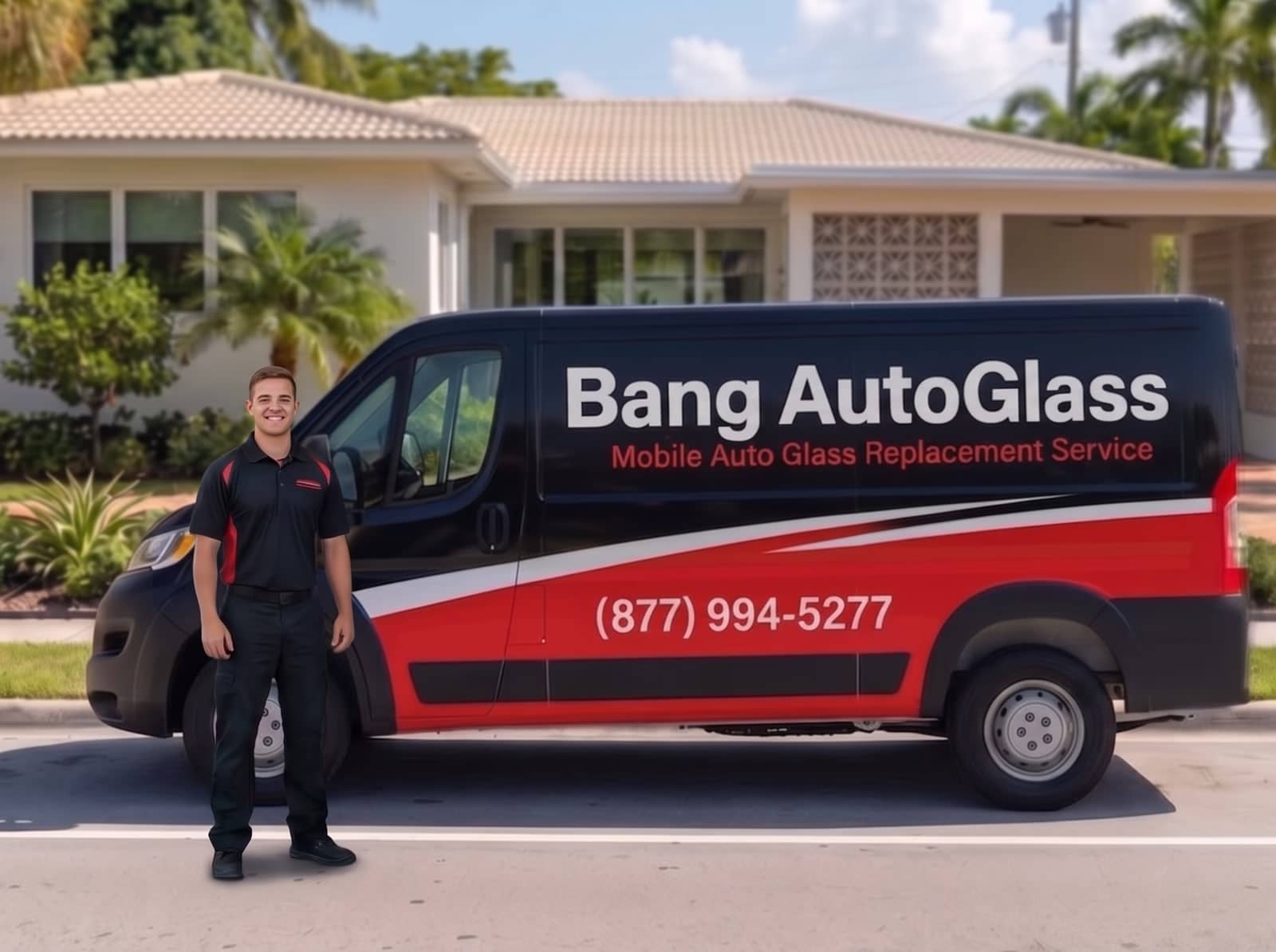
Bang AutoGlass is a fully mobile auto glass and ADAS calibration service, which means we bring the shop to you. Rather than dropping your Ram off at a dealership and waiting days for a service bay to open up, we come to your home, your office, or your jobsite with the equipment and expertise to handle both the windshield replacement and the Ram ADAS calibration in a single visit. With next-day appointments, OEM-quality materials, and a lifetime workmanship warranty backing every job, our mobile Ram ADAS calibration service is built for truck owners who can't afford to lose a day of work or pay dealership labor rates for the same result.
Next-Day Appointments for Ram Owners
We know that a cracked or damaged Ram windshield is more than an inconvenience — it can take your daily driver or work truck out of service entirely. That's why we offer next-day appointments for Ram windshield replacement and ADAS calibration, getting you back behind the wheel of a fully calibrated, fully functional Ram as quickly as possible.
Mobile Service That Works Around Your Schedule
Whether you're a contractor running a Ram 2500 on a jobsite, a fleet manager with a row of Ram 1500s at your facility, or a daily driver who just needs the work done at home, our mobile Ram ADAS calibration service fits your schedule. We arrive on time, complete the windshield replacement in 30 to 45 minutes, allow the full one-hour cure time, and complete the Ram ADAS calibration on site — all in one visit.
Schedule Your Ram ADAS Calibration Today
If your Ram 1500, Ram 2500, Ram 3500, ProMaster, or ProMaster City needs a windshield replacement, Ram ADAS calibration is the critical second half of the job — and Bang AutoGlass is the mobile service that delivers both in a single appointment. With next-day availability, OEM-quality materials, a lifetime workmanship warranty, and full insurance claim assistance, we make it simple to restore your Ram's safety systems to factory specification without ever leaving your driveway. Reach out today to schedule your Ram ADAS calibration and get your truck back on the road with confidence.
Ram ADAS Calibration — common questions
What is ADAS calibration and why does my Ram need it?
ADAS (Advanced Driver Assistance Systems) are safety features like lane-keeping assist and automatic emergency braking that rely on a forward-facing camera mounted on your windshield. After windshield replacement, the camera must be recalibrated to ensure these features work accurately and keep you safe.
How long does Ram ADAS calibration take?
ADAS calibration typically takes about 15-30 minutes to complete. Since we perform this at your location as part of your windshield service, the total visit is roughly 1.5-2 hours to account for the windshield replacement and adhesive set time.
What happens during the ADAS calibration process?
Our technician uses specialized diagnostic equipment to verify and recalibrate the camera alignment and sensor settings to factory specifications. This ensures your safety features like lane-keeping and automatic braking function properly after your windshield replacement.
Is ADAS calibration covered by my insurance?
ADAS calibration is included as part of the complete windshield replacement service and is typically covered under comprehensive glass coverage if your plan includes it. We'll help you understand your coverage when you book.
Where we do Ram auto glass
Bang AutoGlass is a mobile auto glass company serving Arizona and Florida. We don't have a shop you drive to — we come to your home, your job, or wherever the car is sitting, with next-day appointments in most areas. In Arizona that means the whole Valley — Phoenix, Mesa, Scottsdale, Chandler, Gilbert, Tempe, Glendale and out to Tucson and Prescott. In Florida we cover Tampa Bay, Orlando and Miami, from St. Petersburg and Clearwater across to Kissimmee, Winter Park and Fort Lauderdale.
Browse every city we serve in Arizona and Florida, or read how coverage works under Arizona's glass statutes and Florida's § 627.7288.
Mobile auto glass — cities we serve
4.8★ on Google · 350+ reviews from AZ & FL drivers
“I needed my windshield replaced and they made the entire process easy. Bang AutoGlass is the best!”
“Top-notch auto glass service. They handled my windshield replacement quickly and professionally.”
“Bang AutoGlass made my windshield replacement simple from start to finish.”
Need Ram ADAS Calibration?
We come to you across Arizona and Florida — often $0 with insurance.
We reply within minutes during business hours.