
Windshield Replacement in Phoenix, AZ
Phoenix drivers deal with heavy freeway traffic, extreme heat, and road debris across the Valley every day. Bang AutoGlass offers windshield replacement and auto glass replacement for damaged vehicle glass, helping restore safety, visibility, and confidence behind the wheel.
Mobile service throughout Phoenix, Arizona — we come to your home, your work, or the roadside.
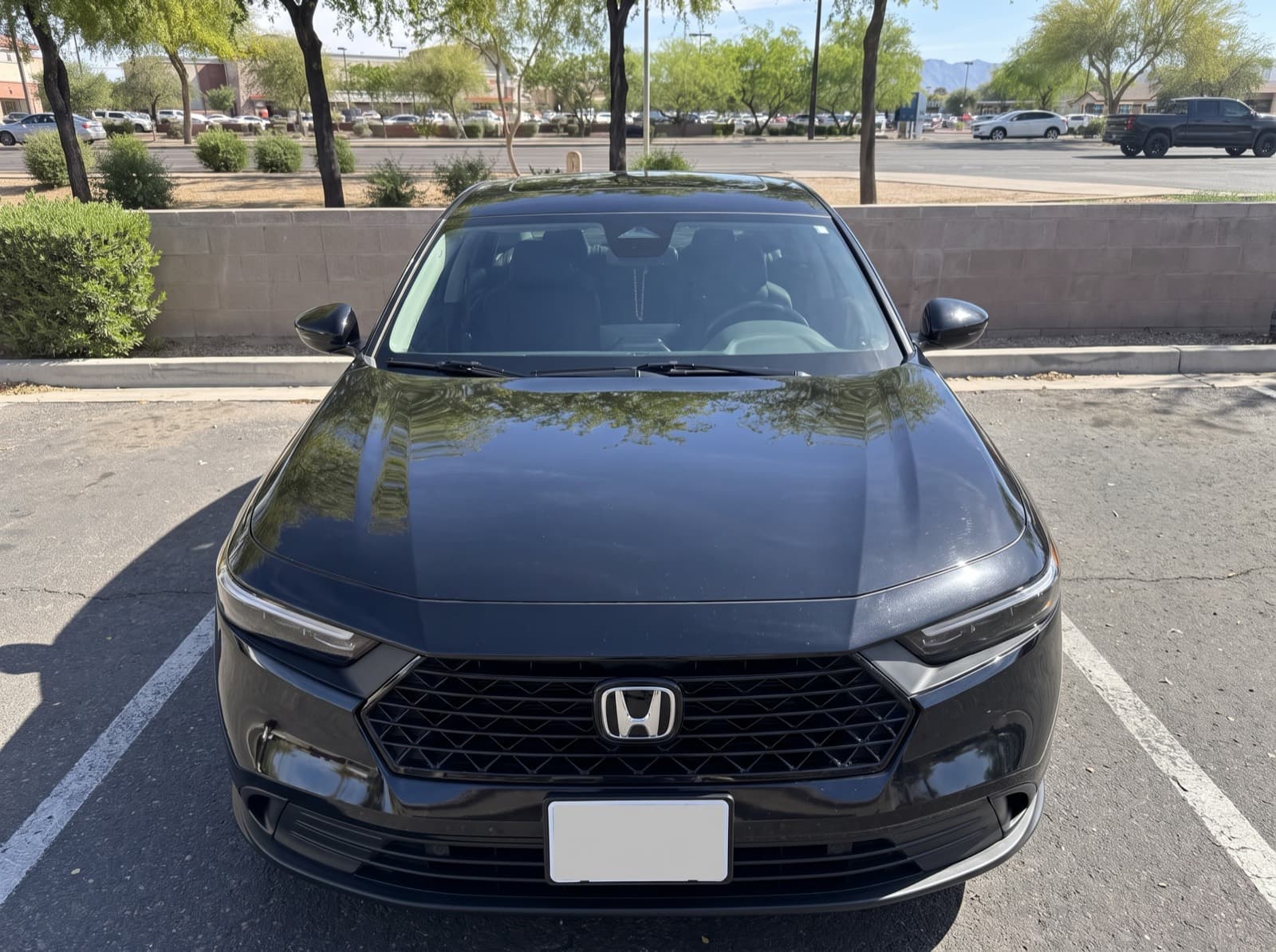
Where we come to you in Phoenix
Home & driveway
The most common appointment in Phoenix: the van parks in your driveway or at the curb, and you stay inside while the glass is replaced. Most jobs take 30–45 minutes.
Work & office lots
Office parks, garages with clearance, retail and campus lots — we meet you where the car is parked. Gated community or controlled lot? Just mention it when you book.
Roadside
Cracked glass doesn't wait for a convenient address. All the crew needs is a flat, level spot with room to open both front doors.
No shop, no waiting room — the shop comes to you. How mobile auto glass service works →
What to expect when we come to you in Phoenix
Heat, gravel, and freeway miles in Phoenix
When you need windshield replacement in Phoenix, Arizona, you need more than a basic glass appointment. Phoenix driving conditions are tough on auto glass. Between desert heat, freeway commuting, dust, gravel, construction zones, airport traffic, and long daily drives across the Valley, a small windshield chip can quickly become a spreading crack. Bang AutoGlass provides mobile windshield replacement and auto glass service for Phoenix drivers who want a convenient appointment without rearranging their entire day.
Phoenix is one of the largest and busiest cities in the country. The City of Phoenix identifies itself as the fifth largest city in the United States, with more than 1.6 million residents, thousands of miles of public streets, and extensive desert parks and mountain preserves. That means Phoenix drivers depend on their vehicles every day for work, school, family errands, airport travel, medical appointments, and commuting across neighborhoods like Downtown Phoenix, Arcadia, Biltmore, Maryvale, Deer Valley, Ahwatukee, Laveen, North Phoenix, South Mountain, Encanto, and Desert Ridge.
At Bang AutoGlass, our service is built around convenience. We are a mobile auto glass company, which means we come to your location instead of making you sit in a shop waiting room. Most windshield replacements take about 30 to 45 minutes to complete, followed by about 1 hour for the adhesive to dry before the vehicle is ready to drive. We also offer next-day appointments when available, OEM-quality materials, and a lifetime workmanship warranty with every replacement.
Phoenix Heat and Freeway Debris Are Hard on Windshields
Phoenix is a desert city with driving conditions that can be rough on windshields. The National Weather Service shows that Phoenix typically reaches 100°F around May 2 and continues seeing 100°F days into early October, while 110°F temperatures typically occur between mid-June and late August. That level of heat can put stress on auto glass, especially when a windshield already has a small chip or crack.
A windshield chip that seems minor in the morning can spread after a hot afternoon, a sudden temperature change, or a long drive on I-10, I-17, Loop 101, Loop 202, SR 51, US 60, or surface streets around Central Phoenix. Phoenix vehicles also deal with dust, rocks, road debris, monsoon winds, and construction traffic, all of which can increase the chance of windshield damage.
Your windshield is not just there to block wind. It helps support visibility, protects the cabin from debris, contributes to vehicle safety, and may house cameras or sensors for modern driver assistance systems. If your windshield is cracked, chipped, pitted, leaking, or damaged near your line of sight, scheduling professional windshield replacement in Phoenix can help restore safety and peace of mind.
Phoenix Windshield Replacement That Comes to You
A cracked windshield is stressful enough without having to drive across town to get it fixed. With mobile windshield replacement in Phoenix, Bang AutoGlass can service your vehicle at a home, office, apartment complex, workplace parking lot, or other approved location. That makes the process easier for busy Phoenix drivers who do not have time to lose half a day at a glass shop.
Mobile service is especially helpful in a spread-out city like Phoenix. Whether you are near Downtown Phoenix, Roosevelt Row, Arcadia, Biltmore, Melrose, Midtown, North Mountain, Paradise Valley Village, South Mountain Village, Camelback East, Ahwatukee Foothills, Laveen, Maryvale, Alhambra, Deer Valley, or Desert Ridge, the goal is the same: make auto glass replacement simple, professional, and efficient.
Most replacements are completed in about 30 to 45 minutes. After installation, the urethane adhesive generally needs about 1 hour to dry before the vehicle is ready to drive. That dry time matters because your windshield needs to bond correctly to the frame. Our team focuses on doing the job properly, not rushing through a critical safety component.
Windshield Replacement for Phoenix Heat, Dust, and Freeway Driving
Phoenix weather is a major reason local drivers should not ignore windshield damage. Extreme heat can worsen existing cracks, and the difference between a hot windshield and a cold blast from air conditioning can add stress to already weakened glass. During summer, a chip can turn into a long crack faster than many drivers expect.
Freeway driving adds another layer of risk. Vehicles traveling on I-10 through the heart of Phoenix, I-17 toward North Phoenix, Loop 202 around the metro area, Loop 101 near the north and west Valley, or SR 51 through central corridors are regularly exposed to gravel, tire debris, and sudden impacts from other vehicles. Even if the original chip is small, vibration and road pressure can cause the damaged area to spread.
Replacing a windshield promptly can help protect visibility and prevent the damage from becoming more inconvenient. If your windshield crack is already spreading across the driver’s view, reaching the edge of the glass, or located near sensors or cameras, replacement may be the better solution.
The Auto Glass Work We Handle in Phoenix
Bang AutoGlass provides mobile auto glass service for many types of vehicle glass damage. Phoenix drivers call for cracked windshields, chipped windshields, broken door glass, damaged quarter glass, back glass replacement, and glass issues caused by road debris, theft, vandalism, impact, or weather.
Services may include:
- Mobile windshield replacement, windshield replacement guidance, front door glass replacement, rear door glass replacement, quarter glass replacement, vent glass replacement, back windshield replacement, leak concerns, glass cleanup related to a replacement, and support for vehicles with windshield-mounted safety technology.
We use OEM-quality materials because your Phoenix auto glass replacement should fit correctly, look clean, and perform the way drivers expect. Every replacement also includes a lifetime workmanship warranty, giving you confidence that the installation was handled professionally.
Can a Chip Be Repaired, or Does Your Phoenix Windshield Need Replacement?
Many Phoenix drivers ask whether a windshield chip can be repaired or whether the full windshield needs to be replaced. The answer depends on the size, depth, location, and severity of the damage. A small rock chip may be repairable if it has not spread, is not directly in the driver’s critical viewing area, and has not damaged the glass too deeply. However, long cracks, edge cracks, severe impact points, and damage around cameras or sensors often require full windshield replacement.
To be clear about scope: Bang AutoGlass replaces glass — we do not offer chip or rock-chip repair. If your damage is genuinely repair-sized, we will tell you so honestly.
Because Phoenix heat can make chips spread faster, it is usually best to have windshield damage inspected quickly. Waiting too long can turn a repairable chip into a replacement. If you are not sure what your vehicle needs, Bang AutoGlass can help you understand the best option based on the damage and vehicle type.
Phoenix Auto Glass and Arizona Windshield Laws
Arizona law is focused on driver visibility and safe vehicle equipment. Arizona Revised Statutes state that drivers generally cannot operate a vehicle with an object or material on the windshield or windows that obstructs or reduces the driver’s clear view. Arizona law also requires certain vehicles, including passenger vehicles and trucks, to have an adequate windshield.
For Phoenix drivers, that means windshield cracks should not be ignored when they affect visibility. A crack across the driver’s line of sight, heavy pitting from desert driving, or damage that makes it harder to see traffic, pedestrians, lane markings, or brake lights can create a safety issue.
Arizona also has important insurance rules related to auto glass. Under Arizona Revised Statutes §20-264, an insurer writing private passenger auto insurance with comprehensive coverage must offer you, at your option, complete coverage for replacement of damaged safety equipment without regard to a deductible; the statute defines safety equipment to include glass used in the windshield, doors, windows, lights, and related materials. The statute requires the offer, not the coverage itself, so the benefit applies only if you elected that optional zero-deductible glass coverage. If you elected it, your windshield replacement is $0 out of pocket. If you carry standard comprehensive only, your usual deductible applies. Two other Arizona rules are worth knowing: under §20-263 an insurer may not raise your premium because of a not-at-fault claim, and under §20-469 you choose the glass shop, not your insurer.
Insurance Windshield Replacement in Phoenix
We check your policy free before any work, and your declarations page will show which coverage you have. If you elected the optional zero-deductible glass coverage described in §20-264, your windshield replacement is $0 out of pocket; if you carry ordinary comprehensive, your normal deductible applies. Bang AutoGlass can help Phoenix customers understand the general process, but your insurance carrier and policy details determine final coverage.
Many drivers in Phoenix deal with windshield damage more than once because of local road conditions. If you regularly commute on freeways, drive near construction areas, park outside in the heat, or travel through dusty desert areas, reviewing your glass coverage can be a smart move. Having the right coverage in place can make future windshield replacement easier and less stressful.
ADAS Windshield Replacement for Modern Vehicles
Many newer vehicles have advanced driver assistance systems, often called ADAS. These systems can include lane departure warning, forward collision warning, automatic emergency braking, adaptive cruise control, lane keeping support, and other safety features. NHTSA explains that forward collision warning systems use sensors to monitor speed, distance, and vehicles ahead, while lane departure warning systems may use a camera to detect when a vehicle drifts out of its lane.
Because many of these cameras and sensors are mounted near or behind the windshield, windshield replacement may require additional care. The correct glass, fit, and installation process matter. Depending on the vehicle, calibration may be needed after replacement so the safety systems can function as intended.
For Phoenix drivers who own newer Toyota, Honda, Ford, Chevrolet, Nissan, Hyundai, Kia, Subaru, Lexus, BMW, Mercedes-Benz, Tesla, Jeep, Ram, GMC, Volkswagen, Audi, or other ADAS-equipped vehicles, it is important to mention any dashboard warnings, camera features, rain sensors, lane assist features, or collision warning systems when scheduling service.
Local Windshield Replacement Near Phoenix Neighborhoods
Phoenix is not one single driving environment. Each part of the city brings different auto glass needs. Downtown Phoenix and Roosevelt Row drivers often deal with tight parking, construction, event traffic, and frequent short trips. Visit Phoenix describes local neighborhoods like Melrose, Arcadia, Biltmore, Midtown, and Uptown as distinct areas with their own mix of shops, dining, resorts, trails, and gathering places.
In Arcadia and Biltmore, many drivers want convenient mobile appointments at home, at work, or near shopping and office areas. In North Phoenix, Deer Valley, and Desert Ridge, longer commutes and freeway driving can increase exposure to rock chips. In South Mountain, Laveen, and Ahwatukee, drivers may spend more time on wide arterial roads and freeway connectors. In Maryvale, Alhambra, Encanto, and Central Phoenix, busy streets and daily commuter traffic can make a damaged windshield especially frustrating.
Phoenix Sky Harbor International Airport also creates heavy transportation demand around central Phoenix. The airport reported more than 51.6 million passengers in 2025, showing how active the travel and transportation corridor is around the city. For rideshare drivers, airport commuters, delivery drivers, service vehicles, and families heading to flights, clear auto glass is essential.
Mobile Auto Glass for Work, Family, and Daily Driving
A windshield replacement should fit into your life, not interrupt it. That is why mobile service is such a strong fit for Phoenix. Instead of driving with a damaged windshield across town, you can schedule a mobile appointment and have the work completed where your vehicle is already parked.
This is valuable for parents, business owners, employees, students, rideshare drivers, fleet drivers, and anyone who depends on their vehicle daily. Phoenix is a driving city, and being without your car for too long can be a major inconvenience. Bang AutoGlass keeps the process straightforward: schedule your appointment, confirm the vehicle details, let our mobile technician complete the replacement, allow the adhesive dry time, and get back on the road.
Simple Scheduling and Fast Turnaround in Phoenix
Bang AutoGlass is built for drivers who want professional mobile windshield replacement without confusion or unnecessary delays. Our process is simple, our service is mobile, and our replacements are backed by a lifetime workmanship warranty.
Most windshield replacements take about 30 to 45 minutes, followed by about 1 hour for the adhesive to dry. We use OEM-quality materials and focus on clean installation, proper bonding, and reliable service. When next-day appointments are available, we help Phoenix drivers get their auto glass handled quickly so they do not have to keep driving with unsafe or annoying damage.
OEM-Quality Materials and Lifetime Workmanship Warranty
Your windshield is part of your vehicle’s safety system, so quality matters. OEM-quality materials help ensure the replacement glass is made to fit properly and provide the clarity, shape, and performance your vehicle needs. A poor installation can lead to wind noise, water leaks, trim issues, bonding problems, or safety concerns.
With Bang AutoGlass, every replacement includes a lifetime workmanship warranty. That means the installation is backed for as long as you own the vehicle, giving you added confidence in the service you receive.
Designed for Phoenix Driving Conditions
Phoenix drivers need auto glass that can handle heat, sun, dust, freeway speeds, and everyday commuting. From a cracked windshield in Downtown Phoenix to broken side glass in North Phoenix or a back glass replacement in South Mountain, Bang AutoGlass brings service directly to you.
We understand that local drivers want speed, quality, and convenience. That is why we offer mobile service, next-day appointments when available, efficient replacement times, OEM-quality materials, and workmanship you can trust.
Schedule Windshield Replacement in Phoenix, AZ
If your windshield is cracked, chipped, damaged, leaking, or unsafe to drive with, schedule mobile windshield replacement in Phoenix with Bang AutoGlass. We make the process easy by coming to you, completing most replacements in 30 to 45 minutes, allowing proper dry time, and backing every replacement with a lifetime workmanship warranty.
For mobile windshield replacement, auto glass replacement, side window replacement, back glass replacement, and Phoenix auto glass service, Bang AutoGlass is ready to help you get clear, safe, and confident on the road again.
Why Phoenix drivers choose Bang AutoGlass
Valley driving is hard on windshields. Between the I-10 sun, monsoon gravel, and triple-digit summers, a small flaw becomes a full replacement fast. We make fixing it effortless—our experienced technicians drive to you anywhere in the Valley.
- We come to you, anywhere in the Valley: Downtown Phoenix, Arcadia, Ahwatukee, Desert Ridge, or stuck on the Loop 101—book mobile service at home, work, or roadside. No glass shop waiting room.
- Built for Phoenix heat: Summer dashboards push past 160°F, which stresses already-weakened glass and old urethane. We install OEM-quality windshields with proper cure times so your bond holds through July and August.
- Monsoon and freeway debris ready: Haboob grit and rocks kicked up on I-17, the 202, and US-60 chip glass constantly. When it spreads beyond saving, we handle full replacement—next-day, not next-week.
- $0 out of pocket if you elected the glass option: Arizona's A.R.S. 20-264 requires your insurer to offer optional zero-deductible glass coverage. If you elected it, your replacement is $0 out of pocket; if you carry standard comprehensive only, your usual deductible applies. We check your policy free before any work—your declarations page shows which you have—and we file the claim start to finish.
Add factory-grade ADAS calibration after your replacement so lane-keep and auto-braking read the Phoenix freeways correctly—all backed by our lifetime workmanship warranty. Get your free quote today: call (877) 994-5277.
Will yours be $0?
What Arizona law actually says about your deductible — in plain English.
Arizona has an optional $0-glass add-on.
With the optional zero-deductible glass coverage (A.R.S. § 20-264) it's often $0 — otherwise your comprehensive deductible applies.
General info, not legal or insurance advice. We confirm your exact policy — free — before any work.
Full details for Arizona drivers: Arizona auto glass insurance guide →
Auto glass services in Phoenix
Arizona drivers: windshield replacement is often $0 out of pocket with the right coverage. We verify your policy free, before any work.
Check my coverageWindshield replacement questions from drivers in Phoenix
How much does a windshield replacement cost?+
Cost depends on your vehicle and glass type. Arizona law (A.R.S. § 20-264) requires insurers writing comprehensive coverage to offer optional zero-deductible safety-glass coverage. If you elected it, your Phoenix replacement is $0 out of pocket; if you carry standard comprehensive only, your usual deductible applies. We provide a clear, upfront quote and help you start your claim.
How long does the replacement process take?+
Replacement takes about 30–45 minutes to complete, plus roughly 1 hour for the adhesive to set before you can drive. We'll let you know the full timeline when you book.
Do you replace windshields at my home or office in the Phoenix metro?+
Yes — every job is mobile. A technician comes to your driveway, office parking lot, or job site anywhere in the Valley, from Buckeye to Apache Junction, usually next-day.
Does Arizona insurance cover my windshield replacement?+
Many Arizona auto policies include full glass coverage, which pays for windshield replacement with no deductible. We verify your coverage and handle the claim paperwork in the same call.
Do you recalibrate ADAS cameras after a Phoenix windshield replacement?+
Yes. If your vehicle has a forward-facing camera or driver-assist sensors behind the glass, we perform the required calibration as part of the same appointment.
What glass do you install, and is it warrantied?+
OEM-quality glass on every job, backed by a lifetime workmanship warranty for as long as you own the vehicle.
How fast can you get to me in Phoenix?+
Next-day availability in most areas. New appointments can be booked 24/7 at (877) 994-5277; installs run Mon–Sat, 8am–6pm.
Serving Phoenix, Arizona
Mobile auto glass that comes to you anywhere in Phoenix — home, work, or roadside.
Installs Mon–Sat, 8am–6pm · New appointments 24/7 at (602) 782-5144 · Hablamos español.
4.8★ on Google · 350+ reviews from AZ & FL drivers
“Top-notch auto glass service. They handled my windshield replacement quickly and professionally.”
“I had an amazing experience with Bang AutoGlass from start to finish. Couldn't be happier.”
“I needed my windshield replaced and they made the entire process easy. Bang AutoGlass is the best!”