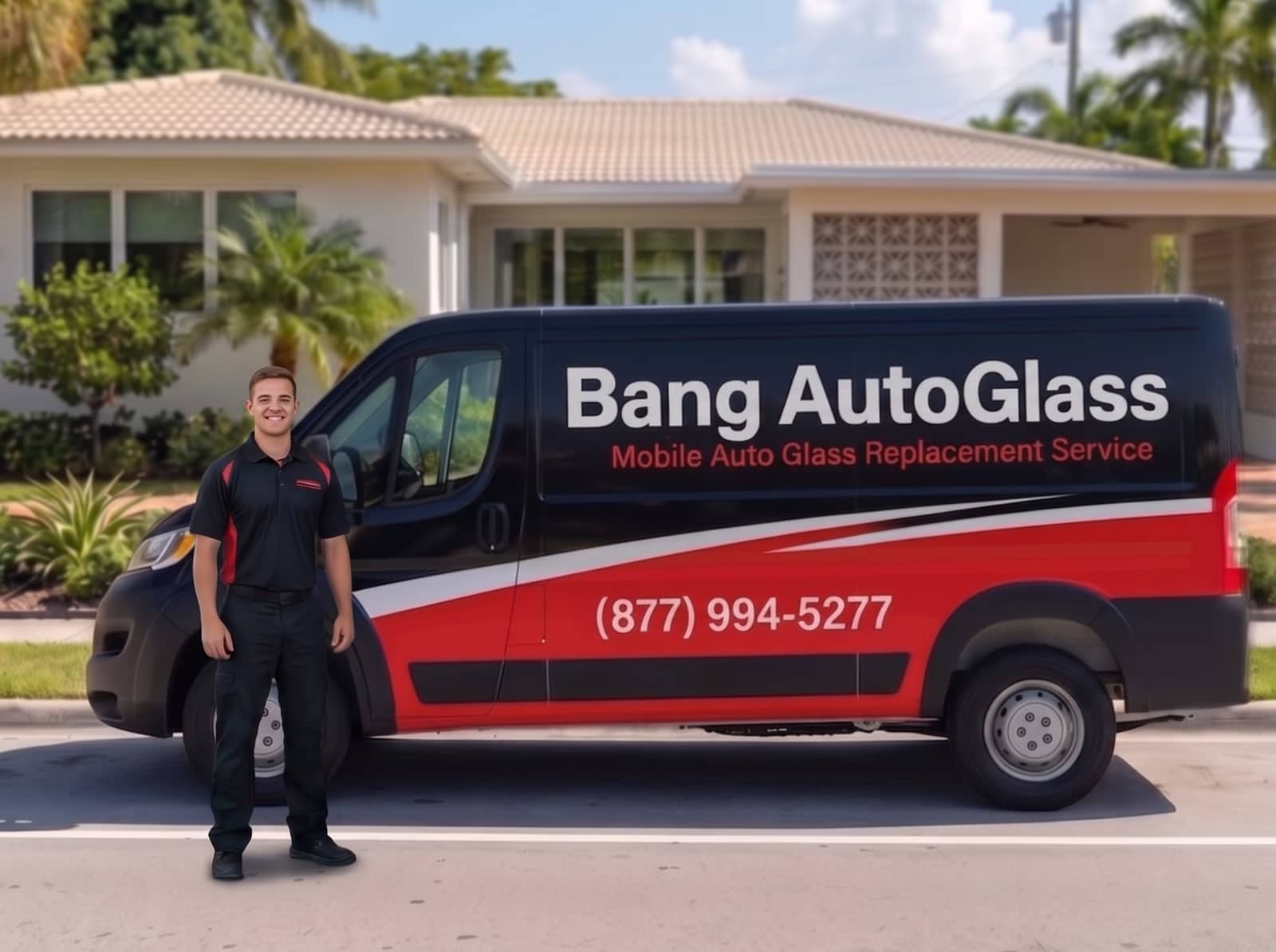
Pontiac Windshield Replacement
Bang AutoGlass installs Pontiac windshields on G6, G8, Vibe, Solstice, Bonneville, Grand Prix, and Aztek with OEM-spec laminated glass and proper urethane bonding for legacy Pontiac vehicles. Mobile service in Arizona and Florida includes HUD support where equipped and lifetime warranty.
Pontiac Windshield Replacement
A cracked or damaged windshield on your Pontiac is more than just a cosmetic issue. It affects the structural integrity of your vehicle, your visibility on the road, and the proper deployment of your airbags in the event of a collision. At Bang AutoGlass, we specialize in Pontiac windshield replacement for every model that rolled off the assembly line, from the early Grand Am and Sunfire to the later G6, G8, Solstice, Torrent, and Vibe. Whether your Pontiac is a daily driver or a weekend classic, our experienced mobile technicians are equipped to restore your windshield to like-new condition without you ever having to leave your home or office.
Expert Pontiac Windshield Replacement You Can Trust
Pontiac may no longer be in production, but that does not mean your vehicle should be treated as a second-class citizen on the road. Many Pontiac owners have a deep emotional connection to their vehicles, whether it is a Firebird Trans Am that has been in the family for decades, a Grand Prix GXP that delivers head-turning performance, or a reliable Vibe that has served as a daily commuter for years. We understand the unique characteristics of Pontiac vehicles and the importance of maintaining their original look, feel, and safety performance. Our team brings years of hands-on experience working with Pontiac windshield replacement projects of every size, shape, and complexity, and we have the tools, materials, and know-how to get the job done right the first time.
Why Pontiac Owners Choose Bang AutoGlass
When you choose Bang AutoGlass for your Pontiac windshield replacement, you are choosing a company that puts quality, convenience, and customer satisfaction at the center of everything we do. Every replacement is performed by a trained technician using OEM-quality glass that meets or exceeds the original specifications of your Pontiac. We back every installation with a lifetime workmanship warranty, meaning that as long as you own your Pontiac, we stand behind the work we performed. Our mobile service brings the shop to you, eliminating the hassle of dropping off your vehicle, waiting in a lobby, or arranging alternative transportation. We offer next-day appointments in most cases, so you do not have to drive around with a damaged windshield any longer than necessary.
Pontiac Models We Service
Pontiac produced a wide range of vehicles over its long history, and we have experience replacing windshields on virtually every model. Each Pontiac has its own unique windshield specifications, mounting points, and trim considerations, and our technicians know how to handle them all.
Pontiac G6 Windshield Replacement
The Pontiac G6 was produced from 2005 to 2010 and remains one of the most common Pontiac models still on the road today. G6 windshields require careful attention to the rain sensor mounting and proper urethane application around the cowl area. Our technicians are familiar with the unique trim clips and molding used on the G6 sedan, coupe, and convertible variants. Whether you have a base G6, a GT, or a GXP, we have the OEM-quality glass and expertise to restore your view of the road.
Pontiac Grand Am Windshield Replacement
The Grand Am was a staple of the Pontiac lineup for decades, and we still see plenty of them rolling through our service area. Grand Am windshields, particularly on the 1999 to 2005 generation, require precise installation to maintain a proper seal around the unique sloped A-pillar design. Our technicians know how to handle the original trim molding and pinchweld preparation that this model demands.
Pontiac Grand Prix Windshield Replacement
From the classic G-body Grand Prix coupes to the W-body sedans and the supercharged GTP and GXP models, the Grand Prix has a long and storied history. Each generation of Grand Prix has its own windshield specifications, and we are equipped to handle them all. The supercharged variants in particular benefit from a properly installed windshield to maintain cabin noise reduction and structural rigidity at higher speeds.
Pontiac Firebird and Trans Am Windshield Replacement
For Firebird and Trans Am owners, we understand that this is not just a car, it is a passion. Whether you own a second-generation, third-generation, or fourth-generation Firebird, we treat your vehicle with the care it deserves. The Trans Am WS6 and Firehawk variants require extra attention to ensure the windshield is mounted correctly to preserve the iconic aerodynamics and aggressive stance of these performance icons.
Pontiac GTO Windshield Replacement
The 2004 to 2006 Pontiac GTO was a unique vehicle, built on the Holden Monaro platform and imported from Australia. This means GTO windshields have some specifications that differ from typical North American Pontiac models. Our technicians have the experience needed to source the correct OEM-quality glass and install it with the proper urethane and trim configuration.
Pontiac Solstice Windshield Replacement
The Pontiac Solstice is a beautiful roadster that demands a perfect windshield installation. Because the windshield frame on the Solstice plays a critical role in rollover protection and structural integrity, we take extra care during the replacement process. Our installations follow strict protocols to ensure your Solstice remains as safe and rigid as the day it left the factory.
Pontiac Vibe Windshield Replacement
The Pontiac Vibe, which shares its platform with the Toyota Matrix, is known for its reliability and practicality. Vibe windshields are relatively straightforward to replace, but we still apply the same level of care and OEM-quality materials to every installation. The Vibe's tall greenhouse and sloped A-pillars require proper alignment to prevent wind noise and water intrusion.
Pontiac Aztek Windshield Replacement
The Pontiac Aztek has developed a cult following in recent years, and we are proud to service these unique crossovers. The Aztek's distinctive design includes a large, steeply raked windshield that demands precise installation. Our technicians know exactly how to handle the Aztek's mounting hardware and trim pieces to deliver a clean, professional result.
Pontiac Sunfire Windshield Replacement
The Sunfire was Pontiac's compact offering for many years, and there are still plenty on the road. We replace Sunfire windshields with the same attention to detail we apply to every job, ensuring proper sealing around the unique molding and trim that this model uses.
Pontiac Bonneville Windshield Replacement
The Pontiac Bonneville was a full-size sedan with a long production run, including the muscular Bonneville SSEi and GXP variants. Bonneville windshields are larger than average and require two technicians for safe handling and installation. We are fully equipped to handle these big, beautiful sedans.
Pontiac G8 Windshield Replacement
The 2008 to 2009 Pontiac G8 is a rear-wheel-drive sport sedan based on the Holden Commodore. Like the GTO, the G8 has some unique specifications, and finding the correct OEM-quality glass requires expertise. We have the sourcing relationships and knowledge needed to get your G8 back on the road quickly.
Pontiac Torrent Windshield Replacement
The Pontiac Torrent crossover, produced from 2006 to 2009, shares much of its design with the Chevrolet Equinox. Torrent windshield replacement is a relatively standard process for our technicians, and we use OEM-quality glass that matches the original specifications exactly.
Pontiac Montana Windshield Replacement
The Pontiac Montana minivan was a family favorite for many years. Montana windshields are large and curved, requiring careful handling and precise installation to avoid distortion and ensure a watertight seal.
Signs Your Pontiac Needs Windshield Replacement Instead of Repair
Not every windshield issue requires a full replacement, but there are clear signs that indicate when replacement is the only safe option. If your Pontiac has any of the following issues, it is time to call Bang AutoGlass for a replacement rather than a repair.
- A crack longer than six inches that extends across the windshield
- Damage in the driver's primary line of sight, even if the crack is small
- Chips or cracks at the edge of the windshield where structural integrity is compromised
- Multiple chips or cracks within close proximity to one another
- Pitting or sandblasting that causes glare at night
- Damage that has penetrated both layers of the laminated glass
- Old repairs that have failed and started spreading again
If you are not sure whether your Pontiac windshield needs replacement or just a repair, give us a call. We will help you understand your options and make the best decision for your vehicle and your wallet.
Our Pontiac Windshield Replacement Process
We have refined our windshield replacement process over countless installations to deliver consistent, high-quality results every time. Here is what you can expect when you choose Bang AutoGlass for your Pontiac windshield replacement.
Step One: Schedule Your Next-Day Appointment
Call or message us with your Pontiac's year, make, and model, and we will provide a quote and schedule your appointment, usually for the next day. We will ask about any specific features your windshield has, such as rain sensors, lane departure warning systems, or heated wiper park areas, so we can bring the correct OEM-quality glass and any necessary calibration tools.
Step Two: We Come to You
Because we are a fully mobile service, you do not need to drive your damaged Pontiac anywhere. Our technician will arrive at your home, workplace, or any other location you specify with all the tools and materials needed to complete the job on-site.
Step Three: Removal and Installation
The actual windshield removal and installation typically takes 30 to 45 minutes. Our technician will carefully remove the damaged windshield, clean and prepare the pinchweld, apply automotive-grade urethane adhesive, and set the new OEM-quality windshield in place with precision. We use the same techniques and materials that meet original equipment manufacturer standards.
Step Four: Safe Drive-Away Time
After installation, the urethane adhesive needs approximately one hour to cure to a safe drive-away level. During this time, we recommend leaving your Pontiac parked and avoiding any door slamming, which can disturb the seal. Once the cure time has elapsed, your Pontiac is ready to hit the road.
OEM-Quality Glass for Every Pontiac Windshield Replacement
Because Pontiac is no longer in production, sourcing the right glass for your vehicle requires expertise and the right supplier relationships. At Bang AutoGlass, we use OEM-quality glass that meets or exceeds the original specifications of your Pontiac. This means the same optical clarity, the same thickness, the same UV protection, and the same fitment as the glass that came on your vehicle from the factory. We do not cut corners on materials, because we know that the quality of your windshield directly affects your safety and your driving experience.
Mobile Pontiac Windshield Replacement at Your Location
One of the biggest advantages of choosing Bang AutoGlass for your Pontiac windshield replacement is our fully mobile service model. There is no shop to visit, no waiting room to sit in, and no need to rearrange your day around a glass appointment. We bring everything we need to your driveway, parking lot, or wherever your Pontiac is located. Whether you are at home, at the office, at a friend's house, or even at a job site, we will meet you there. This convenience is especially valuable for Pontiac owners who do not want to drive their damaged vehicle long distances, which can cause cracks to spread and create additional safety risks.
Insurance Claim Assistance for Pontiac Windshield Replacement
If you have comprehensive coverage on your Pontiac, your insurance policy will likely cover your windshield replacement, often with a low deductible or no deductible at all depending on your state. We help you with the insurance claim from start to finish and make the process as smooth as possible. Our team will guide you through the steps, explain the typical questions insurers ask, and provide any documentation you need to support your claim. Once you have filed and your claim is approved, we will coordinate directly with your insurance provider for billing, so you do not have to worry about handling the payment paperwork yourself.
Lifetime Workmanship Warranty on Every Installation
Every Pontiac windshield replacement we perform comes backed by our lifetime workmanship warranty. If you ever experience a leak, wind noise, or any other issue related to our installation, we will come back out and make it right at no cost to you. This warranty stays with you for as long as you own the vehicle, giving you confidence that the work we performed will stand the test of time. We can offer this warranty because we trust our technicians, our processes, and our materials.
Cost Considerations for Pontiac Windshield Replacement
The cost of a Pontiac windshield replacement depends on several factors, including the specific model, the year, and any features built into the original windshield such as rain sensors, heating elements, or acoustic dampening layers. Some Pontiac models, particularly the GTO, G8, and Solstice, may have slightly higher glass costs due to their unique specifications and lower production volumes. We provide upfront pricing with every quote, so you know exactly what to expect before we begin any work. There are no hidden fees, no surprise upcharges, and no pressure to add services you do not need.
Why Aging Pontiac Vehicles Deserve Quality Glass Now More Than Ever
Because Pontiac production ended in 2010, every Pontiac on the road today is at least fifteen years old. As vehicles age, original windshields become more susceptible to chips, cracks, and pitting from years of sun exposure, road debris, and temperature fluctuations. Replacing your aging Pontiac windshield with a fresh OEM-quality piece of glass not only restores your visibility but also helps preserve the long-term value and usability of your vehicle. For collectors and enthusiasts, a properly installed windshield is also essential to maintaining the appearance and authenticity of the vehicle.
Frequently Asked Questions About Pontiac Windshield Replacement
How Long Does a Pontiac Windshield Replacement Take?
The actual replacement takes 30 to 45 minutes, followed by approximately one hour of cure time before the vehicle can be safely driven. From start to finish, you should plan on roughly an hour and a half to two hours total.
Can You Replace the Windshield on a Discontinued Pontiac Model?
Yes. We replace windshields on every Pontiac model, including discontinued ones. Because Pontiac stopped production in 2010, every Pontiac is technically discontinued at this point, and we have the supplier relationships needed to source OEM-quality glass for all of them.
Can I Book a Next-Day Appointment?
Yes, we offer next-day appointments in most cases. This allows us to confirm the correct glass is on hand and route our technicians efficiently.
Will My Insurance Cover My Pontiac Windshield Replacement?
If you carry comprehensive coverage, your windshield replacement is typically covered, often with little or no out-of-pocket cost. We help you with the insurance claim from start to finish and make the process as smooth as possible.
How Long Before I Can Drive My Pontiac After the Replacement?
Approximately one hour after installation. This is the time required for the urethane adhesive to cure to a safe drive-away strength. We will let you know exactly when it is safe to drive.
Schedule Your Pontiac Windshield Replacement With Bang AutoGlass Today
If your Pontiac needs a windshield replacement, there is no reason to wait. The longer you drive with a damaged windshield, the more likely the damage is to spread and the more compromised your safety becomes. Contact Bang AutoGlass today to schedule your next-day mobile Pontiac windshield replacement appointment. Whether you drive a beloved Firebird, a daily-driver G6, a classic Bonneville, or any other Pontiac model, we are ready to bring our OEM-quality glass, our experienced technicians, and our lifetime workmanship warranty right to your driveway.
Pontiac Windshield Replacement — common questions
How long does a Pontiac windshield replacement take?
Most Pontiac windshield replacements take about 30–45 minutes to complete, then time for the adhesive to set — about an hour is typical, and your technician confirms the exact safe drive-away time. The total visit is typically 1.5–2 hours.
Does my Pontiac windshield replacement include a warranty?
Yes, every Pontiac windshield replacement is backed by a lifetime workmanship warranty and uses OEM-quality glass and materials, so you're protected against defects in installation.
Will my insurance cover a Pontiac windshield replacement?
If you have comprehensive coverage, your insurance likely covers it. In Florida, the deductible is waived for windshield replacement, so many drivers pay nothing out of pocket. We'll help you file your claim.
Can I drive my Pontiac right after the windshield is replaced?
You'll need to wait about 1 hour after the replacement for the adhesive to cure before driving. Your technician will let you know when it's safe to use your vehicle.
Where we do Pontiac auto glass
Bang AutoGlass is a mobile auto glass company serving Arizona and Florida. We don't have a shop you drive to — we come to your home, your job, or wherever the car is sitting, with next-day appointments in most areas. In Arizona that means the whole Valley — Phoenix, Mesa, Scottsdale, Chandler, Gilbert, Tempe, Glendale and out to Tucson and Prescott. In Florida we cover Tampa Bay, Orlando and Miami, from St. Petersburg and Clearwater across to Kissimmee, Winter Park and Fort Lauderdale.
Browse every city we serve in Arizona and Florida, or read how coverage works under Arizona's glass statutes and Florida's § 627.7288.
Mobile auto glass — cities we serve
4.8★ on Google · 350+ reviews from AZ & FL drivers
“I needed my windshield replaced and they made the entire process easy. Bang AutoGlass is the best!”
“Top-notch auto glass service. They handled my windshield replacement quickly and professionally.”
“Bang AutoGlass made my windshield replacement simple from start to finish.”
Need Pontiac Windshield Replacement?
We come to you across Arizona and Florida — often $0 with insurance.
We reply within minutes during business hours.