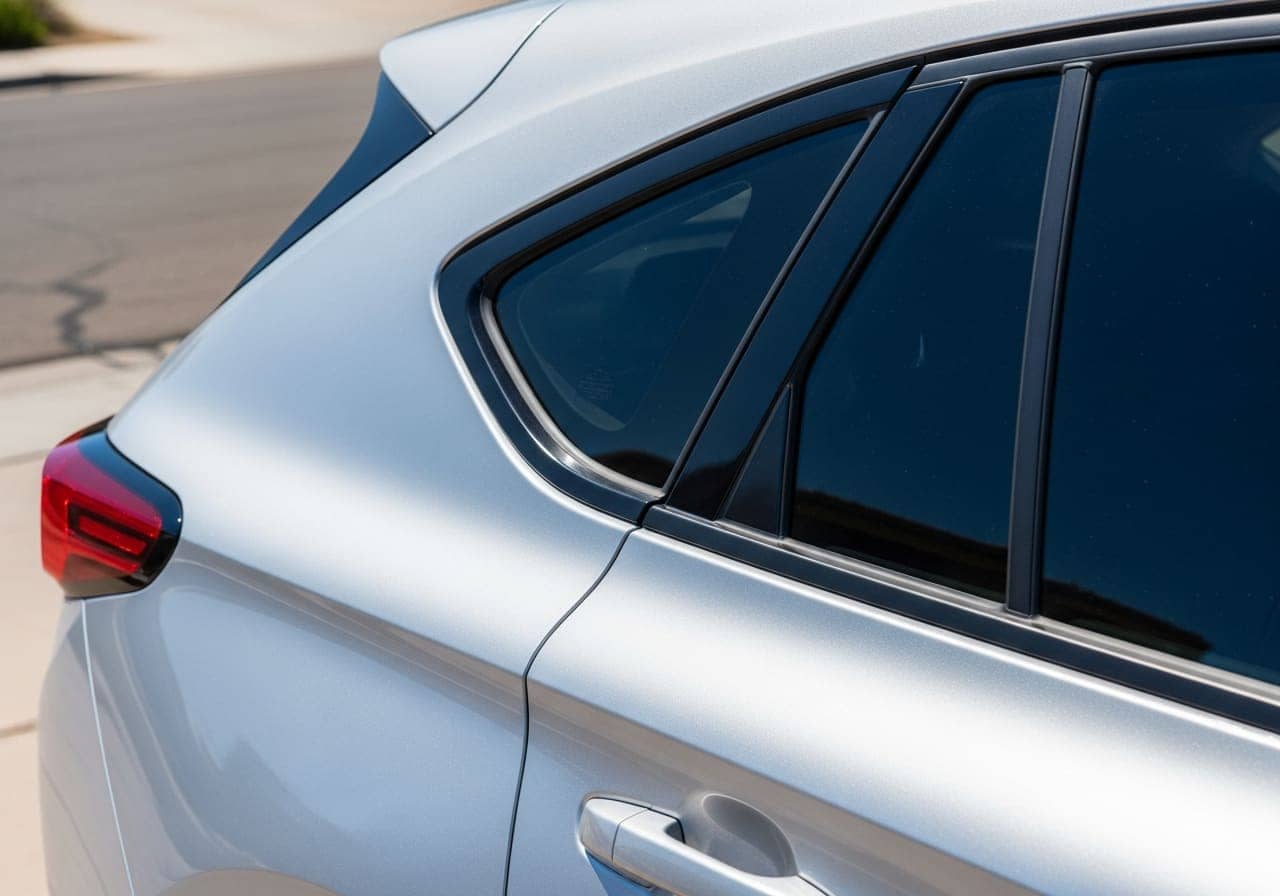
Quarter Glass Replacement in Arizona & Florida
Broken, cracked, leaking, or missing quarter glass can leave your vehicle exposed to rain, dust, heat, theft, and wind noise. Bang AutoGlass provides mobile quarter glass replacement in Arizona and Florida at your location using OEM-quality materials, next-day appointments when available, and a lifetime workmanship warranty.
Is it quarter glass?
The small fixed pane, explained
Quarter glass is the small fixed pane behind the rear door or set into the rear pillar — it doesn't roll down, and like all side glass it's tempered. It's your service if:
- The small fixed pane behind a rear door is cracked or shattered
- A vent or pillar window was broken in a break-in
- You hear wind noise or find water around a fixed rear pane — the seal may have failed along with the glass
Tempered glass can't be repaired, so damaged quarter glass means replacement. We remove the old pane cleanly and set the new glass with a watertight, rattle-free seal.
The small fixed pane most shops will not touch
When the small side window near the rear of your vehicle breaks, cracks, leaks, or becomes loose, it can create a much bigger problem than most drivers expect. Quarter glass may not be as large as a windshield or back glass, but it plays an important role in your vehicle’s visibility, cabin protection, appearance, and overall comfort. At Bang AutoGlass, we provide mobile quarter glass replacement services for drivers in Arizona and Florida, making it easier to get your vehicle restored without rearranging your entire day.
Our mobile auto glass technicians come to your location, inspect the damage, remove broken or compromised glass, prepare the mounting area, and install OEM-quality replacement glass using professional bonding materials. Most quarter glass replacements take about 30–45 minutes to complete, followed by approximately 1 hour for the adhesive to dry before normal driving. We also offer next-day appointments whenever available, and every replacement includes a lifetime workmanship warranty for added confidence.
Whether your quarter window was shattered during a break-in, cracked from road debris, damaged by weather, or leaking because of a failed seal, professional replacement helps protect your vehicle and get it back to a clean, secure, road-ready condition.
What Is Quarter Glass?
Quarter glass, sometimes called quarter panel glass, rear quarter glass, rear side glass, quarter window, or valence glass, is the smaller side window usually located behind the rear door or near the back corner of a car, SUV, van, or truck. On many vehicles, it is fixed in place and does not roll down. On some vans, SUVs, and older vehicle designs, quarter glass may vent, pop out, or open electronically.
Because quarter glass is shaped to match the vehicle body, it is not a universal piece of glass. The correct replacement depends on the year, make, model, body style, side of the vehicle, tint shade, trim package, and any built-in features. Some quarter glass may include privacy tint, rubber molding, clips, antenna connections, defroster elements, or integrated trim. That is why professional quarter glass replacement requires more than simply “putting in a small window.” The glass must fit the opening correctly, seal properly, and match the vehicle’s original design as closely as possible.
When Do You Need Quarter Glass Replacement?
Quarter glass usually needs full replacement once it is cracked, shattered, missing, deeply chipped, or no longer sealed correctly. Unlike small windshield chips that may sometimes be repaired, quarter glass is often tempered safety glass. Once tempered glass is damaged, the entire panel usually needs to be replaced because the strength of the glass has already been compromised.
Common reasons to schedule quarter glass replacement include:
- Broken quarter glass after a theft attempt or vehicle break-in
- Cracks or chips caused by road debris, impact, or flying objects
- Weather damage from hail, wind-blown debris, storms, or falling branches
- Water leaks around the rear side window after rain or car washes
- Wind noise, whistling, or rattling near the quarter panel area
- Loose, missing, or damaged molding around the quarter glass
- Shattered glass inside the vehicle cabin or cargo area
- Failed adhesive, old seals, or improper previous installation
Even if the damage looks small, it is best to address it quickly. A damaged quarter window can allow water, dust, heat, humidity, insects, and debris into your vehicle. It can also make the vehicle easier to access during a break-in and may cause interior damage if rain or moisture gets inside.
Why Quarter Glass Replacement Matters
Quarter glass helps complete the sealed cabin of your vehicle. When it is properly installed, it helps block outside weather, reduce wind noise, protect belongings, maintain visibility, and preserve the clean appearance of the vehicle body. When it is broken or poorly sealed, the opposite can happen: water intrusion, interior odors, rattling trim, road noise, exposed upholstery, and a less secure vehicle.
Better Visibility Around the Vehicle
Rear quarter glass is often positioned near the driver’s blind spot or rear passenger area. A clear, correctly fitted window can help with lane changes, reversing, parking, and checking surrounding traffic. If the glass is cracked, covered with tape, or temporarily patched with plastic, your visibility can be reduced.
Protection From Weather and Road Conditions
Arizona and Florida drivers both deal with conditions that can make damaged glass worse. Arizona’s heat, dust, monsoon storms, and high winds can expose weak seals or unfinished repairs. Florida’s humidity, heavy rain, tropical storms, and rapidly changing weather can quickly turn a small leak into a soaked interior. Replacing damaged quarter glass helps restore the barrier between your cabin and the elements.
Vehicle Security After a Break-In
Quarter glass is a common target during vehicle break-ins because it may be smaller and located near cargo or rear passenger areas. After a break-in, replacement is not only about looks. It is about removing broken glass, securing the opening, restoring the vehicle’s appearance, and helping protect the inside of the vehicle from further exposure.
Quarter Glass Replacement in Arizona
Arizona drivers need auto glass that can handle intense heat, dry air, dust, highway debris, and seasonal storms. During monsoon season, Arizona can experience heavy rain, lightning, hail, high winds, flash flooding, dust storms, and extreme heat. These conditions can make a damaged or poorly sealed quarter glass panel more noticeable, especially if wind noise or water leaks develop around the rear side window.
For drivers in Phoenix, Mesa, Chandler, Scottsdale, Tempe, Glendale, Tucson, Gilbert, and surrounding areas, mobile quarter glass replacement is a practical solution because your vehicle can often be serviced at home, at work, or another safe location. Instead of driving with broken glass or temporary plastic covering the opening, Bang AutoGlass can come to you and replace the damaged glass with OEM-quality materials.
Arizona also has unique auto glass insurance considerations. Under Arizona law, insurers that write private passenger auto insurance with comprehensive coverage must offer optional complete coverage for repair or replacement of damaged safety equipment without regard to a deductible, and the definition of safety equipment includes glass used in windshields, doors, and windows. Coverage still depends on your specific policy, whether you selected the glass option, and how your insurer handles the claim.
Quarter Glass Replacement in Florida
Florida drivers face a different set of auto glass challenges. Humidity, salt air near coastal areas, heavy rain, severe weather, and sudden visibility changes can all make damaged glass more urgent. A broken quarter window can let rainwater into the vehicle quickly, especially during Florida’s afternoon storms or tropical weather patterns. Moisture inside the cabin can lead to fogging, odors, upholstery damage, electrical concerns, and mold risk if not handled promptly.
For drivers in Tampa, Orlando, Miami, Jacksonville, Fort Lauderdale, St. Petersburg, Sarasota, Naples, and surrounding Florida communities, mobile service helps reduce downtime. Bang AutoGlass can come to your location, remove the damaged glass, clean the affected area, prepare the surface, and install the replacement quarter glass without requiring you to sit at a shop.
Florida drivers should also understand the difference between windshield coverage and quarter glass coverage. Florida’s well-known no-deductible comprehensive glass statute applies to windshield damage, not every piece of vehicle glass. That means quarter glass, side windows, vent glass, and back glass may be handled differently depending on your insurance policy and coverage. If you are filing a claim, it is best to verify the details with your insurer before scheduling.
Our Mobile Quarter Glass Replacement Process
Bang AutoGlass keeps the replacement process straightforward. When you schedule service, we confirm the vehicle details so the correct glass can be matched to your car, truck, van, or SUV. Because quarter glass varies by body style and features, accurate information helps prevent ordering the wrong part.
Before the Appointment
Before your technician arrives, park the vehicle in a safe, accessible location if possible. A driveway, parking lot, covered area, or open space with room around the damaged side of the vehicle is ideal. If the glass was broken during a theft attempt, avoid touching sharp glass pieces and keep children or pets away from the area.
During the Replacement
The technician removes remaining damaged glass, old adhesive, loose molding, and debris from the installation area. The surface is then cleaned and prepared so the new quarter glass can bond correctly. Once the replacement glass is positioned, the technician checks fitment, trim alignment, and sealing. The goal is a clean installation that restores the look and function of the original glass.
After the Replacement
Most quarter glass replacements take about 30–45 minutes. After installation, the adhesive needs time to dry, so plan for about 1 hour of dry time before normal driving. During that cure period, avoid slamming doors, pressing on the glass, washing the vehicle, or disturbing the trim around the new panel. This helps protect the seal while the adhesive sets.
OEM-Quality Materials for a Clean Fit
At Bang AutoGlass, we use OEM-quality materials for replacement work. That means the replacement glass and installation materials are selected to provide a proper fit, clean appearance, and dependable performance for your vehicle. Quarter glass must match the vehicle’s shape, tint, and mounting design, so using quality materials matters.
A proper installation should sit flush, seal tightly, reduce wind noise, and keep water out. Poor-quality glass or rushed installation can lead to leaks, uneven gaps, loose trim, rattling, and repeated service issues. With Bang AutoGlass, every replacement also includes a lifetime workmanship warranty, so you can feel confident that the installation work is covered.
Quarter Glass vs. Side Window vs. Vent Glass
Quarter glass is often confused with other types of side glass. Door glass is the window that rolls up and down inside the door. Vent glass is usually a smaller pane near the front door or mirror area, depending on the vehicle design. Quarter glass is typically positioned farther back, often behind the rear door or near the rear cargo area.
This distinction matters because each type of glass has a different replacement process. Door glass may involve the window regulator, door panel, motor, and tracks. Quarter glass is often bonded or sealed into the body and may require trim removal, adhesive preparation, and careful placement. If your rear side window does not roll down and is fixed into the body panel, there is a good chance it is quarter glass.
Insurance and Quarter Glass Replacement
Insurance coverage for quarter glass replacement depends on your state, your carrier, and your policy. Comprehensive coverage may help with glass damage caused by theft, vandalism, falling objects, storms, or road debris, but deductibles and eligibility vary.
In Arizona, drivers may have optional full glass coverage as part of their comprehensive policy, and state law defines covered safety equipment broadly enough to include vehicle windows when that option applies. In Florida, the no-deductible rule is specifically tied to windshields, so quarter glass may not qualify for the same treatment. Because of these differences, it is important to verify your benefits before assuming a replacement will be fully covered.
Bang AutoGlass can provide the details you need for your appointment, including the type of glass being replaced and the service being performed, so you can communicate clearly with your insurance provider.
What Affects Quarter Glass Replacement Cost?
Quarter glass replacement pricing can vary because every vehicle is different. The cost may depend on the vehicle year, make, model, body style, glass availability, tint type, molding, clips, antennas, defroster features, and how much cleanup is required. Break-in situations may require additional interior glass cleanup, while older vehicles may have brittle trim or seals that need extra care.
Luxury vehicles, SUVs, vans, and models with specialty glass may cost more than basic fixed quarter windows. The fastest way to get an accurate quote is to provide your vehicle information and, when possible, a photo of the damaged glass area. This helps identify the correct panel and avoid confusion between quarter glass, vent glass, side glass, and back glass.
Why Choose Bang AutoGlass?
Bang AutoGlass is built around convenience, quality, and dependable mobile service. Instead of asking you to drive with broken glass, we bring the replacement service to you. Our goal is to make the process simple from the first quote to the completed installation.
We offer mobile quarter glass replacement in Arizona and Florida, next-day appointments when available, OEM-quality materials, professional installation, and a lifetime workmanship warranty with every replacement. Most replacements are completed in 30–45 minutes, with about 1 hour needed afterward for the adhesive to dry.
Schedule Mobile Quarter Glass Replacement
If your quarter glass is cracked, shattered, leaking, or missing, do not wait for the problem to get worse. Broken quarter glass can expose your vehicle to rain, heat, dust, theft, wind noise, and interior damage. Bang AutoGlass makes it easy to schedule mobile quarter glass replacement in Arizona and Florida with fast appointment availability and professional service at your location.
Contact Bang AutoGlass today to request a quote, confirm availability, and schedule your next-day mobile quarter glass replacement appointment.
What happens at your appointment
From booking to drive-away
- 1
Book — new appointments 24/7
Any time, by phone, text, or the form. Next-day availability in most areas; installs run Mon–Sat, 8am–6pm.
- 2
We verify your coverage, free
Before any work, we confirm exactly what your policy covers, then file the claim start to finish and bill your insurer directly. All insurance companies are accepted.
- 3
Mobile install at your location
Home, work, or roadside — most jobs take 30–45 minutes.
- 4
ADAS recalibration when your vehicle needs it
If a camera sits behind the glass, we recalibrate it to factory spec as part of the job.
- 5
Lifetime workmanship warranty
Every install is guaranteed for as long as you own the vehicle.
Cost & coverage
What does quarter glass replacement cost?
There’s no honest flat price — the cost depends on:
- Your vehicle's make, model, and year
- Which pane it is and how it's set — bonded panes and framed panes install differently
- Factory tint and any embedded features
The better question is what youpay — and this glass is often covered by comprehensive insurance. Florida’s windshield deductible waiver (Fla. Stat. § 627.7288) is windshield-only, so your normal deductible applies there; in Arizona, the optional zero-deductible glass coverage insurers must offer (A.R.S. § 20-264) reaches windshield, door, and window glass — often $0 when your policy includes it. We verify your coverage free before any work, file the claim start to finish, and bill your insurer directly — all insurance companies accepted. More on how glass insurance works, or the state specifics for Arizona and Florida.
General info, not legal or insurance advice — coverage varies by policy. We confirm your exact coverage free before any work.
Glass quality & warranty
OEM-quality glass, guaranteed for as long as you own the car
Quarter and vent panes are tempered glass set in fixed openings, so the fit and the seal are the whole job. We install OEM-quality glass matched to your vehicle and seal it watertight and rattle-free.
And every install carries the Bang lifetime workmanship warranty — if a workmanship issue ever shows up, we make it right, for as long as you own the vehicle.
What’s included with your Quarter Glass Replacement
- Specialized, precise installation
- Watertight, rattle-free seal
- Mobile service available
- Backed by our lifetime warranty
Auto glass services
Quarter Glass Replacement — common questions
Does insurance cover quarter glass replacement?
Often, yes — comprehensive coverage typically covers glass. Note that Florida's windshield deductible waiver (Fla. Stat. § 627.7288) is windshield-only, so this glass takes your normal deductible there. In Arizona, the optional zero-deductible glass coverage insurers must offer (A.R.S. § 20-264) reaches windshield, door, and window glass — often $0 when your policy includes it. General info, not legal or insurance advice — coverage varies by policy. We confirm your exact coverage free before any work.
How much does quarter glass replacement cost?
It depends on your vehicle and the glass, so we don't quote flat prices sight-unseen. What we do first — free — is verify your insurance coverage; if your policy covers the glass, we file the claim and bill your insurer directly.
How long does quarter glass replacement take?
Most jobs take 30–45 minutes, and next-day appointments are available in most areas. Installs run Mon–Sat 8am–6pm; you can book a new appointment 24/7.
Do you come to me?
Yes — we're mobile-only. Home, work, or roadside across 200+ cities in Arizona and Florida. There is no shop to visit.
Is quarter glass the same as door glass?
No — quarter glass is the small fixed pane behind the rear door or set into the rear pillar. It doesn't roll down, and it's installed with its own seal, which is why it's a different service than a roll-down door window.
Do you file the insurance claim for me?
Yes — we verify coverage free before any work, file the claim start to finish, and bill your insurer directly. All insurance companies are accepted.
What kind of glass do you use?
OEM-quality glass matched to your exact make and model — and every install is backed by a lifetime workmanship warranty for as long as you own the vehicle.
Can quarter glass be repaired?
No — it's tempered glass, and tempered glass can't be repaired once it's damaged. We replace the pane and seal it watertight and rattle-free.
Quarter Glass Replacement guides
Straight answers about quarter glass replacement — what to expect, how insurance works, and how to keep your glass in top shape.
Quarter Glass Replacement — cities we serve
4.8★ on Google · 350+ reviews from AZ & FL drivers
“I needed my windshield replaced and they made the entire process easy. Bang AutoGlass is the best!”
“Top-notch auto glass service. They handled my windshield replacement quickly and professionally.”
“Bang AutoGlass made my windshield replacement simple from start to finish.”
Ready for quarter glass replacement?
We come to you across Arizona and Florida — often $0 with insurance. New appointments 24/7 · Installs Mon–Sat 8am–6pm · Hablamos español.
We reply within minutes during business hours.