Honda Quarter Glass Replacement
Bang AutoGlass replaces Honda quarter glass on Pilot, CR-V, Passport, HR-V, and Odyssey with OEM-fit tempered safety glass set in fresh urethane for a watertight, factory-matched seal. Mobile service in Arizona and Florida includes precise trim handling, exact alignment, and lifetime warranty.
Honda Quarter Glass Replacement: Expert Mobile Service for Every Honda Model
When the small triangular or rectangular window on the side of your Honda gets damaged, it can feel like a much bigger problem than it looks. Quarter glass plays an important role in your car's structural integrity, cabin sealing, and overall appearance, and when it's cracked or shattered, you need a fast, professional solution that doesn't compromise your vehicle. At Bang AutoGlass, we specialize in Honda quarter glass replacement using OEM-quality materials and backed by a lifetime workmanship warranty. Whether you drive a Honda Civic, Accord, CR-V, Pilot, Odyssey, HR-V, or Fit, we have the tools, training, and parts to restore your window quickly, often with a next-day appointment that comes directly to you.
What Is Quarter Glass on a Honda?
Quarter glass refers to the smaller fixed window panels located near the front or rear of your Honda's side glass area. Some Honda models have front quarter glass (also called vent glass) positioned ahead of the front door window, while others have rear quarter glass behind the rear door or alongside the cargo area. Unlike door windows, quarter glass does not roll up or down. It is bonded or set into the body of the vehicle, which means the replacement process requires precision cutting of the urethane adhesive and a careful reset of the new glass into the original opening. Because Honda designs each quarter window to match its model's exact curvature and frame, using OEM-quality replacement glass is essential for a correct fit, proper sealing, and a factory-look finish.
Why Quarter Glass Damage Should Be Repaired Quickly
A broken or cracked Honda quarter window isn't just a cosmetic issue. Once compromised, it allows rain, wind, road noise, and even pests into your cabin. It also creates a security vulnerability that makes your Honda a target for theft. Driving with damaged quarter glass can lead to further interior damage, mold growth from moisture, and electrical issues if water reaches door components or wiring harnesses. Getting it replaced quickly protects your investment and restores your peace of mind.
Common Causes of Honda Quarter Glass Damage
Honda quarter glass can be damaged in a number of ways, and knowing what you're dealing with helps us select the right replacement and prepare for your appointment.
Break-Ins and Vehicle Theft
One of the most common reasons we replace Honda quarter glass is break-ins. Thieves often target quarter windows because they are smaller, less reinforced, and farther from the driver's main line of sight. Honda Civics, Accords, and CR-Vs are popular vehicles, which unfortunately also makes them frequent targets. If your Honda has been broken into, we can replace the shattered quarter glass and clean up the surrounding interior debris during the same mobile appointment.
Road Debris and Accidents
Highway driving exposes your Honda to flying rocks, road debris, and other hazards that can crack or shatter quarter glass. Minor fender benders, parking lot mishaps, and side-impact incidents also frequently damage rear quarter windows because of their location near the rear wheel well and C-pillar.
Weather and Temperature Stress
Extreme temperature changes can stress glass that already has a small chip or stress fracture. Hot summer days followed by cold nights, or running the defroster at full blast on a frozen window, can cause an existing flaw to expand into a full crack. Hail storms are another major source of Honda quarter glass damage.
Vandalism and Accidental Impact
Unfortunately, vandalism happens, and quarter glass is often the target. Accidental impacts from tools, sports equipment, and even falling tree branches also lead to broken quarter glass that needs professional replacement.
Honda Models We Service for Quarter Glass Replacement
Bang AutoGlass services every modern Honda model on the road, and we keep OEM-quality quarter glass available for the most popular trims. Below are the most common Honda quarter glass replacement jobs we complete.
Honda Civic Quarter Glass Replacement
The Honda Civic is one of the most popular cars in America, and its quarter glass varies significantly between body styles. Civic coupes (2006 through 2015) feature a noticeable rear quarter window behind the door, while Civic sedans typically have a smaller fixed rear quarter glass near the C-pillar. Civic hatchbacks have a distinctive elongated quarter glass that wraps toward the rear hatch. Each generation requires a slightly different procedure, and we stock the correct OEM-quality glass for every Civic body style and model year.
Honda Accord Quarter Glass Replacement
Honda Accord quarter glass replacement is a regular service for us, particularly on Accord coupes from 2003 to 2017 that feature a prominent rear quarter window. Accord sedans also have small fixed quarter panels that often get damaged in side impacts or break-ins. We're familiar with the hidden trim clips and screws under the rubber door trim that many shops overlook, which means cleaner removal and a perfect reinstall every time.
Honda CR-V Quarter Glass Replacement
The Honda CR-V uses larger rear quarter glass panels that follow the SUV's wider rear cabin profile. Replacement on CR-V models from 2017 onward, including the redesigned 2023 through 2026 generation, requires extra care because of the integrated rear pillar trim and modern body construction. We ensure the urethane bonding is precise so your CR-V passes any future inspection with no leaks or wind noise.
Honda Pilot Quarter Glass Replacement
The Honda Pilot's rear quarter glass is one of the larger panels we replace. Because the Pilot is a full-size SUV, its rear cabin design includes a sizeable quarter window that often suffers damage from cargo shifting, road debris, or break-ins targeting the third-row area. Our mobile service brings the right size OEM-quality glass to your driveway or workplace.
Honda Odyssey Quarter Glass Replacement
Honda Odyssey minivans have specialized rear quarter glass that integrates with the sliding door track and rear cabin window system. These panels require careful handling and proper bonding to ensure no water intrusion into the sliding door rails. Our technicians know exactly how to handle Odyssey quarter glass without disturbing the surrounding components.
Honda HR-V, Fit, Passport, and Ridgeline Quarter Glass
We also service Honda HR-V, Honda Fit, Honda Passport, and Honda Ridgeline quarter glass replacements. Each of these models has unique quarter window configurations, from the Fit's compact side glass to the Ridgeline's rear cab quarter windows behind the C-pillar. No matter what Honda you drive, we have the right replacement panel and the expertise to install it correctly.
Our Honda Quarter Glass Replacement Process
We've refined our replacement process over years of working specifically with Honda vehicles to deliver fast, clean, and reliable results.
Step-by-Step Honda Quarter Glass Replacement
- We arrive at your location at the scheduled time with the correct OEM-quality Honda quarter glass and all necessary tools.
- We inspect the surrounding trim, body panels, and interior to confirm the scope of work and protect adjacent areas with covers.
- We carefully remove the damaged quarter glass using piano wire or specialized cold knives to cut through the existing urethane adhesive without scratching the paint or damaging the pinch weld.
- We clean and prep the bonding surface, removing all old adhesive residue and applying primer where needed to ensure proper adhesion.
- We apply a fresh bead of high-strength automotive urethane around the perimeter of the opening.
- We set the new Honda quarter glass into position, aligning it to the exact factory specification.
- We secure the glass while the initial bond takes hold, then clean the area and reinstall any trim pieces that were removed.
- We walk you through the cure time, warranty details, and aftercare instructions before we leave.
The hands-on replacement itself usually takes between 30 and 45 minutes, and the urethane adhesive needs about 1 hour to cure before your Honda is safe to drive. This is one of the fastest and cleanest quarter glass replacement experiences you'll find.
Safe Drive-Away Time
Once the urethane has cured for that 1-hour window, your Honda is safe to drive. We recommend avoiding high-pressure car washes, slamming doors, and driving on extremely rough roads for the first 24 hours to give the adhesive time to fully bond. These small precautions help ensure your replacement quarter glass stays watertight and structurally sound for the life of the vehicle.
Mobile Honda Quarter Glass Replacement That Comes to You
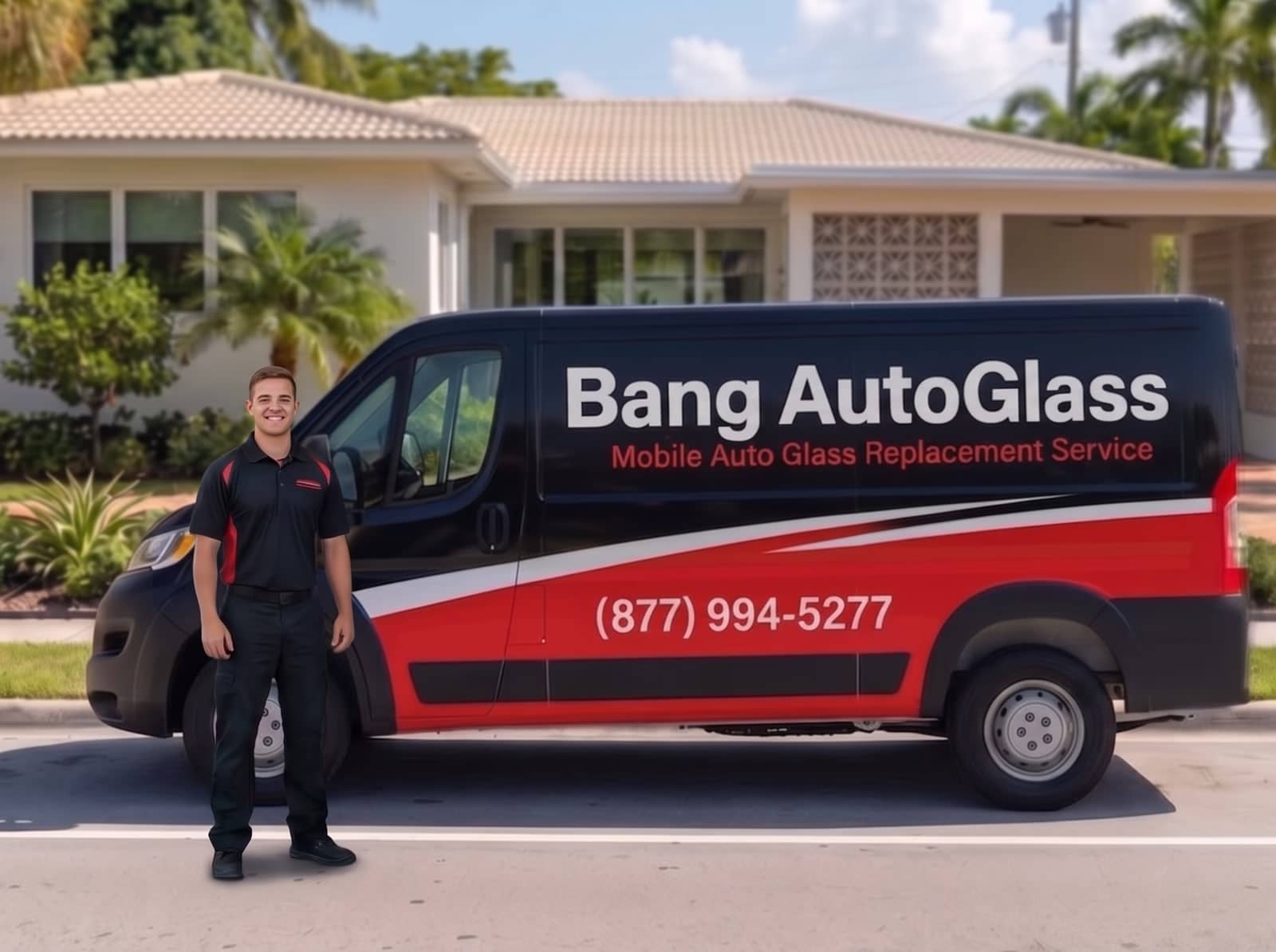
Bang AutoGlass operates as a fully mobile service, meaning we bring everything needed for your Honda quarter glass replacement directly to your home, office, apartment complex, or anywhere else you're parked. You don't need to take time off work, sit in a waiting room, or arrange a ride. Our technicians arrive in a fully stocked service vehicle and complete the job right where your Honda is.
Next-Day Appointments Available
We understand that a broken quarter window can't wait. That's why we offer next-day appointments for Honda quarter glass replacement whenever scheduling allows. In many cases, you can call today and have your Honda back to perfect condition by tomorrow. This rapid turnaround is one of the reasons Honda owners across our service area choose us over traditional brick-and-mortar shops.
OEM-Quality Materials Built for Honda
The glass and adhesives we use on every Honda quarter window replacement meet or exceed the original Honda factory specifications. This matters because Honda quarter glass is contoured to specific curvatures, tinting standards, and thickness ratings that affect both fitment and performance.
What OEM-Quality Means for Your Honda
When we say OEM-quality, we mean the replacement glass and materials are manufactured to the same standards as the parts your Honda left the factory with. Key features of the materials we use include:
- Precision-matched curvature and dimensions for the exact Honda model and year being serviced
- Factory-grade tinting that matches the surrounding windows for a seamless appearance
- Tempered safety glass that meets DOT and ANSI safety standards
- High-strength automotive urethane adhesive rated for structural bonding
- Primer and prep products designed specifically for automotive glass installation
- Trim clips and moldings sourced to match Honda's original specifications when needed
These standards ensure that the replacement quarter glass on your Honda performs exactly the way the factory glass did, with no compromises in fit, finish, or function.
Lifetime Workmanship Warranty on Every Honda Quarter Glass Replacement
Every Honda quarter glass replacement we perform comes with a lifetime workmanship warranty. This means that for as long as you own your Honda, if there is ever an issue caused by our installation, such as a leak, wind noise from improper sealing, or a trim alignment issue, we will come back and make it right at no charge. This warranty reflects our commitment to doing the job right the first time and standing behind our work permanently. Few mobile auto glass shops offer this level of confidence, and it's a major reason Honda owners trust Bang AutoGlass for quarter glass replacement.
Insurance Claims Assistance for Honda Quarter Glass
If your Honda quarter glass damage qualifies for an insurance claim, we make the process easier without overstepping. Many comprehensive auto insurance policies cover glass damage with little or no deductible, depending on your state and coverage.
How We Help You File a Claim
We help you with the insurance claim from start to finish and make the process as smooth as possible. Our team can explain what information your insurance company will need, what to say when you call, what documentation we can provide, and how to coordinate the appointment with your claim once it's been opened. If you've already filed your claim, we can step in immediately and schedule your replacement to align with your insurance approval. This way, you remain in control of your policy while still getting expert guidance every step of the way.
Paying Out of Pocket
If you'd rather not involve insurance, paying out of pocket for Honda quarter glass replacement is a very common option. Quarter glass is typically more affordable than windshield replacement, and the speed of our mobile service often makes the out-of-pocket route the simplest path forward. We're happy to provide a transparent quote for your specific Honda model before we begin any work.
How Long Does Honda Quarter Glass Replacement Take?
The actual hands-on replacement of Honda quarter glass takes about 30 to 45 minutes for most models. After installation, the urethane adhesive needs roughly 1 hour to cure before your Honda is safe to drive. From start to finish, plan for about an hour and a half of total time, though you can go about your day during the cure window since the vehicle just needs to sit still in a safe location. Larger Honda models like the Pilot, Odyssey, and CR-V may take slightly longer because of larger glass panels and more complex trim, but the overall timeline remains very predictable.
Why Honda Owners Choose Bang AutoGlass for Quarter Glass Replacement
Honda owners trust Bang AutoGlass because we combine speed, quality, and convenience in a way that traditional auto glass shops simply can't match. We bring OEM-quality glass to your location, complete the replacement in about 30 to 45 minutes, give you a one-hour cure window, and back our work with a lifetime workmanship warranty. We assist with insurance claims so you're never left guessing, and we offer next-day appointments so a broken quarter window doesn't become a week-long inconvenience. Whether you drive a Civic, Accord, CR-V, Pilot, Odyssey, HR-V, Fit, Passport, or Ridgeline, our mobile Honda quarter glass replacement service is designed to get your vehicle back to factory condition with as little disruption to your day as possible.
Schedule Your Honda Quarter Glass Replacement Today
Don't drive around with a cracked, broken, or missing Honda quarter window any longer than you have to. Contact Bang AutoGlass today using the form above or by calling our team directly, and we'll have your Honda back to perfect condition with a mobile appointment as soon as tomorrow. Our OEM-quality materials, expert technicians, lifetime workmanship warranty, and friendly insurance claim assistance make us the smart choice for Honda quarter glass replacement in our service area. We look forward to taking care of your Honda the right way, the first time.
Honda Quarter Glass Replacement — common questions
What is Honda quarter glass replacement?
Quarter glass is the small fixed window behind the rear door on your Honda. If it cracks or shatters, we replace it with OEM-quality glass at your home or work, backed by our lifetime workmanship warranty.
How long does Honda quarter glass replacement take?
The replacement itself takes about 30–45 minutes to complete. Since the glass is bonded, you'll need to wait for the adhesive to set — about an hour is typical, and your technician confirms the exact safe drive-away time.
Is your Honda quarter glass covered by insurance?
Many comprehensive insurance policies cover glass damage, and we'll help you file your claim if needed. We guide you through the process so you know what to expect.
Why choose mobile service for Honda quarter glass?
Our technicians come to you with fully equipped vehicles, so you get the same quality as a shop without leaving home. We use OEM-quality materials and back every replacement with a lifetime workmanship warranty.
Where we do Honda auto glass
Bang AutoGlass is a mobile auto glass company serving Arizona and Florida. We don't have a shop you drive to — we come to your home, your job, or wherever the car is sitting, with next-day appointments in most areas. In Arizona that means the whole Valley — Phoenix, Mesa, Scottsdale, Chandler, Gilbert, Tempe, Glendale and out to Tucson and Prescott. In Florida we cover Tampa Bay, Orlando and Miami, from St. Petersburg and Clearwater across to Kissimmee, Winter Park and Fort Lauderdale.
Browse every city we serve in Arizona and Florida, or read how coverage works under Arizona's glass statutes and Florida's § 627.7288.
Mobile auto glass — cities we serve
4.8★ on Google · 350+ reviews from AZ & FL drivers
“I needed my windshield replaced and they made the entire process easy. Bang AutoGlass is the best!”
“Top-notch auto glass service. They handled my windshield replacement quickly and professionally.”
“Bang AutoGlass made my windshield replacement simple from start to finish.”
Need Honda Quarter Glass Replacement?
We come to you across Arizona and Florida — often $0 with insurance.
We reply within minutes during business hours.