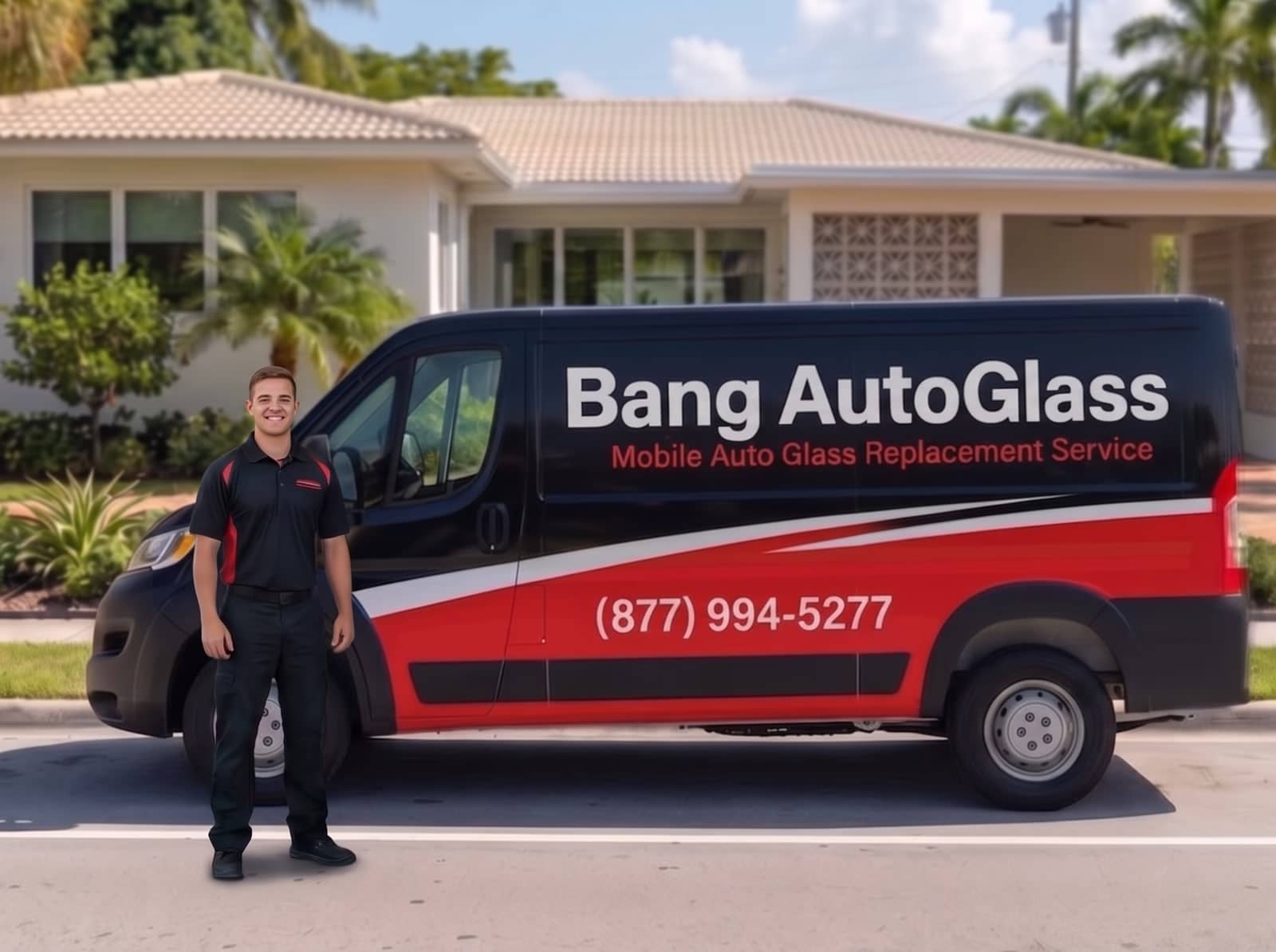
Cadillac Sunroof Glass Replacement
Bang AutoGlass replaces Cadillac panoramic sunroof glass on Escalade, XT5, XT6, and Lyriq with OEM-spec panels, fresh weather seals, and full drainage-tube inspection. Mobile service across Arizona and Florida includes precise alignment, leak testing, and a lifetime workmanship warranty.
Cadillac Sunroof Glass Replacement Done Right By Mobile Auto Glass Professionals
When your Cadillac's sunroof glass is cracked, shattered, or compromised, you need a replacement service that respects the luxury, engineering, and craftsmanship that makes Cadillac one of America's most iconic automotive brands. Cadillac sunroof glass replacement is not the same as replacing glass on an economy car. The tolerances are tighter, the seals are more sophisticated, and the glass itself is engineered to integrate seamlessly with advanced electronic shade systems, rain sensors, and panoramic frame architecture. At Bang AutoGlass, we specialize in restoring your Cadillac's overhead glass to factory-fresh condition using OEM-quality materials and a mobile service experience designed around your schedule.
Whether you drive a late-model Escalade with a massive panoramic roof, a refined CT5 sedan with a power-tilt sunroof, or a sleek Lyriq EV with an expansive fixed-glass moonroof, our technicians have the training, tooling, and product inventory to handle your replacement quickly and correctly. We come to your home, office, or jobsite, complete most replacements in 30 to 45 minutes, allow a one-hour cure window for the adhesive, and back every job with a lifetime workmanship warranty.
Understanding the Cadillac Sunroof System
The Engineering Behind Cadillac Overhead Glass
Cadillac has invested heavily in panoramic and power sunroof technology across its lineup over the past two decades. Modern Cadillac sunroofs are not simple sliding panes of tempered glass. They are integrated systems that combine laminated or tempered safety glass, precision-machined frames, motorized tracks, drainage tubes, electronic shade panels, weather seals, and in many cases, anti-pinch sensors that prevent injury. Replacing the glass on a Cadillac sunroof requires a working understanding of all of these components, because improper installation can cause water leaks, wind noise, motor failure, or warning lights on your driver information center.
Panoramic Sunroofs Versus Single-Panel Sunroofs
Cadillac currently offers both traditional single-panel power sunroofs and ultra-wide panoramic roof systems. Single-panel sunroofs typically open and tilt, exposing a portion of the roof. Panoramic sunroofs, found on most modern Cadillac SUVs, span nearly the entire roof and often include both a sliding front section and a fixed rear glass section. Each style requires different replacement techniques. A fixed panoramic rear glass replacement, for example, demands meticulous attention to urethane adhesive application and frame alignment, while a sliding front panel replacement requires careful recalibration of the motor stops and pinch-protection sensors.
Cadillac Models We Service for Sunroof Glass Replacement
Cadillac Escalade and Escalade ESV Sunroof Replacement
The Cadillac Escalade is the flagship full-size luxury SUV in the lineup, and recent generations feature large power sunroofs as well as available panoramic systems on certain trim configurations. Escalade sunroof glass replacement on these models requires a technician familiar with the heavier roof rail bracing, advanced rain-sensing wipers, and the integrated overhead console with controls for the sunroof, shade, and ambient lighting. Whether you have a 2007 Escalade with a classic single-panel sunroof or a newest-generation 2025 Escalade with a panoramic moonroof, we have the glass and expertise to restore it.
Cadillac XT4, XT5, and XT6 Sunroof Replacement
The crossover lineup including the XT4, XT5, and XT6 commonly comes equipped with the UltraView panoramic sunroof, which Cadillac has marketed for years as one of the largest panoramic roofs available in the segment. The UltraView system uses a sliding front glass panel, a fixed rear glass panel, and an electronic mesh sunshade. When the front glass cracks or the rear glass is damaged, replacement involves precise alignment with the surrounding frame, recalibration of the motor end-stops, and verification that the drainage channels at the four corners of the assembly are clear and properly routed to prevent headliner water damage.
Cadillac CT4 and CT5 Sunroof Replacement
The CT4 and CT5 sedans feature available power tilt-and-slide sunroofs that, while smaller than the panoramic systems found on Cadillac SUVs, still require careful attention during replacement. The tempered glass on these sedans is bonded into a metal carrier frame that slides on precision rails. We replace the glass panel itself when possible or the complete glass-and-frame assembly when the underlying carrier is damaged. Either way, the work is done at your location with no need to leave your driveway.
Cadillac SRX, ATS, CTS, DeVille, and Other Legacy Models
For older Cadillac owners, we still service the SRX, ATS, CTS, STS, DeVille, DTS, Seville, and Eldorado. Many of these vehicles came factory-equipped with sunroofs that are now decades old, meaning seals are brittle and original glass may be prone to stress cracks. Replacement glass for these models is sometimes harder to source, but we maintain supplier relationships that allow us to locate OEM-quality replacement glass for almost any vintage Cadillac sunroof.
Cadillac Lyriq Sunroof Replacement
The all-electric Cadillac Lyriq features a striking fixed-glass roof panel that runs nearly the entire length of the cabin. Because the Lyriq's roof glass does not open, replacement is technically a fixed-glass procedure similar to a windshield bonding job, requiring urethane adhesive, proper primer application, and full cure time before the vehicle returns to service. We are equipped to perform Lyriq sunroof glass replacement at your home or charging location.
Signs Your Cadillac Sunroof Glass Needs Replacement
Recognizing the warning signs early can prevent a small crack from becoming a major headliner-soaking disaster. Look out for the following indicators that it is time to schedule a Cadillac sunroof glass replacement:
- A visible crack, chip, or star break in the sunroof glass, no matter how small, since stress cracks tend to spread quickly across tempered or laminated panels
- Shattered or exploded sunroof glass, which occasionally happens spontaneously due to stress fractures or thermal shock in panoramic systems
- Water dripping onto your headliner, sun visor, dashboard, or seats after rain or a car wash
- Wind noise, whistling, or hissing sounds at highway speeds that did not exist before
- A sunroof that no longer closes flush with the roof or that shows visible gaps in the weather seal
- Frost, condensation, or fogging trapped between glass layers on laminated panoramic panels
- Cloudiness, scratches, or pitting in the glass that obstruct visibility for rear passengers
What Causes Cadillac Sunroof Glass Damage
Road Debris and Flying Objects
Highway driving exposes your Cadillac's overhead glass to rocks, gravel, and debris kicked up by other vehicles. Trucks hauling landscaping materials, gravel haulers, and even bicyclists on roof racks can launch objects that strike your sunroof with surprising force. Tempered glass is strong but it is also engineered to shatter when it fails, which is why a small impact can lead to a fully shattered panel.
Severe Weather and Hail
Hailstorms are among the most common causes of sunroof glass damage in regions prone to severe weather. Even moderate hail can crack or pit panoramic glass, and golf-ball or larger hailstones routinely shatter Cadillac sunroofs. Falling ice from overpasses, frozen tree branches, and heavy snow loads can also damage overhead glass.
Tree Branches and Falling Objects
Parking under trees during storms, near construction zones, or in older neighborhoods with mature oaks and maples puts your Cadillac at risk. Even small branches falling from significant height can crack a sunroof panel.
Stress Cracks and Manufacturing Defects
Panoramic sunroofs experience constant thermal cycling as the cabin heats and cools. Over years of expansion and contraction, microscopic stress points in the glass can develop into visible cracks that seem to appear from nowhere. This is not unique to Cadillac, but it is more common on large panoramic systems simply because there is more glass surface area to flex.
Failed Seals and Water Intrusion
A sunroof seal that has degraded over time may not crack the glass directly, but it can allow water into the headliner, electrical components, and even the airbag system. In many cases, water-damaged sunroofs require both glass and seal replacement to restore proper function.
Our Cadillac Sunroof Glass Replacement Process
When you schedule a replacement with Bang AutoGlass, here is exactly what happens when our mobile technician arrives at your location:
- We confirm the year, model, trim, and sunroof configuration of your Cadillac and verify that the replacement glass we brought matches your vehicle.
- We protect the interior of your vehicle with covers over the headliner, seats, and console to prevent any debris from glass removal or adhesive application from causing damage.
- We carefully remove the damaged glass panel, taking extra care with panoramic systems to extract the panel without distorting the surrounding frame.
- We clean and prep the bonding surface, removing old adhesive residue and applying primer where required by the OEM specification.
- We install the new OEM-quality glass panel using premium urethane adhesive, aligning it precisely with the surrounding bodywork to maintain factory tolerances.
- We test the sunroof for proper tilt, slide, and full-close operation, recalibrating motor end-stops on power systems as needed.
- We allow a one-hour adhesive cure window before the vehicle is safe to drive, during which time you can continue with your day at home or work.
- We perform a final water test and visual inspection, then walk you through the lifetime workmanship warranty.
OEM-Quality Glass for Your Cadillac
We use OEM-quality replacement glass on every Cadillac sunroof job. This glass meets or exceeds the original specifications for thickness, tint, solar coating, laminated construction, and dimensional tolerance. Many of our OEM-quality panels come from the same manufacturers that supply General Motors directly, which means you get factory-fresh fit and finish without the dealership markup. The visual difference between our replacement glass and your original glass is essentially zero, and the functional performance, including UV blocking and acoustic dampening, matches what your Cadillac left the factory with.
Mobile Sunroof Replacement Service Wherever You Are
How Our Mobile Service Works
Bang AutoGlass is a fully mobile auto glass service, which means our technicians come to you. There is no need to drop your Cadillac off at a shop, arrange a rental car, or sit in a waiting room. We replace your sunroof glass in your driveway, your apartment parking lot, your office parking deck, or any other safe location with enough overhead clearance and space for our service vehicle. All we need is a flat, dry working surface and access to your vehicle.
Service Time Expectations
Most Cadillac sunroof glass replacements take between 30 and 45 minutes of active work, followed by a one-hour adhesive cure window before the vehicle is safe to drive. For fixed panoramic rear glass jobs and Lyriq fixed-roof installations, total time on site is usually under two hours from arrival to departure. We will give you a specific timeframe when we confirm your appointment.
Lifetime Workmanship Warranty on Every Cadillac Sunroof Replacement
Every Cadillac sunroof glass replacement we perform is backed by a lifetime workmanship warranty. If you ever experience a leak, wind noise, adhesive failure, or any other issue traceable to our installation, we will come back and fix it at no cost to you for as long as you own the vehicle. This warranty reflects our confidence in the quality of our work and the OEM-quality materials we use.
Insurance Claims Assistance for Cadillac Sunroof Replacement
Many comprehensive auto insurance policies cover sunroof glass replacement, particularly when the damage is caused by hail, falling objects, vandalism, or other covered perils. If you have not already filed a claim, our team can walk you through the process and provide all the documentation your insurance company needs, including detailed damage descriptions, photos, and itemized estimates. We help you with the insurance claim from start to finish and make the process as smooth as possible. Once your claim is approved, we work directly with your insurance carrier to handle billing wherever possible, so you only pay your deductible if one applies.
Next-Day Appointments for Fast Cadillac Sunroof Repair
We understand that a damaged sunroof is more than an inconvenience. It can leave your vehicle exposed to weather, theft, and further interior damage. That is why we offer next-day appointments on most Cadillac sunroof glass replacements. Call us today and we can typically have a technician at your location tomorrow with the correct glass in hand, ready to restore your Cadillac to its proper condition.
How to Care for Your New Cadillac Sunroof
Initial Care After Replacement
For the first 24 hours after your replacement, avoid taking your Cadillac through a high-pressure car wash, slamming the doors with the windows fully closed, or operating the sunroof unnecessarily. These precautions allow the urethane adhesive to reach full strength and ensure a permanent, watertight seal. Light rain is fine after the initial one-hour cure window.
Long-Term Maintenance Tips
To keep your Cadillac sunroof in top condition, occasionally clean the drainage channels at the four corners of the sunroof frame with compressed air or a soft pipe cleaner. Lubricate the rails and seals once or twice a year with a silicone-based product, never petroleum-based, to keep them pliable. Avoid parking in direct sun for extended periods when possible, and consider a sunshade for the interior to reduce thermal stress on panoramic glass.
Why Choose Bang AutoGlass for Your Cadillac Sunroof Glass Replacement
Cadillac owners choose Bang AutoGlass because we combine the convenience of a fully mobile service with the expertise of luxury-vehicle specialists. We bring OEM-quality glass, premium adhesives, and trained technicians directly to your location, complete most replacements in well under two hours, offer next-day scheduling, assist with insurance claims, and back every job with a lifetime workmanship warranty. From the latest Escalade and Lyriq to vintage DeVilles and CTS sedans, we have the parts, tools, and know-how to make your Cadillac whole again.
Schedule Your Cadillac Sunroof Glass Replacement Today
Do not let a cracked or shattered sunroof leave your Cadillac vulnerable to water damage, theft, or further deterioration. Contact Bang AutoGlass today to schedule your next-day mobile sunroof glass replacement. We bring the shop to you, restore your Cadillac with OEM-quality glass, and back every job with our lifetime workmanship warranty.
Cadillac Sunroof Glass Replacement — common questions
Can a Cadillac sunroof glass be repaired or must it be replaced?
A sunroof glass panel cannot be repaired and must be fully replaced. Our technicians will remove the damaged panel and install OEM-quality replacement glass backed by a lifetime workmanship warranty.
How long does Cadillac sunroof glass replacement take?
The replacement typically takes about 30-45 minutes to complete, then time for the adhesive to cure — about an hour is typical, and your technician confirms the exact safe drive-away time. Plan for roughly 1.5 to 2 hours total from arrival to departure.
Does comprehensive insurance cover Cadillac sunroof glass damage?
Comprehensive insurance typically covers sudden sunroof damage from hail, debris, or accidents, but not wear-and-tear damage like leaks or seal failure. We'll help you file your claim, and many drivers pay nothing out of pocket with comprehensive coverage.
Is Cadillac sunroof replacement safe after the technician leaves?
Yes, once the adhesive has cured for about 1 hour, the replacement is fully safe and secure. We'll let you know when it's safe to drive, and your new glass is backed by our lifetime workmanship warranty.
Is panoramic sunroof glass more expensive to replace than a standard sunroof?
Yes, panoramic glass panels are generally larger, more complex, and more expensive than standard sunroof panels. However, our pricing remains competitive, and insurance often covers most or all of the cost.
Do you use OEM glass for Cadillac sunroof replacements?
We use OEM-quality glass that meets or exceeds the original specifications for fit, finish, tinting, and performance. The visual and functional results match your original factory glass.
Where we do Cadillac auto glass
Bang AutoGlass is a mobile auto glass company serving Arizona and Florida. We don't have a shop you drive to — we come to your home, your job, or wherever the car is sitting, with next-day appointments in most areas. In Arizona that means the whole Valley — Phoenix, Mesa, Scottsdale, Chandler, Gilbert, Tempe, Glendale and out to Tucson and Prescott. In Florida we cover Tampa Bay, Orlando and Miami, from St. Petersburg and Clearwater across to Kissimmee, Winter Park and Fort Lauderdale.
Browse every city we serve in Arizona and Florida, or read how coverage works under Arizona's glass statutes and Florida's § 627.7288.
Mobile auto glass — cities we serve
4.8★ on Google · 350+ reviews from AZ & FL drivers
“I needed my windshield replaced and they made the entire process easy. Bang AutoGlass is the best!”
“Top-notch auto glass service. They handled my windshield replacement quickly and professionally.”
“Bang AutoGlass made my windshield replacement simple from start to finish.”
Need Cadillac Sunroof Glass Replacement?
We come to you across Arizona and Florida — often $0 with insurance.
We reply within minutes during business hours.