Nissan Sunroof Glass Replacement
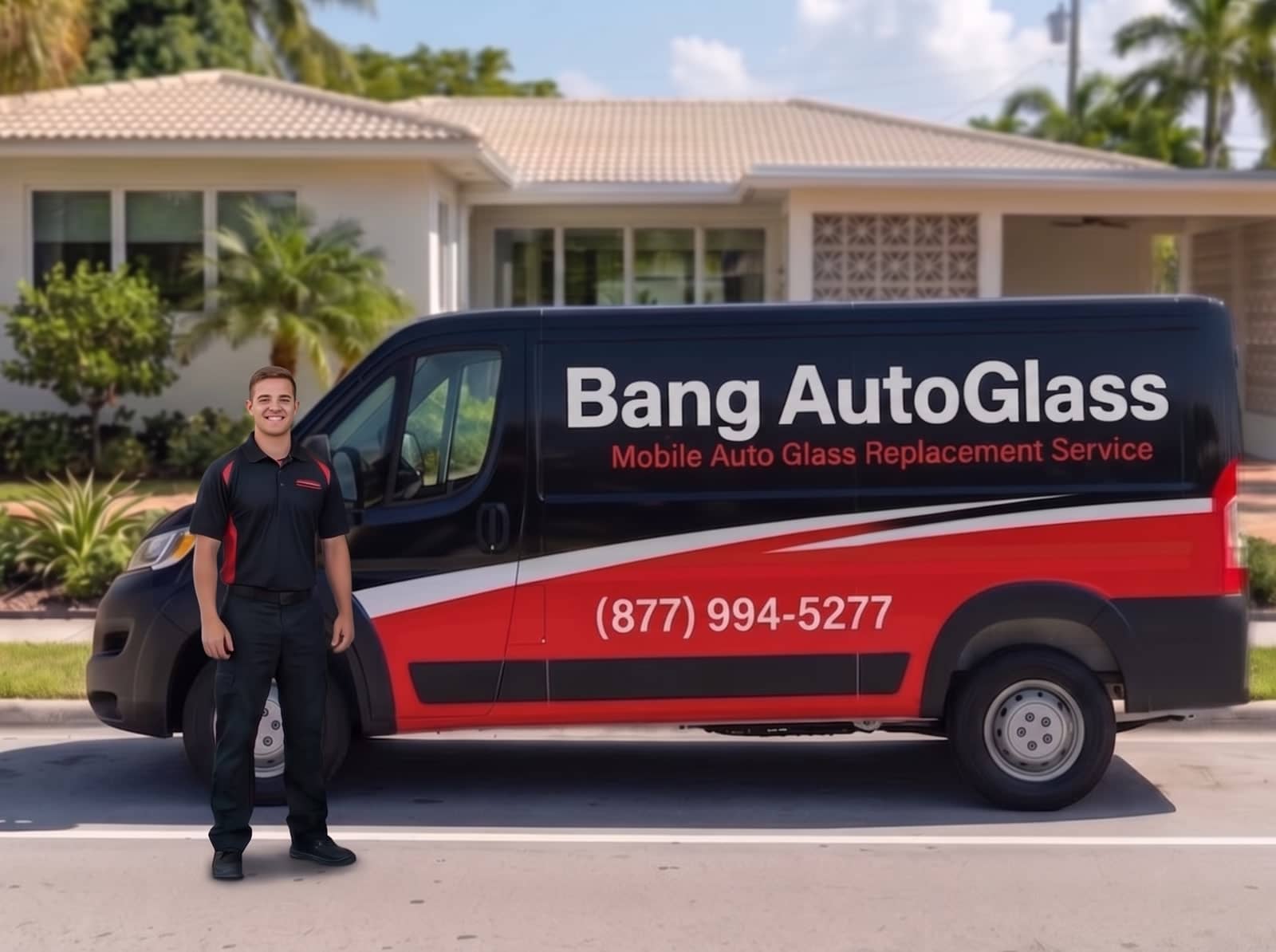
Bang AutoGlass replaces Nissan panoramic moonroof and sunroof glass on Murano, Pathfinder, Rogue, Maxima, and Ariya with OEM-spec panels, fresh weather seals, and drainage-tube inspection. Mobile service in Arizona and Florida includes alignment, leak testing, and lifetime warranty.
Nissan Sunroof Glass Replacement
If you're searching for reliable Nissan sunroof glass replacement, you've landed in the right place. At Bang AutoGlass, we specialize in mobile sunroof and moonroof glass replacement for every Nissan model on the road today, from the compact Sentra and Versa to the panoramic moonroof-equipped Murano, Pathfinder, and Rogue. Whether your sunroof spontaneously shattered overnight, took a hit from a falling tree branch, or finally gave out after years of weather wear, our experienced technicians come directly to your driveway, workplace, or wherever you happen to be parked to make the replacement quick, clean, and stress-free.
Nissan sunroofs and moonroofs add natural light, openness, and resale value to your vehicle, but they're also one of the most exposed pieces of glass on the entire car. When the glass cracks, leaks, or breaks, the damage spreads fast and can quickly turn your interior into a wet, debris-filled mess. Replacing a Nissan sunroof isn't a do-it-yourself project either. It requires the correct OEM-quality glass panel, the right urethane adhesive, model-specific seals, and careful technique to keep the headliner, electronics, and roof frame intact. That's exactly what we deliver.
Understanding Your Nissan Sunroof or Moonroof
Before we replace any Nissan sunroof glass, it helps to know what kind of roof you're working with. Nissan has used several different overhead glass systems across its lineup over the past two decades, and each one has its own replacement requirements, glass thickness, and sealing process.
Power Sliding Sunroofs
The traditional power sliding sunroof is the most common style found in the Nissan Altima, Maxima, Sentra, and older Murano and Pathfinder trims. This style features a single rectangular pane of tempered safety glass that tilts up at the rear edge or slides back into a cavity above the headliner. The glass itself is bonded to a steel or aluminum frame, and replacement involves carefully removing the entire assembly, transferring the frame, or sourcing a complete glass-and-frame unit depending on the model year.
Panoramic Moonroofs
Panoramic moonroofs stretch from just above the windshield nearly to the rear seats and provide an open-air feel for everyone in the cabin. Nissan models like the Murano, Pathfinder, Rogue, and Armada commonly feature this large dual-pane setup, where a front sliding glass panel pairs with a fixed rear panel. Replacing panoramic glass is significantly more involved because each pane is larger, heavier, and requires precise alignment to keep the seals leak-free for the long haul.
Fixed and Pop-Up Sunroofs
Some older Nissan trims, especially earlier Frontier, Xterra, and Versa models, feature smaller pop-up or manually operated tilt-out sunroofs. These use simpler hardware but still require model-specific glass and rubber gaskets to seal properly after replacement.
Common Reasons Nissan Sunroof Glass Needs Replacement
Nissan sunroofs and moonroofs can fail for a wide range of reasons. Understanding why your glass broke not only helps with the replacement itself but also matters when you're considering an insurance claim or trying to prevent future damage.
Spontaneous Glass Shattering
One of the more alarming issues Nissan owners report is sunroof glass that seems to explode without warning, sometimes while driving and sometimes while the car is sitting parked. This phenomenon, often called spontaneous breakage, can be caused by a tiny chip or imperfection in the tempered glass that grows under temperature changes and cabin pressure until the pane finally lets go. Nissan Murano and Pathfinder panoramic moonroofs have shown this pattern more often than smaller single-pane setups.
Impact Damage from Hail, Debris, and Branches
Roof-level glass is incredibly vulnerable to anything that falls from above. Hailstorms, falling tree limbs, acorns, golf balls, construction debris, and even bird strikes can all crack or shatter a Nissan sunroof. Because the glass is angled and curved, even a small impact at the right spot can create a web of cracks that spreads across the entire panel.
Cracks from Frame Flex and Stress
Vehicles flex constantly as they roll over uneven roads, and that flex transfers up to the roof structure. Older seals, dried-out gaskets, or a previous improper installation can create stress points that lead to long, slow-growing cracks. We see this most often in higher-mileage Altimas, Maximas, and first-generation Rogues.
Failed Seals and Water Leaks
Sometimes the glass itself looks fine, but the seal around it has failed. Water intrusion can damage the headliner, electronics, wiring harnesses, and even airbag components. We assess whether a seal repair or full Nissan sunroof glass replacement is the better long-term solution before recommending the work.
Nissan Models We Service for Sunroof and Moonroof Replacement
We replace sunroof and moonroof glass on virtually every Nissan model that came factory-equipped or dealer-equipped with an overhead glass panel. Here are the most common Nissan vehicles we work on.
Nissan Sedans
Nissan Altima Sunroof Replacement
The Nissan Altima has offered an optional power moonroof on SV, SR, SL, and Platinum trims for many years. Whether you drive a current-generation Altima or one of the popular early-2010s models, we source the correct OEM-quality glass for your specific year and can be at your location with next-day availability for most ZIP codes in our service area.
Nissan Maxima Sunroof Replacement
Maxima drivers know their sport sedan was designed with comfort and style in mind, including a generous sliding moonroof. We've replaced cracked, shattered, and leaking Maxima sunroofs across multiple generations and make sure every replacement matches the original tint and curvature.
Nissan Sentra Sunroof Replacement
The Nissan Sentra's optional sunroof has been a popular feature on SR and SL trims for years. Sentra glass tends to be smaller and lighter, which often means faster appointments and lower replacement costs compared to larger SUV moonroofs.
Nissan SUVs and Crossovers
Nissan Rogue Sunroof and Panoramic Moonroof Replacement
The Nissan Rogue is one of America's most popular crossovers and frequently came with either a single moonroof or a panoramic dual-pane setup. We replace both versions and verify the drainage tubes are clear before final installation to prevent future leaks.
Nissan Murano Panoramic Moonroof Replacement
The Murano's signature panoramic moonroof is one of the most striking features in its class and also one of the most frequently replaced. We carry OEM-quality panoramic glass and have the lift assistance equipment needed to handle the oversized panes safely.
Nissan Pathfinder Sunroof Replacement
Pathfinders, especially Platinum and Rock Creek trims, often come with dual-panel panoramic moonroofs. Whether you need the front sliding pane or the rear fixed pane replaced, we handle both with precision.
Nissan Armada Moonroof Replacement
The full-size Armada's moonroof is a heavy, well-built piece of glass, and replacement requires the right tools and the right urethane. Our technicians are trained on the Armada's specific roof assembly and seal design.
Nissan Trucks
Nissan Frontier and Titan Sunroof Replacement
Truck owners with sunroof-equipped Frontiers and Titans rely on us for quick, mobile replacements that get them back to work without losing a day at the shop. We bring the right glass and tools out to the jobsite, the driveway, or wherever the truck is parked.
Our Nissan Sunroof Glass Replacement Process
Every Nissan sunroof replacement we perform follows a careful, repeatable process that protects your vehicle and ensures a long-lasting seal.
Initial Assessment and Glass Sourcing
When you reach out, we ask for your Nissan's year, model, and trim, along with photos of the damage when possible. This lets us order the exact glass panel that matches your vehicle's curvature, tint level, and any embedded antenna, defroster, or rain sensor features. Every replacement uses OEM-quality glass that meets or exceeds factory specifications.
Vehicle Preparation
On the day of service, we arrive at your home, office, or another safe parking location. Our mobile units are fully stocked with everything we need. We protect the surrounding paint, headliner, and interior with quality covers before any work begins.
Removing the Damaged Glass
We carefully remove the broken sunroof glass, capture any loose shards from inside the cabin and channels, and inspect the surrounding frame for hidden damage. If the drainage tubes are clogged or the seals are degraded, we address those issues during the same visit.
Installation, Sealing, and Cure
We bond the new Nissan sunroof glass into place using high-quality urethane adhesive applied at the correct temperature and bead profile. Most Nissan sunroof glass replacements take about 30 to 45 minutes from start to finish. After installation, the adhesive needs about one hour to cure before the vehicle is safe to drive. During that cure time we run a final inspection, verify smooth operation of the sunroof motor and slide mechanism, and walk you through care instructions.
Why Choose Bang AutoGlass for Your Nissan Sunroof Replacement
There are plenty of shops that can swap a piece of glass. Here's what sets a Bang AutoGlass Nissan sunroof replacement apart.
Fully Mobile Service
We're a mobile auto glass company, which means we come to you. There's no need to drive a car with a shattered or leaking sunroof across town to a shop, no waiting room, and no rideshare bill while your car sits in a service bay. We handle every Nissan sunroof glass replacement at your location.
Next-Day Appointments
Sunroof damage rarely fits a convenient schedule. That's why we offer next-day appointments for most Nissan sunroof glass replacements, so you're not stuck driving around with plastic and tape over your roof for a week.
OEM-Quality Glass and Materials
Every Nissan sunroof glass replacement we perform uses OEM-quality glass that matches the original panel's thickness, tint, curvature, and sensor compatibility. We pair that glass with premium urethane adhesives engineered specifically for automotive structural glass.
Lifetime Workmanship Warranty
We stand behind every replacement with a lifetime workmanship warranty. If anything related to our installation fails, ever, we'll make it right. That long-term confidence is one of the biggest differences between us and discount-only competitors.
Insurance and Nissan Sunroof Glass Claims
Sunroof glass replacement is often covered by your auto insurance policy, and we make the process easy whether or not you've ever filed a glass claim before.
How Comprehensive Coverage Applies
In most states, sunroof glass damage caused by hail, falling objects, vandalism, or spontaneous breakage falls under comprehensive insurance coverage, separate from collision. Depending on your policy, you may have a deductible that applies, or you may have full glass coverage that pays for the replacement with no out-of-pocket cost.
How We Assist With Your Insurance Claim
If you haven't started a claim yet, we'll help guide you through it. We help you with the insurance claim from start to finish and make the process as smooth as possible.
Cash and Card Options for Out-of-Pocket Replacement
If you'd rather skip insurance altogether, we offer fair, transparent pricing for out-of-pocket Nissan sunroof replacement. We provide a quote up front so there are no surprises on service day.
What to Expect on Nissan Sunroof Replacement Day
Knowing what's coming makes the day go smoothly. When our technician arrives, they'll verify the year, model, trim, and damage one more time before unpacking. They'll find a level spot to work, lay down protective covers, and get straight into the removal and installation. Most replacements wrap up in 30 to 45 minutes of active work, followed by one hour of cure time before the vehicle should be driven. During the cure time we recommend leaving the car parked in the same spot and keeping the sunroof closed. Once the cure is complete, you're cleared to drive normally.
After your Nissan sunroof glass replacement, follow these simple aftercare tips for the best long-term results:
- Avoid running the sunroof through an automatic carwash for the first 48 hours.
- Skip slamming doors during the first day, since cabin pressure can stress the new seal.
- Keep the drainage tubes clear of leaves and debris year-round.
- Watch for any moisture inside the headliner during the first week and contact us right away if you notice anything unusual.
- Operate the sunroof normally otherwise. There's no break-in period for the motor or glass.
Frequently Asked Questions About Nissan Sunroof Replacement
How long does a Nissan sunroof glass replacement actually take?
The active installation typically takes 30 to 45 minutes, with an additional one hour of cure time before the vehicle is safe to drive. Plan for about two hours total from when our technician arrives to when you can be on your way.
Will my Nissan sunroof leak after replacement?
When the replacement is performed correctly with quality urethane and properly seated seals, your sunroof should not leak. Our lifetime workmanship warranty backs that up.
Can panoramic moonroof glass be replaced, or does the whole assembly need to come out?
In most cases, just the damaged pane of glass needs to be replaced. We carry OEM-quality panoramic panels for the Nissan Murano, Pathfinder, Rogue, and Armada and replace only what's needed rather than upselling a full assembly.
Can I book a next-day appointment?
Yes. We focus on next-day appointments so we can confirm the correct glass is in stock and routed to your location with efficiency and precision.
What if my sunroof motor or track is damaged too?
Glass replacement covers the glass, seals, and adhesive. If your sunroof motor, switch, or track has mechanical issues separate from the glass, we'll let you know what we find during the replacement and point you in the right direction.
Schedule Your Nissan Sunroof Glass Replacement Today
Don't drive around with cracked, shattered, or leaking sunroof glass any longer than you have to. The longer the damage sits, the more risk there is of water leaks, interior damage, and additional glass shards finding their way into your cabin. Reach out to Bang AutoGlass today using the contact form at the top of this page or give us a call directly. We'll confirm your Nissan's year, model, and trim, source the correct OEM-quality glass, and have a mobile technician at your location as soon as the next day. With our lifetime workmanship warranty, OEM-quality materials, and convenient mobile service, your Nissan sunroof replacement is closer than you think.
Nissan Sunroof Glass Replacement — common questions
How long does a Nissan sunroof glass replacement take?
The replacement itself takes about 30-45 minutes to complete. The adhesive then needs about 1 hour to set, so plan for roughly 1.5-2 hours total before the sunroof is ready to use.
Is Nissan sunroof glass replacement safe to drive after?
Yes, once the adhesive has set for about 1 hour, your sunroof is safe to use. We'll let you know when it's fully cured and ready to operate.
What does Nissan sunroof glass replacement cost?
Cost depends on your specific Nissan model and glass type. With comprehensive insurance, many sunroof replacements are fully covered with nothing out of pocket, and we help you get your claim started.
Does the sunroof replacement come with a warranty?
Yes, every replacement is backed by a lifetime workmanship warranty. We also use OEM-quality glass and materials to ensure a perfect fit and durability.
Where we do Nissan auto glass
Bang AutoGlass is a mobile auto glass company serving Arizona and Florida. We don't have a shop you drive to — we come to your home, your job, or wherever the car is sitting, with next-day appointments in most areas. In Arizona that means the whole Valley — Phoenix, Mesa, Scottsdale, Chandler, Gilbert, Tempe, Glendale and out to Tucson and Prescott. In Florida we cover Tampa Bay, Orlando and Miami, from St. Petersburg and Clearwater across to Kissimmee, Winter Park and Fort Lauderdale.
Browse every city we serve in Arizona and Florida, or read how coverage works under Arizona's glass statutes and Florida's § 627.7288.
Mobile auto glass — cities we serve
4.8★ on Google · 350+ reviews from AZ & FL drivers
“I needed my windshield replaced and they made the entire process easy. Bang AutoGlass is the best!”
“Top-notch auto glass service. They handled my windshield replacement quickly and professionally.”
“Bang AutoGlass made my windshield replacement simple from start to finish.”
Need Nissan Sunroof Glass Replacement?
We come to you across Arizona and Florida — often $0 with insurance.
We reply within minutes during business hours.