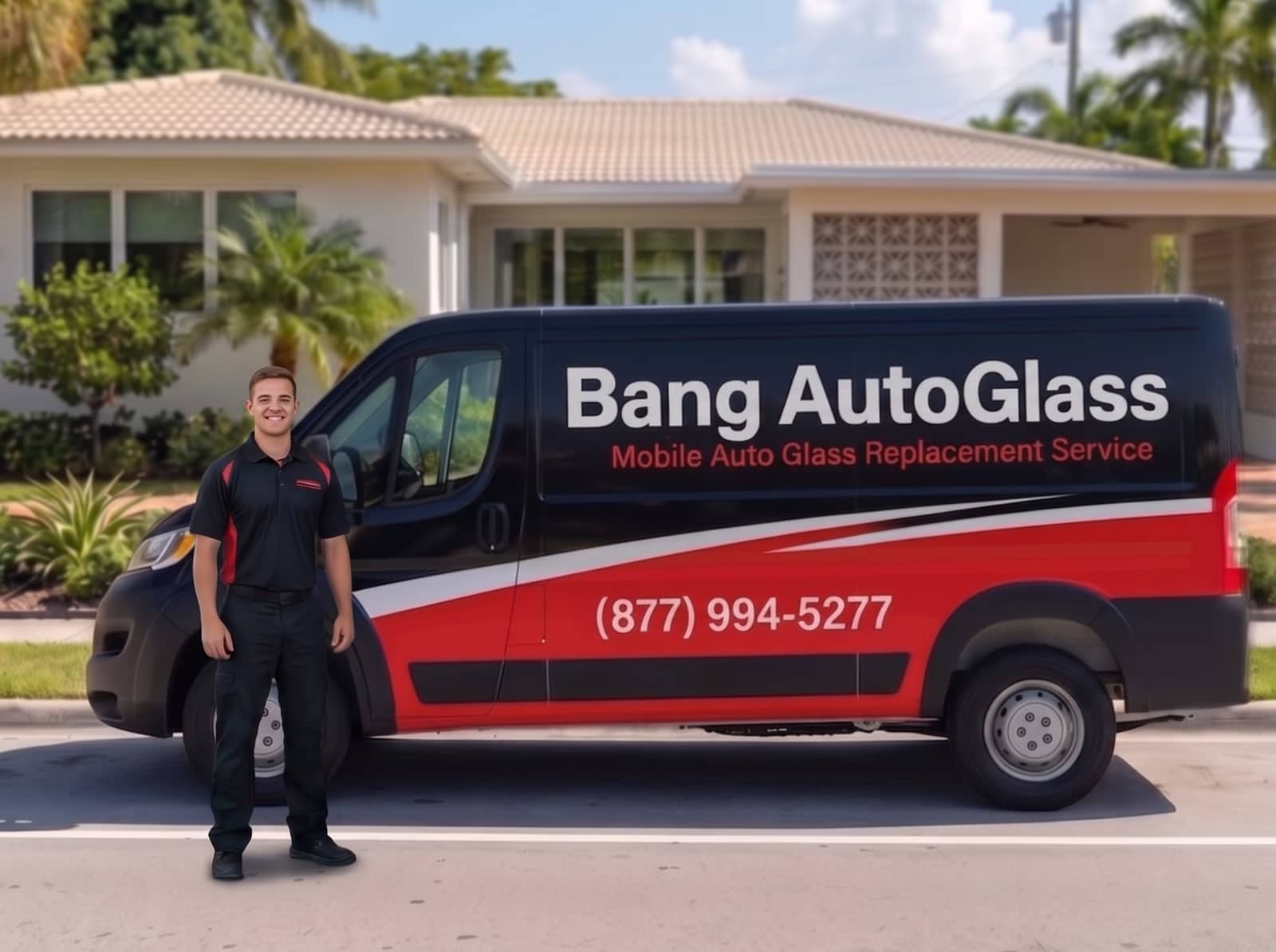
Infiniti Windshield Replacement
Bang AutoGlass installs Infiniti windshields on Q50, Q60, QX50, QX55, QX60, and QX80 with OEM-spec laminated glass supporting ProPILOT Assist forward camera, rain sensor, and HUD. Mobile service in Arizona and Florida includes urethane bonding, ADAS recalibration, and lifetime workmanship warranty.
Infiniti Windshield Replacement: Premium Auto Glass Service Backed by Mobile Convenience and Lifetime Workmanship
When your Infiniti's windshield is compromised by a crack, chip, or impact damage, the replacement process demands more attention to detail than a typical economy vehicle. Infiniti vehicles are engineered as luxury performance machines with acoustic glass, advanced driver assistance systems, rain sensors, heated elements, and in select models, head-up display technology. A proper Infiniti windshield replacement protects your investment, preserves cabin comfort, and ensures every safety system continues to function exactly as the engineers in Yokohama designed it to. At Bang AutoGlass, we specialize in Infiniti windshield replacement using OEM-quality glass, backed by a lifetime workmanship warranty and the convenience of fully mobile service that comes directly to your home, office, or wherever your Infiniti is parked.
Why Infiniti Windshields Require Specialized Replacement
Infiniti is the luxury and performance division of Nissan, and the brand's windshields reflect that elevated engineering. Unlike standard passenger vehicle glass, Infiniti windshields are typically multi-layered with acoustic interlayers, UV-blocking coatings, and integrated mounting points for safety cameras and rain sensors. These features mean an Infiniti windshield replacement is never a one-size-fits-all job. The wrong glass can compromise sound insulation, throw off camera angles, or trigger persistent dashboard warnings that no driver wants to chase down. Choosing a shop that understands Infiniti-specific specifications is the difference between a replacement that feels factory and one that constantly reminds you something is off.
Engineered for Luxury, Built for Safety
Every modern Infiniti is built around a human-centered design philosophy where the windshield serves as a structural component. It contributes to roof crush strength during a rollover, helps the passenger airbag deploy correctly in a frontal collision, and maintains cabin rigidity at highway speeds. A proper Infiniti windshield replacement uses the correct urethane adhesive, proper bead height, and a safe drive-away time that respects manufacturer specifications. Cutting corners on any of these areas can compromise occupant safety in the exact scenario the engineering was designed to protect against.
Advanced Driver Assistance Systems Integration
Most Infiniti vehicles produced after 2017 are equipped with ProPILOT Assist, Forward Emergency Braking, Predictive Forward Collision Warning, Lane Departure Warning, Intelligent Cruise Control, and Blind Spot Intervention. These features rely on a forward-facing camera mounted to the windshield. When the windshield is replaced, that camera's field of view and angle change ever so slightly, and ADAS calibration is required to restore factory accuracy. Without proper calibration, lane keeping may drift, automatic emergency braking may activate late, and adaptive cruise control may misjudge following distances. This is one of the most overlooked aspects of luxury windshield replacement, and it is one we take seriously on every Infiniti we service.
Infiniti Models We Service for Windshield Replacement
Bang AutoGlass provides windshield replacement for every Infiniti model in the current and recent lineup, as well as legacy vehicles still on the road. Whether you drive a sport sedan, a luxury crossover, or a full-size SUV, we source the correct glass for your specific year, trim, and feature configuration.
Infiniti Sedans and Coupes
The Infiniti Q50 sport sedan and Q60 coupe are some of the most common Infiniti models we replace windshields on. These vehicles often come with acoustic laminated windshields, rain sensors, and forward-facing cameras supporting ProPILOT Assist or Distance Control Assist. We also service the legacy G35, G37, M35, M37, M45, M56, and Q70 sedans, sourcing the proper acoustic and non-acoustic variants depending on your trim level. Performance trims like the Q50 Red Sport 400 and Q60 Red Sport demand the same factory-quiet cabin they came with, which is why we never substitute acoustic glass with a non-acoustic alternative.
Infiniti SUVs and Crossovers
The QX50, QX55, QX60, and QX80 each have unique windshield specifications. The QX80 in particular features a heated wiper park area, available head-up display projection, and a large curved windshield that requires careful handling and precise urethane application. The QX60 three-row family SUV typically includes acoustic glass and rain-sensing wipers across most trims, while the QX55 coupe-style crossover includes ProPILOT Assist on nearly every build. Older FX35, FX37, FX45, FX50, EX35, EX37, and QX70 models are also fully supported with the correct OEM-quality glass and proper bracket fitments.
Legacy and Performance Infiniti Models
We routinely replace windshields on older Infinitis including the G20, G25, I30, I35, M30, J30, and the iconic Q45. These vehicles may be harder to source glass for, but our network of OEM-quality glass suppliers gives us access to the correct windshield for virtually any Infiniti ever sold in North America. If you own a classic Infiniti and have been told elsewhere that the glass is unavailable, we encourage you to reach out before giving up on the replacement.
Common Signs Your Infiniti Needs a Windshield Replacement
Not every chip or crack requires a full windshield replacement, but knowing when repair is no longer a safe option saves you time, money, and potential safety risk. Most Infiniti owners benefit from replacement rather than repair when damage meets certain thresholds.
Cracks That Have Spread Beyond Repair
A crack longer than approximately six inches, or any crack that has begun branching outward, generally cannot be safely repaired. Resin injection works on small, contained chips but cannot restore structural integrity to a windshield with extended damage. If you can run your fingernail along the crack and feel it travel across the glass, you are looking at full replacement territory, not repair territory.
Damage in the Driver's Direct Line of Sight
Even a small chip or repair scar directly in front of the driver can refract light, distort vision at night, and fail state inspection in many regions. For Infiniti owners who rely on the visual feedback of head-up display projection in models like the Q50, QX60, or QX80, damage in this area is especially disruptive and warrants full replacement. Driving with compromised visibility in a luxury vehicle defeats the entire purpose of the driving experience you invested in.
Pitting, Hazing, and Edge Damage
Years of highway driving cause microscopic sandblasting that pits the glass surface and scatters oncoming headlights. If your Infiniti's windshield has reached the point where night driving feels noticeably more difficult, replacement restores clarity. Likewise, any crack starting from the edge of the windshield, which is common after temperature swings or minor body flex, tends to spread rapidly and should be addressed quickly before it crosses into the driver's view.
The Bang AutoGlass Infiniti Windshield Replacement Process
We've refined our process to be fast, precise, and respectful of the engineering that goes into every Infiniti. Most Infiniti windshield replacements take 30 to 45 minutes from start to finish, followed by approximately one hour of safe drive-away time while the urethane adhesive cures to bonding strength. Here is what you can expect from beginning to end.
- We confirm your Infiniti's exact year, model, trim, and feature set to source the correct OEM-quality windshield, including any acoustic, rain sensor, camera bracket, or HUD specifications.
- Our technician arrives at your home, office, or chosen location with the correct glass and all the tooling needed to complete the job on-site.
- We protect your Infiniti's paint, dashboard, and interior with covers, then carefully remove the damaged windshield using cold knife or wire-cut techniques designed to preserve the pinch weld.
- The pinch weld is cleaned, primed where necessary, and prepared for fresh urethane adhesive applied at the manufacturer-recommended bead height.
- The new OEM-quality windshield is set into place using suction handles for precise alignment, ensuring camera brackets, rain sensors, and HUD projection zones line up exactly with factory tolerances.
- We reinstall moldings, cowl panels, rearview mirror assemblies, and any sensor housings removed during the process.
- Where ADAS calibration is required, we coordinate static or dynamic calibration to restore your Infiniti's safety systems to factory accuracy.
- After the one-hour safe drive-away time, your Infiniti is ready to be driven and used as normal, with a gentle reminder to avoid automatic car washes for the first 24 hours.
ADAS Calibration for Infiniti Vehicles
If your Infiniti is equipped with ProPILOT Assist, Intelligent Cruise Control, Lane Departure Warning, Forward Emergency Braking, or Predictive Forward Collision Warning, a windshield replacement must be followed by ADAS calibration. This is not optional. The forward-facing camera relies on a precise position and angle to interpret road markings, vehicles, and pedestrians correctly, and even a fraction of a degree off can produce real-world consequences.
Static Versus Dynamic Calibration
Some Infiniti models require static calibration, where targets are positioned in a controlled environment at exact distances and heights from the vehicle. Other models require dynamic calibration, completed by driving the vehicle on well-marked roads at specific speeds while the system relearns visual references. Certain Infiniti models, particularly newer Q50, QX50, QX55, and QX60 variants, require both static and dynamic procedures completed in sequence. We confirm the correct calibration type for your specific vehicle before service begins so there are no surprises on completion day.
Why Calibration Matters
A windshield camera that is off by even one degree can misjudge a pedestrian's position by several feet at highway distance. After any Infiniti windshield replacement, calibration ensures lane centering stays centered, automatic emergency braking activates at the right moment, and adaptive cruise control maintains the precise following distance you select. Skipping calibration may leave warning lights on the dashboard and degrade the safety performance you paid premium dollar for when you bought the vehicle.
OEM-Quality Glass for Your Infiniti
Bang AutoGlass installs OEM-quality windshields on every Infiniti we service. This means the glass meets or exceeds the specifications of the original windshield in thickness, optical clarity, acoustic dampening, UV coating, and feature integration. You get the same look, feel, and performance of factory glass without paying the dealership markup that often comes with going through an Infiniti retailer.
Acoustic Glass Technology
Many Infiniti trims include acoustic laminated windshields with a sound-deadening interlayer that reduces road, wind, and engine noise inside the cabin. Replacing acoustic glass with a non-acoustic equivalent is one of the most common installer mistakes in the industry, and it leads to a noticeably louder cabin at highway speeds. We always match acoustic-to-acoustic so your Infiniti retains the luxury quiet ride it was engineered to deliver.
Rain Sensor, Camera, and Heads-Up Display Compatibility
Our OEM-quality windshields include the correct bracket mounts, gel pads, and frit patterns to support your Infiniti's rain-sensing wipers, forward-facing ADAS camera, and head-up display projection where applicable. Models like the Q50, Q60, QX60, and QX80 with HUD have a specific reflective area built into the laminate, and using the wrong glass produces a blurry, double-image, or ghosted projection. We get the glass selection right the first time so you never have to wonder why the HUD looks off.
Mobile Infiniti Windshield Replacement
Bang AutoGlass is a fully mobile auto glass service, which means we bring the shop to you. Whether you are at home, at your office, at a job site, or at a friend's house, we can perform your Infiniti windshield replacement on-site without you needing to wait in a shop lobby or arrange a ride. There are real, tangible advantages to this approach for Infiniti owners who value their time.
- No need to drive a vehicle with a damaged windshield to a shop, which is unsafe and often illegal depending on the severity of the damage.
- Skip the dealership wait times, loaner car negotiations, and shuttle scheduling that come with going through a retailer.
- Complete the replacement during your work day without sacrificing personal time or burning a vacation day.
- Avoid putting additional miles on a vehicle with compromised glass structural integrity.
- Enjoy direct, personal communication with the technician completing the work, not a service writer relaying information.
- Receive next-day appointment availability so you are not waiting a week or more for safe replacement glass.
How Our Mobile Service Works
Once you contact Bang AutoGlass with your Infiniti year, model, and damage description, we confirm your appointment, usually for next-day service. Our technician arrives at the scheduled time with the correct OEM-quality windshield, completes the replacement in 30 to 45 minutes, and stays through any final reassembly. After approximately one hour of safe drive-away time for the urethane to cure, your Infiniti is ready to roll exactly as it did the morning you bought it.
Insurance Claim Assistance for Your Infiniti Windshield Replacement
Many Infiniti owners carry comprehensive auto insurance, which typically covers windshield replacement after the deductible is satisfied. Some states offer zero-deductible glass coverage as a separate endorsement, which can reduce out-of-pocket costs to nothing. We help you with the insurance claim from start to finish and make the process as smooth as possible.
How We Help You File Your Claim
We help you with the insurance claim from start to finish and make the process as smooth as possible. What we do is provide hands-on assistance so you can confidently file your own claim. We help you understand your coverage, identify whether you have a glass endorsement, walk you through the claim phone call or mobile app submission, provide your insurer with the correct part number and labor estimate, and ensure the claim references the right adjuster contact information. Our experience working with major insurers means we know exactly what information they need from a customer, so your claim moves through quickly and without back-and-forth.
What If You Are Paying Out of Pocket?
If you do not carry comprehensive coverage or simply prefer not to use insurance for a glass claim, we offer transparent, competitive cash pricing for Infiniti windshield replacement. There are no hidden fees, no surprise calibration upcharges, and no dealership markup added to the final invoice. You receive the same OEM-quality glass and the same lifetime workmanship warranty either way you choose to pay.
Our Lifetime Workmanship Warranty
Every Infiniti windshield replacement performed by Bang AutoGlass includes a lifetime workmanship warranty. This means as long as you own the vehicle, we stand behind the installation against air leaks, water leaks, wind noise from improper sealing, and adhesive failure attributable to our work. If anything related to our installation goes wrong over the lifetime of your ownership, we make it right at no additional cost to you. This is the kind of accountability you should expect from any premium auto glass provider, and it is exactly what we offer every Infiniti customer who trusts us with their vehicle.
Why Choose Bang AutoGlass for Your Infiniti Windshield Replacement
Choosing the right shop for your Infiniti windshield replacement protects your vehicle, your safety, and your wallet. Bang AutoGlass combines luxury-grade attention with the convenience of mobile service, fast turnaround, and pricing transparency. Our technicians understand the specific nuances of Infiniti glass, from the acoustic dampening of a Q50 Red Sport to the HUD projection requirements of a QX80, and we treat every vehicle like it just rolled off the showroom floor. We are also committed to the small details that elevate an installation: clean cuts on the pinch weld, factory-spec urethane bead height, perfectly aligned moldings, and zero adhesive residue on your interior. When we leave your driveway, your Infiniti looks like nothing ever happened, except the chip, crack, or shattered glass that brought you to us in the first place is now gone.
Schedule Your Infiniti Windshield Replacement Today
If you are dealing with a chipped, cracked, or broken windshield on your Infiniti Q50, Q60, QX50, QX55, QX60, QX80, or any other Infiniti model past or present, do not wait for the damage to spread. A small chip today can become a full crack overnight, especially in temperature swings or after hitting a single pothole. Contact Bang AutoGlass to schedule your next-day mobile Infiniti windshield replacement, and let us bring the OEM-quality glass, expert installation, ADAS calibration coordination, and lifetime workmanship warranty directly to wherever you are parked. Your Infiniti deserves the quality of care it was built around, and we are ready to deliver it the moment you reach out.
Infiniti Windshield Replacement — common questions
How long does an Infiniti windshield replacement take?
Most Infiniti windshield replacements take about 30-45 minutes to complete, then time for the adhesive to set — about an hour is typical, and your technician confirms the exact safe drive-away time. If your Infiniti has an advanced safety camera, ADAS calibration adds roughly 15-30 minutes.
What happens if I have a camera-equipped Infiniti windshield?
Many newer Infiniti models have a forward-facing camera on the windshield for lane-keeping assist and automatic braking. Our technicians perform ADAS calibration to ensure these features work correctly after replacement, adding 15-30 minutes to your appointment.
Is my Infiniti windshield covered by insurance?
If you have comprehensive coverage, your windshield is likely covered. In Florida, the comprehensive deductible is waived by statute for windshield replacement, so you pay nothing out of pocket. In Arizona, many drivers also qualify for no-deductible coverage. We'll help you file your claim.
Does your Infiniti windshield replacement come with a warranty?
Yes. Every Infiniti windshield replacement is backed by a lifetime workmanship warranty and uses OEM-quality glass and materials, ensuring durability and a perfect fit.
Where we do Infiniti auto glass
Bang AutoGlass is a mobile auto glass company serving Arizona and Florida. We don't have a shop you drive to — we come to your home, your job, or wherever the car is sitting, with next-day appointments in most areas. In Arizona that means the whole Valley — Phoenix, Mesa, Scottsdale, Chandler, Gilbert, Tempe, Glendale and out to Tucson and Prescott. In Florida we cover Tampa Bay, Orlando and Miami, from St. Petersburg and Clearwater across to Kissimmee, Winter Park and Fort Lauderdale.
Browse every city we serve in Arizona and Florida, or read how coverage works under Arizona's glass statutes and Florida's § 627.7288.
Mobile auto glass — cities we serve
4.8★ on Google · 350+ reviews from AZ & FL drivers
“I needed my windshield replaced and they made the entire process easy. Bang AutoGlass is the best!”
“Top-notch auto glass service. They handled my windshield replacement quickly and professionally.”
“Bang AutoGlass made my windshield replacement simple from start to finish.”
Need Infiniti Windshield Replacement?
We come to you across Arizona and Florida — often $0 with insurance.
We reply within minutes during business hours.