Kia ADAS Calibration in Arizona & Florida
Bang AutoGlass coordinates Kia DriveWise ADAS calibration after windshield service so Forward Collision-Avoidance Assist, Smart Cruise Control, Lane Keeping Assist, and Highway Driving Assist read targets correctly on Forte, Sportage, Telluride, and EV6. Arizona and Florida mobile, warranty-backed.
14,000+ auto glass jobs completed4.7★ on Google
- We come to you
Home, work, or roadside — no shop visit
- Next-day
In most areas
- Lifetime warranty
On our workmanship, for as long as you own the vehicle
- We file the claim
Coverage verified free, your insurer billed direct
How Kia ADAS calibration works in Arizona and Florida
Coverage, price, where we do the work, and how long it takes — the short version, before the details.
Coverage
Often $0 with insurance. Florida waives the windshield deductible with comprehensive coverage (§627.7288), and Arizona insurers must offer optional zero-deductible glass coverage (A.R.S. §20-264). We verify your exact policy, free, before any work.
Price
No single flat price. Your vehicle, glass features, and ADAS requirements determine the quote; your policy determines your deductible. We verify yours free before any work.
Mobile
We come to you — home, work, or roadside, with next-day appointments in most areas.
Timing
Most jobs take 30–45 minutes, backed by a lifetime workmanship warranty on your Kia.
General info, not legal or insurance advice — coverage varies by policy. We confirm your exact coverage free before any work.
Kia ADAS Calibration: Precision Recalibration for Your Kia's Advanced Safety Systems
Modern Kia vehicles are engineered with some of the most sophisticated driver assistance technology on the road today. From the Kia Telluride and Sorento to the Sportage, K5, EV6, and EV9, nearly every late-model Kia rolls off the assembly line equipped with a suite of safety features collectively known as Advanced Driver Assistance Systems, or ADAS. When your Kia's windshield is replaced, those systems must be recalibrated with absolute precision to function the way Kia engineered them to. At Bang AutoGlass, we specialize in mobile Kia ADAS calibration, delivering manufacturer-grade recalibration that restores your vehicle's safety features to factory specifications.
What Is Kia ADAS Calibration?
Kia ADAS calibration is the technical process of realigning and recalibrating the forward-facing camera, sensors, and related computer modules that power your Kia's advanced driver assistance features. The forward-facing ADAS camera in your Kia is mounted directly to the inside of the windshield, typically near the rearview mirror bracket. Even a fraction-of-a-degree shift in the camera's angle, position, or alignment after a windshield replacement can cause the camera to misread the road, generate false alerts, fail to activate critical safety features, or misjudge distances to other vehicles, pedestrians, and lane markings.
Kia engineers calibrate these cameras with extreme accuracy at the factory, and any time the windshield is removed and replaced, federal safety guidelines and Kia manufacturer specifications require a full ADAS recalibration. Skipping this step compromises the entire safety architecture of your Kia, which is why Kia windshield calibration is a non-negotiable part of any modern Kia windshield replacement.
Understanding the Technology Behind Your Kia's Safety Suite
Your Kia's ADAS system isn't just one camera or sensor — it's a network of interconnected technologies that work together to keep you safe. The forward-facing camera bonded to your windshield is the centerpiece of that network, feeding real-time visual data to the vehicle's computer modules to make instantaneous decisions about braking, steering, and acceleration. When the camera is even slightly out of alignment, the entire safety chain is broken.
Why Kia ADAS Calibration Matters After a Windshield Replacement
Many Kia drivers don't realize that replacing a windshield on a vehicle equipped with ADAS isn't simply a glass swap. The forward-facing camera that controls lane keep assist, forward collision warning, automatic emergency braking, and adaptive cruise control is physically attached to the windshield. The moment the original windshield is removed, that camera loses its calibrated reference point. Reinstalling the camera onto a new piece of glass — even glass that's perfectly OEM-quality — requires a complete recalibration to teach the camera where the road is relative to the vehicle.
Without proper Kia ADAS calibration, your Kia's safety systems may continue to display as "active" on the dashboard while actually performing incorrectly. A miscalibrated forward-facing camera could miss a pedestrian crossing the road, fail to trigger emergency braking in time, or steer your vehicle inappropriately during lane keep assist intervention. This is why every Kia windshield replacement we perform at Bang AutoGlass is paired with a full ADAS recalibration appointment.
The Direct Link Between Your Windshield and Your Kia's Camera
The windshield in your Kia is not just a piece of glass — it's a structural and optical component that the ADAS camera depends on to function. Kia uses specific optical-grade glass with precise thickness, curvature, and clarity tolerances so the camera can see through it without distortion. After replacement, the camera bracket position, glass curvature, and even the tiny variations in glass thickness all factor into how the camera interprets what's in front of your Kia.
Types of Kia ADAS Calibration: Static, Dynamic, and Dual
There are three primary methods used to calibrate Kia ADAS systems, and the correct method depends on the specific Kia model, year, and ADAS package. Understanding the difference helps Kia owners know what to expect during their appointment.
Static Calibration for Kia Vehicles
Static Kia ADAS calibration is performed in a controlled environment using precise target boards and measuring equipment placed at specific distances and angles in front of the vehicle. The Kia is held perfectly still while specialized diagnostic equipment communicates with the vehicle's ADAS module and adjusts the camera's aim to align with the calibration targets. This method is commonly used for many Kia models, including certain Telluride, Sorento, and Sportage trims.
Dynamic Calibration for Kia Vehicles
Dynamic Kia ADAS calibration requires the vehicle to be driven at specific speeds on roads with clearly marked lane lines. During this drive, a diagnostic scan tool is connected to the Kia's OBD-II port, and the camera learns its alignment by observing real-world driving conditions. Certain Kia models, particularly some Forte, Soul, and older Sportage trims, use dynamic calibration as the primary method.
Dual Calibration: When Both Are Required
Some newer Kia models, especially those with Highway Driving Assist 2 or the most advanced Drive Wise packages, require both static and dynamic calibration to be performed in sequence. This dual calibration ensures the forward-facing camera is aligned both at rest and under real-world driving conditions, which is critical for features that operate at highway speeds.
Kia ADAS Features That Require Recalibration
Your Kia's ADAS suite is made up of multiple safety features, and nearly all of them rely on the forward-facing camera for proper operation. The most common Kia ADAS features that depend on recalibration after windshield replacement include:
- Forward Collision-Avoidance Assist (FCA) with Pedestrian and Cyclist Detection
- Lane Keeping Assist (LKA) and Lane Following Assist (LFA)
- Smart Cruise Control (SCC) with Stop & Go
- Highway Driving Assist (HDA and HDA 2)
- Driver Attention Warning (DAW)
- High Beam Assist (HBA)
- Blind-Spot Collision Warning supplementary camera input
- Intelligent Speed Limit Assist and traffic sign recognition
Every one of these features depends on a perfectly calibrated camera. After a Kia windshield replacement, all of them must be verified through proper recalibration to ensure they function as Kia intended.
Kia Models That Require ADAS Calibration
ADAS calibration is required on virtually every Kia model produced in the last several years. If your Kia has a forward-facing camera mounted near the rearview mirror, it typically needs recalibration after a windshield replacement. Some of the most common Kia vehicles that require ADAS calibration include the Kia Telluride, Kia Sorento, Kia Sportage, Kia K5, Kia Forte, Kia Soul, Kia Carnival, Kia Niro, Kia EV6, Kia EV9, Kia Stinger, and Kia Seltos.
Each of these Kia models has slightly different calibration procedures depending on the trim level, model year, and specific ADAS package installed. For instance, a base-model Kia Forte may have a simpler camera array than a top-trim Kia Telluride SX Prestige, which includes Highway Driving Assist and Smart Cruise Control with Stop & Go. Our technicians are trained to handle the calibration requirements of each Kia trim and configuration.
Popular Kia Models with ADAS Features
The Kia Telluride and Kia Sorento both feature Kia's most comprehensive Drive Wise safety suite, including Forward Collision-Avoidance Assist, Lane Keeping Assist, Blind-Spot Collision-Avoidance Assist, and Highway Driving Assist. The Kia Sportage and Kia K5 include similar packages with model-specific tuning. The all-electric Kia EV6 and Kia EV9 add even more advanced features like Remote Smart Parking Assist and Highway Driving Assist 2, all of which depend on a properly calibrated forward-facing camera.
Signs Your Kia Needs ADAS Calibration
If you've recently had a windshield replaced on your Kia and skipped the calibration step, your vehicle may be sending warning signs. Dashboard warning lights related to lane keep assist, forward collision warning, or Drive Wise may illuminate. Your Kia may issue false lane departure alerts even when you're driving perfectly straight. Smart Cruise Control may apply the brakes unexpectedly or fail to engage at all. The lane centering feature may drift toward one side of the lane instead of holding the center.
In some cases, the warnings won't be obvious at all, and the system will appear to be working normally while actually performing incorrectly. This is the most dangerous scenario, because Kia owners may rely on safety features that are no longer accurate. The only way to be sure your Kia ADAS system is functioning correctly is to have an experienced Kia ADAS calibration performed.
What Happens During a Kia ADAS Calibration Appointment
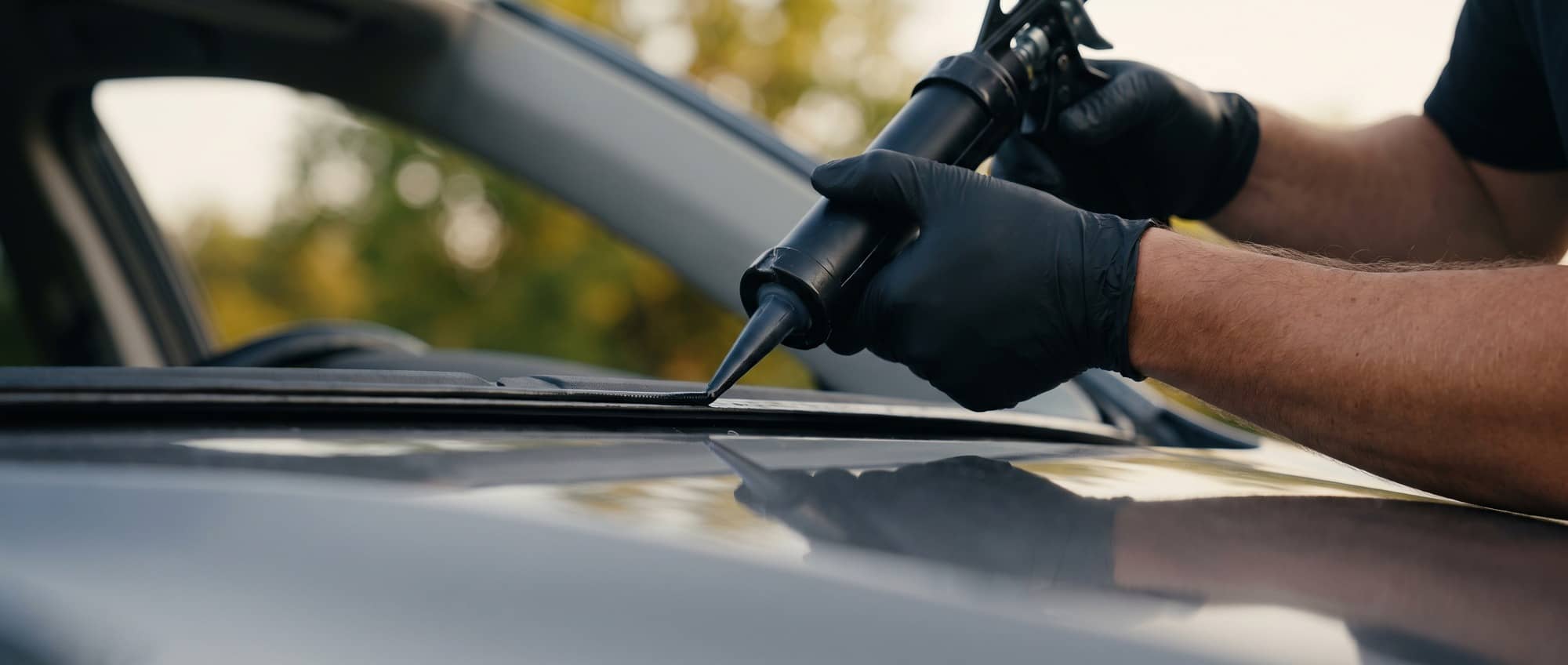
When you book a Kia ADAS calibration with Bang AutoGlass, our experienced mobile technicians arrive at your home, office, or location of choice with everything needed to complete the job. We start by performing a pre-calibration diagnostic scan of your Kia's ADAS module to identify any existing fault codes. Next, we install the new OEM-quality windshield with precision adhesive and allow proper bonding time. Once the glass is set, we perform the appropriate static, dynamic, or dual calibration procedure based on your specific Kia model and trim. Finally, we run a post-calibration scan to verify that all systems are reading correctly and that no fault codes remain.
How Long Does Kia ADAS Calibration Take?
A Kia windshield replacement at Bang AutoGlass typically takes 30 to 45 minutes to complete. After the replacement, the urethane adhesive that bonds the new windshield to your Kia's frame requires approximately one hour to cure before the vehicle is safe to drive. Once the adhesive has cured, the ADAS calibration procedure can begin. Static calibration usually adds about 15 to 30 minutes at your location, while dynamic calibration requires a short drive on appropriate roads. Dual calibration takes the longest, combining both procedures into a single appointment, and your technician confirms the exact time for your Kia.
We schedule every Kia ADAS calibration appointment with realistic timing so you know exactly what to expect. There are no surprises, no rushed work, and no compromises on quality.
Mobile Kia ADAS Calibration Service
Bang AutoGlass is a fully mobile auto glass and ADAS calibration service, which means we come to you. Whether you're at home, at work, or anywhere in our service area, our experienced technicians arrive with all the diagnostic equipment, calibration targets, and OEM-quality glass needed to complete your Kia ADAS calibration on-site. This eliminates the inconvenience of driving a vehicle with a damaged windshield to a brick-and-mortar shop, sitting in a waiting room, and arranging rides.
Mobile Kia ADAS calibration is performed with the same level of precision as any shop-based service. Our technicians use the same OEM-grade diagnostic tools, the same calibrated target equipment, and follow the same factory procedures to ensure your Kia is restored to factory specifications.
Does Insurance Cover Kia ADAS Calibration in Arizona or Florida?
Most comprehensive auto insurance policies cover windshield replacement and ADAS calibration, often with little or no out-of-pocket cost to the policyholder. If you haven't already filed a claim for your Kia windshield damage, we're happy to assist you through the claims process. We help you with the insurance claim from start to finish and make the process as smooth as possible.
We work with all major insurance carriers and can provide the documentation, invoices, and calibration records your insurance company requires to process the claim. Our goal is to make the entire experience — from claim assistance to completed Kia ADAS calibration — as effortless as possible.
Next-Day Appointments for Kia Drivers
We understand that a damaged windshield on your Kia isn't something you can leave for next week. That's why Bang AutoGlass offers next-day appointments for Kia windshield replacement and ADAS calibration. When you call or book online, we'll work to get you scheduled as quickly as possible — often the very next day — so you can get back on the road safely with a fully functioning ADAS system.
Fast scheduling never means rushed work. Every Kia ADAS calibration we perform follows the full factory procedure, regardless of how quickly we were able to fit you in.
Arizona
A.R.S. § 20-264
Insurers must offer zero-deductible full glass coverage — when your policy includes it, windshield replacement is often $0.
Florida
Fla. Stat. § 627.7288
With comprehensive coverage, Florida waives the deductible for windshield replacement — windshield only.
General info, not legal or insurance advice — coverage varies by policy. We confirm your exact coverage free before any work.
How Much Does Kia ADAS Calibration Cost?
There is no flat-rate answer for Kia adas calibration — the quote comes down to what your specific vehicle carries in its glass. We price the job up front, in writing, before any work begins.
Glass features and sensors
Rain sensors, acoustic interlayers, embedded antennas and camera brackets all change which pane your Kia needs.
Model year and body style
A redesign or a trim change can mean a different part number — and a different quote — even within the same model.
ADAS calibration
If your Kia mounts a camera at the windshield, calibration is part of the job — quoted with the work, never added later.
OEM-quality glass sourcing
Every replacement uses OEM-quality glass matched to your Kia's specifications, sourced for your vehicle rather than pulled from a generic shelf.
With the right coverage, your out-of-pocket is often $0 — we verify your coverage free and help you file the claim.
General info, not legal or insurance advice — coverage varies by policy. We confirm your exact coverage free before any work.
Get your Kia glass quote
We verify coverage before any work — next-day in most areas.
New appointments 24/7 · Our team confirms every request.
OEM-Quality Materials for Every Kia ADAS Calibration
Every Kia windshield we install is OEM-quality glass that meets or exceeds the optical, structural, and dimensional specifications required for your Kia's ADAS camera to function correctly. This is critically important because the forward-facing camera depends on consistent glass clarity, thickness, and curvature to see the road accurately. Using inferior or non-spec glass can cause calibration failures, optical distortion, and long-term performance issues with your Kia's safety systems.
We pair OEM-quality glass with manufacturer-approved urethane adhesives, OEM-spec moldings, and calibration equipment to deliver a complete Kia ADAS calibration that meets factory standards from start to finish.
Lifetime Workmanship Warranty on Every Kia ADAS Calibration
Every Kia windshield replacement and ADAS calibration we perform comes backed by our lifetime workmanship warranty. If you ever experience an issue related to the installation or calibration work we performed, we'll make it right at no additional cost to you for as long as you own the vehicle. This warranty reflects our confidence in the quality of our work and our long-term commitment to every Kia owner we serve.
What the Lifetime Workmanship Warranty Covers
Our warranty covers any workmanship-related issues with the installation, including air or water leaks, adhesive failures, molding issues, and calibration-related concerns that stem from our work. This gives Kia owners total peace of mind knowing their investment in a quality windshield replacement and ADAS calibration is protected for the life of the vehicle.
Why Choose Bang AutoGlass for Your Kia ADAS Calibration
Choosing the right shop for your Kia ADAS calibration matters more than most drivers realize. The forward-facing camera in your Kia is one of the most important safety components in the entire vehicle, and the precision of its calibration directly affects how the vehicle reacts in emergency situations. At Bang AutoGlass, we bring experienced technicians, OEM-quality glass, factory-approved calibration procedures, mobile convenience, next-day availability, a lifetime workmanship warranty, and personal claim assistance to every Kia we service.
Whether you drive a Kia Telluride, Sorento, Sportage, K5, Forte, Soul, Carnival, Niro, EV6, EV9, Stinger, or Seltos, we're equipped to handle your Kia ADAS calibration with the precision and care your vehicle deserves. Get in touch with Bang AutoGlass today to schedule your mobile Kia windshield replacement and ADAS recalibration appointment, and experience the difference that careful workmanship and OEM-quality materials make.
Kia ADAS calibration — common questions
What is Kia ADAS calibration and why is it needed?
ADAS (Advanced Driver Assistance Systems) calibration aligns your Kia's safety cameras and sensors after windshield replacement so features like lane-keeping assist and automatic braking work accurately. It's essential for your vehicle's safety systems to function properly.
How long does Kia ADAS calibration take?
ADAS calibration typically adds about 15-30 minutes to your windshield replacement appointment. The technician performs the calibration right at your location as part of the mobile service.
Is ADAS calibration covered by insurance on my Kia?
Calibration is usually included as part of the windshield replacement service. If your comprehensive insurance covers the windshield, it typically covers the calibration as well, so you may have nothing out of pocket.
Does my Kia need ADAS calibration after windshield replacement?
Most Kias from 2018 onward have camera-equipped windshields that require calibration after replacement to keep safety features accurate. Our technician can confirm whether your specific Kia needs it.
Where we do Kia auto glass
Bang AutoGlass is a mobile auto glass company serving Arizona and Florida. We don't have a shop you drive to — we come to your home, your job, or wherever the car is sitting, with next-day appointments in most areas. In Arizona that means the whole Valley — Phoenix, Mesa, Scottsdale, Chandler, Gilbert, Tempe, Glendale and out to Tucson and Prescott. In Florida we cover Tampa Bay, Orlando and Miami, from St. Petersburg and Clearwater across to Kissimmee, Winter Park and Fort Lauderdale.
Browse every city we serve in Arizona and Florida, or read how coverage works under Arizona's glass statutes and Florida's § 627.7288.
ADAS Calibration — cities we serve
4.7★ on Google · 350+ reviews from AZ & FL drivers
“Highly recommend. This business was so helpful to me when I got a crack in my windshield. Daniella was super efficient and thorough. She actually called my insurance company for me and the whole process was really fast. The replacement itself was done the next day.”
“Bang AutoGlass was fantastic from start to finish. They replaced my windshield twice and were consistently quick, responsive, and easy to work with. Super friendly team, great communication, and truly amazing service overall. Highly recommend.”
“The company kept me informed throughout the entire process and were very accommodating in setting up a convenient appointment to change my windshield. The installer was very efficient and detail oriented. The installation was fast and my vehicle was left clean when finished.”
Need Kia ADAS calibration?
We come to you across Arizona and Florida — often $0 with insurance.