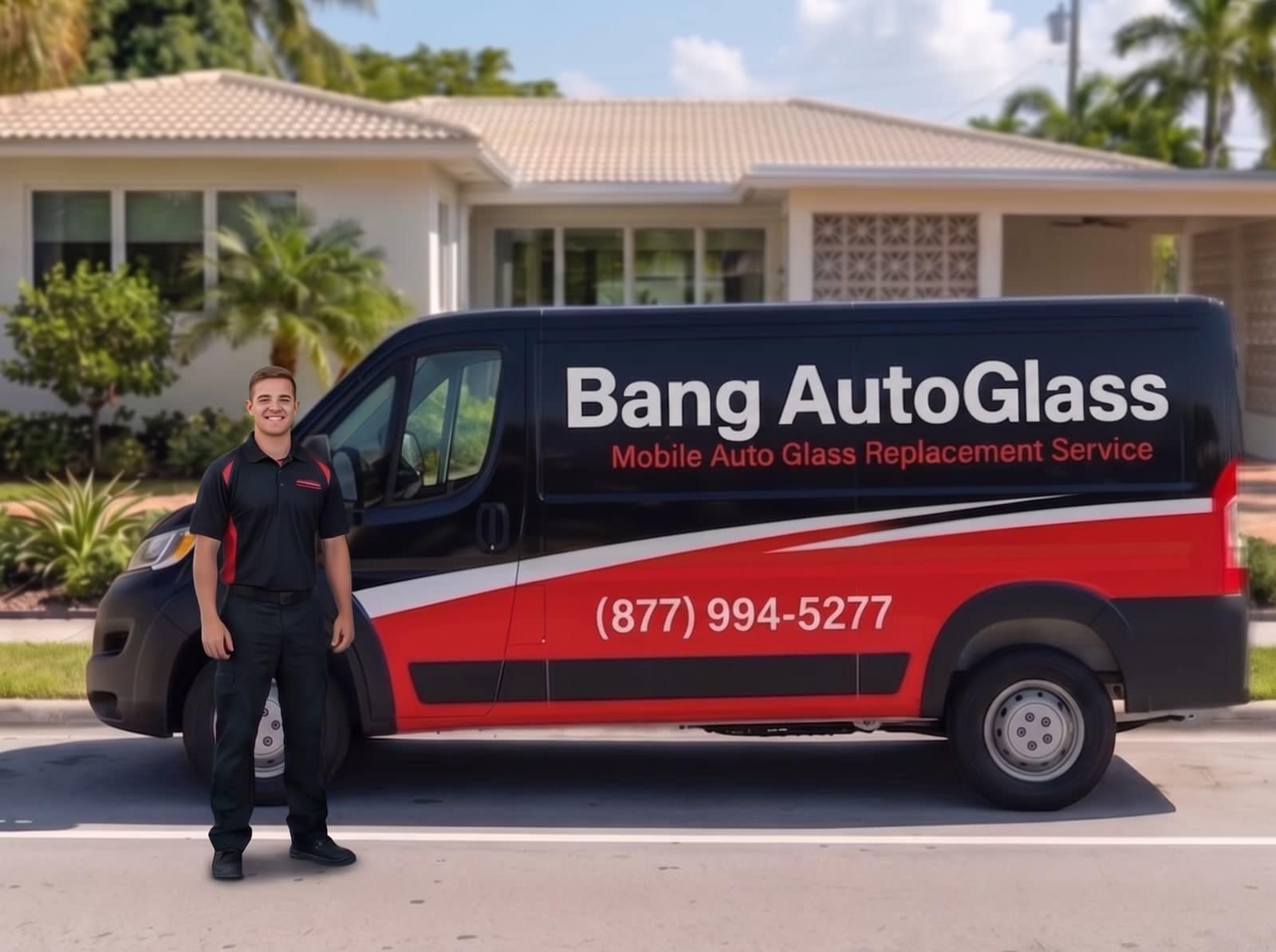
Dodge ADAS Calibration
Bang AutoGlass coordinates Dodge ADAS calibration after windshield service so Adaptive Cruise Control, Forward Collision Warning, Lane Departure Warning, and Blind Spot Monitoring read targets correctly on Charger, Challenger, Durango, and Hornet. Arizona and Florida mobile, warranty-backed.
14,000+ auto glass jobs completed4.7★ on Google
- We come to you
Home, work, or roadside — no shop visit
- Next-day
In most areas
- Lifetime warranty
On our workmanship, for as long as you own the vehicle
- We file the claim
Coverage verified free, your insurer billed direct
How Dodge ADAS calibration works in Arizona and Florida
Coverage, price, where we do the work, and how long it takes — the short version, before the details.
Coverage
Often $0 with insurance. Florida waives the windshield deductible with comprehensive coverage (§627.7288), and Arizona insurers must offer optional zero-deductible glass coverage (A.R.S. §20-264). We verify your exact policy, free, before any work.
Price
No single flat price. Your vehicle, glass features, and ADAS requirements determine the quote; your policy determines your deductible. We verify yours free before any work.
Mobile
We come to you — home, work, or roadside, with next-day appointments in most areas.
Timing
Most jobs take 30–45 minutes, backed by a lifetime workmanship warranty on your Dodge.
General info, not legal or insurance advice — coverage varies by policy. We confirm your exact coverage free before any work.
Dodge ADAS Calibration: Restoring Your Vehicle's Advanced Safety Systems
Modern Dodge vehicles are equipped with some of the most sophisticated Advanced Driver Assistance Systems on the road today. From the muscle-bound Charger and Challenger to the family-ready Durango and the all-new Hornet, every recent Dodge relies on a network of cameras, sensors, and radar units to keep you safe behind the wheel. The moment your windshield is replaced, those systems must be precisely recalibrated to function correctly. At Bang AutoGlass, we provide expert Dodge ADAS calibration services as part of our mobile windshield replacement offerings, ensuring your vehicle's safety technology performs exactly as the manufacturer intended.
What Is Dodge ADAS Calibration?
ADAS stands for Advanced Driver Assistance Systems, a suite of electronic safety features that help prevent collisions, maintain lane position, monitor blind spots, and assist with parking. In your Dodge, many of these systems rely on a forward-facing camera mounted to the windshield, typically just behind the rearview mirror. This camera works in concert with radar sensors, ultrasonic parking sensors, and onboard computers to interpret the road ahead and respond in real time.
Dodge ADAS calibration is the precise process of realigning these sensors and cameras so they accurately read the road, lane markings, vehicles, pedestrians, and other objects in your surroundings. Even a one-degree variance in camera angle can cause your Dodge's safety features to misread distances by several feet at highway speeds, which is why calibration is not optional after a windshield replacement.
How ADAS Works in Your Dodge
The forward-facing camera in your Dodge captures a continuous video stream of what's in front of your vehicle. The onboard computer processes this footage and combines it with data from radar sensors hidden behind the grille and ultrasonic sensors in the bumpers. Together, these components inform features like Adaptive Cruise Control, Full-Speed Forward Collision Warning Plus, LaneSense Lane Departure Warning Plus, and Automatic Emergency Braking. When any of these sensors shift even slightly out of alignment, the system can no longer trust its own data, and warnings, brake assistance, or steering corrections may fire at the wrong moments or fail to fire at all.
Why Calibration Is Necessary After Windshield Replacement
When we replace your Dodge windshield, the forward-facing camera must be removed from the old glass and remounted to the new one. Because the new windshield sits in the frame at a microscopically different angle and the camera bracket itself is being repositioned, the camera's view of the road is no longer identical to what it was before. Without recalibration, your Dodge will continue to operate, but its safety systems will be referencing an outdated calibration baseline. This is why every reputable auto glass company, and every Dodge service guideline, requires ADAS recalibration after a windshield replacement involving a camera-equipped vehicle.
Common Dodge ADAS Features That Require Calibration
After a Dodge windshield replacement, the following camera-dependent and integrated systems will need to be recalibrated for safe and accurate operation:
- Forward Collision Warning and Full-Speed Forward Collision Warning Plus
- Adaptive Cruise Control with Stop and Go
- LaneSense Lane Departure Warning Plus and Lane Keep Assist
- Automatic Emergency Braking and Pedestrian Detection
- Traffic Sign Recognition and Intelligent Speed Assist
- Automatic High Beam Headlamp Control
- Rain-Sensing Wipers
- Drowsy Driver Detection (Hornet and newer models)
If your Dodge has any of these features, calibration is not just recommended after a windshield replacement, it is required for the system to function safely and as designed by the manufacturer.
Types of Dodge ADAS Calibration
Not every Dodge calibrates the same way. Depending on the model, trim, and model year, your vehicle will require one of three calibration types, each with its own equipment and process.
Static Calibration
Static calibration is performed with the vehicle parked in a controlled environment. Specialized targets, charts, and reflectors are placed at precise distances and angles in front of the vehicle, and a diagnostic scan tool is connected to the OBD-II port to communicate with the Dodge's onboard computer. The camera is then guided through a series of recognition routines that confirm its alignment against the known target positions. Static calibration is most common on Dodge Durango and Dodge Charger models with earlier ADAS hardware.
Dynamic Calibration
Dynamic calibration requires driving the vehicle on a well-marked road at specific speeds, usually between 25 and 45 miles per hour, for a set distance while the diagnostic tool monitors the camera's learning process. The camera observes real-world lane markings, vehicles, and signage to verify its alignment. Many late-model Dodge Challenger and Dodge Hornet vehicles use dynamic calibration as their primary procedure.
Combination Calibration
Some Dodge vehicles, particularly newer Durango and Hornet models, require both static and dynamic calibration in sequence. The static portion is completed first to establish a baseline, followed by a dynamic drive cycle to confirm the calibration in real-world conditions. This dual-step process takes longer but ensures the highest possible accuracy.
Dodge Models That Require ADAS Calibration
Nearly every Dodge model produced over the last decade includes at least one ADAS feature that depends on a windshield-mounted camera. If your Dodge was built in 2015 or later and includes a Technology Package, Driver Convenience Group, or any safety bundle, recalibration is typically required.
Dodge Charger ADAS Calibration
The Dodge Charger, particularly trims like the GT, R/T, Scat Pack, and Hellcat, often comes equipped with Adaptive Cruise Control with Stop, Forward Collision Warning Plus, LaneSense, and Blind Spot Monitoring. Calibrating a Dodge Charger windshield camera typically requires both static and dynamic calibration depending on the model year, with later 2020 and newer Chargers needing a more involved procedure due to upgraded camera hardware.
Dodge Challenger ADAS Calibration
The Dodge Challenger shares much of its safety architecture with the Charger. After windshield replacement on a Challenger equipped with the Technology Group, the forward camera must be recalibrated to restore Forward Collision Warning, Adaptive Cruise Control, and lane-keeping functions. Because the Challenger has a relatively steep windshield rake angle, calibration accuracy is especially important to ensure the camera reads the road surface correctly.
Dodge Durango ADAS Calibration
The Dodge Durango is one of the most ADAS-rich vehicles Dodge produces, with the R/T, Citadel, and SRT trims often featuring the full Advanced Safety Group. This includes Adaptive Cruise Control with Stop and Go, Lane Departure Warning Plus, Automatic High Beams, Rain-Sensing Wipers, and Forward Collision Warning Plus with Active Braking. Durango calibration is critical because families often rely on these features when transporting children and passengers.
Dodge Hornet ADAS Calibration
The new Dodge Hornet, including the Hornet R/T plug-in hybrid, comes equipped with one of the most modern ADAS suites in the Dodge lineup. Features like Intelligent Adaptive Cruise Control, Traffic Sign Recognition, Drowsy Driver Detection, and Intelligent Speed Assist all rely on the windshield-mounted camera being calibrated to factory specification.
Signs Your Dodge ADAS Needs Calibration
If your Dodge has recently had its windshield replaced and the ADAS system was not recalibrated, you may notice a number of warning signs. The most common is a dashboard warning light related to the camera, lane departure system, or adaptive cruise control. You may also notice that Adaptive Cruise Control no longer maintains the proper following distance, that lane departure warnings fire at the wrong times or fail to fire at all, or that Automatic Emergency Braking activates unexpectedly. Some Dodge owners report that the system simply turns itself off and refuses to engage until calibration is completed. Any of these symptoms after a windshield replacement is a clear sign that ADAS calibration is needed.
The Dodge ADAS Calibration Process
When you book a windshield replacement with Bang AutoGlass that requires ADAS calibration on your Dodge, here is what you can expect from start to finish:
- We arrive at your home, office, or other preferred location with all the necessary tools, OEM-quality glass, and calibration equipment.
- The damaged windshield is carefully removed, and the old urethane is trimmed back to manufacturer specification.
- The forward-facing camera bracket is detached from the old glass and prepared for transfer to the new windshield.
- A new OEM-quality windshield is installed using high-strength urethane adhesive, with the camera bracket remounted to factory specification.
- The vehicle sits for approximately one hour while the urethane cures to a safe drive-away strength.
- Once cured, the appropriate static, dynamic, or combination calibration procedure is performed using manufacturer-grade diagnostic equipment.
- A final scan confirms that all ADAS-related fault codes are cleared and that every camera-dependent feature is functioning correctly.
The entire windshield replacement portion typically takes 30 to 45 minutes, followed by the one-hour cure window. Calibration time varies by model but generally adds about 15 to 30 minutes depending on whether your Dodge requires static, dynamic, or combination calibration.
How Long Does Dodge ADAS Calibration Take?
The full process of replacing your Dodge windshield and recalibrating its ADAS system generally takes roughly 1.5 to 2 hours from start to finish. The windshield replacement itself takes 30 to 45 minutes. The urethane adhesive then needs approximately one hour to cure to a safe drive-away strength. After that, the calibration process is performed, which generally adds about 15 to 30 minutes, with your technician confirming the exact time for combination calibration on newer Dodge Durango or Hornet models. We always confirm the final timing with you in advance so you can plan accordingly.
How Long Does Dodge ADAS Calibration Take?
The full process of replacing your Dodge windshield and recalibrating its ADAS system generally takes roughly 1.5 to 2 hours from start to finish. The windshield replacement itself takes 30 to 45 minutes. The urethane adhesive then needs approximately one hour to cure to a safe drive-away strength. After that, the calibration process is performed, which generally adds about 15 to 30 minutes, with your technician confirming the exact time for combination calibration on newer Dodge Durango or Hornet models. We always confirm the final timing with you in advance so you can plan accordingly.
Does Insurance Cover Dodge ADAS Calibration in Arizona or Florida?
The good news for most Dodge owners is that ADAS calibration is typically covered by comprehensive auto insurance as part of your windshield replacement claim. Insurance carriers recognize that calibration is a mandatory part of the repair process and is required by Dodge to restore the vehicle to a pre-loss condition. Many policies include glass coverage with low or zero deductibles, depending on your state and carrier.
How We Help With Insurance Claims
We help you with the insurance claim from start to finish and make the process as smooth as possible. We can walk you through what information your insurance company will need, help you understand what your policy likely covers, and explain how the calibration portion of the repair is documented. Once you have filed your claim and your insurer has assigned a claim number, we coordinate directly with them to complete the work and submit the necessary documentation. This way, you stay in control of your claim while still getting expert guidance from a team that handles Dodge windshield and ADAS work every day.
Arizona
A.R.S. § 20-264
Insurers must offer zero-deductible full glass coverage — when your policy includes it, windshield replacement is often $0.
Florida
Fla. Stat. § 627.7288
With comprehensive coverage, Florida waives the deductible for windshield replacement — windshield only.
General info, not legal or insurance advice — coverage varies by policy. We confirm your exact coverage free before any work.
How Much Does Dodge ADAS Calibration Cost?
There is no flat-rate answer for Dodge adas calibration — the quote comes down to what your specific vehicle carries in its glass. We price the job up front, in writing, before any work begins.
Glass features and sensors
Rain sensors, acoustic interlayers, embedded antennas and camera brackets all change which pane your Dodge needs.
Model year and body style
A redesign or a trim change can mean a different part number — and a different quote — even within the same model.
ADAS calibration
If your Dodge mounts a camera at the windshield, calibration is part of the job — quoted with the work, never added later.
OEM-quality glass sourcing
Every replacement uses OEM-quality glass matched to your Dodge's specifications, sourced for your vehicle rather than pulled from a generic shelf.
With the right coverage, your out-of-pocket is often $0 — we verify your coverage free and help you file the claim.
General info, not legal or insurance advice — coverage varies by policy. We confirm your exact coverage free before any work.
Get your Dodge glass quote
We verify coverage before any work — next-day in most areas.
New appointments 24/7 · Our team confirms every request.
Why Choose Bang AutoGlass for Your Dodge ADAS Calibration
Choosing the right shop for your Dodge ADAS calibration is just as important as choosing the right glass. Bang AutoGlass combines convenient mobile service with manufacturer-grade calibration tools to deliver a complete solution wherever you are.
Mobile Service Convenience
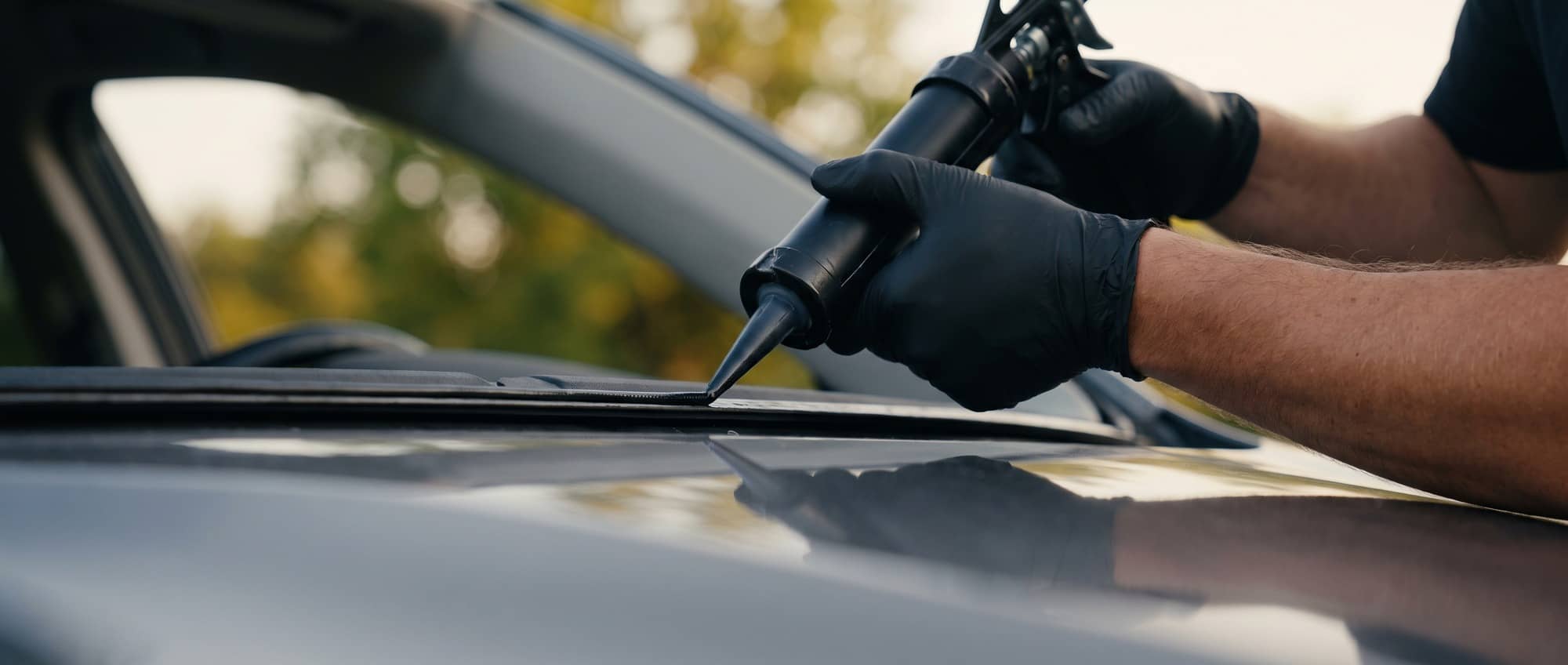
We come to you. Whether you're at home, at work, or at a family member's place, our mobile technicians arrive fully equipped to complete your Dodge windshield replacement and ADAS calibration in one visit. No need to drop your vehicle off at a shop, no need to wait in a lobby, and no need to rearrange your day around our schedule. Mobile service is built into everything we do.
OEM-Quality Materials
Every Dodge windshield we install is made with OEM-quality glass that matches the optical clarity, thickness, and acoustic dampening properties of the original factory windshield. This is especially important for ADAS calibration because the camera relies on the glass having consistent light transmission and distortion characteristics. Using subpar glass can cause calibration to fail or produce inaccurate readings that compromise your safety systems.
Lifetime Workmanship Warranty
We stand behind every Dodge ADAS calibration we perform with a lifetime workmanship warranty. If you ever experience an issue with the installation, the seal, or the calibration itself, we will return and make it right at no additional cost. Our reputation is built on doing the job right the first time and supporting our customers for as long as they own the vehicle.
Next-Day Appointments
Most of our Dodge customers book their windshield replacement and ADAS calibration with a next-day appointment. We understand that a cracked windshield or a malfunctioning safety system is not something you want to put off, and our scheduling flexibility means you can get back on the road safely and quickly.
Dodge ADAS calibration — common questions
Still have questions? Call (877) 994-5277 or see all FAQs.
What is Dodge ADAS calibration?
ADAS calibration resets the advanced safety camera systems on your Dodge after windshield replacement. It ensures features like lane-keeping assist, automatic braking, and collision warning work accurately.
Why does my Dodge need ADAS calibration after windshield replacement?
Your windshield houses the forward-facing safety camera that powers ADAS features. Replacing the windshield moves the camera slightly, so calibration realigns it to factory specs.
How long does Dodge ADAS calibration take?
Calibration adds about 15-30 minutes to your windshield replacement appointment. Our technician performs it on-site using specialized equipment to ensure precise alignment.
Is ADAS calibration covered by my insurance?
Most comprehensive insurance policies cover ADAS calibration as part of the windshield replacement. We help you file your claim to ensure it's included in your coverage.
Where we do Dodge auto glass
Bang AutoGlass is a mobile auto glass company serving Arizona and Florida. We don't have a shop you drive to — we come to your home, your job, or wherever the car is sitting, with next-day appointments in most areas. In Arizona that means the whole Valley — Phoenix, Mesa, Scottsdale, Chandler, Gilbert, Tempe, Glendale and out to Tucson and Prescott. In Florida we cover Tampa Bay, Orlando and Miami, from St. Petersburg and Clearwater across to Kissimmee, Winter Park and Fort Lauderdale.
Browse every city we serve in Arizona and Florida, or read how coverage works under Arizona's glass statutes and Florida's § 627.7288.
ADAS Calibration — cities we serve
4.7★ on Google · 350+ reviews from AZ & FL drivers
“Highly recommend. This business was so helpful to me when I got a crack in my windshield. Daniella was super efficient and thorough. She actually called my insurance company for me and the whole process was really fast. The replacement itself was done the next day.”
“Bang AutoGlass was fantastic from start to finish. They replaced my windshield twice and were consistently quick, responsive, and easy to work with. Super friendly team, great communication, and truly amazing service overall. Highly recommend.”
“The company kept me informed throughout the entire process and were very accommodating in setting up a convenient appointment to change my windshield. The installer was very efficient and detail oriented. The installation was fast and my vehicle was left clean when finished.”
Need Dodge ADAS calibration?
We come to you across Arizona and Florida — often $0 with insurance.