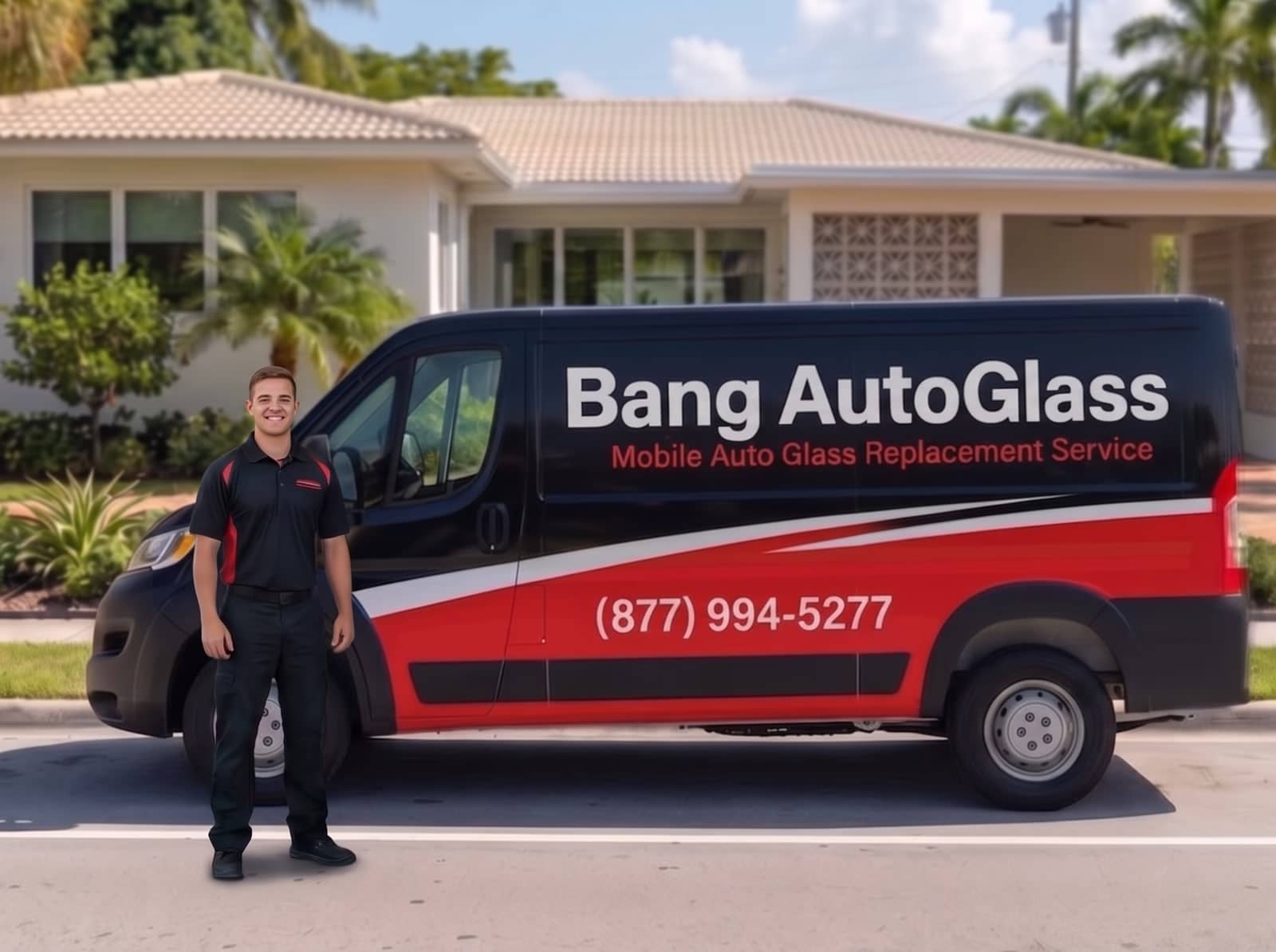
Buick Windshield Replacement
Bang AutoGlass installs mobile Buick windshields on Enclave, Encore GX, and Envision across Arizona and Florida with OEM-spec laminated glass supporting forward camera, rain sensor, and HUD when equipped. Every install includes urethane bonding, ADAS recalibration, and lifetime workmanship warranty.
Professional Buick Windshield Replacement Services
When your Buick's windshield becomes damaged, you need a trusted auto glass partner who understands the engineering, advanced safety features, and refined craftsmanship that define every Buick on the road. At Bang AutoGlass, we specialize in Buick windshield replacement services that restore the structural integrity, visibility, and luxury feel that Buick drivers expect from their vehicles. Whether you drive a modern Buick Enclave with the latest ADAS technology or a classic LaCrosse, our mobile auto glass technicians bring dealership-level expertise directly to your driveway, parking lot, or office.
Buick has built a reputation around quiet cabins, premium materials, and sophisticated safety systems. A poorly installed windshield can compromise every one of those qualities. That is why our team treats each Buick windshield replacement as more than just a glass swap. We deliver a complete restoration of your vehicle's safety, sound insulation, and visual clarity using OEM-quality glass and industry-leading installation practices.
Why Buick Owners Choose Bang AutoGlass for Windshield Replacement
Buick drivers tend to be discerning. They appreciate craftsmanship, attention to detail, and a service experience that respects their time. Bang AutoGlass was built around those exact values, which is why we have become a go-to choice for Buick windshield replacement.
OEM-Quality Glass Designed for Buick Vehicles
Every Buick windshield we install meets or exceeds the original equipment manufacturer specifications for your specific make and model. From the acoustic interlayer that keeps your Buick's cabin whisper-quiet to the precise curvature required for accurate ADAS camera function, our OEM-quality glass is engineered to perform exactly like the windshield that came from the factory. We carry glass options for nearly every Buick model, including the Enclave, Encore, Encore GX, Envision, Regal, LaCrosse, Cascada, Verano, Lucerne, and Century.
Lifetime Workmanship Warranty on Every Buick Replacement
We back every Buick windshield replacement with a lifetime workmanship warranty. If you ever experience an issue related to our installation, whether it is a leak, wind noise, or a bonding concern, we will make it right at no cost to you for as long as you own the vehicle. This warranty reflects our confidence in our technicians and our commitment to long-term customer satisfaction.
Fully Mobile Service Across the Region
Bang AutoGlass is a 100% mobile auto glass company. We come to you. Whether you need your Buick windshield replaced at home, at work, or somewhere in between, our experienced technicians arrive fully equipped with the tools, urethane adhesive, and OEM-quality glass needed to complete the job onsite. Most Buick windshield replacements are completed in 30 to 45 minutes, followed by one hour of adhesive cure time before your vehicle is safe to drive.
Next-Day Appointments Available
A cracked windshield should never sit for weeks. We offer next-day appointments for Buick windshield replacement so you can get back on the road quickly, safely, and without disrupting your schedule.
Common Causes of Buick Windshield Damage
Buick windshields are made from laminated safety glass, which is engineered to withstand significant impact. However, even the toughest glass has its limits. Understanding the common causes of windshield damage can help Buick owners take preventative steps and identify when replacement is needed.
Highway Debris and Rock Chips
The most common cause of Buick windshield damage is highway debris. Loose gravel kicked up by other vehicles, stones falling from construction trucks, and road debris can all create chips or cracks. Even a small rock chip on a Buick Enclave or Envision can quickly spread into a long crack due to temperature changes, vehicle vibration, and continued road stress.
Temperature Stress Cracks
Buick vehicles are commonly driven in regions with significant temperature swings. A windshield exposed to a hot summer sun followed by a sudden cold rain shower can develop stress cracks, even without any direct impact. These cracks often start from the edge of the windshield and spread inward.
Vandalism, Accidents, and Failed Repairs
Collisions, attempted break-ins, and previous repairs that did not fully address the underlying damage can all lead to the need for a complete windshield replacement on your Buick.
Buick Models We Service
We service every modern and most legacy Buick vehicles on the road. Each model has unique features and considerations that our technicians are trained to handle.
Buick Enclave Windshield Replacement
The Buick Enclave is a three-row luxury SUV with one of the largest windshields in the Buick lineup. Many Enclave trims, especially the Avenir, include rain-sensing wipers, forward-facing cameras for lane keep assist, and acoustic glass technology. Replacing an Enclave windshield requires careful attention to all of these systems, including post-installation ADAS calibration.
Buick Encore and Encore GX Windshield Replacement
The Buick Encore and Encore GX are compact luxury crossovers equipped with various ADAS features depending on the model year and trim. Newer Encore GX models often include lane departure warning, forward collision alert, and automatic emergency braking, all of which rely on the windshield-mounted camera. Our technicians ensure that your Encore windshield is replaced with glass that supports proper camera function and that all required calibrations are performed.
Buick Envision Windshield Replacement
The Buick Envision is a midsize luxury SUV that frequently includes rain-sensing wipers, lane keep assist, adaptive cruise control, and heads-up display options on higher trims. Our team is well-versed in Envision-specific windshield variants, including those that accommodate the heads-up display projection area and the humidity and rain sensors built into the glass.
Buick Regal, LaCrosse, and Cascada Windshield Replacement
For Buick sedans and convertibles like the Regal, LaCrosse, and Cascada, we offer windshield replacement that preserves the sleek aerodynamics and acoustic refinement that these models are known for. The LaCrosse, in particular, often features a quiet tuning package that depends heavily on the acoustic interlayer in the windshield, and we use OEM-quality glass that maintains those sound-dampening properties.
Buick Verano, Lucerne, and Century Windshield Replacement
For older or discontinued Buick models such as the Verano, Lucerne, Century, and Park Avenue, we still stock or source the correct windshield glass. These models may not include ADAS calibration requirements, but they still benefit from precise installation and OEM-quality materials to ensure a long-lasting seal and clear visibility.
Advanced Driver Assistance Systems (ADAS) and Your Buick Windshield
Modern Buick vehicles rely on a network of cameras, sensors, and computers to deliver safety features that protect you and your passengers. The windshield is a critical component of this network, and any replacement must account for the systems mounted to or projecting through the glass.
Forward-Facing Camera Calibration
Most Buick models from the 2017 model year forward include a forward-facing camera mounted near the rearview mirror. This camera supports features like lane keep assist, lane departure warning, forward collision alert, and automatic emergency braking. After a windshield replacement, this camera must be recalibrated to ensure accurate operation.
Lane Keep Assist and Lane Departure Warning
Buick's lane keep assist system uses the forward-facing camera to detect lane markings and gently steer the vehicle back into its lane if it begins to drift. Without proper calibration after a windshield replacement, this system can become inaccurate or fail to engage at all.
Rain-Sensing Wipers and Rainsense Technology
Many Buick models, including the Encore, Envision, and Enclave Avenir, are equipped with Rainsense wipers. This system uses an infrared sensor mounted to the windshield to detect moisture and automatically activate the wipers. When replacing a windshield with this feature, our technicians ensure that the Rainsense sensor is properly transferred, sealed, and tested before we consider the job complete.
Heads-Up Display and Acoustic Glass
Higher-trim Buick vehicles often include a heads-up display that projects driving information onto a specific section of the windshield. This requires a specialized windshield variant with a reflective layer engineered for the heads-up display. Acoustic glass is also common across the Buick lineup and uses a sound-dampening interlayer to keep cabin noise to a minimum. We always match the original glass type, including HUD and acoustic variants, when replacing your Buick windshield.
Static and Dynamic Calibration Methods
Buick ADAS systems may require static calibration, dynamic calibration, or both, depending on the model year and equipment. Our team coordinates calibration as part of the replacement service so your Buick leaves with every safety system functioning as designed.
Our Buick Windshield Replacement Process
We follow a precise, step-by-step process for every Buick windshield replacement to ensure long-lasting results and complete customer satisfaction.
- Inspection and verification of the correct OEM-quality windshield for your specific Buick make, model, year, and trim
- Protection of the surrounding paint, dashboard, and interior surfaces
- Careful removal of the damaged windshield using techniques that protect the pinch weld
- Cleaning and priming of the bonding surfaces to ensure a strong, leak-free seal
- Application of high-grade urethane adhesive engineered for OEM specifications
- Precise placement of the new Buick windshield with proper alignment of cameras, sensors, and HUD zones
- Transfer and testing of all sensors including rain sensors, humidity sensors, and forward-facing cameras
- Final inspection, cleanup, and verification of proper cure time before vehicle release
This methodical approach is why Bang AutoGlass is trusted by Buick owners across the region.
How Long Does a Buick Windshield Replacement Take?
Most Buick windshield replacements are completed in 30 to 45 minutes onsite. After installation, the urethane adhesive needs approximately one hour to cure before your vehicle is safe to drive. This safe drive-away time is critical because the adhesive forms the bond that holds your windshield in place and provides structural support during a collision or rollover. Driving too soon can compromise that bond, so we always recommend respecting the full cure window for your safety.
Buick Windshield Replacement and Insurance Claims
Filing an insurance claim for a Buick windshield replacement is often easier than customers expect. Most comprehensive auto insurance policies cover windshield damage, and some states require insurers to waive the deductible entirely for glass claims.
What Comprehensive Coverage Typically Includes
If your auto insurance policy includes comprehensive coverage, windshield damage from rocks, debris, weather, vandalism, or theft is usually covered. Some Buick owners are surprised to learn that their windshield can be replaced with little or no out-of-pocket expense, depending on their deductible and state.
How Bang AutoGlass Assists With Your Claim
We help you with the insurance claim from start to finish and make the process as smooth as possible. We can walk you through the steps to open a claim, provide the documentation your insurer needs, and coordinate directly with your insurance company once your claim is approved. This personalized guidance takes the stress out of dealing with insurance paperwork and ensures your Buick gets replaced quickly.
Out-of-Pocket and Cash Options
If you prefer to pay out of pocket, we offer transparent, upfront pricing on every Buick windshield replacement. There are no surprise fees, no hidden labor charges, and no last-minute upcharges. You will know your exact total before we begin the work.
Buick Windshield Repair Versus Replacement
In some cases, a damaged Buick windshield can be repaired rather than replaced. Knowing the difference can save you time and money.
When Repair Is the Right Option
Small chips smaller than a quarter and short cracks under three inches can often be repaired, especially if the damage is not in the driver's direct line of sight and is not located near the edge of the windshield. Repair is faster and less expensive than replacement, and it preserves the original factory seal.
When Replacement Is Necessary
If the damage is larger than a quarter, longer than three inches, located in the driver's line of sight, or near the edge of the windshield, replacement is the safer choice. Replacement is also necessary when the inner layer of the laminated glass has been compromised, when the damage interferes with ADAS camera function, or when previous repairs have failed.
Caring for Your New Buick Windshield
Once your Buick windshield has been replaced, a few simple steps will help protect your investment and ensure the longest possible lifespan.
The most important window of care is the first 24 to 48 hours after installation. During this time, you should avoid car washes, leave a window slightly cracked to equalize cabin pressure, refrain from slamming doors, and avoid driving on extremely rough roads when possible. After the first 48 hours, your Buick windshield will be fully cured and ready for normal use.
For long-term care, it is helpful to keep a few habits in mind:
- Maintain a safe following distance from large trucks and construction vehicles to reduce the risk of rock chips
- Replace your wiper blades regularly to avoid scratches caused by worn-out rubber
- Use a quality glass cleaner that is safe for tinted and coated automotive glass
- Park in shaded or covered areas when possible to reduce thermal stress
- Address small chips immediately before they spread into larger cracks
Following these tips will help you get the most out of your new Buick windshield and protect the safety systems that depend on it.
Schedule Your Buick Windshield Replacement With Bang AutoGlass
If your Buick needs windshield replacement, Bang AutoGlass is ready to help. With next-day appointments, fully mobile service, OEM-quality glass, ADAS calibration, and a lifetime workmanship warranty, we make it easy to restore your Buick to factory condition without ever leaving your driveway. Contact us today using the form above or by phone, and our team will walk you through the entire process, provide a transparent quote, and schedule your replacement at a time that fits your day.
Drive with confidence. Drive with clarity. Drive with Bang AutoGlass.
Buick Windshield Replacement — common questions
How long does a Buick windshield replacement take?
Most Buick windshield replacements take about 30-45 minutes to complete, then time for the adhesive to set — about an hour is typical, and your technician confirms the exact safe drive-away time. If your Buick has a safety camera, ADAS calibration adds roughly 15-30 minutes.
What is Bang AutoGlass's windshield replacement warranty?
Every windshield replacement is backed by a lifetime workmanship warranty, covering the quality of the install and OEM-quality materials at no extra cost. We stand behind every job for as long as you own your Buick.
Does comprehensive insurance cover Buick windshield replacement?
Yes, comprehensive coverage typically covers windshield damage. In Florida, the deductible is waived for windshield replacement with comprehensive coverage, so you pay nothing out of pocket. Arizona drivers with optional no-deductible coverage also pay nothing. We help you file your claim.
Why should I choose mobile windshield service for my Buick?
Our technicians come to your home, work, or roadside with a fully equipped vehicle and complete the job with the same quality as a shop—no waiting in a service center. Mobile service is convenient and efficient for your Buick.
Where we do Buick auto glass
Bang AutoGlass is a mobile auto glass company serving Arizona and Florida. We don't have a shop you drive to — we come to your home, your job, or wherever the car is sitting, with next-day appointments in most areas. In Arizona that means the whole Valley — Phoenix, Mesa, Scottsdale, Chandler, Gilbert, Tempe, Glendale and out to Tucson and Prescott. In Florida we cover Tampa Bay, Orlando and Miami, from St. Petersburg and Clearwater across to Kissimmee, Winter Park and Fort Lauderdale.
Browse every city we serve in Arizona and Florida, or read how coverage works under Arizona's glass statutes and Florida's § 627.7288.
Mobile auto glass — cities we serve
4.8★ on Google · 350+ reviews from AZ & FL drivers
“I needed my windshield replaced and they made the entire process easy. Bang AutoGlass is the best!”
“Top-notch auto glass service. They handled my windshield replacement quickly and professionally.”
“Bang AutoGlass made my windshield replacement simple from start to finish.”
Need Buick Windshield Replacement?
We come to you across Arizona and Florida — often $0 with insurance.
We reply within minutes during business hours.