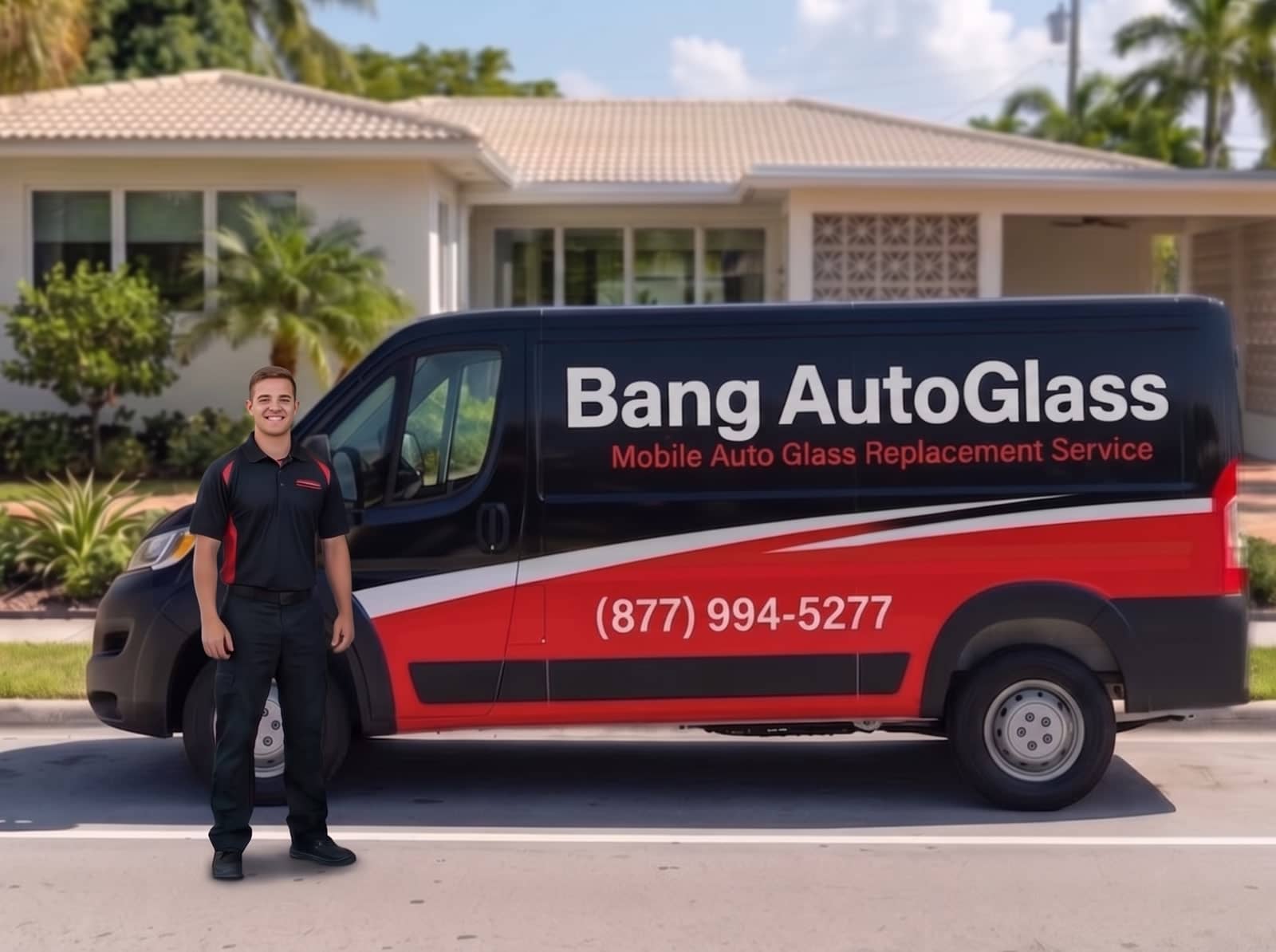
Honda Windshield Replacement
Bang AutoGlass installs Honda windshields on Civic, Accord, CR-V, Pilot, Odyssey, HR-V, and Passport with OEM-spec laminated glass supporting Honda Sensing forward camera, rain sensor, and HUD on Accord Touring. Mobile service in Arizona and Florida includes ADAS recalibration and lifetime warranty.
Honda Windshield Replacement: Expert Mobile Service You Can Trust
When your Honda's windshield is cracked, chipped, or shattered, getting it replaced quickly and correctly isn't just about visibility, it's about protecting the engineering that goes into every Honda vehicle. At Bang AutoGlass, we specialize in Honda windshield replacement using OEM-quality glass and proven installation techniques that preserve the safety, comfort, and advanced driver-assistance features your Honda was built with. Whether you drive a Civic, Accord, CR-V, Pilot, Odyssey, or any other Honda model, our fully mobile team comes directly to you and gets the job done right the first time.
What Makes Honda Windshield Replacement Different
Honda vehicles aren't simple to work on the way older cars used to be. Modern Hondas integrate the windshield into the structural integrity of the cabin and the function of multiple safety technologies. Replacing the glass isn't a matter of pulling out the old one and dropping in a new piece, it requires precision, calibration, and the right materials. A poor installation can compromise everything from your defroster to your forward collision warning system, which is why Honda owners specifically need a glass company that understands their vehicle.
Honda Sensing and ADAS Integration
Most Honda models from 2015 onward come equipped with Honda Sensing, the brand's signature suite of advanced driver-assistance systems. Honda Sensing relies on a forward-facing camera mounted at the top of the windshield, and that camera powers a long list of safety features that you depend on every time you drive:
- Collision Mitigation Braking System (CMBS)
- Lane Keeping Assist System (LKAS)
- Adaptive Cruise Control with Low-Speed Follow
- Road Departure Mitigation System (RDM)
- Traffic Sign Recognition
- Auto High-Beam Headlights
- Lane Departure Warning
When your Honda windshield is replaced, this camera must be properly recalibrated so it can accurately read the road ahead. Skipping calibration or doing it improperly can cause Honda Sensing to misjudge distances, fail to brake in time, or trigger false alerts. We take ADAS calibration seriously and ensure every applicable Honda is calibrated to factory specs after installation.
Acoustic Windshields and Cabin Comfort
Many Honda models, especially trims like the Accord Touring, CR-V EX-L, Pilot Elite, and Odyssey Elite, come from the factory with acoustic windshields. These windshields contain a special inner layer of sound-dampening film that reduces road and wind noise, contributing to the quiet cabin experience Honda is known for. Replacing an acoustic Honda windshield with a standard piece of glass will noticeably change how your vehicle sounds at highway speeds. We always match the exact specifications of your original windshield, including acoustic layers, so you don't lose that refined ride quality.
Rain Sensors, Heated Wiper Areas, and Other Embedded Features
Higher trim Hondas often include rain-sensing wipers, heated wiper park areas to prevent ice buildup, humidity sensors that work with the climate control system, and built-in antennas. These features are wired into or mounted on the windshield itself. When we replace your Honda glass, we make sure these components are properly transferred or replaced and that everything functions exactly as it did before.
Common Reasons Honda Owners Need Windshield Replacement
Even the most carefully driven Honda is vulnerable to windshield damage. Understanding what causes the damage can help you know when a quick repair won't cut it and full replacement is necessary.
Rock Chips That Spread Into Cracks
A small chip from a kicked-up rock might seem harmless, but Honda windshields, especially on taller-riding CR-Vs, Pilots, and Ridgelines that see more highway and trail use, are particularly prone to chips that spread fast. Temperature changes, vibration, and the natural flex of the glass cause chips to crack outward. Once a crack reaches the edge of the windshield, sits in the driver's line of sight, or extends longer than about three inches, full replacement is the only safe option.
Stress Cracks From Temperature Swings
Honda windshields can develop stress cracks without any direct impact, often from rapid temperature changes. Blasting the defroster on an icy morning or parking a hot Civic in the shade after a long highway drive can cause the laminated glass to expand and contract unevenly, creating a crack that seems to appear out of nowhere.
Severe Weather and Road Debris
Hail, falling branches, and debris from construction zones or large trucks can shatter or deeply pit a Honda windshield. Modern laminated glass tends to hold together rather than break apart, which is good for safety, but it usually means the windshield needs to be fully replaced rather than repaired.
Vandalism or Break-In Damage
If your Honda has been broken into or vandalized, the windshield may have been struck or pried at. Even hairline damage from these incidents weakens the structural bond of the glass to the vehicle frame and warrants replacement rather than repair.
Honda Models We Service
We replace windshields on every Honda model on the road, and we keep up with the specific quirks each one brings to the table.
Honda Civic Windshield Replacement
The Civic is one of the most common windshields we replace, partly because it's one of the best-selling cars in America and partly because its low-slung profile makes it a frequent target for highway rock damage. We service every generation of Civic, including sedan, coupe, hatchback, Si, and Type R variants. Newer Civics from 2016 forward include Honda Sensing and require ADAS calibration after any windshield replacement.
Honda Accord Windshield Replacement
Accord windshields are larger than Civics and often include acoustic glass, especially on Touring trims. The 10th and 11th generation Accords from 2018 forward all include Honda Sensing as standard equipment, so camera calibration is part of every replacement we perform on these vehicles.
Honda CR-V Windshield Replacement
The CR-V is one of the most popular SUVs in America, and its tall, upright windshield is a common target for highway debris. CR-V windshields are typically larger and heavier than sedan glass, and they almost always include rain sensors and the Honda Sensing camera on EX trim and above.
Honda Pilot Windshield Replacement
The Pilot has one of the larger windshields in Honda's lineup and is often equipped with acoustic glass to keep the third-row cabin quiet on family road trips. Pilot windshield replacements take a little longer due to size, but we still complete the job comfortably within our standard service window.
Honda Odyssey Windshield Replacement
Odyssey minivans have expansive windshields that contribute significantly to cabin visibility. They're also one of the most likely Honda models to include the full suite of Honda Sensing features, acoustic glass, and rain sensors. Mobile replacement is especially convenient for Odyssey owners since wrangling a minivan to a shop with kids in tow is often more trouble than it's worth.
Honda HR-V, Passport, and Ridgeline
These models share platform components with the Civic, CR-V, and Pilot, but each has its own windshield part numbers and feature options. The Ridgeline, as Honda's only truck, is exposed to more bed-related debris than other models and tends to see frequent replacement requests.
Honda Insight, Fit, and Older Models
We also service Insight hybrids, Fit subcompacts, and older Hondas like the Element, S2000, CR-Z, Crosstour, and discontinued Civic Hybrid. If you drive a classic or older Honda, we can usually source OEM-quality glass for your vehicle.
Our Honda Windshield Replacement Process
Every Honda windshield replacement we perform follows a careful, step-by-step process designed to deliver factory-quality results.
- Inspection and quote. We confirm the exact glass needed for your specific Honda, including trim level, ADAS features, and any optional equipment like rain sensors or acoustic layers.
- Removing the damaged windshield. We protect the surrounding paint, dash, and trim, then carefully cut the urethane bond holding the old windshield in place.
- Preparing the pinch weld. The frame is cleaned and primed to ensure a strong, leak-free bond with the new glass.
- Installing OEM-quality glass. We use premium urethane adhesive and seat the new windshield with precise alignment to match factory tolerances.
- Curing the adhesive. The vehicle needs to sit for about one hour for the glue to reach safe drive-away strength.
- ADAS calibration. For Hondas equipped with Honda Sensing, we perform the manufacturer-recommended calibration so all safety features work correctly.
- Final quality check. We test sensors, wipers, defrosters, and confirm there are no air or water leaks before we hand the vehicle back to you.
The actual replacement itself usually takes 30 to 45 minutes, with an additional hour for the adhesive to fully cure. That means most Honda owners are back on the road in well under two hours from when we arrive.
ADAS Calibration for Your Honda
Calibration is one of the most misunderstood parts of modern windshield replacement, and Honda owners ask about it constantly. The forward-facing camera that powers Honda Sensing sits in a specific position relative to the road. Even a fraction of an inch off can cause the system to misread lane markings, misjudge distances, or fail to trigger automatic braking when you need it most.
Static Versus Dynamic Calibration
Honda generally requires a combination of static and dynamic calibration depending on the model year and equipment. Static calibration is performed with the vehicle stationary using factory-style targets, while dynamic calibration requires driving the vehicle at a set speed for a certain distance so the camera can re-learn its environment. We handle whatever method your specific Honda calls for.
When Calibration Is Always Required
Any Honda equipped with a forward-facing camera at the top of the windshield needs calibration after a windshield replacement. This includes virtually all Honda Sensing models from 2015 to present. Skipping calibration is not an option if you want your safety features to function properly.
Mobile Honda Windshield Replacement at Your Location
We're a fully mobile auto glass company, which means we come to you. No towing, no rearranging your day around a shop appointment, no sitting in a waiting room watching the clock. Our technicians arrive with the correct OEM-quality glass for your Honda, the proper urethane adhesives, and the calibration equipment needed for Honda Sensing vehicles.
What to Expect on Replacement Day
When we arrive, we'll walk through the work with you, get your Honda parked on a level surface, and get started right away. The actual replacement is finished within 30 to 45 minutes, then we wait one hour for the urethane to cure before you drive. You can use that hour however you like, work from home, run errands on foot, or just enjoy a coffee in your kitchen.
Next-Day Appointments Available
Windshield damage doesn't wait for a convenient time, which is why we offer next-day appointments for Honda windshield replacement in most cases. Call us today and we can likely have a technician at your driveway tomorrow with the right glass and tools ready to go.
Cost of Honda Windshield Replacement
Honda windshield replacement cost varies based on several factors, and we believe in transparent pricing. When you call or request a quote, we give you the full price upfront so you can make an informed decision.
Factors That Affect Honda Windshield Pricing
Your Honda's model year, trim level, and feature set all play a role. A base-model Civic without Honda Sensing will cost less than a Pilot Elite with acoustic glass, rain sensors, and a forward-facing camera that needs calibration. Heated wiper park areas, humidity sensors, and HUD-compatible glass on certain trims can also affect the price.
Insurance Coverage for Honda Windshields
Many auto insurance policies include comprehensive coverage that pays for windshield replacement, often with a low deductible or, in some states, no deductible at all. If you have comprehensive coverage on your Honda, your out-of-pocket cost may be minimal or even zero.
Filing an Insurance Claim for Your Honda Windshield
If you'd like to use your insurance for your Honda windshield replacement, we'll assist you through the claim process. We help you with the insurance claim from start to finish and make the process as smooth as possible. Many of our customers get their claim approved the next day they call.
What You'll Need
Most insurance companies will ask for your policy number, the date and cause of damage, the year, make, and model of your Honda, and the VIN. We'll let you know if your specific insurer requires anything else beyond that.
Our Lifetime Workmanship Warranty
Every Honda windshield replacement we perform comes with a lifetime workmanship warranty. If you ever experience leaks, wind noise, or any installation-related issue for as long as you own your Honda, we'll come back and fix it at no cost. This warranty reflects our confidence in the OEM-quality glass we use, the certified urethane that bonds it in place, and the skill of the technician who installed it.
Why Honda Owners Choose Bang AutoGlass
Honda drivers tend to be loyal, and we understand why. The brand has built a reputation for reliability, smart engineering, and lasting value. We treat every Honda windshield replacement with the same respect Honda puts into building these vehicles. Our technicians use OEM-quality glass that matches factory specs, certified urethane adhesives, and proper ADAS calibration procedures every single time. We also pride ourselves on being honest about pricing, transparent about what your specific Honda needs, and respectful of your time and your driveway.
Frequently Asked Questions About Honda Windshield Replacement
How long does a Honda windshield replacement take?
The actual replacement takes about 30 to 45 minutes. After installation, the adhesive needs about one hour to cure before you can safely drive the vehicle. ADAS calibration, if required for your Honda Sensing model, may add additional time depending on the calibration type.
Can I drive my Honda immediately after the windshield is replaced?
No, you should wait at least one hour after installation before driving. The urethane adhesive needs that time to bond properly and reach safe drive-away strength so the windshield is secure in the event of an airbag deployment or collision.
Can I book a next-day appointment?
Yes, we offer next-day appointments for most Honda windshield replacements. Call us today and we can likely schedule your appointment for tomorrow.
Will my Honda Sensing features still work after the windshield is replaced?
Yes, as long as your windshield is properly replaced and calibrated. We calibrate every Honda Sensing camera as part of the replacement process so your safety features work exactly as they did before.
Does Bang AutoGlass come to me?
Yes, we are a fully mobile auto glass service. We come to your home, office, or any safe location where you have your Honda parked on a level surface.
Is OEM-quality glass as good as factory glass?
Yes. The OEM-quality glass we use is built to meet or exceed the same specifications as the original glass that came on your Honda from the factory. It matches in thickness, optical clarity, embedded features, and safety standards.
Schedule Your Honda Windshield Replacement Today
If you're dealing with a chip, crack, or shattered windshield on your Honda, don't wait for the damage to spread or compromise your safety. Bang AutoGlass is ready to come to you with OEM-quality glass, expert installation, full Honda Sensing calibration, and a lifetime workmanship warranty backing every job. Give us a call or fill out our quick contact form to lock in a next-day appointment for your Civic, Accord, CR-V, Pilot, Odyssey, or any other Honda model. We'll handle the glass while you handle the rest of your day.
Frequently asked questions
How long does a Honda windshield replacement take?
The replacement itself takes about 30-45 minutes to complete. The adhesive then needs roughly 1 hour to set before you can safely drive. If your Honda has a safety camera, ADAS calibration adds about 15-30 minutes.
Is it safe to drive after a windshield replacement?
You'll need to wait about 1 hour after the replacement is finished for the adhesive to fully set before driving. We'll let you know exactly when it's safe to hit the road.
Does insurance cover Honda windshield replacement?
Many comprehensive insurance plans cover windshield replacement with nothing out of pocket. In Florida, the state law waives the deductible for windshield claims with comprehensive coverage. We'll help you understand your coverage and file your claim.
What warranty comes with a Honda windshield replacement?
Every windshield replacement is backed by a lifetime workmanship warranty. We use OEM-quality glass and materials to ensure durability and a perfect fit for your Honda.
4.8★ on Google · 350+reviews from AZ & FL drivers
“I needed my windshield replaced and they made the entire process easy. Bang AutoGlass is the best!”
“Top-notch auto glass service. They handled my windshield replacement quickly and professionally.”
“Bang AutoGlass made my windshield replacement simple from start to finish.”
Need Honda Windshield Replacement?
We come to you across Arizona and Florida — often $0 with insurance.
We reply within minutes during business hours.