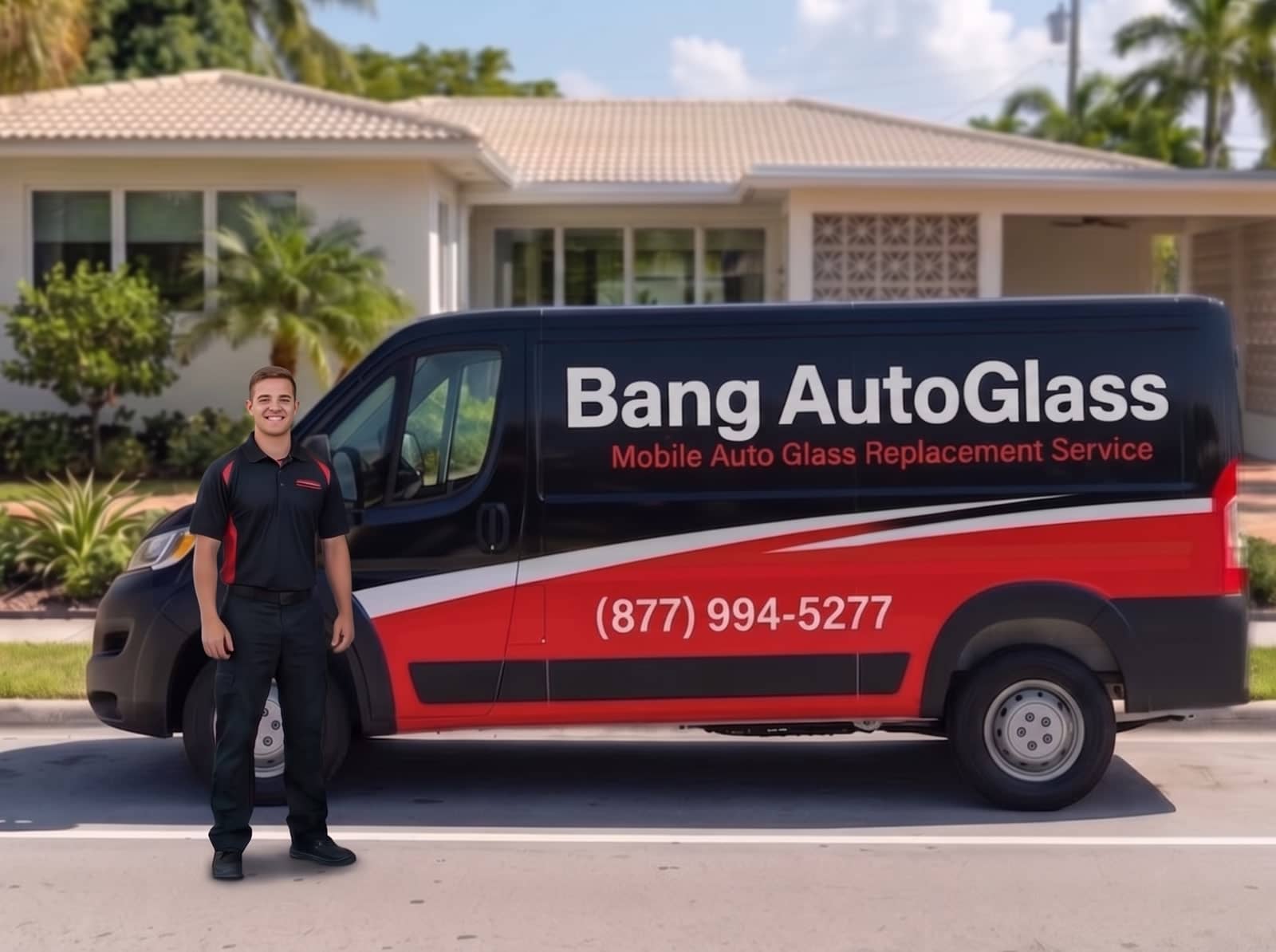
Hyundai ADAS Calibration
Bang AutoGlass coordinates Hyundai SmartSense ADAS calibration after windshield service so Forward Collision-Avoidance Assist, Lane Keeping Assist, Smart Cruise Control, and Highway Driving Assist read correctly on Elantra, Tucson, Santa Fe, Palisade, and Ioniq 5. Arizona and Florida mobile.
Hyundai ADAS Calibration: Restoring Hyundai SmartSense After Windshield Replacement
When you drive a modern Hyundai, you're trusting more than just steel and rubber to keep you safe. You're trusting a sophisticated network of cameras, radar sensors, and Hyundai SmartSense technology that constantly monitors the road ahead. The moment your windshield is replaced or your front-end is disturbed, that entire safety network can be thrown off by even a millimeter, and that's exactly where Hyundai ADAS calibration becomes essential. At Bang AutoGlass, we specialize in restoring the precise factory alignment of your Hyundai's Advanced Driver Assistance Systems so every camera, sensor, and warning system performs exactly the way Hyundai engineered it to.
What Is Hyundai ADAS Calibration?
ADAS stands for Advanced Driver Assistance Systems, and on a Hyundai, these systems are bundled under the Hyundai SmartSense umbrella. Hyundai ADAS calibration is the process of resetting and aligning the forward-facing camera, radar units, and supporting sensors so they accurately read the road, vehicles, pedestrians, and lane markings around your car. Because the primary SmartSense camera lives behind the windshield, any time that glass is removed or replaced, the camera's factory aim is broken and calibration is mandatory before the system can be trusted again.
Why Calibration Is Required After a Hyundai Windshield Replacement
Hyundai windshields are not simple sheets of glass. They serve as the mounting platform for the forward camera that drives features like Lane Keeping Assist, Forward Collision-Avoidance Assist, and Smart Cruise Control. A shift as small as two millimeters in the camera's position can cause that camera to read lane lines three to four feet off at highway speed. That kind of error means your Hyundai might brake for a phantom object, fail to recognize a real pedestrian, or drift out of its lane without warning. Calibration brings the camera back into perfect agreement with the rest of the vehicle so SmartSense behaves the way it was designed to behave from the factory.
Hyundai SmartSense Safety Systems That Depend on Calibration
Hyundai SmartSense is a comprehensive suite of driver assistance features, and most of them rely on the windshield-mounted camera being calibrated correctly. Understanding which systems depend on calibration helps explain why this step is non-negotiable after Hyundai auto glass replacement.
Forward Collision-Avoidance Assist (FCA)
Hyundai's Forward Collision-Avoidance Assist with Pedestrian Detection uses the front camera and front radar to identify vehicles, cyclists, and pedestrians in your path. When the system detects a likely collision, it provides an audible warning, a visual alert in the cluster, and, if you don't react quickly enough, it applies the brakes automatically. After a Hyundai windshield replacement, FCA cannot function reliably until the camera is recalibrated to match the radar's view of the road.
Lane Keeping Assist (LKA) and Lane Following Assist (LFA)
Lane Keeping Assist warns you if your Hyundai begins drifting toward a lane line and applies gentle steering correction to keep you centered. Lane Following Assist takes that one step further by actively maintaining your position in the lane during normal driving. Both features depend on a perfectly aimed forward camera reading painted lane markings. Without calibration, the system can over-correct, under-correct, or fail to recognize lanes altogether.
Smart Cruise Control (SCC) and Highway Driving Assist (HDA)
Smart Cruise Control uses radar and camera fusion to maintain a safe gap between your Hyundai and the vehicle in front. Highway Driving Assist combines SCC with lane centering to provide semi-autonomous driving on the freeway. If the camera's aim is even slightly off after a windshield replacement, both systems can misjudge distance, react late, or disengage unexpectedly.
Driver Attention Warning (DAW)
Driver Attention Warning monitors your steering inputs, lane position, and driving patterns to detect signs of fatigue or distraction. Because it relies on lane data from the same windshield camera, DAW also requires calibration any time SmartSense components are disturbed.
Blind Spot Collision-Avoidance Assist and Rear Cross-Traffic Alert
While these systems primarily use radar units in the rear bumper, certain Hyundai models cross-reference data with the forward camera for system-wide awareness. Calibration ensures every input agrees with every other input across the SmartSense network.
Hyundai Models That Require ADAS Calibration After Windshield Replacement
Nearly every Hyundai built from 2016 forward with a forward-facing camera requires ADAS recalibration after a windshield replacement. Below are the most common Hyundai models we calibrate at Bang AutoGlass.
Hyundai Elantra ADAS Calibration
Hyundai Elantra models, especially 2017 and newer trims equipped with SmartSense, use a windshield-mounted camera for FCA, LKA, and LFA. After an Elantra windshield replacement, both static and dynamic calibration are typically required depending on the model year.
Hyundai Sonata ADAS Calibration
The Hyundai Sonata, particularly DN8-generation models from 2020 to present, carries a full SmartSense suite. Sonata windshield camera calibration must be performed any time the glass is replaced or the front bumper is removed.
Hyundai Tucson ADAS Calibration
The Hyundai Tucson is one of the most common vehicles we calibrate. The 2022 and newer NX4 platform Tucson uses an advanced multi-function camera that controls Lane Following Assist, Highway Driving Assist, and Forward Collision-Avoidance Assist 2. Tucson ADAS calibration is required after every windshield replacement, period.
Hyundai Santa Fe ADAS Calibration
The Hyundai Santa Fe relies on its SmartSense camera for highway-speed safety features and adaptive cruise. After a Santa Fe windshield replacement, static calibration in a controlled environment is standard.
Hyundai Palisade ADAS Calibration
The Hyundai Palisade is a flagship SUV with one of the most sophisticated SmartSense configurations Hyundai offers. Palisade ADAS calibration is critical because the vehicle relies heavily on its forward camera for lane centering, automatic emergency braking, and adaptive cruise.
Hyundai Kona, Venue, Ioniq, Ioniq 5, and Ioniq 6
Hyundai's compact crossovers and electric models all use the same SmartSense camera architecture. Whether you drive a Kona, a Venue, an Ioniq 5, or an Ioniq 6, ADAS calibration after a windshield replacement is required to keep your driver assistance features safe and accurate.
Types of Hyundai ADAS Calibration
Hyundai uses two primary calibration methods, and many vehicles require a combination of both. Understanding the difference helps explain why proper Hyundai ADAS calibration cannot be rushed or skipped.
Static Calibration
Static calibration is performed in a controlled environment with the vehicle parked and specialized targets placed at specific distances and angles in front of the camera. The Hyundai scan tool then guides the camera to recognize those targets and reset its baseline. Static calibration is the most precise method and is required for many Hyundai models, especially newer Palisade, Tucson, Sonata, and Santa Fe trims.
Dynamic Calibration
Dynamic calibration is performed while driving the Hyundai on a well-marked road at specific speeds, usually between 30 and 50 miles per hour. The camera observes lane lines and traffic in real time while the scan tool monitors and confirms successful alignment. Dynamic calibration is common on older Hyundai SmartSense vehicles and on certain newer models in combination with static procedures.
Dual Static and Dynamic Calibration
Many modern Hyundai vehicles require both static and dynamic calibration in sequence. The static phase establishes the baseline camera aim, and the dynamic phase confirms the calibration under real-world driving conditions. Skipping either step on a vehicle that requires both leaves your SmartSense system incomplete and unsafe.
The Hyundai ADAS Calibration Process Step-by-Step
Here is exactly what happens when Bang AutoGlass performs a Hyundai ADAS calibration after your windshield replacement:
- We complete your Hyundai windshield replacement using OEM-quality glass, which on most vehicles takes 30 to 45 minutes from start to finish.
- We allow approximately one hour for the urethane adhesive to cure so the windshield is structurally bonded before we begin calibration.
- We connect a Hyundai-compatible scan tool to your vehicle's OBD-II port and read the camera and radar modules to confirm they are communicating correctly.
- If your Hyundai requires static calibration, we set up targets at the manufacturer-specified distances and angles in front of the vehicle on a level surface.
- We initiate the calibration sequence and allow the scan tool to walk the camera through target recognition until alignment is confirmed.
- If your Hyundai also requires dynamic calibration, we take the vehicle on a road test at the speeds and lane conditions Hyundai specifies.
- We clear any temporary fault codes and verify that every SmartSense feature reports ready and operational before returning the keys.
How Long Does Hyundai ADAS Calibration Take?
Hyundai windshield camera calibration typically takes 60 to 90 minutes on its own. When combined with a windshield replacement, the total appointment window is generally two to three hours, including the 30 to 45 minute glass install and the one hour adhesive cure time. Because we are a mobile auto glass service, we bring the entire process to your driveway, workplace, or wherever your Hyundai is parked. That means no dropping the car off at a dealer, no rideshare back home, and no wasted day in a waiting room. We also offer next-day appointments so you don't have to wait a week to get your SmartSense safety features restored.
Signs Your Hyundai Needs ADAS Calibration
If your Hyundai windshield has been replaced and the calibration step was skipped, or if you've recently had front-end work done, watch for any of the following symptoms that point to an out-of-spec ADAS system:
- A Lane Keeping Assist or Forward Collision warning light remains illuminated on the dashboard
- Lane Keeping Assist pulls the steering wheel when no lane lines are present or fails to react when they are
- Forward Collision-Avoidance Assist brakes for objects that are not in your path, also known as phantom braking
- Smart Cruise Control fails to maintain a consistent following distance from the vehicle ahead
- Highway Driving Assist disengages frequently or refuses to activate
- The vehicle displays a SmartSense service message or a camera-related fault code
Any one of these symptoms is reason enough to schedule a Hyundai ADAS calibration appointment. Driving a vehicle with miscalibrated safety systems is genuinely more dangerous than driving one without those systems at all, because you may rely on warnings or interventions that never come.
Insurance Coverage and Claim Assistance for Hyundai ADAS Calibration
The cost of Hyundai ADAS calibration is almost always covered by comprehensive auto insurance when it is performed as part of a windshield replacement claim. Most major carriers treat calibration as a required, related operation under glass coverage, which means filing the calibration alongside the glass replacement typically does not raise your premium. Dealer pricing for the same service can run $750 to $1,200, while independent specialists like Bang AutoGlass deliver the same quality calibration for a fraction of that cost.
How We Help You With Your Insurance Claim
We help you with the insurance claim from start to finish and make the process as smooth as possible. We help you gather the information you need, explain what to tell your adjuster, identify the right coverage on your policy, and make sure the calibration is documented on the work order from the start. That documentation is what guarantees the calibration gets paid as part of your glass claim instead of becoming an out-of-pocket surprise later. We help you with the insurance claim from start to finish and make the process as smooth as possible.
Why Choose Bang AutoGlass for Your Hyundai ADAS Calibration
There are plenty of shops that will replace a windshield. There are far fewer that handle the calibration correctly, and even fewer that bring all of it to your driveway. Here's what sets Bang AutoGlass apart for Hyundai owners.
Mobile Service Across the Service Area
We come to you. Whether your Hyundai is parked at home, at the office, at a job site, or at a coffee shop, our mobile technicians arrive with everything needed to complete the windshield replacement and the ADAS calibration on the spot. No tow truck, no rideshare, no lost day.
OEM-Quality Materials Every Time
Every Hyundai we work on receives OEM-quality glass and OEM-spec urethane. The materials we install meet the same optical clarity, frit pattern, and bracket specifications as the glass that came from the factory, which is critical because your SmartSense camera reads through that glass. Inferior glass with optical distortion can cause calibration to fail or produce unreliable readings even after a successful calibration.
Lifetime Workmanship Warranty
Every Hyundai windshield replacement and ADAS calibration we perform is backed by our lifetime workmanship warranty. If anything related to our installation ever causes an issue, we make it right. That warranty is our promise that the job is done correctly the first time.
Next-Day Appointments
You shouldn't have to wait a week to drive a safe vehicle. We offer next-day appointments for Hyundai windshield replacement and ADAS calibration so you can get back on the road with full SmartSense functionality almost immediately after the damage occurs.
Schedule Your Hyundai ADAS Calibration Today
If your Hyundai needs a windshield replacement, the calibration is not optional, it's part of the job. Bang AutoGlass is your local mobile specialist for Hyundai windshield replacement and Hyundai ADAS calibration, combining OEM-quality materials, a lifetime workmanship warranty, next-day availability, and full insurance claim assistance into one streamlined appointment. Use the contact information above or fill out the quick sign-up form to lock in your next-day appointment, and we'll handle the rest, from the glass to the calibration to the paperwork.
Frequently asked questions
What is ADAS calibration and why does my Hyundai need it?
ADAS (Advanced Driver Assistance Systems) are safety features like lane-keeping assist and automatic braking that rely on a camera mounted on your windshield. After windshield replacement, the camera must be recalibrated to ensure these features work accurately and keep you safe.
How long does Hyundai ADAS calibration take?
ADAS calibration typically takes about 15-30 minutes once your windshield replacement is complete. The full visit, including glass replacement and calibration, is roughly 1.5-2 hours total.
Is ADAS calibration included in my windshield replacement?
If your Hyundai has ADAS features (typically 2018 and newer), calibration is included as part of the windshield replacement service at no additional charge. We perform it right on-site during your mobile appointment.
Do all Hyundai vehicles require ADAS calibration?
Most Hyundai vehicles from 2018 onward come equipped with ADAS features and will need calibration after windshield replacement. Older models without this technology do not require it, and our technician will confirm whether your vehicle needs it.
4.8★ on Google · 350+reviews from AZ & FL drivers
“I needed my windshield replaced and they made the entire process easy. Bang AutoGlass is the best!”
“Top-notch auto glass service. They handled my windshield replacement quickly and professionally.”
“Bang AutoGlass made my windshield replacement simple from start to finish.”
Need Hyundai ADAS Calibration?
We come to you across Arizona and Florida — often $0 with insurance.
We reply within minutes during business hours.