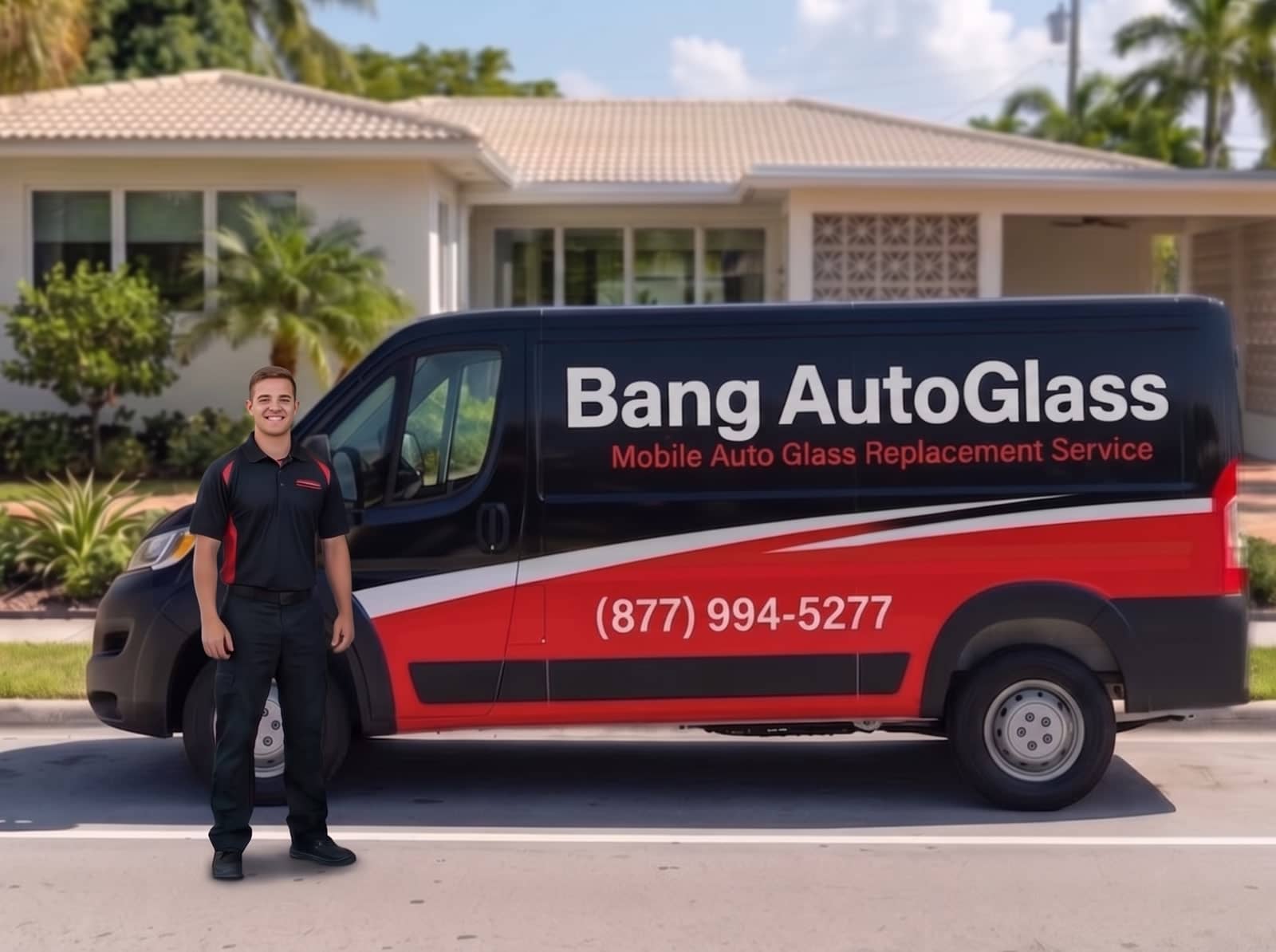
Hyundai Windshield Replacement
Bang AutoGlass installs Hyundai windshields on Elantra, Sonata, Tucson, Santa Fe, Palisade, and Ioniq 5 with OEM-spec laminated glass supporting SmartSense forward camera, rain sensor, and HUD on Palisade. Mobile service in Arizona and Florida includes ADAS recalibration and lifetime warranty.
Hyundai Windshield Replacement
Driving a Hyundai means enjoying a vehicle built around safety, comfort, and the latest in-cabin technology, and the windshield plays a much bigger role in all three of those areas than most drivers realize. Whether you own a sporty Elantra, a family-ready Palisade, or an efficient Ioniq, your windshield is a structural component, a sensor platform, and a barrier between you and the road. When that glass becomes damaged, getting a professional Hyundai windshield replacement isn't just about visibility, it's about restoring the entire safety system your vehicle was engineered with. At Bang AutoGlass, we specialize in fast, mobile Hyundai windshield replacement using OEM-quality glass and a lifetime workmanship warranty backing every install.
Why Your Hyundai Windshield Is More Than Just Glass
Modern Hyundai vehicles are designed with the windshield as a load-bearing safety component. In the event of a rollover, the windshield contributes a significant portion of the roof's crush strength, and during a frontal collision it provides a backstop for the passenger-side airbag to deploy properly. A damaged or improperly installed windshield can compromise both of these critical safety functions. Beyond crash protection, today's Hyundai windshields also house an increasing number of sensors, cameras, and antennas tied to the Hyundai SmartSense suite of driver assistance features. That means a crack or chip in your Hyundai windshield isn't only an eyesore, it can interfere with everything from lane departure warnings to automatic emergency braking.
Hyundai Models We Replace Windshields For
Bang AutoGlass services the full lineup of Hyundai vehicles, and we keep ourselves up to date on the unique glass requirements of each model. Here are some of the most common Hyundai models our customers bring to us for windshield replacement.
Hyundai Elantra Windshield Replacement
The Elantra is one of the most popular compact sedans on the road, and newer model years come equipped with a forward-facing camera mounted behind the rearview mirror. Replacement of an Elantra windshield often requires ADAS recalibration to ensure features like Lane Keeping Assist and Forward Collision-Avoidance Assist continue to work as designed. We're familiar with every Elantra generation, including the latest hybrid and N-Line trims.
Hyundai Sonata Windshield Replacement
The midsize Sonata frequently features acoustic laminated glass to keep cabin noise down on highway drives. Many Sonatas also include rain-sensing wipers and a humidity sensor mounted to the glass, both of which need to be properly transferred or replaced during the install. Higher trims may also include a Heads-Up Display, which requires a HUD-compatible windshield to function correctly.
Hyundai Tucson Windshield Replacement
The Tucson is one of Hyundai's best-selling SUVs and is loaded with SmartSense features. Newer Tucson models often have heated wiper park areas and forward-facing cameras, requiring careful handling of the wiring harness and electrical connections during replacement. We make sure every Tucson windshield is sealed and calibrated to the exact spec your model year requires.
Hyundai Santa Fe Windshield Replacement
The Santa Fe is a family-focused SUV with a larger windshield surface area, and many trims include acoustic glass and integrated rain sensors. Because of its size, proper urethane application and full cure time are essential for a leak-free, structurally sound install on the Santa Fe.
Hyundai Palisade Windshield Replacement
The flagship Palisade often features a Heads-Up Display projection area and a robust array of SmartSense sensors mounted to the glass. ADAS calibration is almost always required when replacing a Palisade windshield, and we make sure your premium three-row SUV gets the attention it deserves.
Hyundai Kona Windshield Replacement
The subcompact Kona, including the Kona Electric, has its own unique glass configuration. While smaller in size, the Kona still includes forward-facing cameras on most trims, meaning a Kona windshield replacement still typically calls for ADAS recalibration once the new glass is in place.
Hyundai Ioniq and Ioniq 5 Windshield Replacement
Hyundai's electrified Ioniq lineup, including the futuristic Ioniq 5 and Ioniq 6, often comes with advanced glass features such as solar control coatings, acoustic interlayers, and complex camera arrays. EV-specific design means we use extra care to avoid disturbing nearby sensors and antennas during a Hyundai Ioniq windshield replacement.
Hyundai Accent and Venue Windshield Replacement
Even Hyundai's entry-level models like the Accent and Venue benefit from professional windshield replacement. While they may have fewer integrated sensors, the same structural and safety standards apply, and we treat every install with the same level of care and precision.
Common Causes of Hyundai Windshield Damage
Windshields take a beating on the road, and a Hyundai is no exception. Some of the most common reasons our customers need a Hyundai windshield replacement include rocks and gravel kicked up by other vehicles on highways and construction zones, sudden temperature changes that cause an existing chip to spread into a long crack, hail and severe weather impacts, vandalism or attempted break-ins, and stress cracks that originate from the edge of the glass and grow over time. Even a small chip can quickly become a full-length crack if left untreated, especially when hot afternoons heat up the glass and cool morning air contracts it.
Signs You Need a Hyundai Windshield Replacement
Not every chip means replacement, but there are a number of situations where repair simply won't cut it and a full Hyundai windshield replacement is the safer choice. Here are the warning signs to watch for:
- Cracks longer than six inches or any crack that extends to the edge of the glass
- Multiple chips or cracks clustered in close proximity to one another
- Damage directly in the driver's line of sight
- Chips that penetrate both layers of the laminated glass
- Cracks that have started to spider or branch out across the windshield
- Damage that interferes with ADAS sensors or the forward-facing camera
- Heavy pitting across the windshield from years of road wear
If you notice any of these issues, the safest move is to schedule a Hyundai windshield replacement before the damage gets worse. The longer you wait, the more likely the crack will spread, the more dangerous driving becomes, and the higher the risk of failing a safety inspection.
The Bang AutoGlass Hyundai Windshield Replacement Process
We've refined our replacement process to be as fast, clean, and convenient as possible while never cutting corners on safety. Here's what to expect when you book your Hyundai windshield replacement with us:
- Inspection and verification of the correct windshield part number for your specific Hyundai make, model, year, and trim, including any sensor or feature options
- Careful removal of wipers, cowl, and trim pieces, followed by safe extraction of the damaged windshield using cold-knife or wire-cutting techniques to protect your paint and pinch weld
- Cleaning and priming of the pinch weld to ensure proper adhesion of the new urethane bead
- Application of premium automotive-grade urethane and precise placement of your new OEM-quality Hyundai windshield
- Reinstallation of all trim, cowl, wipers, sensors, and electrical connectors, followed by a one-hour adhesive cure period before the vehicle is safe to drive
- ADAS recalibration when applicable, ensuring your Hyundai SmartSense features are restored to factory specifications
The entire physical replacement typically takes 30 to 45 minutes, with an additional hour of cure time before you're back on the road. That means most of our customers are up and running again in just over an hour and a half from the time we arrive.
ADAS Calibration for Hyundai Vehicles
Hyundai SmartSense is the brand's umbrella term for its driver assistance technologies, and many of those features rely on a forward-facing camera mounted to the windshield. When the windshield is replaced, that camera's position can shift by just a millimeter or two, which is enough to throw off its calibration and cause features to malfunction.
Hyundai SmartSense Features That Depend on Calibration
Features that may require recalibration after a Hyundai windshield replacement include Lane Keeping Assist, Lane Following Assist, Forward Collision-Avoidance Assist, Driver Attention Warning, Smart Cruise Control with Stop and Go, and High Beam Assist. Each of these systems uses the forward-facing camera to monitor the road, lane markings, vehicles ahead, and roadside signage, so accurate calibration is non-negotiable for them to function as intended.
Static and Dynamic Calibration Explained
Hyundai uses both static and dynamic calibration depending on the model and year. Static calibration is performed with the vehicle stationary in a controlled environment using a calibration target, while dynamic calibration requires driving the vehicle on well-marked roads at specific speeds. We coordinate the necessary calibration for your specific Hyundai to ensure everything is dialed in correctly before we consider the job complete.
OEM-Quality Glass Built for Your Hyundai
At Bang AutoGlass, we use OEM-quality glass for every Hyundai windshield replacement. OEM-quality means the glass meets or exceeds the same specifications, thickness, optical clarity, sensor cutouts, and acoustic properties as the original factory windshield, all without the dealership markup. For Hyundai owners, this matters because the brand uses several specialty glass features depending on model and trim.
Acoustic Laminated Glass
Many Hyundai models, particularly mid- and upper-trim Sonatas, Santa Fes, and Palisades, come equipped with acoustic windshields that include a noise-dampening inner layer. We make sure your Hyundai windshield replacement matches that acoustic specification so cabin quietness is preserved.
Rain Sensors, Humidity Sensors, and Heated Elements
Hyundai windshields often include built-in rain sensors that automatically adjust wiper speed, humidity sensors that help defog the cabin, and heated wiper park areas to melt ice and snow. Each of these features requires the correct glass and proper transfer or installation of the related components.
Heads-Up Display Compatibility
Models like the Palisade and certain Sonata trims feature a Heads-Up Display that projects driving information onto the windshield. HUD-equipped windshields use a special wedge-shaped interlayer to prevent double imaging, and we make sure to install the correct glass for your specific Hyundai configuration.
Tint Bands and UV Protection
Most Hyundai windshields include a tinted shade band at the top to reduce sun glare, along with UV protection built into the laminated glass. Our OEM-quality replacements match these features for the same comfort and protection you expect from your Hyundai.
How Long Does Hyundai Windshield Replacement Take?
We know your time matters, which is why our Hyundai windshield replacement service is built around efficiency. The actual install takes about 30 to 45 minutes from start to finish. After that, the urethane adhesive needs roughly one hour to cure before your vehicle is safe to drive. If your Hyundai requires ADAS recalibration, that may add additional time depending on the model and the calibration method required. From the moment our technician arrives, you can generally expect to be back on the road in under two hours.
Mobile Hyundai Windshield Replacement at Your Location
Bang AutoGlass is a fully mobile service, which means we bring the shop to you. There's no need to take time off work, sit in a waiting room, or arrange a ride to and from a repair facility. We come to your driveway, your office parking lot, your apartment complex, or any safe and accessible location, and we perform the entire Hyundai windshield replacement on-site.
Where We Can Replace Your Hyundai Windshield
As long as the location is reasonably level and safe to work in, we can replace your Hyundai windshield there. Common spots include residential driveways, workplace parking lots, college campus lots, and shopping center spaces. We bring everything needed to complete the job, including the new OEM-quality glass, urethane adhesives, tools, and ADAS calibration equipment when applicable.
Next-Day Appointments Available
We understand that windshield damage doesn't wait, and neither should you. Bang AutoGlass offers next-day appointments so you can get back behind the wheel of your Hyundai as quickly as possible. Whether you noticed a crack on your morning commute or your windshield was damaged overnight, give us a call and we'll work to fit you in on the next available day.
Cost of Hyundai Windshield Replacement
The cost of replacing a Hyundai windshield depends on several factors, including the specific model and year, whether the windshield includes acoustic glass, sensors, heated elements, or HUD compatibility, and whether ADAS calibration is required. Generally, simpler models like the Accent or Venue will cost less to replace than feature-loaded Palisades or Ioniq 5s, but in every case our pricing is competitive and transparent.
Insurance Coverage for Hyundai Windshield Replacement
Many drivers don't realize that their auto insurance policy may cover windshield replacement, often with a low deductible or even no deductible at all if they carry comprehensive coverage. Depending on your state and policy, glass coverage may be included as a no-cost benefit, which can make replacing your Hyundai windshield far more affordable than expected.
Insurance Claim Assistance
If you haven't already filed a claim with your insurance company, we're happy to assist you through the process. We help you with the insurance claim from start to finish and make the process as smooth as possible. Our goal is to make the entire experience as smooth as possible from the first phone call to the final install.
Lifetime Workmanship Warranty on Every Hyundai Windshield Replacement
Every Hyundai windshield replacement we perform comes backed by our lifetime workmanship warranty. That means if there's ever an issue tied to our installation, whether it's a leak, a wind noise complaint, or a trim concern caused by our work, we'll make it right at no cost to you for as long as you own the vehicle. We stand behind our work because we know we use the right glass, the right urethane, and the right techniques on every job.
Caring for Your New Hyundai Windshield
A few simple precautions in the first day after installation will help your new windshield bond properly and last for years to come.
The First 24 Hours
Avoid slamming your doors, washing your vehicle, or driving on rough terrain for the first 24 hours after installation. The urethane adhesive needs that time to fully cure, and excess pressure or vibration can compromise the bond. Leaving a window cracked slightly can also help relieve any pressure differences inside the cabin when closing doors.
Long-Term Care for Your Hyundai Windshield
Once cured, your windshield is just as strong as the original. To extend its life, replace wiper blades regularly to avoid scratching the glass, address chips and small cracks as soon as they appear before they spread, avoid sudden temperature changes such as blasting hot defrost on icy glass, and park in shaded areas when possible to reduce thermal stress.
Why Choose Bang AutoGlass for Your Hyundai Windshield Replacement
Hyundai owners across the area choose Bang AutoGlass because we combine speed, quality, and convenience in a way few other shops can match. We're fully mobile, so we come to you. We use OEM-quality glass that matches the original specifications of your Hyundai. We offer next-day appointments, a lifetime workmanship warranty, and assistance navigating the insurance claim process if you need help getting started. Our technicians know Hyundai vehicles inside and out, from the smallest Accent to the largest Palisade, and we handle each Hyundai windshield replacement with the precision your vehicle deserves.
Schedule Your Hyundai Windshield Replacement Today
Don't let a cracked or chipped windshield put your safety, your Hyundai's structural integrity, or your SmartSense features at risk. Bang AutoGlass is ready to bring fast, professional, mobile Hyundai windshield replacement directly to you. Give us a call or fill out the quick contact form above to schedule your next-day appointment and get back to enjoying every drive in your Hyundai with confidence.
Frequently asked questions
How long does a Hyundai windshield replacement take?
The replacement itself takes about 30–45 minutes, then the adhesive needs roughly 1 hour to set before you can drive. We'll let you know the exact timeline when we arrive at your location.
Is mobile windshield replacement as good as a shop?
Yes. Our fully-equipped technicians complete the entire job at your home, work, or roadside using OEM-quality glass and materials, with the same quality and care as a traditional shop.
Does comprehensive insurance cover my Hyundai windshield?
Most comprehensive policies do cover windshield damage. In Florida, the deductible is waived, so you pay nothing out of pocket. In Arizona, many drivers qualify for no-deductible coverage. We help you file your claim if needed.
What warranty covers my new Hyundai windshield?
Every windshield replacement is backed by a lifetime workmanship warranty, so you're protected against defects in installation for the life of your vehicle.
4.8★ on Google · 350+reviews from AZ & FL drivers
“I needed my windshield replaced and they made the entire process easy. Bang AutoGlass is the best!”
“Top-notch auto glass service. They handled my windshield replacement quickly and professionally.”
“Bang AutoGlass made my windshield replacement simple from start to finish.”
Need Hyundai Windshield Replacement?
We come to you across Arizona and Florida — often $0 with insurance.
We reply within minutes during business hours.