Toyota Windshield Replacement
Bang AutoGlass installs Toyota windshields on Camry, Corolla, RAV4, Highlander, 4Runner, Tundra, Tacoma, and bZ4X with OEM-spec laminated glass supporting Toyota Safety Sense camera, rain sensor, and HUD. Mobile service in Arizona and Florida includes ADAS recalibration and lifetime warranty.
Toyota Windshield Replacement
Expert Toyota Windshield Replacement You Can Count On
When your Toyota's windshield is cracked, chipped, or shattered, you need a windshield replacement service that understands the engineering, technology, and safety systems built into every Toyota on the road today. At Bang AutoGlass, we specialize in Toyota windshield replacement for every model in the lineup, from the daily-driven Toyota Camry and Corolla to the rugged Tacoma, Tundra, 4Runner, and the family-favorite Highlander, RAV4, and Sienna. Whether you're dealing with a stress crack that spread overnight, a rock chip that turned into a full-length fracture, or impact damage from a recent accident, our mobile Toyota auto glass specialists are equipped to handle the job at your home, office, or anywhere else you need us. Every Toyota windshield replacement we perform is backed by a lifetime workmanship warranty and built using OEM-quality glass, so you can drive away with the same clarity, safety, and confidence your Toyota was designed to deliver.
Why Toyota Owners Choose Bang AutoGlass
Toyota vehicles are engineered with precision, and the windshield is far more than a simple piece of glass. It's a structural component that contributes to roof crush resistance, supports proper airbag deployment, and houses the forward-facing camera that powers Toyota Safety Sense. That's why so many Toyota owners trust Bang AutoGlass for their windshield replacement service. We've trained our technicians specifically on Toyota's bonding procedures, urethane requirements, molding clip patterns, and ADAS-equipped windshield handling, so the new glass we install fits, performs, and protects exactly the way Toyota intended. With next-day appointments, mobile service that comes to you, and OEM-quality materials on every job, choosing Bang AutoGlass means choosing a Toyota windshield replacement experience that's faster, more convenient, and built to last.
Toyota Models We Service for Windshield Replacement
We service the full Toyota lineup, and each model has its own quirks, sensor packages, and glass options. Below is a breakdown of the most common Toyota windshield replacements we handle.
Toyota Camry Windshield Replacement
The Toyota Camry is one of the best-selling sedans in America, and we replace Camry windshields almost daily. Newer Camry models, especially trims equipped with Toyota Safety Sense 2.5+ and 3.0, require ADAS calibration after replacement because of the multi-camera array mounted behind the rearview mirror. Many Camry windshields also include rain-sensing wipers and acoustic laminated glass to keep cabin noise down on the highway. We make sure every Camry windshield replacement we perform uses glass that matches the original acoustic, optical, and bracket specifications.
Toyota Corolla Windshield Replacement
Toyota Corolla windshield replacements are extremely common because the car is everywhere and its low ride height makes it especially prone to rock chips from highway debris. Modern Corolla and Corolla Hatchback models include Toyota Safety Sense as a standard feature, meaning even the entry-level Corolla L needs camera recalibration following a windshield replacement. We bring the proper Corolla-specific moldings and clips to every appointment.
Toyota RAV4 Windshield Replacement
The Toyota RAV4 is the most popular SUV in the country, and its tall windshield makes a noticeable difference when cracked. RAV4 windshields often feature rain-sensing wipers, a forward-facing camera, and acoustic glass on higher trims like the XLE Premium, Limited, and TRD Off-Road. RAV4 Hybrid and RAV4 Prime models include additional safety calibration requirements that we handle in-house as part of every windshield replacement.
Toyota Highlander Windshield Replacement
The Toyota Highlander has one of the larger windshields in the Toyota SUV lineup, and replacement requires careful handling to maintain the panoramic visibility this family hauler is known for. Highlander Limited and Platinum trims often include a heads-up display (HUD) windshield, which uses a specialized wedge-shaped inner film to project speed and navigation data clearly without ghosting. We stock the correct HUD-compatible glass for these trims.
Toyota Tacoma Windshield Replacement
The Toyota Tacoma is one of the most common windshield replacement jobs we perform, mainly because Tacoma owners spend a lot of time on dirt roads, gravel highways, and construction sites where rock chips and stress cracks are part of life. Many Tacoma windshields include an acoustic interlayer and a heated wiper park area, and TRD Pro and Limited trims add Toyota Safety Sense camera mounts that must be recalibrated.
Toyota Tundra Windshield Replacement
The newer generation Toyota Tundra introduced one of the largest windshields in the Toyota lineup, paired with an advanced multi-camera system. Tundra windshield replacement requires precise alignment and full ADAS recalibration to keep Pre-Collision braking, Lane Tracing Assist, and Dynamic Radar Cruise Control working correctly.
Toyota 4Runner Windshield Replacement
The Toyota 4Runner is a body-on-frame off-roader, which means trail damage to the windshield is common. Older 4Runner models often skip ADAS calibration, but TRD Pro and Limited trims with Toyota Safety Sense P do require it. We carry the correct 4Runner glass thickness and tint band for both standard and TRD trims.
Toyota Sienna Windshield Replacement
The Toyota Sienna minivan windshield replacement frequently involves a heated wiper park area, a rain sensor, and an acoustic laminated build. The newest Sienna Hybrid models also include a forward-facing camera that requires recalibration as part of any complete windshield replacement.
Toyota Prius Windshield Replacement
The Toyota Prius has a steeply raked windshield that's especially vulnerable to rock impacts. Prius models include Toyota Safety Sense as standard equipment, and the wedge-shaped HUD glass on higher trims makes correct OEM-quality replacement glass essential.
Common Signs Your Toyota Needs a Windshield Replacement
Not every chip means a full replacement is necessary, but there are clear warning signs that your Toyota needs more than just a repair. If you notice any of the following, it's time to schedule a Toyota windshield replacement with Bang AutoGlass:
- A crack longer than the width of a dollar bill or any crack that reaches the edge of the glass
- Multiple chips, star breaks, or bullseye impacts within a small area
- Damage directly in the driver's line of sight that can't be safely repaired
- Pitting, hazing, or sandblasting from years of highway driving that causes glare at night
- Stress cracks that appeared without an impact, often caused by temperature swings or frame flex
- Water leaks, wind noise, or interior fogging caused by failed urethane bonding on a previous install
- Damaged or dislodged trim, moldings, or clips after a minor accident
If you're unsure whether your Toyota qualifies for repair or full replacement, send us a photo when you book your appointment and we'll let you know before the technician arrives.
Toyota Safety Sense (TSS) and ADAS Calibration
One of the most important parts of any modern Toyota windshield replacement is the calibration of the advanced driver assistance systems mounted to the glass. Skipping this step can leave Pre-Collision braking, Lane Departure Alert, and other critical safety features misaligned, which is a serious safety concern.
What Is Toyota Safety Sense?
Toyota Safety Sense, often abbreviated TSS, is Toyota's suite of active driver assistance technology. It includes Pre-Collision System with Pedestrian Detection, Lane Departure Alert with Steering Assist, Dynamic Radar Cruise Control, Automatic High Beams, Lane Tracing Assist, and Road Sign Assist. Most of these features rely on a forward-facing camera mounted to the back of the windshield, paired with a millimeter-wave radar sensor behind the Toyota emblem on the grille. When your windshield is replaced, the camera position shifts even by a millimeter, and that shift can translate to several meters of detection error at highway speeds.
Why ADAS Calibration Is Required After a Toyota Windshield Replacement
Toyota requires ADAS recalibration any time the windshield is removed and replaced. Without recalibration, your Toyota's Pre-Collision System could brake too late, Lane Departure Alert could read lane lines incorrectly, and Dynamic Radar Cruise Control could misjudge the distance to the vehicle ahead. We handle calibration as part of the Toyota windshield replacement service so you don't have to make a second appointment at the dealership.
Static vs. Dynamic Calibration
Some Toyota models require static calibration, which uses precision targets placed at exact distances in front of the vehicle in a controlled environment. Other Toyota models use dynamic calibration, which is performed by driving the vehicle at a specified speed on well-marked roads while the system recalibrates itself. A few Toyota models require both. We confirm the exact calibration type required for your specific Toyota year, model, and trim before your appointment.
Toyota Windshield Features We Replace
Toyota windshields are not all created equal, and the trim and option package on your specific Toyota determines which features your glass needs to support. Here are the most common windshield features we replace.
Rain-Sensing Wipers
Rain-sensing wipers use a small optical sensor mounted behind the rearview mirror to automatically activate and adjust wiper speed based on the amount of moisture on the glass. We see this feature on the Toyota Sienna, C-HR, Land Cruiser, Prius, RAV4, and most Limited and Platinum trims. Replacement glass must have the correct sensor gel pad area and bracket pattern for the wipers to function.
Acoustic Laminated Glass
Many Toyota windshields use an acoustic interlayer that significantly reduces highway noise. If your Toyota came with acoustic glass from the factory, replacing it with non-acoustic glass will result in a louder cabin. Every OEM-quality Toyota windshield we install matches the original acoustic specification.
Heated Wiper Park Area
Toyota Sienna, Tacoma, and several Limited trims include a heated wiper park area, a thin heating element embedded in the bottom of the windshield to prevent wipers from freezing in place during winter. We install replacement glass with the correct heating element and electrical connector.
Heads-Up Display (HUD)
Toyota Highlander Limited, Platinum, Avalon Limited, and certain Prius trims include a HUD windshield with a wedge-shaped inner film designed to project speed and navigation without creating a double image. HUD-compatible Toyota windshields are not interchangeable with standard glass, so we always confirm HUD presence before ordering.
Forward-Facing Camera and Sensor Bracket
The forward-facing camera bracket is bonded to the inside of the windshield and is one of the most precision-sensitive components of any Toyota replacement. We use OEM-quality glass with the correct bracket, gel pad, and humidity sensor housing for every ADAS-equipped Toyota.
Our Toyota Windshield Replacement Process
We've refined our process specifically for Toyota vehicles, and every replacement follows the same proven sequence to ensure a perfect bond, accurate calibration, and a windshield that looks and performs like factory.
- We confirm the exact glass specification for your Toyota year, model, trim, and option package, including HUD, rain sensor, acoustic glass, heated wiper park, and ADAS bracket.
- We arrive at your chosen location with the correct OEM-quality glass, fresh urethane adhesive, and all required moldings, clips, and cowl components.
- The technician protects your Toyota's paint, dash, and interior with covers before carefully cutting out the damaged windshield.
- The pinch weld is cleaned, primed, and prepped to manufacturer specification to guarantee a strong, leak-free bond.
- A fresh bead of high-strength urethane is applied, and the new Toyota windshield is set into place using proper alignment guides.
- New moldings and clips are installed, the cowl is reseated, and the camera bracket and rain sensor are reconnected.
- We perform Toyota Safety Sense calibration, either static or dynamic depending on your model, to restore full ADAS functionality.
- The vehicle sits for the required safe drive-away time, then we walk you through the workmanship warranty and aftercare instructions before leaving.
How Long Does a Toyota Windshield Replacement Take?
Most Toyota windshield replacements take 30 to 45 minutes for the physical installation, followed by approximately 1 hour for the urethane adhesive to cure before the vehicle is safe to drive. For Toyota models that require ADAS calibration, add additional time depending on whether your Toyota uses static or dynamic calibration. We always give you a realistic time estimate when you book, so there are no surprises on the day of service. Because we offer next-day appointments, you don't have to wait days or weeks to get back on the road safely.
OEM-Quality Glass for Every Toyota We Service
Every Toyota windshield replacement we perform uses OEM-quality glass that matches the original Toyota specification in thickness, curvature, tint band, acoustic interlayer, sensor brackets, and HUD compatibility. The glass we install meets or exceeds Federal Motor Vehicle Safety Standards (FMVSS 205 and FMVSS 212), so your Toyota's structural integrity, airbag deployment, and ADAS performance remain exactly as Toyota engineered them. You get factory-grade fit, clarity, and durability at a fraction of dealership pricing.
Mobile Toyota Windshield Replacement Service
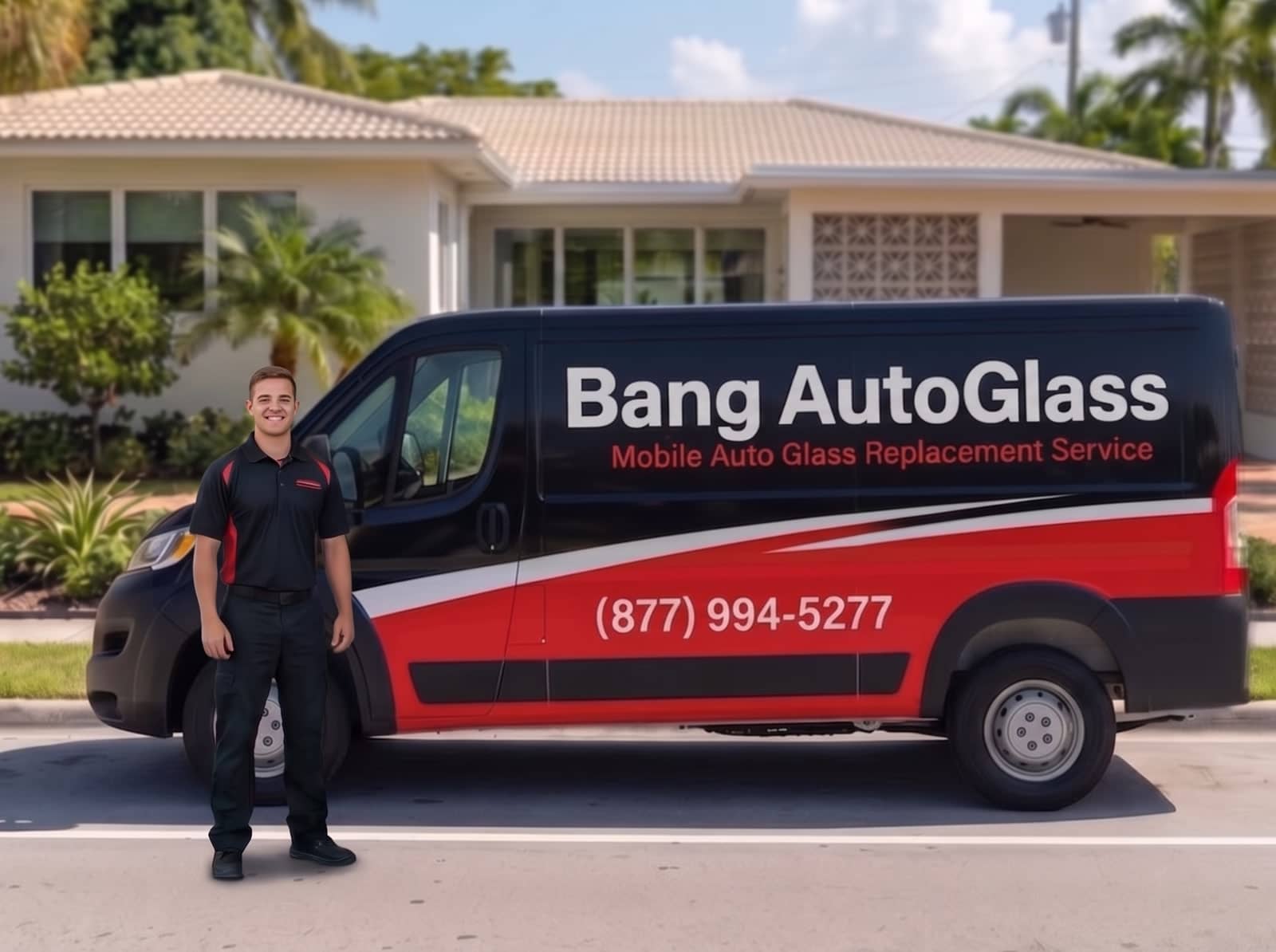
Bang AutoGlass is a fully mobile auto glass company, which means we come to you. Whether you're at home, at work, at the gym, or stuck somewhere with a windshield that's no longer safe to drive, our mobile Toyota windshield replacement service brings the shop to your driveway, parking lot, or job site. There's no need to take a day off, arrange a ride, or sit in a waiting room. Our mobile setup is built for professional installations in any reasonable outdoor environment, and we always confirm weather and location before your appointment.
Toyota Windshield Replacement Cost and Insurance
The cost of a Toyota windshield replacement depends on the specific model, trim, and which features your windshield supports. A base Corolla without ADAS is significantly less expensive than a Highlander Platinum with HUD, rain sensor, acoustic glass, and Toyota Safety Sense calibration. We always provide an upfront, all-in quote when you book, with no hidden fees added later.
Filing an Insurance Claim for Your Toyota Windshield
If you carry comprehensive coverage, your Toyota windshield replacement is often covered with little or no out-of-pocket cost depending on your deductible. We help you with the insurance claim from start to finish and make the process as smooth as possible. We'll walk you through what information your insurance company needs, help you understand your coverage, and provide all the documentation required so the claim goes through smoothly. Many of our customers find the process much easier with our guidance, especially if it's their first time filing a glass claim on their Toyota.
Paying Out of Pocket
If you'd rather skip insurance, we offer fair, transparent pricing for every Toyota windshield replacement. There are no surprise fees, no upcharges for OEM-quality materials, and no inflated calibration costs.
Lifetime Workmanship Warranty on Every Toyota Replacement
Every Toyota windshield replacement we perform is backed by a lifetime workmanship warranty. That means as long as you own the vehicle, we stand behind the installation. If you ever experience a leak, wind noise, molding issue, or any other workmanship-related problem with your Toyota windshield, we'll come back out and make it right at no cost. Combined with OEM-quality glass and certified ADAS calibration, this warranty gives you complete peace of mind from the day we install until the day you sell your Toyota.
Schedule Your Toyota Windshield Replacement Today
Don't drive with a cracked, chipped, or compromised windshield. A damaged Toyota windshield reduces visibility, weakens your vehicle's structural integrity, and disables critical Toyota Safety Sense features. Bang AutoGlass offers next-day mobile Toyota windshield replacement, OEM-quality glass, full ADAS calibration, and a lifetime workmanship warranty on every installation. Use the form above or give us a call to schedule your Toyota windshield replacement today, and we'll have your Toyota back to factory-fresh condition in about an hour.
Frequently asked questions
How long does a Toyota windshield replacement take?
The replacement itself takes about 30-45 minutes, then the adhesive needs roughly 1 hour to set before you can safely drive. If your Toyota has a camera for safety features like lane-keeping assist, ADAS calibration adds about 15-30 minutes.
Is it safe to drive after a windshield replacement?
You can drive once the adhesive has set, usually about 1 hour after the technician finishes. We'll let you know when it's safe, and you'll receive care instructions to ensure the best cure.
Does my insurance cover a Toyota windshield replacement?
If you have comprehensive coverage, your insurance likely covers it fully with nothing out of pocket in Florida, and many drivers in Arizona pay nothing under optional no-deductible coverage. We'll help you file or start your claim.
Is the windshield covered by warranty?
Yes, every replacement is backed by a lifetime workmanship warranty. We use OEM-quality glass and materials to ensure your Toyota's safety and durability.
4.8★ on Google · 350+reviews from AZ & FL drivers
“I needed my windshield replaced and they made the entire process easy. Bang AutoGlass is the best!”
“Top-notch auto glass service. They handled my windshield replacement quickly and professionally.”
“Bang AutoGlass made my windshield replacement simple from start to finish.”
Need Toyota Windshield Replacement?
We come to you across Arizona and Florida — often $0 with insurance.
We reply within minutes during business hours.