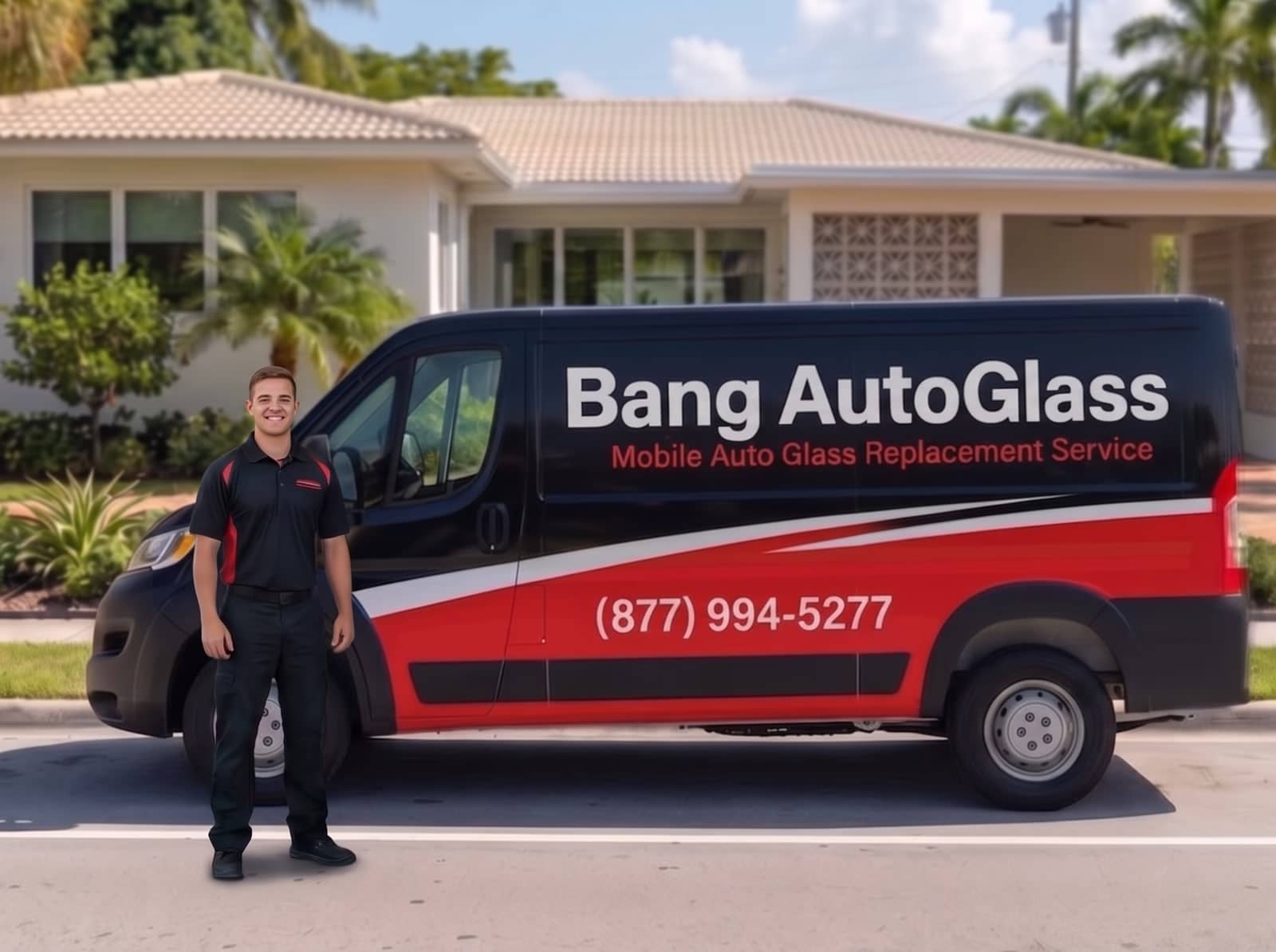
Acura ADAS Calibration
Bang AutoGlass coordinates Acura ADAS calibration after windshield replacement so AcuraWatch features—Collision Mitigation Braking, Lane Keeping Assist, Adaptive Cruise Control, and Road Departure Mitigation—read targets correctly. Mobile scheduling across Arizona and Florida, warranty-backed.
Acura ADAS Calibration: Restoring Precision to Your Vehicle's Safety Systems
When you drive a modern Acura, you're trusting an intricate network of cameras, sensors, and radar units to help keep you safe on the road. From the AcuraWatch suite to the forward-facing camera mounted behind your windshield, these advanced driver assistance systems work together to monitor lane markings, detect potential collisions, read traffic signs, and maintain safe following distances. After any windshield replacement on an Acura, professional ADAS calibration isn't just a recommendation, it's a critical safety requirement. At Bang AutoGlass, we specialize in Acura ADAS calibration services that restore your vehicle's safety systems to factory-precise accuracy, ensuring every feature performs exactly as Acura engineered it to.
What Is Acura ADAS Calibration?
Acura ADAS calibration is the precise process of realigning and reprogramming the advanced driver assistance system sensors, cameras, and radar components on your Acura after they've been disturbed by windshield replacement, collision repair, suspension work, or other procedures that affect sensor positioning. The forward-facing camera that powers most of your AcuraWatch features is typically mounted to the windshield itself or bonded directly behind it. When that windshield is replaced, even a millimeter of misalignment can cause your ADAS features to behave inaccurately or fail to engage at all.
Understanding AcuraWatch Technology
AcuraWatch is Acura's proprietary suite of safety and driver assistance technologies, standard or available on virtually every Acura model from the 2016 model year onward. The system relies on a monocular camera positioned at the top of the windshield, paired with a millimeter-wave radar unit usually integrated behind the front grille emblem. Together, these components feed real-time data to your vehicle's safety computers, enabling features like automatic emergency braking, lane keeping assistance, and adaptive cruise control.
Because the windshield camera is the eyes of your entire AcuraWatch system, any movement, replacement, or repair affecting that glass requires complete recalibration. The factory specifications for camera angle, pitch, yaw, and roll are extraordinarily tight, and Acura's service procedures explicitly require both static and dynamic recalibration after windshield replacement on most ADAS-equipped models.
Why Calibration Is Required After Windshield Replacement
When we replace your Acura's windshield, the camera bracket bonded to the new glass may sit at a slightly different angle than the original. Even high-quality replacement glass with proper installation will result in micro-variations that affect how the camera perceives the road ahead. Without recalibration, your Acura's safety systems may misread lane markings by inches, miscalculate distances to vehicles ahead, or fail to recognize stationary obstacles within the system's expected range. Calibration synchronizes the camera's perception with the vehicle's known geometry so the system can interpret real-world inputs accurately.
Acura Models That Require ADAS Calibration
Nearly every modern Acura on the road today is equipped with AcuraWatch and requires professional calibration after windshield replacement. Our team is trained on the specific calibration procedures for each model in the lineup.
Acura MDX ADAS Calibration
The Acura MDX, particularly the redesigned fourth-generation models from 2022 onward, features one of the most comprehensive ADAS packages in the segment. MDX calibration requires both a static target-based procedure performed in a controlled service environment and a dynamic on-road calibration that verifies sensor performance under real driving conditions. The MDX's wide field-of-view forward camera demands especially precise alignment, and the SH-AWD system integration adds another layer of complexity that benefits from professional calibration.
Acura RDX ADAS Calibration
The Acura RDX has been a strong seller since its 2019 redesign, and every RDX from that generation forward comes equipped with AcuraWatch as standard equipment. RDX ADAS calibration covers the windshield-mounted camera as well as integration checks for the front radar unit. The RDX's Lane Keeping Assist and Road Departure Mitigation systems are especially sensitive to camera positioning, making calibration after windshield replacement absolutely essential.
Acura TLX ADAS Calibration
The Acura TLX, including the high-performance Type S, relies on a sophisticated camera and radar combination to deliver its full suite of driver assistance features. TLX calibration requires careful attention to the steering angle sensor reset and yaw rate sensor verification, both of which interface with the forward camera to enable proper lane centering. Our calibration procedure for the TLX restores every AcuraWatch function to factory accuracy.
Acura Integra and ILX ADAS Calibration
The reborn Acura Integra has quickly become one of the most popular compact luxury sedans on the market, and its AcuraWatch system requires the same meticulous calibration approach as the rest of the lineup. The older ILX models from 2016 through 2022 also benefit from professional ADAS calibration anytime the windshield is replaced. Both vehicles use a similar camera architecture that responds well to a combined static and dynamic calibration approach.
Types of ADAS Calibration for Acura Vehicles
Acura's official service procedures specify different calibration methods depending on the model, year, and which sensors are being addressed. Understanding the difference helps you appreciate why proper calibration takes specialized equipment and training.
Static Calibration
Static calibration is performed with the vehicle stationary in a controlled environment. We position your Acura on a perfectly level surface, then place precise calibration targets at manufacturer-specified distances and angles in front of the camera. Using factory-approved diagnostic equipment, we instruct the camera to identify these targets, which gives the system a known reference point for its real-world calculations. Static calibration is essential for establishing the baseline accuracy of your forward-facing camera.
Dynamic Calibration
Dynamic calibration takes place on the road. After completing the static portion, our technician drives your Acura at specific speeds for a set distance while the diagnostic system monitors how the camera interprets real-world lane markings, traffic signs, and surrounding vehicles. The system uses this data to fine-tune its perception algorithms and verify that the static calibration translates properly to active driving scenarios.
Dual Calibration
Most ADAS-equipped Acura vehicles require dual calibration, both static and dynamic procedures performed in sequence. Skipping either step risks leaving the system partially calibrated, which can cause inconsistent ADAS behavior or warning lights on the dashboard. We always perform the complete calibration procedure specified by Acura for your exact model and year.
Acura ADAS Features That Depend on Proper Calibration
Your AcuraWatch suite includes multiple interconnected safety features, and each one depends on accurate sensor data to function as designed.
Collision Mitigation Braking System
CMBS uses the forward camera and radar to detect potential collisions with vehicles ahead. When the system identifies a risk, it provides visual and audible warnings, pretensions the seatbelts, and applies emergency braking if the driver doesn't respond. An uncalibrated camera can cause CMBS to either fail to detect real threats or trigger false alarms, both of which compromise the safety value of the system.
Lane Keeping Assist System
LKAS reads lane markings through the windshield camera and applies steering input to help keep your Acura centered in its lane. After windshield replacement, an uncalibrated camera might misjudge the position of lane lines, causing LKAS to drift toward one side or disengage unexpectedly. Proper calibration ensures the system can correctly identify lane boundaries at highway speeds.
Road Departure Mitigation
RDM goes a step beyond lane keeping by detecting when your Acura is about to leave the roadway entirely. It can apply steering correction and braking to prevent run-off-road incidents. Because RDM depends on accurate identification of road edges and shoulder markings, camera calibration is non-negotiable for this feature to function correctly.
Adaptive Cruise Control with Low-Speed Follow
Adaptive Cruise Control maintains a set distance between your Acura and the vehicle ahead, even in stop-and-go traffic. The system relies on radar for distance measurement but uses the forward camera to confirm object identification and lane position. After windshield replacement, calibration ensures the camera and radar work in proper harmony so the system maintains smooth, safe following distances.
Traffic Sign Recognition System
Newer Acura models include Traffic Sign Recognition, which displays speed limits and other important road signs in the driver information cluster. This feature depends entirely on the forward camera's ability to clearly read signs at varying angles and distances, something only properly calibrated optics can accomplish reliably.
The Acura ADAS Calibration Process
Our calibration workflow follows Acura's factory service procedures from start to finish. Here's how we approach every Acura ADAS calibration:
- We complete the windshield replacement using OEM-quality glass that meets or exceeds Acura's optical clarity and structural specifications, with the entire installation typically wrapping up in 30 to 45 minutes plus a 1-hour cure time for the urethane adhesive to fully set.
- Once the adhesive has properly cured, we perform a pre-calibration diagnostic scan to document the existing state of all ADAS modules and confirm no underlying faults are present.
- We position your Acura on a level surface and place factory-specified calibration targets at the exact distances and angles required for your specific model and year.
- Using OEM-approved diagnostic equipment, we initiate the static calibration sequence and verify successful target acquisition by the forward camera.
- We then conduct the dynamic calibration portion by driving the vehicle at specified speeds along a route with clear lane markings, allowing the system to verify its real-world accuracy.
- A final post-calibration diagnostic scan confirms that all ADAS modules are reporting normal operation with no fault codes, and we document the completed calibration for your records.
Signs Your Acura Needs ADAS Calibration
Sometimes Acura owners aren't sure whether their vehicle requires calibration. The most obvious indicator is recent windshield replacement, but there are other situations worth watching for. Warning lights on your dashboard related to AcuraWatch, CMBS, LKAS, or RDM almost always indicate a calibration issue. Inconsistent or erratic behavior from lane keeping assist, such as unexpected disengagement or steering inputs that feel slightly off, is another sign. If your adaptive cruise control begins following too closely or too distantly compared to its original behavior, that's a strong indicator of a camera or radar calibration drift. Even without warning lights, any collision repair, suspension work, or windshield-related service should prompt a calibration check.
Mobile Acura ADAS Calibration Service
One of the biggest advantages of choosing Bang AutoGlass for your Acura ADAS calibration is our mobile service model. We bring our equipment and expertise directly to your home or workplace, eliminating the need to drop your vehicle off at a shop and wait for it to be ready.
Convenience of On-Site Service
Our mobile setup is fully equipped to handle both the windshield replacement and the static calibration portion of the ADAS procedure on-site at your location. As long as we have a level surface with enough clear space in front of your Acura for the calibration targets, we can complete the entire job without you having to drive anywhere. The dynamic calibration portion is performed by our technician on nearby roads, so the only thing you'll need to provide is the parking space and a little patience while the work is completed.
Next-Day Appointments Available
We understand that an unexpected windshield issue can disrupt your week, which is why we offer next-day appointments on most Acura ADAS calibration jobs. When you call to schedule, we work with you to find a time that fits your schedule, whether that's at your home before you leave for work or at your office during the day. The complete service, including glass replacement, adhesive cure time, and full ADAS calibration, can typically be wrapped up in a single visit.
Acura ADAS Calibration Cost and Insurance Coverage
Many Acura owners are pleasantly surprised to learn that ADAS calibration is usually covered by comprehensive auto insurance policies as part of a windshield replacement claim. Insurance companies recognize that calibration is a required step in modern windshield service, and they generally pay for it accordingly.
Insurance Claim Assistance
If you haven't already started an insurance claim for your Acura's windshield, we're happy to assist you through the process. We help you with the insurance claim from start to finish and make the process as smooth as possible. Most claims for windshield replacement and ADAS calibration can be initiated with a single phone call to your carrier, and we make sure you feel confident at every step.
Working with Your Insurance Provider
We work with virtually every major insurance company in the country and are familiar with the documentation requirements each carrier expects. Once your claim is open, we provide the necessary invoices, calibration certificates, and supporting paperwork directly to your insurer to keep the process moving. In most cases, your only out-of-pocket cost will be your comprehensive deductible. When the calibration is part of a covered windshield replacement it rides on that same claim, and in Florida Fla. Stat. 627.7288 waives the comprehensive deductible for that windshield work specifically; Arizona drivers who elected their insurer's optional zero-deductible glass coverage pay nothing as well.
Why Choose Bang AutoGlass for Your Acura ADAS Calibration
When it comes to your Acura's safety systems, the quality of the calibration work matters as much as the glass itself. Bang AutoGlass has built a reputation on delivering professional results that meet the standards Acura owners expect.
Lifetime Workmanship Warranty
Every Acura ADAS calibration we perform is backed by a lifetime workmanship warranty. If anything related to our installation or calibration work doesn't perform as it should at any point during your ownership of the vehicle, we'll make it right. This warranty reflects the confidence we have in our technicians and our procedures, and it's one of the most generous coverage promises available in the mobile auto glass industry.
OEM-Quality Materials
We use OEM-quality replacement glass that matches the optical clarity, dimensional accuracy, and structural integrity of the original Acura windshield. This is critical for ADAS-equipped vehicles because the camera must see through perfectly clear, distortion-free glass to perform accurate calibration and ongoing operation. The OEM-quality urethane adhesives we use are engineered to bond securely with both the glass and your Acura's body, ensuring a safe, durable installation that supports proper sensor function over the long term.
Quick Turnaround Time
Most Acura windshield replacements take just 30 to 45 minutes for the actual installation, followed by a 1-hour cure time for the adhesive to set before the vehicle can be safely driven. The ADAS calibration is then performed in sequence, with the entire service typically completed in a single appointment. We respect your time and work efficiently without ever cutting corners on quality or skipping a single step of Acura's required procedure.
Schedule Your Acura ADAS Calibration Today
If you've recently had your Acura's windshield replaced, or if you're planning a replacement and want to make sure ADAS calibration is part of the job, Bang AutoGlass is ready to help. Our mobile service, next-day availability, OEM-quality materials, lifetime workmanship warranty, and experienced calibration procedures combine to deliver a complete solution for ADAS-equipped Acura owners. Contact us today using the form above or give our team a call, and we'll get your Acura's safety systems back to factory-precise accuracy so you can drive with complete confidence.
Acura ADAS Calibration — common questions
What is Acura ADAS calibration and why is it needed?
ADAS (Advanced Driver Assistance Systems) calibration realigns safety cameras and sensors after windshield replacement or damage so features like lane-keeping assist and automatic braking work accurately. Without recalibration, these safety systems may not function correctly.
How long does Acura ADAS calibration take?
ADAS calibration typically takes about 15-30 minutes and is performed immediately after your windshield replacement. The total appointment time including the windshield work is roughly 1.5-2 hours for the adhesive to set before you can drive.
Is Acura ADAS calibration covered by insurance?
ADAS calibration is included as part of the windshield replacement service and is covered by comprehensive insurance the same way your windshield is. In Florida, this is often fully covered with nothing out of pocket due to the state's windshield deductible waiver.
What Acura models require ADAS calibration?
Most Acura vehicles from 2018 onward with safety camera systems require ADAS calibration after windshield replacement. Our technician will confirm whether your specific model needs it during the appointment.
Where we do Acura auto glass
Bang AutoGlass is a mobile auto glass company serving Arizona and Florida. We don't have a shop you drive to — we come to your home, your job, or wherever the car is sitting, with next-day appointments in most areas. In Arizona that means the whole Valley — Phoenix, Mesa, Scottsdale, Chandler, Gilbert, Tempe, Glendale and out to Tucson and Prescott. In Florida we cover Tampa Bay, Orlando and Miami, from St. Petersburg and Clearwater across to Kissimmee, Winter Park and Fort Lauderdale.
Browse every city we serve in Arizona and Florida, or read how coverage works under Arizona's glass statutes and Florida's § 627.7288.
Mobile auto glass — cities we serve
4.8★ on Google · 350+ reviews from AZ & FL drivers
“I needed my windshield replaced and they made the entire process easy. Bang AutoGlass is the best!”
“Top-notch auto glass service. They handled my windshield replacement quickly and professionally.”
“Bang AutoGlass made my windshield replacement simple from start to finish.”
Need Acura ADAS Calibration?
We come to you across Arizona and Florida — often $0 with insurance.
We reply within minutes during business hours.