BMW Quarter Glass Replacement
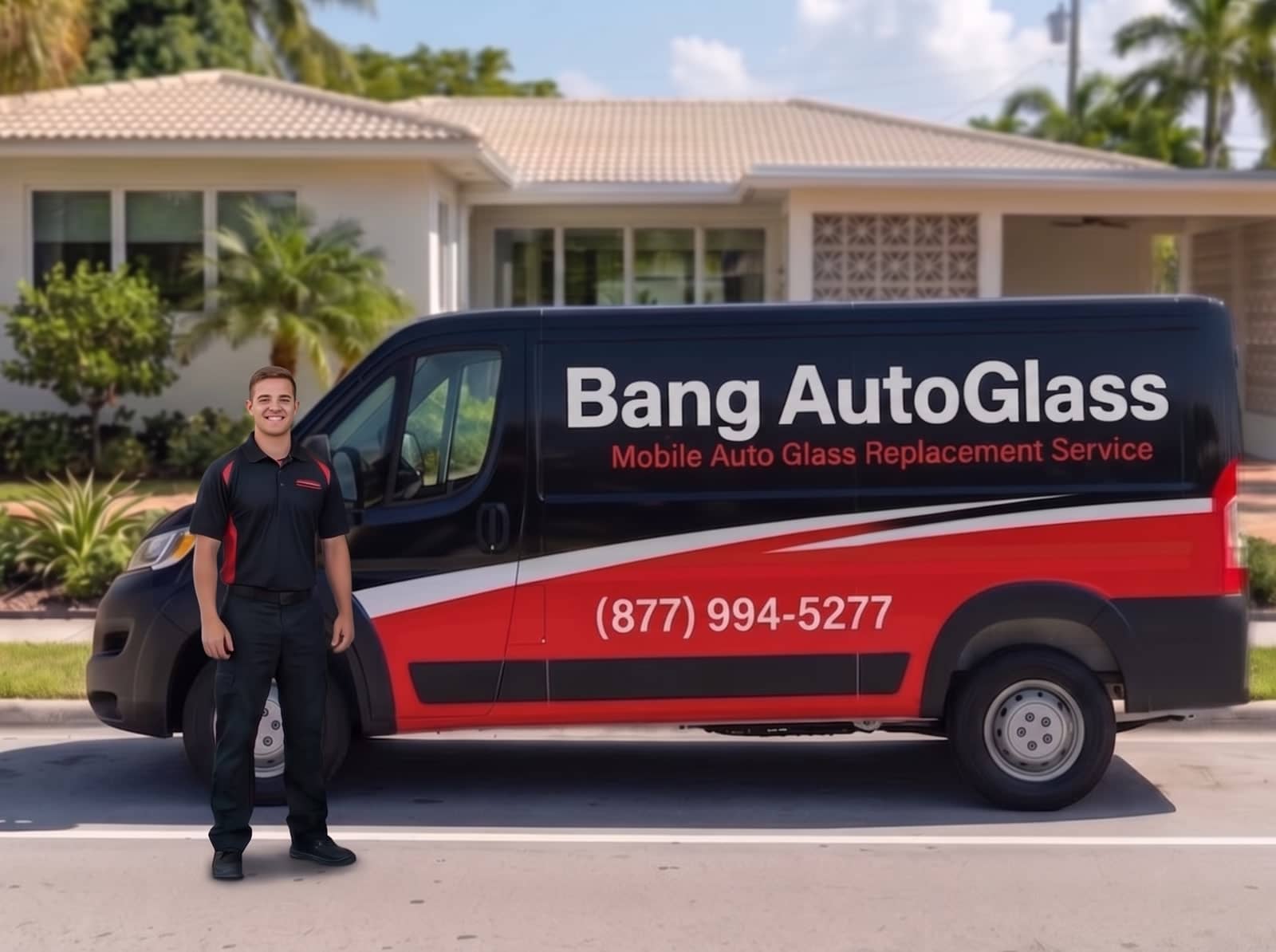
Bang AutoGlass replaces BMW quarter glass on X3, X5, X7, 3 Series, and 5 Series with OEM-fit tempered safety glass set in fresh urethane for a watertight, factory-matched seal. Mobile service in Arizona and Florida includes trim handling, exact alignment, and lifetime warranty.
BMW Quarter Glass Replacement
Understanding BMW Quarter Glass and Its Role in Your Vehicle
Quarter glass refers to the small, often triangular or trapezoidal panes of glass positioned behind the rear doors of your BMW, typically located near the C-pillar or D-pillar depending on the model. These panels are sometimes called sail windows, opera windows, or rear vent glass. While they may appear minor in size compared to a windshield or door window, they play a critical role in the overall structural integrity, outward visibility, and refined aesthetic of your BMW.
For BMW owners, quarter glass is more than just a window. It contributes to the vehicle's signature greenhouse design, supports proper outward visibility for safe lane changes, and on certain models, houses integrated antennas, defroster lines, or acoustic dampening layers that contribute to the cabin's premium feel. Because BMW engineering operates within tight tolerances, even the smallest replacement glass component must meet exact specifications to preserve the vehicle's driving character, weather sealing, and resale value. A poorly installed or low-quality quarter glass on a BMW can lead to wind noise, water intrusion, and even rattles that compromise the luxury experience the brand is known for.
Why BMW Quarter Glass Gets Damaged
BMW quarter glass damage can happen to even the most cautious drivers, and the causes are more varied than most people realize. Road debris kicked up by larger vehicles is one of the most common culprits, particularly on highways where small rocks travel at high velocity. Vandalism and break-in attempts also frequently target quarter glass because thieves believe these smaller windows offer easier access without setting off as much attention as breaking a main door window.
Other common causes include minor collisions and parking lot incidents, severe weather events such as hail or falling tree branches, temperature-related stress cracks that occur when extreme cold meets warm interior air, and accidental impacts during tailgating, loading cargo, or sports activities like baseballs and golf balls. On older BMW models, the seals and adhesives surrounding the quarter glass can deteriorate over time, putting added stress on the glass itself and increasing the likelihood of cracking or popping out of position.
Recognizing the Signs That Your BMW Needs Quarter Glass Replacement
Identifying quarter glass damage early can prevent further problems down the road. Look for visible cracks of any length, chips or pits that catch your fingernail, spider-web patterns spreading from a central impact point, gaps between the glass and the body where the seal has failed, water leaking into the rear cargo area or backseat during rain, and increased wind noise at highway speeds. If your BMW's quarter glass shows any of these signs, it's time to schedule a replacement before the issue worsens.
Why Quarter Glass Replacement Is Typically Required Instead of Repair
Unlike windshield damage, which can sometimes be resolved with a chip repair or resin injection, BMW quarter glass damage almost always requires full replacement. This is because quarter glass is typically made from tempered glass, which is designed to shatter into small, blunt pieces when broken rather than remain intact like the laminated glass used in windshields. Once tempered glass is compromised at any point, the structural integrity of the entire panel is jeopardized, and a small crack can spread or cause the entire pane to fail unexpectedly.
For BMW owners, this means that even a small chip or crack in the quarter glass is not a candidate for repair. A complete quarter glass replacement is the only safe and effective solution, and putting it off only increases the risk of the glass failing while driving or being parked, which can lead to interior damage, theft exposure, and additional repair costs.
BMW-Specific Considerations for Quarter Glass Replacement
BMW vehicles are not like average passenger cars when it comes to glass replacement, and there are several brand-specific factors that influence the process. Understanding these considerations helps you appreciate why working with a specialist matters.
Model Variations Across the BMW Lineup
Quarter glass differs significantly between BMW models. The 3 Series sedans feature small fixed quarter windows near the C-pillar, while X3, X5, and X7 SUVs have larger, more prominent quarter windows that wrap toward the rear. The 5 Series and 7 Series luxury sedans often include acoustic-laminated quarter glass for enhanced cabin quietness. Coupes like the 4 Series and 8 Series have unique frameless quarter glass that requires especially precise installation. M Performance variants such as the M3, M4, and M5 may include lightweight glass options that demand specific handling during replacement.
Tinting, Logos, and Factory Features
Many BMW quarter glass panels come from the factory with privacy tinting, particularly on SUV models like the X5 and X7. When replacing the glass, color and tint matching is essential to preserve the uniform look of your vehicle. Some BMW quarter glass also features etched logos or model identifiers, and high-end trims may include heated elements, hidden antennas for navigation or radio, or rain-sensing components nearby that must be carefully reconnected or recalibrated after installation.
Acoustic and Insulating Glass Properties
Newer BMW models, especially those in the 7 Series and 8 Series, often use multi-layer acoustic glass even in quarter window applications. This glass features a sound-dampening interlayer that reduces road and wind noise, contributing to BMW's hallmark cabin quietness. Replacing this type of glass with anything less than equivalent OEM-quality material will result in noticeably more cabin noise and a degraded driving experience.
Our BMW Quarter Glass Replacement Process at Bang AutoGlass
When you choose Bang AutoGlass for your BMW quarter glass replacement, you're choosing a process built around precision, quality, and convenience. We take the time to ensure every step is handled correctly, because anything less compromises the integrity of your vehicle.
Initial Assessment and Glass Sourcing
Before any work begins, we confirm the exact glass specification needed for your specific BMW model, year, and trim level. This includes checking for factory tinting, acoustic layering, antenna integration, and any other features that affect the replacement glass selection. We source OEM-quality materials that match the original factory glass in optical clarity, thickness, tint, and any embedded features.
Removal of the Damaged Quarter Glass
Our technicians carefully remove the damaged quarter glass using BMW-appropriate techniques. This involves protecting surrounding paint, interior trim, and rear pillar components from any damage during extraction. We remove old adhesive residue completely from the bonding surfaces to ensure the new glass has a clean, secure foundation for installation.
Precision Installation
Installing BMW quarter glass requires steady hands, the right tools, and adherence to BMW's bonding specifications. We apply professional-grade urethane adhesive in the correct bead pattern, set the new glass with proper alignment, and verify a complete, even seal around the entire perimeter. Any clips, moldings, or trim pieces are reinstalled in their original positions.
Curing and Final Inspection
After installation, the adhesive needs approximately one hour to cure properly before the vehicle should be driven or exposed to weather stress. During this time, we inspect the work area for any imperfections, clean the glass inside and out, verify that any antennas or electrical connections are functioning, and walk you through the final result before you take your BMW back on the road.
How Long Does BMW Quarter Glass Replacement Take?
One of the most common questions we receive is how long the replacement process takes. The actual replacement work on most BMW quarter glass installations is completed in 30 to 45 minutes. After the new glass is installed, the urethane adhesive requires approximately one hour to cure before the vehicle is safe to drive. This curing time ensures the glass is fully bonded to the vehicle body and able to withstand normal driving forces, weather exposure, and door slam vibrations.
We make this process as convenient as possible by coming directly to you. As a fully mobile service, Bang AutoGlass handles the entire job at your home, office, or another location of your choice, so you can carry on with your day while we take care of your BMW. There's no need to drive to a shop, sit in a waiting room, or arrange a ride.
Mobile BMW Quarter Glass Replacement Service
Convenience is one of the biggest advantages of choosing Bang AutoGlass for your BMW quarter glass replacement. Our fully mobile service means we bring everything we need to your location, including the replacement glass, professional installation tools, urethane adhesives, and protective materials for your vehicle's surroundings.
This is especially valuable for BMW owners who rely on their vehicle for work or family commitments and can't afford to lose a full day driving to a shop and waiting. We can perform the replacement in your driveway, your office parking lot, or anywhere else that's safe and accessible. With next-day appointments available, you don't have to wait weeks to get your BMW back to factory condition. Most customers can have their quarter glass fully replaced within 24 hours of calling us.
OEM-Quality Materials for Your BMW
When it comes to luxury vehicles like BMW, the quality of replacement materials matters enormously. At Bang AutoGlass, we use OEM-quality glass for every BMW quarter glass replacement we perform. This means the glass we install matches the factory original in thickness, optical clarity, tint level, acoustic properties, and any embedded features such as antennas or heating elements.
We also use professional-grade urethane adhesives that meet or exceed BMW's bonding requirements. The combination of high-quality glass and high-quality adhesive ensures a watertight, airtight, and structurally sound seal that lasts for the long haul. Cutting corners on materials might save a few dollars upfront, but it leads to leaks, wind noise, premature failure, and a compromised driving experience that any BMW owner would immediately notice.
Lifetime Workmanship Warranty
Every BMW quarter glass replacement we perform at Bang AutoGlass comes with a lifetime workmanship warranty. This means that for as long as you own your BMW, we stand behind the quality of the installation work. If any issue arises that traces back to our installation, such as a leak, improper seal, or trim alignment problem, we will make it right at no cost to you.
This warranty reflects our confidence in our technicians and our commitment to doing the job correctly the first time. It also gives you peace of mind that your investment in replacing your BMW quarter glass is protected long after the appointment is over.
Insurance Coverage and Filing a Claim for BMW Quarter Glass Replacement
Many BMW owners are surprised to learn that auto glass damage is often covered under comprehensive insurance coverage, sometimes with little or no deductible depending on the policy. If you carry comprehensive coverage on your BMW, your quarter glass replacement may be fully or partially covered.
If you haven't filed a claim yet, we're happy to assist you through the process. We help you with the insurance claim from start to finish and make the process as smooth as possible. Our experience with auto glass insurance claims means we can answer questions about deductibles, claim timing, and how the replacement coordinates with your insurance provider.
For BMW owners paying out of pocket, we offer transparent, competitive pricing with no surprises. The total cost depends on your specific BMW model, the type of glass required, and whether any additional features need to be addressed during installation.
Common BMW Models We Service for Quarter Glass Replacement
Here are some of the BMW models we regularly service for quarter glass replacement, though this list is not exhaustive:
- BMW 3 Series including 320i, 328i, 330i, 335i, M3, and all sedan and wagon variants
- BMW 5 Series including 528i, 530i, 535i, 540i, 550i, and M5
- BMW 7 Series including 740i, 750i, 760i, and Alpina B7
- BMW X1, X2, X3, X4, X5, X6, and X7 SUVs across all trims
- BMW 4 Series and 8 Series coupes and Gran Coupes
- BMW Z4 roadster
- BMW i3, i4, iX, and i7 electric vehicles
- BMW M2, M4, M8, and other M Performance variants
If your specific BMW model isn't listed here, please reach out and we'll confirm whether we can service it. In almost every case, we can.
Step-by-Step Guide to Scheduling Your BMW Quarter Glass Replacement
Getting your BMW quarter glass replaced with Bang AutoGlass is a straightforward process designed around your schedule.
- Contact us by phone or through the quick sign-up form on our website and provide your BMW's year, model, and trim along with a brief description of the damage.
- We'll confirm the exact quarter glass specification needed and provide you with a transparent quote, including any insurance coordination if applicable.
- If insurance is involved, we'll help guide you through filing your claim with your provider so the process goes smoothly.
- We schedule a next-day appointment at a time and location that works best for you, whether that's your home, office, or another convenient spot.
- Our mobile technician arrives with everything needed, completes the replacement in 30 to 45 minutes, and allows one hour for the adhesive to cure before you drive.
Why BMW Owners Across the Region Trust Bang AutoGlass
BMW owners expect more from every aspect of vehicle ownership, including auto glass repair and replacement. At Bang AutoGlass, we understand that you didn't choose a BMW just to have it serviced by people who treat it like any other car. Our approach combines technical expertise, OEM-quality materials, mobile convenience, and personalized customer service that respects both your vehicle and your time.
We've replaced quarter glass on countless BMWs, from compact 3 Series sedans to flagship 7 Series luxury cars and rugged X7 SUVs. Each replacement is treated with the same care, attention to detail, and commitment to quality. That's why so many BMW owners come back to us for their auto glass needs and refer friends and family who also drive German performance vehicles.
Maintaining Your BMW Quarter Glass After Replacement
After your BMW quarter glass replacement, a few simple practices help ensure the longevity of the new installation. Avoid slamming doors hard for the first 24 hours, as the vibrations can stress the curing adhesive. Keep the area around the new glass dry for the first hour after installation. Avoid automatic car washes for at least 48 hours to give the seal time to fully set. Inspect the glass periodically for any signs of new chips, cracks, or seal issues, and address them promptly.
With proper care and regular driving habits, your replacement BMW quarter glass should perform flawlessly for years to come. The combination of OEM-quality glass, professional adhesives, and expert installation creates a result that's virtually indistinguishable from the factory original.
Schedule Your BMW Quarter Glass Replacement With Bang AutoGlass Today
If your BMW has a damaged quarter glass, don't wait for the problem to grow worse, lead to interior damage, or compromise your safety on the road. Bang AutoGlass offers next-day mobile service, OEM-quality materials, fast 30 to 45 minute replacement times, a one hour adhesive cure, and a lifetime workmanship warranty on every job. Whether your BMW is a daily driver or a weekend showpiece, we treat it with the precision and respect it deserves.
Reach out today through the quick sign-up form on this page or give us a call to schedule your BMW quarter glass replacement. We'll come to you, do the job right, and get you back on the road with confidence.
BMW Quarter Glass Replacement — common questions
What is BMW quarter glass replacement?
Quarter glass is the small fixed window located behind the rear doors on your BMW. We replace it on-site at your location with OEM-quality glass and complete the job in roughly 30-45 minutes, plus time for the adhesive to set — about an hour is typical, and your technician confirms the exact safe drive-away time.
Can I have my BMW quarter glass replaced at home?
Yes, we're mobile-only. Our fully-equipped technicians come to your home, work, or roadside and complete the entire replacement with the same quality as a traditional shop.
Is BMW quarter glass replacement covered by insurance?
Quarter glass is typically covered under comprehensive auto insurance. We help you file or start your claim if needed, and many policies cover it fully with nothing out of pocket depending on your deductible and coverage.
What warranty covers BMW quarter glass replacement?
Every replacement is backed by a lifetime workmanship warranty, and we use OEM-quality glass and materials to ensure durability and safety.
Where we do BMW auto glass
Bang AutoGlass is a mobile auto glass company serving Arizona and Florida. We don't have a shop you drive to — we come to your home, your job, or wherever the car is sitting, with next-day appointments in most areas. In Arizona that means the whole Valley — Phoenix, Mesa, Scottsdale, Chandler, Gilbert, Tempe, Glendale and out to Tucson and Prescott. In Florida we cover Tampa Bay, Orlando and Miami, from St. Petersburg and Clearwater across to Kissimmee, Winter Park and Fort Lauderdale.
Browse every city we serve in Arizona and Florida, or read how coverage works under Arizona's glass statutes and Florida's § 627.7288.
Mobile auto glass — cities we serve
4.8★ on Google · 350+ reviews from AZ & FL drivers
“I needed my windshield replaced and they made the entire process easy. Bang AutoGlass is the best!”
“Top-notch auto glass service. They handled my windshield replacement quickly and professionally.”
“Bang AutoGlass made my windshield replacement simple from start to finish.”
Need BMW Quarter Glass Replacement?
We come to you across Arizona and Florida — often $0 with insurance.
We reply within minutes during business hours.