Cadillac ADAS Calibration
Bang AutoGlass coordinates Cadillac Super Cruise and Driver Assist ADAS calibration after windshield service so the driver attention camera, Adaptive Cruise, Lane Keep Assist, and Forward Collision Warning read targets correctly on Escalade, XT5, CT5, and Lyriq. Arizona and Florida mobile.
Cadillac ADAS Calibration: Restoring Luxury Safety Tech After Windshield Replacement
Cadillac builds some of the most technologically advanced vehicles on the road today, and a major reason for that is the suite of Advanced Driver Assistance Systems (ADAS) integrated into nearly every modern model. From the iconic Escalade to the precision-engineered CT5-V and the all-electric LYRIQ, Cadillac drivers expect their vehicles to deliver safety, comfort, and intelligent assistance every time they get behind the wheel. The forward-facing camera mounted at the top of your windshield is the heart of this system — and any time that windshield is replaced, professional Cadillac ADAS calibration becomes a non-negotiable part of restoring your vehicle to factory specifications. At Bang AutoGlass, we specialize in performing precise, mobile Cadillac ADAS recalibration services that bring your safety technology back to peak performance, all without you ever having to leave home or your office.
What Is Cadillac ADAS Calibration?
Cadillac ADAS calibration is the process of realigning and recalibrating the forward-facing camera, sensors, and supporting modules embedded in or behind your Cadillac's windshield. These components are responsible for powering everything from Forward Collision Alert and Lane Keep Assist to Adaptive Cruise Control and, in equipped models, Super Cruise hands-free driving. Even minor changes in the camera's position — measured in fractions of a millimeter or a single degree — can throw off how the system interprets the road ahead, which is why factory-grade recalibration is essential after any windshield service.
Understanding the Camera Behind Your Windshield
The forward camera on your Cadillac is mounted to a precision bracket bonded just behind the top center of the windshield, typically integrated with the rearview mirror housing. This camera continuously scans the environment, identifies lane lines, tracks vehicles, monitors pedestrians and cyclists, reads speed limit signs, and feeds data to the brain of your Cadillac's ADAS suite. When a windshield is replaced, the glass is removed from the urethane adhesive bead, the camera bracket is decoupled from its original optical reference point, and a new piece of glass is installed in its place. Because no two pieces of glass are optically identical at the microscopic level, the camera's view of the world shifts ever so slightly — and your Cadillac needs to relearn that view through professional calibration.
Why Cadillac Vehicles Require Specialized Calibration
Cadillac engineering teams design their ADAS hardware to extremely tight tolerances. The brand's commitment to a luxury driving experience means every assistance feature is expected to operate seamlessly and predictably. Unlike economy vehicles where the ADAS suite may be limited to basic warnings, Cadillac integrates camera-dependent functions directly into critical safety and convenience systems. This means a miscalibrated camera doesn't just reduce performance — it can disable major safety functions entirely and trigger warning lights on your driver information center.
Super Cruise and the Cadillac Calibration Standard
Cadillac's Super Cruise is one of the most advanced hands-free driving systems available, and it relies on a fusion of cameras, radar, GPS data, and LiDAR-mapped roadways. The forward-facing camera plays a key role in this fusion, identifying lane markings and confirming your Cadillac is positioned correctly within compatible road segments. If your Cadillac is equipped with Super Cruise, ADAS calibration after windshield replacement is absolutely required — Super Cruise will not engage if the camera's calibration status is out of spec.
How Calibration Differs From Basic Windshield Service
A standard windshield replacement on most vehicles ends when the glass is bonded and cured. On a Cadillac, that's only step one. ADAS calibration is the second half of the job, and skipping it leaves your safety systems in a degraded or fully disabled state. At Bang AutoGlass, we view calibration as part of a complete Cadillac windshield replacement — not an optional add-on.
When Does Your Cadillac Need ADAS Calibration?
The most common reason for Cadillac ADAS calibration is windshield replacement, but it's not the only one. Any event that could shift the position of the camera or its supporting components is a trigger for recalibration.
Common Triggers for Cadillac ADAS Recalibration
You should schedule a Cadillac ADAS calibration after a windshield replacement, after a front-end collision (even a minor one), after suspension or alignment work, after camera or mirror module replacement, and any time a dashboard warning indicates that a camera, lane departure, or collision system has been disabled or is requesting service. If you notice your Adaptive Cruise Control dropping out unexpectedly, lane warnings not triggering when they should, or Super Cruise refusing to engage on a compatible road, those are all strong signs your Cadillac is asking for calibration.
Cadillac Models That Require ADAS Calibration
Virtually every Cadillac built within the last decade includes some level of camera-based driver assistance. The following models commonly require ADAS calibration after windshield replacement:
- Cadillac Escalade and Escalade ESV (including IQ electric models)
- Cadillac CT4 and CT4-V
- Cadillac CT5 and CT5-V (including Blackwing variants)
- Cadillac CT6 (especially Super Cruise-equipped trims)
- Cadillac XT4, XT5, and XT6
- Cadillac LYRIQ
- Cadillac Celestiq
- Cadillac Optiq
Cadillac Escalade ADAS Calibration
The Cadillac Escalade carries one of the most feature-rich ADAS packages in the lineup, including HD Surround Vision, Night Vision (on select trims), Rear Camera Mirror, and Super Cruise. The Escalade's forward camera handles lane positioning, vehicle tracking, and pedestrian detection — all of which depend on a precisely calibrated view through the windshield.
Cadillac CT4 and CT5 Calibration
The CT4 and CT5 sedans rely on forward camera input for Lane Keep Assist, Forward Collision Alert, Pedestrian Braking, and Adaptive Cruise Control. CT5 Premium Luxury and CT5-V models often include Super Cruise, making calibration mandatory after any windshield service.
Cadillac XT4, XT5, and XT6 Calibration
Cadillac's SUV lineup uses the same camera-based ADAS platform across the XT family. After replacing a windshield on any XT-series vehicle, the forward camera, rain sensor, and humidity sensor often need to be reseated and recalibrated together to restore proper system function.
Cadillac LYRIQ and Electric Vehicle Calibration
The Cadillac LYRIQ and other EV models like Celestiq and Optiq lean heavily on camera-driven systems for one-pedal driving feedback, range optimization, and Super Cruise navigation. Calibration on these EVs follows Cadillac's strict OEM procedure, and we make sure your LYRIQ leaves our service ready to take full advantage of every connected feature.
Static vs. Dynamic Cadillac ADAS Calibration
Cadillac specifies one of two calibration methods — or sometimes both — depending on the model, year, and equipment package.
Static Calibration
Static calibration is performed with your Cadillac parked on a level surface inside a controlled environment. Specialized targets, mats, and reference boards are positioned around the vehicle at precise distances and angles dictated by Cadillac's service procedure. A factory-grade scan tool then communicates with the camera module and walks the system through a stepwise alignment process. Static calibration is typical for many Cadillac CT and XT models.
Dynamic Calibration
Dynamic calibration is performed by driving your Cadillac under specific conditions — usually at posted highway speeds on roads with clearly visible lane markings, in good lighting, and free of heavy traffic. A scan tool connected to your Cadillac monitors the camera's learning progress in real time and confirms once calibration is complete. Many Escalade trims and newer Cadillac vehicles use dynamic calibration.
Dual Calibration Procedures
Some Cadillac models — especially Super Cruise-equipped trims — require both a static and dynamic calibration to fully restore ADAS functionality. We follow the exact procedure outlined by Cadillac for your specific VIN to ensure nothing is skipped.
The Cadillac ADAS Calibration Process at Bang AutoGlass
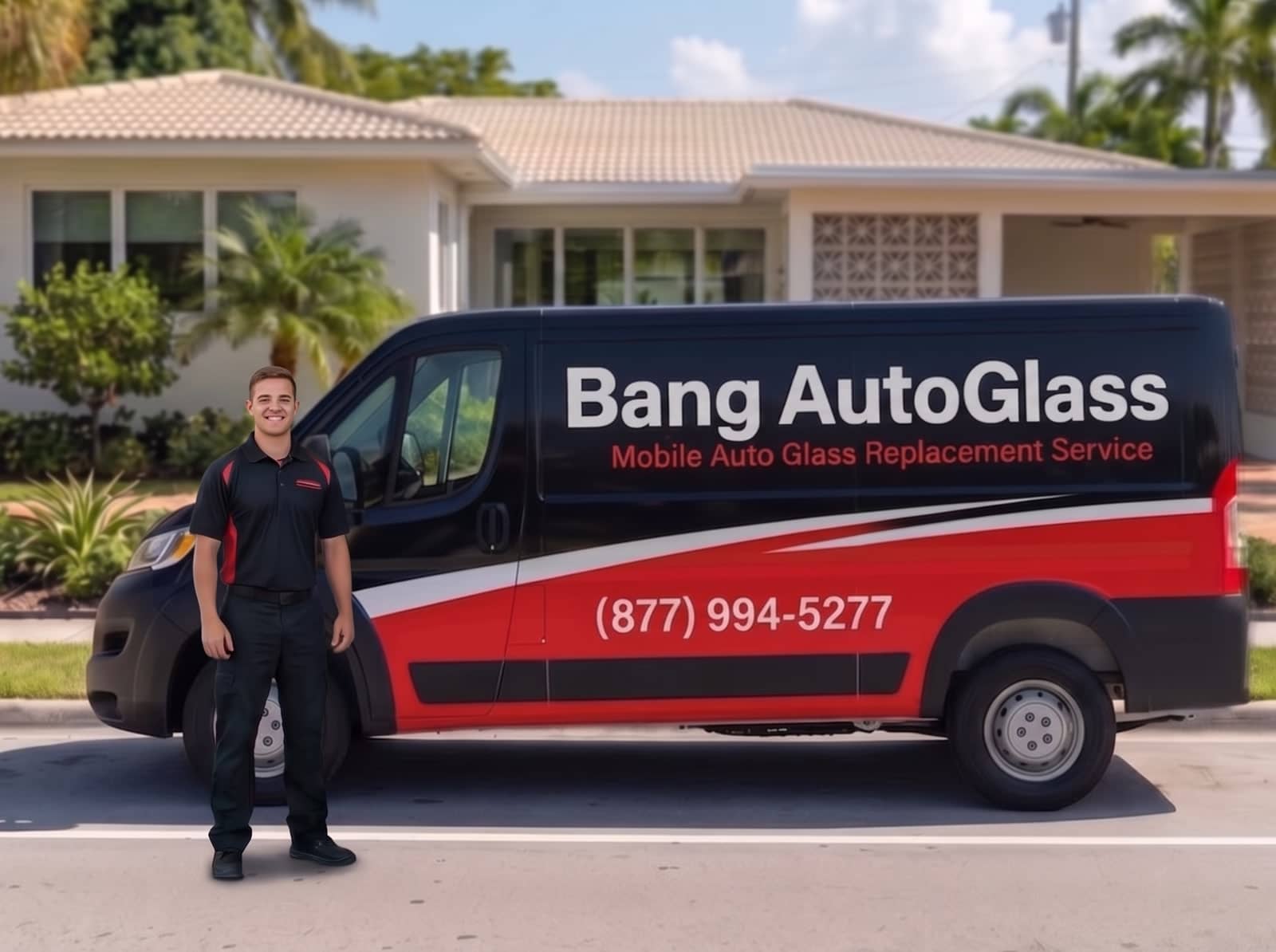
Bang AutoGlass is a fully mobile auto glass and ADAS calibration service, which means we come to you — whether you're at home, at work, or anywhere convenient. Our process is designed to minimize disruption while delivering OEM-level results.
- We confirm your Cadillac's make, model, year, and VIN to identify the exact calibration procedure required.
- We replace your windshield using OEM-quality glass, factory-spec urethane adhesive, and Cadillac-approved installation practices, with the replacement itself taking roughly 30 to 45 minutes.
- We allow the urethane adhesive a 1-hour safe-drive-away cure time, which also gives the bonded camera bracket time to stabilize.
- We connect a manufacturer-grade scan tool to verify camera readiness and check for any stored fault codes.
- We perform the required static calibration, dynamic calibration, or dual procedure based on your specific Cadillac model.
- We complete a final post-calibration system scan to confirm every ADAS module is reporting "calibrated" and free of fault codes before handing your keys back.
Cure Time and Final Verification
The 1-hour cure time isn't just for safety — it's also critical for calibration accuracy. The camera bracket sits on a structure that must be fully bonded before any calibration can be considered reliable. We never rush this step, and every Cadillac we service leaves with documentation confirming the calibration has been completed correctly.
Cadillac Safety Features Restored Through Proper Calibration
Calibrating your Cadillac's forward camera isn't just a checkbox — it's what makes every advanced safety feature work the way Cadillac engineers intended.
Forward Collision Alert and Automatic Emergency Braking
These systems use the forward camera to detect vehicles, pedestrians, and obstacles in your path. Without proper calibration, your Cadillac may brake unnecessarily, brake late, or fail to brake at all when you need it most.
Lane Keep Assist and Lane Departure Warning
Lane-based systems depend on the camera reading painted lane lines on the road. A miscalibrated camera might cause your Cadillac to drift, steer abruptly, or trigger warnings when no lane departure is occurring.
Adaptive Cruise Control
Adaptive Cruise relies on the forward camera and radar working together to maintain a safe following distance. After a windshield replacement, the camera-to-radar alignment can shift, leading to incorrect following distances or unexpected speed changes.
Super Cruise Hands-Free Driving
Super Cruise is one of Cadillac's most prized features, and it simply will not function correctly without a properly calibrated camera. We make sure your Super Cruise-equipped Cadillac is ready to operate hands-free on compatible roads the moment you drive away.
Why Choose Bang AutoGlass for Cadillac ADAS Calibration
Cadillac drivers expect a premium experience, and we deliver one. Our entire workflow is built around convenience, quality, and trust.
Mobile Service Convenience
Because Bang AutoGlass is fully mobile, you never have to schedule a tow, drop off your Cadillac, or wait in a service lobby. Our technicians come to your driveway, parking lot, or office and complete both the windshield replacement and Cadillac ADAS calibration on-site.
OEM-Quality Materials and Lifetime Workmanship Warranty
We use OEM-quality glass and factory-spec adhesives engineered to meet or exceed original Cadillac specifications. Every Cadillac windshield replacement and ADAS calibration we complete is backed by our lifetime workmanship warranty, so you can drive with full confidence in the work we've done.
Next-Day Appointment Availability
We know how important your Cadillac is to your daily routine. That's why we offer next-day appointments for windshield replacement and ADAS calibration whenever possible, helping you get back on the road quickly without compromising on quality.
Cadillac ADAS Calibration and Insurance Claims
Many comprehensive insurance policies cover both windshield replacement and the required ADAS calibration that follows. Because calibration is now a standard part of a complete repair on modern Cadillac vehicles, most major carriers recognize and reimburse the procedure.
How We Help You File a Claim
If you haven't started a claim yet, we'll walk you through it. We help you with the insurance claim from start to finish and make the process as smooth as possible. We can also provide documentation and invoices that support your claim, making the process as smooth as possible.
What to Have Ready When Filing
To make your insurance call easy, have your policy number, the date and cause of the damage, your Cadillac's VIN, and a brief description of the glass damage available. With those details in hand, most carriers can authorize service within minutes.
Risks of Skipping Cadillac ADAS Calibration
Driving a Cadillac without a properly calibrated camera isn't just inconvenient — it's a real safety concern. Lane warnings may trigger incorrectly or not trigger at all, automatic emergency braking can activate unexpectedly or fail to engage, Adaptive Cruise Control may follow vehicles at unsafe distances, and Super Cruise will refuse to engage entirely. You'll also likely see persistent warning lights on the driver information center, which can affect resale value and trigger diagnostic concerns at future service visits. The bottom line: a Cadillac is built to perform as a complete system, and skipping calibration breaks that system.
Frequently Asked Questions About Cadillac ADAS Calibration
How long does Cadillac ADAS calibration take?
After the windshield replacement and 1-hour adhesive cure, calibration itself typically takes 30 minutes to 90 minutes depending on whether your Cadillac requires static, dynamic, or dual calibration.
Can my Cadillac self-calibrate after a windshield replacement?
No. Cadillac's forward camera cannot self-calibrate after the windshield is removed. A professional calibration using factory-grade equipment and procedures is required.
Does insurance cover Cadillac ADAS calibration?
In most cases, yes — comprehensive policies that cover glass replacement also typically cover the calibration that follows. We can help guide you through the claim process so nothing gets missed.
Will OEM-quality glass affect my Cadillac's ADAS calibration?
Not when installed correctly. We use OEM-quality glass that meets the optical and structural standards needed for a successful Cadillac ADAS calibration, paired with factory-spec adhesives and Cadillac's required procedure.
Schedule Your Cadillac ADAS Calibration With Bang AutoGlass
Your Cadillac was engineered to deliver a premium driving experience — and that experience depends on every safety system functioning exactly as Cadillac intended. Whether you drive an Escalade, CT5, XT6, LYRIQ, or any other Cadillac model, Bang AutoGlass is ready to bring expert mobile windshield replacement and ADAS calibration directly to you. Contact us today to schedule your next-day appointment, ask about insurance assistance, or learn more about how our lifetime workmanship warranty and OEM-quality materials protect your investment for the long haul.
Frequently asked questions
What is ADAS calibration and why does a Cadillac need it?
ADAS (Advanced Driver Assistance Systems) calibration recalibrates the safety cameras and sensors on your Cadillac after windshield replacement so features like lane-keeping, collision warning, and automatic braking work correctly. Without recalibration, these systems may not function as designed.
How long does Cadillac ADAS calibration take?
ADAS calibration typically adds about 15–30 minutes to your windshield replacement appointment. The total mobile visit, including glass replacement and adhesive set time, is roughly 1.5–2 hours.
Does the calibration cost extra?
ADAS calibration is part of our comprehensive windshield replacement service and does not carry a separate fee. The cost depends on your vehicle and glass type; comprehensive insurance often covers the entire job with nothing out of pocket.
Is ADAS calibration covered by insurance?
Yes, when your windshield replacement is covered by comprehensive insurance, ADAS calibration is included at no extra cost. We help you file your claim if needed, and in Florida many drivers pay nothing out of pocket due to the windshield deductible waiver.
4.8★ on Google · 350+reviews from AZ & FL drivers
“I needed my windshield replaced and they made the entire process easy. Bang AutoGlass is the best!”
“Top-notch auto glass service. They handled my windshield replacement quickly and professionally.”
“Bang AutoGlass made my windshield replacement simple from start to finish.”
Need Cadillac ADAS Calibration?
We come to you across Arizona and Florida — often $0 with insurance.
We reply within minutes during business hours.