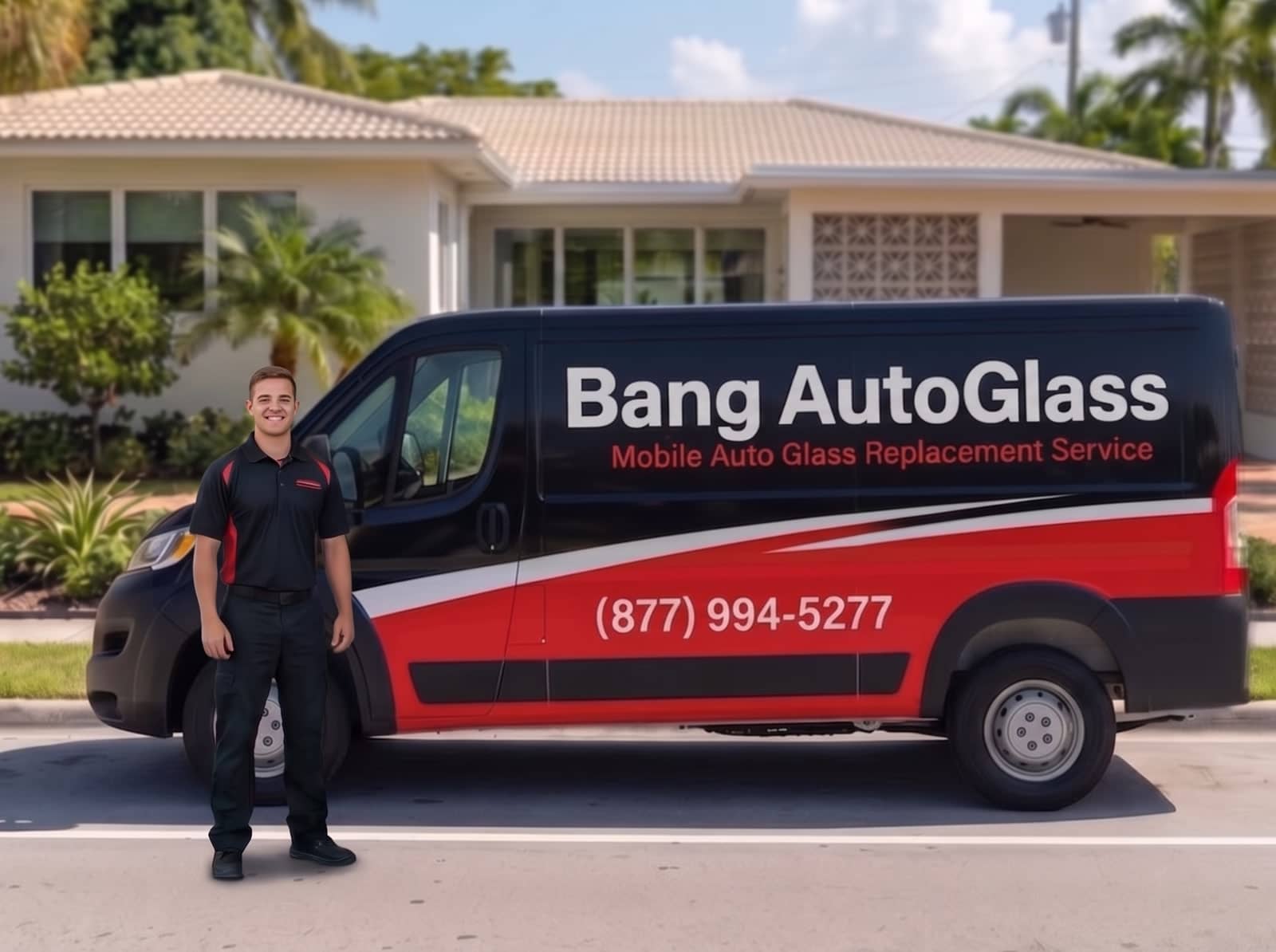
Genesis Windshield Replacement
Bang AutoGlass installs Genesis windshields on G70, G80, G90, GV70, and GV80 with OEM-spec laminated acoustic glass supporting Highway Driving Assist camera, HUD, and rain sensor. Mobile service in Arizona and Florida includes urethane bonding, ADAS recalibration, and lifetime workmanship warranty.
Genesis Windshield Replacement: Premium Auto Glass Service for Luxury Vehicles
When your Genesis suffers a cracked, chipped, or shattered windshield, you can't trust your luxury investment to just any auto glass shop. Genesis vehicles represent the pinnacle of refined engineering, blending advanced driver-assistance technology with handcrafted comfort, and your windshield plays a far bigger role in that experience than most drivers realize. At Bang AutoGlass, we specialize in mobile Genesis windshield replacement that protects your vehicle's structural integrity, restores every safety system to factory specification, and keeps the cabin as quiet and refined as the day you drove it off the dealership lot. Whether you drive a Genesis G70, G80, G90, GV60, GV70, or GV80, our certified technicians come to your home, office, or job site with everything needed to deliver a flawless replacement, often as soon as the next business day.
Why Genesis Windshield Replacement Demands a Specialist
Genesis windshields are not standard pieces of safety glass. Each one is engineered as a multi-layered component that contributes to acoustic insulation, structural rigidity, ultraviolet filtration, and the precise alignment of your vehicle's forward-facing camera system. When a generic shop installs the wrong glass or skips post-installation calibration, you can end up with wind noise, distorted heads-up display imagery, malfunctioning lane-keeping assist, and even compromised airbag deployment in the event of a collision. A Genesis windshield isn't just a sheet of glass between you and the road, it is a structural and electronic component that must be treated with the same precision Genesis engineers used when designing your vehicle.
That's why every Genesis windshield replacement we perform follows manufacturer-aligned procedures, uses OEM-quality glass that matches the original spec for thickness, tint band, acoustic interlayer, and bracket placement, and is followed by full advanced driver-assistance system recalibration when required. We treat your G70, G80, GV70, or GV80 with the level of care a luxury vehicle deserves, never cutting corners on adhesive cure times, primer application, or sensor alignment.
What Makes a Genesis Windshield Different From Other Vehicles
Most Genesis models roll off the assembly line with acoustic laminated glass, an interlayer of sound-dampening polyvinyl butyral that significantly reduces road, wind, and engine noise inside the cabin. This is one of the reasons a Genesis G80 or G90 feels so peaceful at highway speeds. If your replacement glass doesn't carry that acoustic layer, you'll immediately notice a louder, harsher cabin, and you'll lose one of the signature qualities of the Genesis brand.
In addition to acoustic glass, many Genesis trims feature a heads-up display projection area at the base of the windshield, a heated wiper park zone to prevent ice accumulation, infrared and ultraviolet coatings that reduce solar load and protect interior leather, rain and light sensors mounted to the glass, and a forward-facing camera bracket that supports lane keeping assist, forward collision-avoidance assist, and adaptive cruise control. Each of these features depends on glass that is manufactured to exact tolerances, which is why we always source Genesis-compatible OEM-quality windshields rather than generic replacements.
Genesis Models We Replace Windshields For
Bang AutoGlass provides mobile windshield replacement for the entire Genesis lineup, including both gas-powered and electrified variants. Our technicians are trained to identify the specific glass features and ADAS configuration of each model so the replacement matches what your vehicle was built with.
Genesis G70 Windshield Replacement
The Genesis G70 is a compact luxury sedan with a tightly engineered cabin where wind noise and structural rigidity are critical. G70 windshields typically feature acoustic glass, a rain sensor, and a forward camera supporting lane following assist and forward collision-avoidance assist. Replacement requires precise urethane bead placement to maintain the chassis stiffness G70 owners expect when carving through curves.
Genesis G80 Windshield Replacement
The G80 is one of the most popular Genesis models on the road, and its windshield often includes an integrated heads-up display, acoustic interlayer, infrared-reflective coating, and a multi-function camera that powers Highway Driving Assist. G80 windshield replacement requires careful HUD alignment and ADAS recalibration to ensure the projected speedometer, navigation arrows, and warning indicators appear crisp and properly positioned in the driver's line of sight.
Genesis G90 Windshield Replacement
The flagship G90 represents the most refined cabin Genesis builds. Its windshield includes premium acoustic glass, advanced solar coatings, a high-resolution heads-up display, and the most comprehensive ADAS suite in the lineup. G90 owners expect dealership-level service, and our mobile installation process delivers exactly that without requiring you to leave your home or office.
Genesis GV60 Windshield Replacement
The all-electric GV60 has unique demands because EVs amplify wind and road noise that a combustion engine would normally mask. The GV60's acoustic windshield is even more critical to cabin refinement, and the integrated camera system supports advanced features like Remote Smart Parking Assist. Proper replacement preserves the silent EV driving experience GV60 owners love.
Genesis GV70 Windshield Replacement
The GV70 luxury SUV features a tall, sweeping windshield with acoustic glass, rain sensor, forward camera, and on many trims a heads-up display. Because of the GV70's larger glass surface, getting the urethane bead, glass positioning, and trim alignment perfect on the first try is essential, and our technicians have replaced enough GV70 windshields to know exactly where every bracket, clip, and sensor needs to land.
Genesis GV80 Windshield Replacement
The GV80 is the largest SUV in the Genesis lineup, and its panoramic windshield is paired with one of the most advanced driver-assistance camera modules Genesis offers. GV80 windshield replacement requires meticulous attention to camera bracket bonding and post-installation calibration so features like Forward Collision-Avoidance Assist with junction turning, Lane Following Assist, and Highway Driving Assist 2 continue to function exactly as engineered.
Common Reasons Genesis Owners Need Windshield Replacement
Genesis windshields are durable, but they aren't invincible, and several common scenarios send Genesis owners searching for windshield replacement near me. Understanding the cause of your damage helps you decide whether repair or full replacement is the right call, and in most cases involving a Genesis, replacement is the safer long-term decision because of the ADAS sensors and acoustic layering involved.
- Rock chips from highway debris, especially behind gravel trucks or on freshly resurfaced roads
- Long stress cracks that started as small chips and spread across the driver's view
- Star breaks or bullseye chips directly in front of the camera or HUD projection zone
- Hail damage from severe storms that leaves multiple impact points across the glass
- Vandalism or break-ins that shatter the windshield entirely
- Improper prior installations that allowed wind noise, water leaks, or sensor malfunctions
- Frozen wiper blades or aggressive ice scraping that scored the glass beyond polishing
When the damage falls in the driver's primary viewing area, exceeds the size of a quarter, or interferes with the camera mount, replacement is almost always the right answer for a Genesis. Repairing a chip that sits in front of the lane-keeping camera can leave a visual distortion that confuses the system, which is why we recommend full replacement in those cases.
ADAS Calibration After Genesis Windshield Replacement
This is where Genesis windshield replacement separates the specialists from the discount shops. Nearly every Genesis on the road today relies on a forward-facing camera mounted to the windshield to power its safety systems. When we remove the original windshield, that camera comes off with it, and when the new glass goes in, the camera must be reattached and calibrated so it sees the road exactly as Genesis engineered it to.
Forward Collision-Avoidance Assist
Genesis Forward Collision-Avoidance Assist uses the windshield-mounted camera to detect vehicles, pedestrians, and cyclists ahead of you, and to automatically apply the brakes if a collision is imminent. Even a small misalignment of the camera can cause the system to misjudge distances or fail to trigger when needed. We perform full recalibration after every Genesis windshield replacement that includes this system.
Lane Keeping Assist and Lane Following Assist
Lane Keeping Assist gently steers your Genesis back into its lane if you drift, while Lane Following Assist actively centers the vehicle on the highway. Both rely on the camera reading lane markings through the windshield. Improper installation or skipped calibration can cause the system to ping-pong between lane lines or disengage entirely, which is unacceptable in a luxury vehicle of this caliber.
Highway Driving Assist and Smart Cruise Control
Highway Driving Assist combines lane following with adaptive cruise to deliver semi-autonomous highway driving, one of the standout features in modern Genesis vehicles. Smart Cruise Control with Stop and Go uses the same camera and radar fusion to maintain your set distance from the vehicle ahead. After we replace your windshield, we calibrate the camera to factory specification so these systems work exactly as they did before the damage occurred.
Our Genesis Windshield Replacement Process
Bang AutoGlass has refined our installation process over thousands of luxury vehicle replacements to deliver consistent, dealership-quality results in your driveway. Each appointment follows the same proven sequence so nothing is missed, nothing is rushed, and your Genesis goes back on the road safely.
- We confirm your exact Genesis model, trim, and feature package so we bring the correct OEM-quality windshield with the right acoustic interlayer, HUD compatibility, sensor brackets, and tint band
- Our technician arrives at your scheduled location with a fully equipped mobile service vehicle and protects your hood, dash, and surrounding paint with covers
- We carefully remove the wiper assembly, cowl panel, A-pillar trim, rain sensor, and forward camera without damaging clips or finishes
- The damaged windshield is cut out using cold-knife or wire-out methods that preserve the pinch weld
- We clean and prime the bonding surface, then apply a fresh bead of high-modulus urethane rated for Genesis chassis stiffness
- The new windshield is set with precision suction tools to ensure perfect alignment with the roof, A-pillars, and cowl
- All sensors, cameras, brackets, and trim are reinstalled, and ADAS recalibration is performed when required
- We complete a final inspection, walk you through the cure time, and explain your lifetime workmanship warranty
The actual replacement portion typically takes 30 to 45 minutes from start to finish, and we ask that the vehicle remain stationary for an additional hour after installation so the urethane adhesive can fully cure and bond the glass to your Genesis. This safe drive-away time protects the structural integrity of the installation and ensures the windshield performs correctly in the event of an airbag deployment or collision.
Mobile Genesis Windshield Replacement at Your Home or Office
We are a fully mobile auto glass service, which means you never have to drop your Genesis off, sit in a waiting room, or arrange a rental car. Our technicians come to wherever your vehicle is parked, whether that's your driveway, your office parking lot, a job site, or even a hotel during travel. This is especially valuable for Genesis owners whose schedules don't allow for half-day shop visits, and it means your luxury vehicle is treated with the same white-glove convenience you expect from concierge dealership service.
Mobile Genesis windshield replacement also gives you peace of mind because you can watch the entire process, ask questions, and verify the quality of the OEM-grade glass before it goes onto your vehicle. We handle everything onsite, including ADAS calibration when conditions allow, so by the time we drive away your Genesis is fully restored and ready for the road.
How Long Does Genesis Windshield Replacement Take
The actual installation of a Genesis windshield typically takes between 30 and 45 minutes once our technician arrives and begins work. After installation, we ask that you allow approximately 1 hour for the urethane adhesive to fully cure before driving the vehicle. This safe drive-away window is non-negotiable on a Genesis because the windshield contributes meaningfully to roof crush strength and airbag support, and rushing the cure can compromise both. Most Bang AutoGlass customers schedule next-day appointments, so from the moment you call to the moment your Genesis is back in service, you're typically looking at 24 to 48 hours total.
OEM-Quality Glass for Your Genesis
Every Genesis windshield we install is OEM-quality, meaning it matches the original equipment specification for glass thickness, acoustic interlayer, sensor bracket placement, frit pattern, tint band, and any HUD or solar coatings that came on your vehicle from the factory. This ensures that your cabin stays as quiet as it was when new, your heads-up display projects crisply, your rain sensor works correctly, and your forward camera sees the road exactly as Genesis engineered it to.
We refuse to install lower-grade glass on a luxury vehicle. The price difference between cheap glass and OEM-quality glass is small, but the difference in long-term performance, fitment, and safety is enormous, and Genesis owners deserve nothing less than the best.
Lifetime Workmanship Warranty on Every Genesis Replacement
Every Genesis windshield replacement we perform is backed by our lifetime workmanship warranty. If you ever experience a leak, wind noise, rattle, or any other issue tied to the installation itself, we will return and make it right at no cost to you for as long as you own the vehicle. This warranty reflects the confidence we have in our technicians and our process, and it gives Genesis owners the long-term peace of mind that comes with working with a true specialist.
Genesis Windshield Replacement Cost and Insurance Claim Assistance
Genesis windshield replacement cost varies based on the model, trim, ADAS features, and whether your vehicle has a heads-up display, heated wiper park, or acoustic glass. A G70 without a HUD will cost less than a fully loaded GV80 with the premium camera package, but in either case we provide transparent upfront pricing before any work begins so there are no surprises.
Filing an Insurance Claim
Most comprehensive auto insurance policies cover windshield replacement, often with a low or even waived deductible depending on your state and carrier. We help you with the insurance claim from start to finish and make the process as smooth as possible. If you need to file a claim, we'll guide you on what information to gather, how to contact your carrier, and how to schedule the replacement once your claim is approved.
Out-of-Pocket Replacement
If you prefer to pay out of pocket, whether to avoid a claim on your record or because your deductible is higher than the replacement cost, we offer fair, transparent pricing on every Genesis windshield. We'll provide a written quote before scheduling so you know exactly what to expect.
Caring for Your New Genesis Windshield
Once your new Genesis windshield is installed and the urethane has cured, a few simple practices will keep it in showroom condition for years to come. Avoid slamming doors during the first 24 hours so the pressure differential doesn't disturb the seal. Leave the retention tape in place for at least 24 hours if our technician applies it. Avoid automatic car washes with stiff brushes for the first 48 hours. And keep an eye on your wiper blades, replacing them at the first sign of streaking so they don't score your new glass.
Why Genesis Owners Choose Bang AutoGlass
Bang AutoGlass has become a trusted name in luxury vehicle windshield replacement because we treat every Genesis the way we'd want our own to be treated. We bring OEM-quality glass to your driveway, complete the replacement in 30 to 45 minutes with a 1-hour cure window, recalibrate every ADAS system to factory specification, and back it all with a lifetime workmanship warranty. We offer next-day appointments so you're never stuck waiting a week with a damaged windshield, and our mobile service eliminates the hassle of dropping your vehicle off at a shop.
Schedule Your Genesis Windshield Replacement Today
If your Genesis G70, G80, G90, GV60, GV70, or GV80 has a damaged windshield, don't wait for a small chip to spread into a full crack or for a structural compromise to put your safety at risk. Contact Bang AutoGlass today to schedule your next-day mobile Genesis windshield replacement. Our team is ready to bring OEM-quality glass, certified installation, and full ADAS calibration directly to your location, all backed by our lifetime workmanship warranty. Use the contact information and quick sign-up form above to get started, and let us restore your Genesis to its full luxury performance.
Frequently asked questions
How long does a Genesis windshield replacement take?
The replacement typically takes about 30-45 minutes to complete, plus about 1 hour for the adhesive to set before you can drive safely. The total visit is roughly 1.5-2 hours.
Is windshield replacement covered by insurance?
If you have comprehensive coverage, windshield replacement is often fully covered with nothing out of pocket. In Florida and Arizona, many policies waive or offer waivers on the deductible for windshield claims. We can help you file your claim.
What quality glass and materials does Bang AutoGlass use?
Every Genesis windshield replacement uses OEM-quality glass and materials backed by a lifetime workmanship warranty, ensuring the same durability and fit you'd get at a dealership.
Do Genesis windshields need ADAS calibration?
Most newer Genesis models have safety cameras on the windshield, so ADAS calibration is typically needed to keep lane-keeping and automatic braking accurate. This adds only about 15-30 minutes to your appointment.
4.8★ on Google · 350+reviews from AZ & FL drivers
“I needed my windshield replaced and they made the entire process easy. Bang AutoGlass is the best!”
“Top-notch auto glass service. They handled my windshield replacement quickly and professionally.”
“Bang AutoGlass made my windshield replacement simple from start to finish.”
Need Genesis Windshield Replacement?
We come to you across Arizona and Florida — often $0 with insurance.
We reply within minutes during business hours.