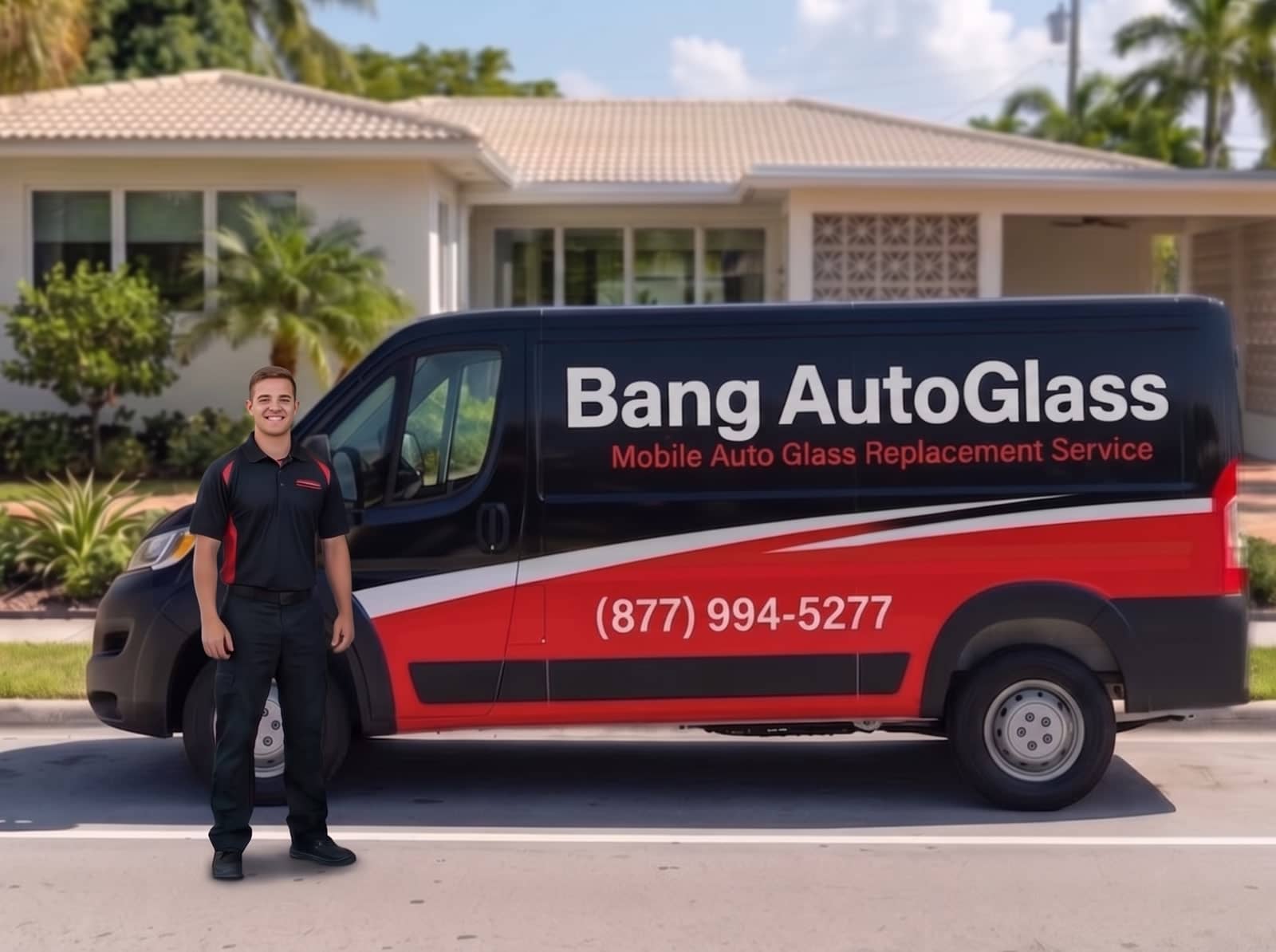
GMC Windshield Replacement
Bang AutoGlass installs GMC windshields on Sierra, Yukon, Yukon XL, Acadia, and Terrain with OEM-spec laminated glass supporting Pro Safety camera, Super Cruise driver attention camera, and HUD. Mobile service in Arizona and Florida includes ADAS recalibration and a lifetime warranty.
GMC Windshield Replacement Services by Bang Auto Glass
When the windshield on your GMC takes a hit, you're not just dealing with a piece of glass, you're dealing with a critical safety component engineered to work hand-in-hand with your truck or SUV's structural integrity, airbag deployment system, and advanced driver assistance technology. At Bang Auto Glass, we specialize in professional GMC windshield replacement that restores your vehicle to its original safety standards while keeping the entire process simple, fast, and affordable. Whether you drive a heavy-duty Sierra 2500HD pulling a fifth-wheel across the country or a refined Yukon Denali shuttling the family to weekend events, your GMC deserves a windshield replacement done by technicians who understand exactly what makes these vehicles different from anything else on the road.
Why GMC Windshields Require a Specialized Replacement Approach
GMC has built its reputation on premium materials, refined engineering, and capability that ranges from light-duty crossovers to massive heavy-duty trucks. That same level of engineering carries over to the windshield itself. Modern GMC windshields are far from a simple sheet of glass, they are a layered, sensor-integrated component that plays a direct role in how the vehicle protects its occupants and how its safety systems perform.
Built for Heavy-Duty and Premium Driving Conditions
GMC trucks and SUVs are routinely exposed to demanding conditions, gravel roads, jobsite debris, towing turbulence, and long highway commutes that all expose the windshield to constant impact risk. The windshields used in vehicles like the Sierra 1500, Sierra HD, and Canyon are engineered to handle these stresses, which is why a proper replacement requires precise installation to maintain that same factory-grade durability. A poorly installed windshield can compromise cabin sealing, allow wind noise, and even fail during a rollover scenario, which is why Bang Auto Glass treats every GMC replacement with the same precision used by certified shops.
The Role of Advanced Driver Assistance Systems on GMC Vehicles
Most GMC models from 2015 onward come equipped with some level of GMC Pro Safety or GMC Pro Safety Plus, which includes Forward Collision Alert, Lane Keep Assist with Lane Departure Warning, Automatic Emergency Braking, Following Distance Indicator, and on certain models, Super Cruise hands-free driving technology. The forward-facing camera that powers many of these features is mounted directly to the windshield, which means the moment your glass is replaced, those systems must be recalibrated to work correctly. Skipping calibration can cause your GMC's safety features to misfire, fail to engage, or trigger false warnings, all of which we prevent by handling the entire process the right way.
GMC Models We Service for Windshield Replacement
Bang Auto Glass offers windshield replacement for the full GMC lineup, current generation and older. Whether your GMC has a basic acoustic laminated windshield or a fully loaded HUD-equipped Denali setup, we have the OEM-quality glass to match.
The GMC models we regularly service include:
- GMC Sierra 1500, Sierra 2500HD, and Sierra 3500HD
- GMC Yukon and Yukon XL, including Denali and AT4 trims
- GMC Acadia and Acadia Denali
- GMC Terrain and Terrain Denali
- GMC Canyon, including AT4 and Denali trims
- GMC Hummer EV Pickup and Hummer EV SUV
- GMC Savana cargo and passenger vans
GMC Sierra Windshield Replacement
The GMC Sierra is one of the most replaced windshields we handle, partially because of how often these trucks are on the highway and partially because of how exposed their windshields are to road debris from larger vehicles. Sierra windshields often include rain-sensing wipers, lane departure cameras, heated wiper park areas, and on Denali trims, full Heads-Up Display projection. Each of these features changes the exact part needed for replacement, and we make sure we order glass that matches your VIN-specific configuration.
GMC Yukon and Yukon XL Windshield Replacement
The Yukon and Yukon XL come standard with acoustic laminated glass that helps create that quiet, refined cabin GMC is known for. Denali trims often add HUD compatibility, and most newer Yukons also feature a forward-facing camera array tied to Lane Keep Assist and Adaptive Cruise Control. A Yukon windshield replacement performed by Bang Auto Glass restores all of these capabilities and protects the calibration of every camera and sensor mounted to the glass.
GMC Acadia Windshield Replacement
The Acadia and Acadia Denali rely heavily on their forward-facing camera for active safety features, and many of the newer model years include rain-sensing wipers and condensation sensors built into the windshield. Acadia windshield replacement requires precise camera bracket alignment, and our team handles the entire calibration step so your safety features come back fully functional.
GMC Terrain Windshield Replacement
The Terrain is one of GMC's most popular crossovers, and its compact frame paired with a tall windshield profile makes it especially vulnerable to highway rock chips. We replace Terrain windshields with the correct OEM-quality glass that matches features like the integrated rain sensor, light sensor, and forward-facing camera mount, ensuring everything works exactly the way it did before the damage.
GMC Canyon Windshield Replacement
The midsize Canyon, especially in AT4 and Denali trims, is built to take a beating off-road, which often means the windshield does too. Canyon windshield replacement frequently involves brackets for forward-facing cameras and humidity sensors, and we calibrate everything before we leave so your truck is ready to keep working.
GMC Hummer EV Windshield Replacement
The Hummer EV is one of the most technologically advanced vehicles GMC has ever built, and its windshield reflects that. Featuring a curved laminated design, integrated cameras for Super Cruise, and acoustic dampening for the quiet electric cabin, a Hummer EV windshield must be installed with extreme precision. Bang Auto Glass uses OEM-quality glass for these replacements and follows GM's exact calibration procedures for the camera and sensor arrays.
Common Reasons GMC Owners Need Windshield Replacement
Damage to your GMC windshield can come from countless sources, and understanding the cause often helps determine whether replacement is the right call versus a simple repair.
Rock Chips and Highway Debris
By far the most common cause of GMC windshield damage is highway debris. A small chip from a rock thrown by a semi-truck can quickly grow into a full crack with the next temperature swing or pothole impact. If a chip is larger than a quarter or sits in your line of sight, replacement is almost always the safer option.
Stress Cracks From Temperature Changes
GMC owners in regions with extreme temperature swings often deal with stress cracks that appear seemingly out of nowhere. These cracks typically start at the edge of the windshield where the glass is under the most pressure, and once they begin spreading, they cannot be repaired and require full replacement.
Failed Repairs and Spreading Cracks
If you have already had a chip repaired and the crack has continued to grow, replacement is the only safe path forward. A compromised windshield no longer offers the structural support needed to protect the cabin in a collision or rollover.
GMC Windshield Features We Account For During Replacement
GMC vehicles come with a wide range of windshield-integrated technologies, and getting the right glass means matching every feature your specific VIN includes.
Acoustic Laminated Glass
Most newer GMCs, particularly Denali trims, use acoustic laminated glass to dampen road and wind noise inside the cabin. We always replace acoustic windshields with OEM-quality acoustic glass to maintain that quiet ride.
Heads-Up Display (HUD) Windshields
GMCs equipped with Heads-Up Display require a special windshield with a reflective coating designed to project a clear, unblurred image. Installing the wrong glass on a HUD vehicle results in a ghosted, distorted, or invisible HUD projection. Bang Auto Glass always confirms HUD compatibility before ordering glass.
Rain-Sensing Wipers and Light Sensors
Many GMC models include a sensor module mounted to the windshield that controls automatic wipers and headlights. Replacing the glass requires properly transferring or remounting these sensors so they continue to function correctly.
Heated Windshields and Wiper Park De-Ice
Some GMC trims feature a heated wiper park area that prevents wiper blades from freezing to the glass. We make sure the replacement windshield includes the same heated element and that all electrical connections are restored.
Forward-Facing Camera Mounts
The forward-facing camera bracket built into the windshield is one of the most precision-dependent components of any GMC replacement. Even a millimeter of misalignment can affect Lane Keep Assist, Forward Collision Alert, and Adaptive Cruise Control performance, which is why we calibrate after every replacement.
Our GMC Windshield Replacement Process Step by Step
Bang Auto Glass keeps the entire windshield replacement process straightforward, professional, and convenient. Here's exactly how it works from start to finish.
- You contact us with your GMC's year, make, model, and trim, and we identify the exact OEM-quality windshield that matches your vehicle's features and sensors.
- We confirm a next-day mobile appointment at the location of your choice, whether that's your home, your office, or a jobsite.
- Our technician arrives on time and inspects the damaged windshield, sensor brackets, and surrounding trim before beginning the removal.
- The damaged windshield is carefully removed without damaging your paint, pinch weld, or interior trim.
- We prep the bonding surface, apply premium urethane adhesive, and install your new OEM-quality windshield with precise alignment.
- The replacement itself takes 30 to 45 minutes, after which we recommend allowing 1 hour for the adhesive to fully cure before driving.
- We perform any required ADAS calibration, transfer sensors, and verify that all features are working before we leave.
ADAS Calibration After GMC Windshield Replacement
If your GMC was built within the last decade, there is a strong chance it requires camera calibration after windshield replacement. This is not a step you can skip, GM specifically requires calibration on most equipped models to restore Lane Keep Assist, Forward Collision Alert, Automatic Emergency Braking, and Following Distance Indicator to factory accuracy.
Static vs. Dynamic Calibration
GMC vehicles use two types of calibration depending on the model. Static calibration is performed in a controlled environment using targets and measurement equipment, while dynamic calibration is done on the road at specific speeds and conditions. Some GMC models require both. Bang Auto Glass uses the proper procedure for your specific vehicle to make sure every system is restored to GM specifications.
Why Calibration Matters
A windshield replaced without calibration may look perfect, but the safety systems behind it will be operating with inaccurate data. That can mean late braking, unintended lane corrections, or completely disabled features. We never leave a calibration step unfinished because your safety, and the safety of everyone in your GMC, depends on it.
Mobile GMC Windshield Replacement Anywhere You Need Us
Bang Auto Glass is a fully mobile auto glass service, meaning we come to you. There is no need to take time off work, sit in a waiting room, or coordinate a ride home. Whether you need your GMC Sierra serviced at a worksite, your Yukon serviced in your driveway, or your Acadia serviced in an office parking lot, our team brings everything required for a complete, professional windshield replacement directly to your location. Mobile service has become the standard for busy GMC owners who want quality work without the hassle of dropping off a vehicle.
Insurance Claim Assistance for GMC Windshield Replacement
If you have comprehensive insurance, your GMC windshield replacement is often covered fully or partially depending on your deductible. Bang Auto Glass walks you through the entire claim process so you understand exactly how to file and what to expect. We help you with the insurance claim from start to finish and make the process as smooth as possible. Many of our customers are surprised to learn that their windshield replacement ends up costing them little to nothing out of pocket once their insurance is involved, and we make sure you are informed every step of the way.
Our Lifetime Workmanship Warranty on Every GMC Windshield Replacement
Every GMC windshield replacement performed by Bang Auto Glass comes backed by a lifetime workmanship warranty. That means as long as you own the vehicle, any issue related to our installation, leaks, wind noise, sensor remounting, or adhesion, will be corrected at no additional cost. We stand behind our work because we believe quality service should never come with an expiration date.
OEM-Quality Glass and Materials We Use
Bang Auto Glass installs OEM-quality glass on every GMC windshield replacement. That means your replacement windshield is built to meet or exceed the same specifications as the glass GM originally installed at the factory, including correct thickness, acoustic properties, sensor compatibility, HUD reflectivity when applicable, and safety performance. Combined with premium urethane adhesives and precision installation, you get a finished result that looks, sounds, and performs like the day your GMC rolled off the line.
How Long Does GMC Windshield Replacement Take?
The actual installation of your GMC windshield typically takes 30 to 45 minutes from start to finish. After installation, we ask that you allow 1 hour for the urethane adhesive to fully cure before driving the vehicle. This short cure time is part of why mobile service works so well, you can schedule your appointment, get the work done, and be back on the road within just a couple of hours total.
Schedule Your GMC Windshield Replacement With Bang Auto Glass
When your GMC needs a new windshield, you deserve a service that respects your time, your investment, and your safety. Bang Auto Glass offers next-day mobile appointments, OEM-quality glass, expert ADAS calibration, lifetime workmanship warranty, and full insurance claim assistance, all delivered by technicians who understand exactly how GMC vehicles are built. Reach out today and let us take care of your GMC Sierra, Yukon, Acadia, Terrain, Canyon, or Hummer EV windshield replacement with the precision and professionalism your truck or SUV deserves.
Frequently asked questions
How long does a GMC windshield replacement take?
A GMC windshield replacement typically takes about 30-45 minutes to complete, plus roughly 1 hour for the adhesive to set before you can drive. Total visit time is usually 1.5-2 hours. If your GMC has a safety camera, ADAS calibration may add 15-30 minutes.
Is mobile windshield replacement the same quality as a shop?
Yes. Our fully-equipped technicians perform the complete replacement at your location using OEM-quality glass and materials, with the same care and precision as a traditional shop. Every replacement is backed by a lifetime workmanship warranty.
Does insurance cover a GMC windshield replacement?
With comprehensive coverage, your windshield replacement is often fully covered with nothing out of pocket. Florida waives the deductible entirely, and many Arizona drivers have optional no-deductible coverage. We'll help you file or start your insurance claim if needed.
Can I drive my GMC right after the windshield is replaced?
We recommend waiting about 1 hour for the adhesive to fully set before driving. Our technician will advise you on cure time and any precautions based on weather and conditions at the time of your appointment.
4.8★ on Google · 350+reviews from AZ & FL drivers
“I needed my windshield replaced and they made the entire process easy. Bang AutoGlass is the best!”
“Top-notch auto glass service. They handled my windshield replacement quickly and professionally.”
“Bang AutoGlass made my windshield replacement simple from start to finish.”
Need GMC Windshield Replacement?
We come to you across Arizona and Florida — often $0 with insurance.
We reply within minutes during business hours.