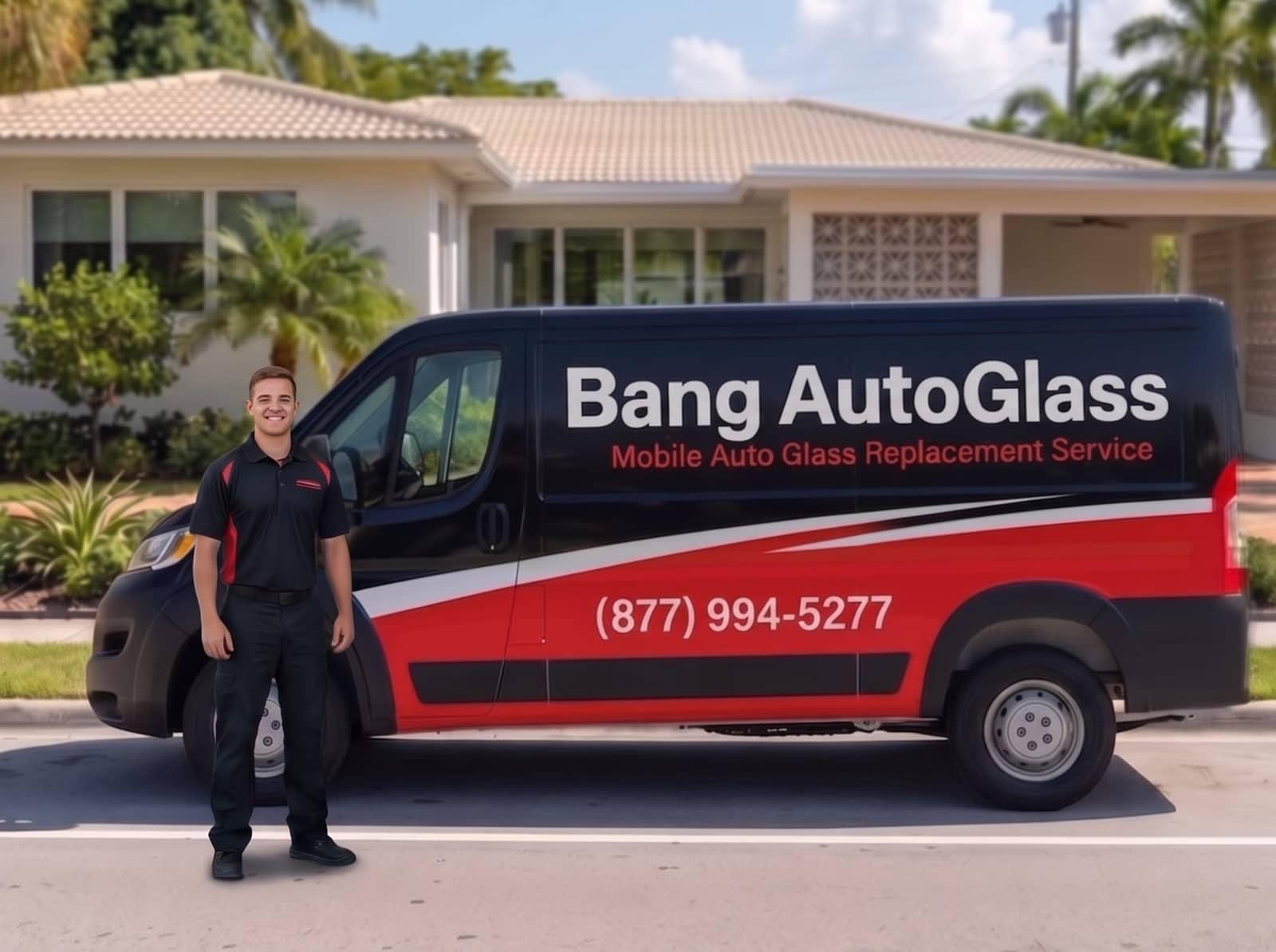
BMW Door Glass Replacement
Bang AutoGlass replaces BMW door glass on 3, 5, 7, X3, X5, and i-series using OEM-fit tempered side windows—including frameless panes on 4, 6, and 8 Series Gran Coupe. Mobile service across Arizona and Florida includes vacuum cleanup, regulator inspection, and a lifetime workmanship warranty.
BMW Door Glass Replacement
When your BMW's door glass is damaged, you need a replacement service that understands the engineering and precision that go into every BMW vehicle. At Bang AutoGlass, we specialize in BMW door glass replacement that restores not only the appearance of your luxury vehicle but also the performance, safety, and refinement BMW owners expect. Whether you drive a 3 Series sedan, an X5 SUV, or a frameless 8 Series coupe, our mobile technicians come directly to your location and complete most BMW door glass replacements in 30 to 45 minutes, with no adhesive cure wait afterward because the glass is carried by the window regulator. Combined with next-day appointments, OEM-quality materials, and a lifetime workmanship warranty, BMW owners across the area trust Bang AutoGlass to handle their door glass needs the right way the first time.
Why BMW Door Glass Replacement Requires Specialized Attention
BMW vehicles are built to a higher standard than most cars on the road, and that level of engineering extends to every piece of glass installed at the factory. From acoustic-laminated side windows to frameless coupe designs and one-touch automatic window regulators, BMW door glass involves systems that demand the right materials, the right tools, and a technician who knows exactly how each component interacts. A proper BMW door glass replacement is more than just popping out broken glass and dropping in a new piece. It requires window regulator inspection, anti-pinch sensor reinitialization, careful seal alignment, and an understanding of how acoustic glass affects the cabin experience. At Bang AutoGlass, every BMW door glass replacement we perform uses OEM-quality materials that match the original specifications of your vehicle so the fit, finish, and function feel exactly the way BMW intended.
Understanding the Different Types of BMW Door Glass
Not all door glass is the same, and BMW in particular offers more variation than the average automaker. Knowing what type of glass your vehicle uses is essential to ordering the correct replacement and preserving the BMW driving experience you're used to.
Tempered Safety Glass
Most BMW door glass is made from tempered safety glass, which is engineered to shatter into small, blunt pieces when broken to reduce the risk of injury. This is the standard glass used in the front and rear doors of most non-acoustic BMW models and is the most common type of replacement we perform on daily-driver BMWs.
Laminated Acoustic Glass
Many BMW models, particularly higher trims and luxury-class vehicles like the 7 Series, X5, X7, and i Series, come from the factory with laminated acoustic door glass. This glass features a thin sound-dampening layer sandwiched between two pieces of tempered glass, dramatically reducing wind, road, and traffic noise inside the cabin. If your BMW originally came equipped with acoustic glass, replacing it with standard tempered glass will result in a noticeably louder cabin. We always match acoustic glass with acoustic-rated OEM-quality replacements to preserve the BMW driving experience.
Privacy and Tinted Glass
Many BMW SUVs, including X3, X5, and X7 models, come with factory-tinted privacy glass on the rear doors. Our team identifies the correct tint level and shade to match the rest of your vehicle so the replacement is seamless and undetectable from inside or outside the car.
BMW Models We Service for Door Glass Replacement
Our mobile technicians are trained to work on the entire BMW lineup, from compact sedans to full-size SUVs and high-performance M variants.
BMW 3 Series and 4 Series Door Glass Replacement
3 Series Sedan, Touring, and Gran Turismo
The BMW 3 Series is one of the most popular vehicles we service. Whether you drive an E90, F30, or G20 generation 3 Series, we replace front door glass, rear door glass, and rear quarter vent windows with precision and OEM-spec accuracy.
4 Series Coupe, Convertible, and Gran Coupe
The 4 Series Coupe and Convertible feature frameless door glass that requires careful alignment after installation to ensure proper sealing against wind noise and water intrusion. Our technicians have specific experience with frameless BMW windows.
BMW 5 Series and 7 Series Door Glass Replacement
The 5 Series and 7 Series represent BMW's executive sedans and almost always come equipped with laminated acoustic glass. These vehicles also feature soft-close doors and advanced one-touch window operation that requires reinitialization following any door glass replacement to function correctly.
BMW X Series SUV Door Glass Replacement
Compact X1 and X3
These compact SUVs are commonly seen with damaged rear door glass from break-ins or road debris. Privacy tint and acoustic options vary by trim, and we identify the exact specification before scheduling.
Midsize and Full-Size X5, X6, and X7
These flagship SUVs are most often equipped with acoustic glass and privacy tint, especially on higher trims. Their large door glass dimensions make them more vulnerable to road debris and parking lot incidents.
BMW i Series Electric Vehicle Door Glass
The BMW i4, iX, and i7 represent BMW's electric future and feature acoustic side glass to keep the cabin whisper-quiet without engine noise to mask wind and road sounds. We use OEM-quality acoustic-rated glass for every i Series replacement.
BMW M, Z4, and Convertible Door Glass
High-performance M models and the Z4 roadster require special attention. Frameless windows, convertible top integration, and unique seal designs mean each of these BMWs needs a technician who has experience with the specific challenges they present.
Common Reasons BMW Owners Need Door Glass Replacement
There are several reasons why a BMW owner might find themselves searching for door glass replacement, and our mobile service can handle every one of them:
- Vehicle break-ins and smash-and-grab theft, especially in urban areas where BMWs are frequently targeted
- Vandalism and intentional damage to parked vehicles
- Road debris kicked up by other vehicles, particularly on highways and construction zones
- Failed window regulators causing the glass to fall into the door cavity and crack
- Stress fractures from extreme temperature swings, more common in older or sun-worn glass
- Accidents or impacts that cause cracking, chipping, or complete shattering
No matter the cause, our mobile service handles cleanup, removal of old glass, and full installation of your new BMW door glass without you ever having to leave home or work.
Our BMW Door Glass Replacement Process
We've refined our BMW door glass replacement process over thousands of jobs to deliver fast, accurate, and reliable results every time. Here is what you can expect when you schedule with Bang AutoGlass:
- Book your next-day mobile appointment by phone or through our online sign-up form
- Our technician arrives at your home, office, or other preferred location with the correct OEM-quality BMW door glass already in hand
- The interior door panel and weatherstripping are carefully removed and protected
- All broken glass fragments are vacuumed from inside the door cavity to prevent regulator damage
- The window regulator is inspected to confirm proper operation before installation
- New OEM-quality door glass is installed and aligned to factory specifications
- The window is reinitialized so anti-pinch and one-touch features work correctly
- Door panel, trim, and weatherstripping are reinstalled and inspected
- Final test of all window functions to confirm smooth operation and proper sealing
The entire replacement is typically completed in 30 to 45 minutes, and since door glass is held by hardware rather than urethane, you can drive as soon as we finish.
Mobile BMW Door Glass Replacement at Your Location
Bang AutoGlass is a fully mobile auto glass service, which means there is no need to drive your damaged BMW to a shop, sit in a waiting room, or coordinate a ride home. Our service trucks come fully equipped with everything needed to complete your door glass replacement on-site, whether you're parked in your driveway, at your office, or in a parking lot. This is especially valuable when your door glass is shattered and your vehicle has been left exposed to the weather, since driving a BMW with a missing or damaged door window is also a security risk. The faster we can get to you, the better. Our next-day appointment availability for most BMW door glass replacements means you do not have to wait days or weeks to get your vehicle back to its original condition.
OEM-Quality Materials Built for BMW Standards
When it comes to a luxury vehicle like a BMW, the quality of the replacement glass matters as much as the installation itself. Bang AutoGlass uses only OEM-quality glass that meets the original equipment manufacturer's standards for thickness, tint, optical clarity, and acoustic performance. Our materials are sourced from trusted manufacturers that supply automakers worldwide, ensuring your replacement glass looks, fits, and functions identically to what your BMW left the factory with. Combined with high-grade urethane adhesives and OEM-spec moldings, every replacement we perform restores your vehicle to its original level of safety, sound insulation, and structural integrity.
BMW-Specific Considerations During Installation
BMW door glass replacement is more involved than a standard vehicle, and our technicians pay close attention to the specific systems that BMWs rely on for proper window operation.
Window Regulator Inspection
When your BMW door glass shatters, fragments often fall down inside the door cavity and can damage or jam the window regulator. We inspect every regulator before installing new glass to make sure the system is functioning correctly. If a regulator has failed or is showing signs of damage, we will let you know before proceeding so you can decide whether to address it at the same time.
Anti-Pinch Sensor Reinitialization
Modern BMWs come equipped with anti-pinch protection that automatically reverses the window if it detects an obstruction. This system must be reinitialized after any door glass replacement so it works correctly and does not falsely trigger during normal use. Our technicians complete the proper initialization procedure on every BMW we service.
One-Touch Window Reset
BMW one-touch up and down window functionality is convenient but it requires recalibration after the regulator or glass has been disturbed. We perform the model-specific reset procedure so your one-touch operation works exactly as it did from the factory.
Frameless Window Alignment
For BMW coupes and convertibles with frameless door glass, alignment is critical. Improperly aligned frameless glass can cause wind noise, water leaks, and excessive wear on door seals. Our technicians take the extra time to align frameless windows precisely to ensure a perfect seal every time.
How Long Does BMW Door Glass Replacement Take
For most BMW door glass replacements, our technicians complete the actual installation in 30 to 45 minutes. Because door glass is clamped to the window regulator rather than bonded with urethane, there is no cure period and the vehicle is safe to drive as soon as the technician finishes. This means most BMW owners can expect to be back on the road within about an hour of our arrival, with a fully restored door window that looks and performs exactly as it did before the damage occurred.
BMW Door Glass Replacement Cost and Insurance
The cost of BMW door glass replacement varies depending on the model, year, and type of glass your vehicle requires. Acoustic-laminated glass on luxury models like the 7 Series or X7 will cost more than standard tempered glass on a base 3 Series. Privacy-tinted rear door glass and frameless coupe windows also tend to be priced higher due to the specialized materials and labor involved.
Working With Your Insurance Provider
Most comprehensive auto insurance policies cover door glass replacement, often subject to a deductible. Bang AutoGlass works with all major insurance carriers and handles the billing process directly with your insurer once your claim is approved.
Help Filing a Glass Claim
If you have not yet filed a claim, our team is happy to assist you through the process. We help you with the insurance claim from start to finish and make the process as smooth as possible.
What You'll Want to Have Ready
Before you call your insurance company, it helps to have your policy number, your VIN, the date of the damage, and a brief description of how the glass was damaged ready to share with your claims representative.
Out-of-Pocket Pricing
If you prefer to pay out of pocket or your insurance does not cover glass damage, we provide upfront, transparent pricing before any work begins. There are never hidden fees, surprise charges, or last-minute upsells with Bang AutoGlass.
Lifetime Workmanship Warranty on Every BMW Door Glass Replacement
Every BMW door glass replacement we perform is backed by our lifetime workmanship warranty. If anything related to our installation, such as a leak, wind noise, or seal failure, ever becomes an issue, we return and make it right at no cost to you. This warranty reflects the confidence we have in our technicians and the OEM-quality materials we use on every job, and it gives BMW owners peace of mind that their luxury vehicle was repaired by professionals who stand behind their work.
After Your BMW Door Glass Replacement
Taking proper care of your vehicle in the hours and days following your replacement helps ensure a long-lasting, perfect result.
Care and Maintenance Tips
First 24 Hours
You can drive normally as soon as the technician finishes, but we recommend avoiding car washes for at least 24 hours to give all seals time to settle. Try not to slam doors during this period either, since the air pressure can put unnecessary stress on a freshly installed window.
Long-Term Maintenance
Keep the new glass clean using a non-ammonia glass cleaner to preserve any tint or coating. Periodically inspect the rubber weatherstripping around the door for signs of wear or damage, and report any unusual wind noise or water intrusion immediately so we can address it under your lifetime workmanship warranty.
Schedule Your BMW Door Glass Replacement Today
Damaged door glass on a BMW is more than just an inconvenience. It's a security risk, a weather risk, and a hit to the refinement of your driving experience. Bang AutoGlass makes restoration fast, easy, and stress-free with mobile service that comes to you, next-day appointments, OEM-quality materials, and a lifetime workmanship warranty backing every job. Whether you drive a daily-driver 3 Series, a flagship 7 Series, an electric i4, or a frameless 4 Series Coupe, our team has the experience and the materials to get you back on the road quickly and safely. Contact Bang AutoGlass today to schedule your BMW door glass replacement and experience the convenience of expert mobile auto glass service done the BMW way.
BMW Door Glass Replacement — common questions
Can you replace my BMW door glass while I'm at home?
Yes, we're a mobile-only service and come directly to your home, workplace, or wherever you're located in Arizona or Florida to replace your door glass on site. Our fully-equipped technicians do the complete job with the same quality as a traditional shop.
How long does BMW door glass replacement take?
Door glass is held by hardware and doesn't require adhesive, so the replacement typically takes 30-45 minutes and you can drive right away. We'll vacuum up all the shattered tempered glass from the door and interior before we leave.
What's the cost of BMW door glass replacement?
Cost depends on your specific BMW model and glass type. If you have comprehensive insurance, many jobs are fully covered with nothing out of pocket, and we can help you file your claim.
Is BMW door glass covered by warranty?
Every door glass replacement is backed by a lifetime workmanship warranty and uses OEM-quality glass and materials. This warranty covers the installation workmanship for as long as you own the vehicle.
Where we do BMW auto glass
Bang AutoGlass is a mobile auto glass company serving Arizona and Florida. We don't have a shop you drive to — we come to your home, your job, or wherever the car is sitting, with next-day appointments in most areas. In Arizona that means the whole Valley — Phoenix, Mesa, Scottsdale, Chandler, Gilbert, Tempe, Glendale and out to Tucson and Prescott. In Florida we cover Tampa Bay, Orlando and Miami, from St. Petersburg and Clearwater across to Kissimmee, Winter Park and Fort Lauderdale.
Browse every city we serve in Arizona and Florida, or read how coverage works under Arizona's glass statutes and Florida's § 627.7288.
Mobile auto glass — cities we serve
4.8★ on Google · 350+ reviews from AZ & FL drivers
“I needed my windshield replaced and they made the entire process easy. Bang AutoGlass is the best!”
“Top-notch auto glass service. They handled my windshield replacement quickly and professionally.”
“Bang AutoGlass made my windshield replacement simple from start to finish.”
Need BMW Door Glass Replacement?
We come to you across Arizona and Florida — often $0 with insurance.
We reply within minutes during business hours.