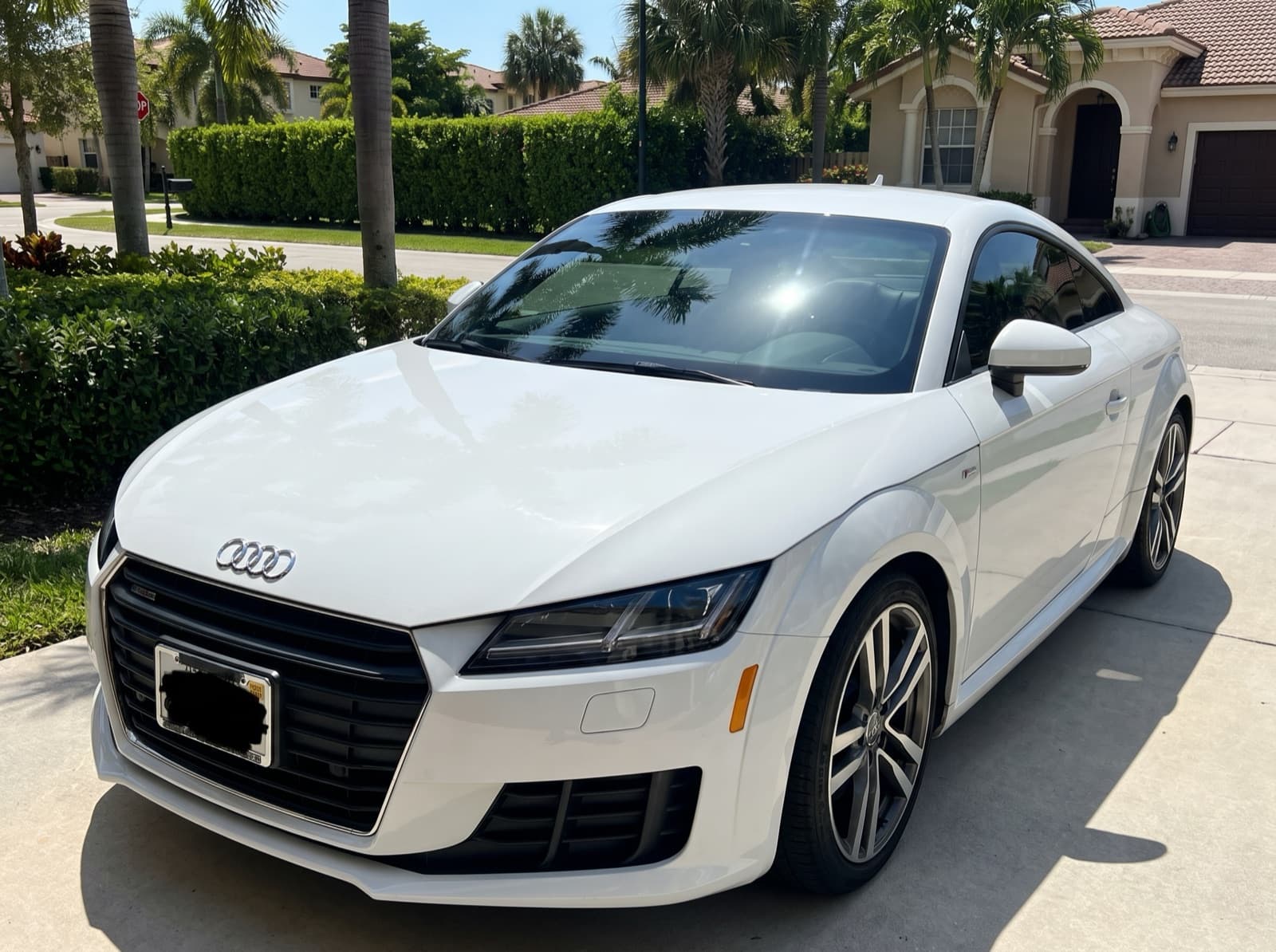
Modern Audi vehicles are engineered with some of the most sophisticated driver assistance technology on the road today. From Audi pre sense to Active Lane Assist, every advanced safety feature in your Audi depends on perfectly aligned cameras, radar units, and sensors to function as designed. When any of these components are disturbed, removed, or repositioned, your Audi requires a precision ADAS calibration to bring the system back into factory specification. At Bang AutoGlass, our mobile Audi ADAS calibration service is designed to restore that precision quickly, accurately, and with the same care Audi engineered into your vehicle from the factory.
Audi ADAS calibration is not optional. It's the procedure that tells your Audi's onboard computer exactly where each camera and sensor is pointing after a windshield replacement, collision repair, suspension adjustment, or sensor replacement. Without it, your Audi's safety systems may misread the road, fail to brake in time, drift out of its lane, or worse, signal false alerts that distract you behind the wheel. This page covers everything Audi owners need to know about ADAS calibration, the systems involved, when calibration is required, and why Bang AutoGlass is the trusted local choice for Audi drivers.
Audi ADAS calibration is the technical process of aligning your Audi's Advanced Driver Assistance Systems back to their original factory tolerances. ADAS stands for Advanced Driver Assistance Systems, and these technologies use a combination of forward-facing cameras (usually mounted behind the windshield near the rearview mirror), radar units (typically housed in the front grille or rear bumper), ultrasonic sensors, and onboard control modules. Every one of these components has to know its exact angle, distance, and orientation relative to the road, the vehicle's centerline, and the other sensors on the car.
When a windshield is replaced on an Audi, even a perfectly installed piece of glass changes the camera's position by fractions of a millimeter. That's enough to throw off lane detection, automatic emergency braking distances, and adaptive cruise control. Audi ADAS calibration corrects that variance using either static targets in a controlled environment, a dynamic road test, or both, depending on your Audi model and year.
The cameras and radar behind your Audi windshield make split-second decisions every time you drive. A misaligned camera by even one degree can translate to several feet of error at highway distances. That's the difference between your Audi pre sense system braking in time or not. Calibration isn't a luxury, it's a manufacturer-required safety procedure that protects you, your passengers, and everyone else on the road.
Audi has built one of the most comprehensive driver assistance suites in the luxury market. Almost every Audi model on the road today, from the compact A3 to the flagship A8, Q7, Q8, and e-tron lineup, includes ADAS features that rely on calibration. Knowing which systems your Audi has helps you understand why calibration is non-negotiable after windshield work or front-end repairs.
Audi pre sense is the umbrella safety platform that uses windshield-mounted cameras and front radar to detect imminent collisions and prepare the vehicle automatically. It tightens seatbelts, closes windows and the sunroof, primes the brakes, and adjusts seat positions before impact. There are several variations of Audi pre sense, each requiring proper camera calibration to work.
Pre sense basic is included on most Audi models and uses data from existing systems to prepare the cabin for a potential collision. It relies on the same windshield camera that supports your lane assist features, which means a windshield replacement triggers a calibration requirement.
Pre sense front actively monitors the road ahead for stationary and moving objects using the forward-facing camera and radar. If a collision becomes likely, the system can apply autonomous emergency braking. After windshield replacement, this system must be recalibrated so it sees the road exactly as the factory engineers intended.
Pre sense city is designed for low-speed urban environments and detects pedestrians and other vehicles up to about 52 mph. It depends entirely on a precisely aligned forward camera, which is why Bang AutoGlass always confirms calibration is complete before returning your Audi to you.
Pre sense rear uses the rear radar sensors to detect approaching vehicles from behind. While windshield replacement doesn't typically affect this system, suspension or bumper work can, and a full diagnostic scan during calibration confirms all pre sense systems are responding correctly.
Active Lane Assist uses the forward-facing windshield camera to read lane markings and gently steer your Audi back into its lane if you begin to drift. Because the camera is the heart of this system, any windshield replacement requires Active Lane Assist to be recalibrated. Without calibration, the system may either over-correct, under-correct, or shut off entirely, often triggering a warning light on your virtual cockpit.
Adaptive cruise assist combines radar and camera data to maintain a set distance from the vehicle ahead and adjust speed automatically. Traffic Jam Assist extends this to stop-and-go conditions. Both systems require both the front camera and front radar to be calibrated and confirmed against factory specifications.
Audi Side Assist uses rear-mounted radar in the rear bumper to monitor blind spots and warn you of vehicles approaching from behind in adjacent lanes. While windshield work doesn't usually trigger Side Assist calibration, any rear bumper removal, body repair, or sensor replacement does. Our technicians always run a full ADAS scan to identify which sensors need attention.
Traffic Sign Recognition reads posted speed limits, no-passing zones, and other regulatory signage through the same windshield camera that powers lane assist and pre sense. After calibration, you can expect your Audi to display traffic signs accurately on the digital cluster and head-up display.
Many newer Audi models, especially Q5, Q7, Q8, A6, A7, and A8, include a 360-degree top view camera system. These cameras require their own calibration any time a windshield, bumper, mirror housing, or tailgate is removed. Park Assist uses ultrasonic sensors around the vehicle that also require calibration after collision repair.
Available on higher-trim A6, A7, A8, Q7, and Q8 models, Night Vision Assistant uses a thermal imaging camera mounted in the front grille. It's not directly affected by windshield replacement, but front-end damage or grille work always requires recalibration.
Audi specifies that ADAS calibration is required any time a sensor's position, alignment, or operating environment changes. The most common situations that require calibration include:
If your Audi has experienced any of the above, calibration is required to bring your safety systems back to full functionality.
Audi's ADAS systems are calibrated using one of three procedures depending on the model, year, and features installed. Bang AutoGlass technicians are equipped to perform all three on virtually every Audi on the road today.
Static calibration is the most common method for Audi vehicles. The overwhelming majority of Audi ADAS sensor calibrations are static and require a precisely placed target board positioned at exact measurements from the vehicle, a level floor, controlled lighting, and an OEM-grade scan tool to initiate the procedure. The car's computer reads the target through the camera and adjusts internal alignment values until the camera sees the target exactly where Audi expects it.
Dynamic calibration is performed on the road. Your Audi is driven at a specific speed range, often between 30 and 60 mph, on roads with clearly painted lane markings and visible road signage. The camera and radar log data while a scan tool monitors the calibration progress until completion.
Many newer Audi models, particularly those equipped with Adaptive Cruise Assist and Traffic Jam Assist, require both static and dynamic procedures to be completed in sequence. Bang AutoGlass technicians follow Audi's exact factory service procedure for your specific VIN to ensure both procedures are completed correctly.
Bang AutoGlass performs Audi ADAS calibration on virtually every model in the lineup, including the A3, A4, A4 allroad, A5, A6, A6 allroad, A7, A8, S3, S4, S5, S6, S7, S8, RS3, RS5, RS6, RS7, Q3, Q4 e-tron, Q5, Q7, Q8, e-tron, e-tron GT, and TT. Whether your Audi is a daily driver A4 or a flagship RS7 performance sedan, we calibrate every ADAS feature your vehicle came with from the factory.
Audi ADAS calibration is a methodical, multi-step process and we follow it the same way every time to guarantee accurate results.
Before any calibration begins, our technicians perform a full diagnostic scan of your Audi to identify which systems are present and which require calibration. This scan also documents any existing fault codes before the work begins, protecting both you and us from any miscommunication.
If the calibration follows a windshield replacement, our technicians confirm the glass is installed perfectly flush, the camera bracket is properly seated, and the rain/light sensor coupling pad is free of bubbles or embedded debris. We use OEM-quality glass and brackets that match the optical clarity and curvature your Audi camera was designed to see through.
For models requiring static calibration, the Audi is positioned on a level surface with the precise target board placement Audi specifies for your model. Our scan tool walks the camera through its calibration sequence until factory tolerances are confirmed.
For models requiring a dynamic procedure, our technician drives your Audi on appropriate roads while the scan tool runs the live calibration sequence. We never skip this step or substitute it with a static procedure when the manufacturer requires both.
Once calibration is complete, we perform a final diagnostic scan to confirm zero fault codes, then road test your Audi to verify Active Lane Assist, Adaptive Cruise Assist, Traffic Sign Recognition, and pre sense are all responding correctly. You receive your Audi back ready to drive with every safety system fully restored.
Bang AutoGlass is a mobile service, which means we bring Audi ADAS calibration directly to your home, office, or job site whenever the environment allows for it. Most Audi windshield replacements take just 30 to 45 minutes to complete, followed by one hour of safe drive-away time for the urethane adhesive to cure. Dynamic calibrations can often be completed right after the cure period. For static calibrations that require a controlled environment, we coordinate with you to find the most convenient setup or, when needed, complete the procedure at a partner facility that meets Audi's space and lighting requirements.
Audi owners choose Bang AutoGlass because we treat every calibration with the same precision Audi engineers built into the vehicle in the first place.
We use OEM-quality glass, urethane adhesive, and mounting brackets on every Audi we service. Optical clarity, curvature, and frit patterns matter enormously when your Audi camera is reading the road through that glass, and substandard materials can prevent calibration from completing.
Every Audi windshield replacement and ADAS calibration we perform is backed by our lifetime workmanship warranty. If anything related to our installation or calibration work ever goes wrong, we make it right.
We know Audi drivers don't have time to wait a week for service. Bang AutoGlass offers next-day appointments for Audi ADAS calibration whenever schedules allow, so you can get back on the road with full safety system functionality fast.
Mobile service doesn't mean cutting corners. Our technicians arrive equipped with OEM-level scan tools, calibration targets, and the technical bulletins specific to your Audi VIN to perform the same calibration procedure a dealership would.
Most comprehensive auto insurance policies cover Audi windshield replacement and the required ADAS calibration that follows. If you haven't already filed a claim, Bang AutoGlass is happy to walk you through the process and provide all the documentation your insurance company needs. We don't file the claim on your behalf, but we provide hands-on assistance so you can complete the claim quickly and confidently. Once your claim is approved, we coordinate directly with your insurer for billing so you don't have to worry about the paperwork.
Calibration time depends on the systems involved and the procedure type. Static calibration typically takes 45 minutes to 90 minutes. Dynamic calibration requires a road test that can range from 15 to 45 minutes depending on traffic and road conditions. Combined static and dynamic calibrations may take up to two hours. When paired with a windshield replacement, the full appointment usually fits within a half-day window including the one-hour adhesive cure time.
Driving a 2017 or newer Audi without proper ADAS calibration after windshield replacement or collision repair carries serious risks. Pre sense may fail to brake in time. Lane Assist may steer you in the wrong direction. Traffic Sign Recognition may display incorrect speed limits. Adaptive cruise may misjudge following distance. In addition to the safety implications, an uncalibrated ADAS system can void portions of your Audi's warranty and create liability issues in the event of a collision. Calibration is not a recommendation, it's a requirement.
Your Audi will start and drive, but features like Active Lane Assist, Adaptive Cruise Assist, and pre sense may be disabled, restricted, or operate inaccurately. Warning lights on your virtual cockpit are common and indicate the system is aware it has not been recalibrated.
Almost every Audi from 2017 onward equipped with the camera package requires calibration after windshield replacement. If your Audi has Active Lane Assist, pre sense, or adaptive cruise, calibration is required.
Yes, but you don't need to take your Audi to the dealer. Bang AutoGlass uses the same OEM-level diagnostic and calibration equipment, OEM-quality glass and adhesives, and follows the same Audi service procedures, often at significant savings and with the convenience of mobile service and next-day appointments.
If calibration cannot complete, it usually points to a related issue such as misaligned glass, a damaged camera bracket, a fault elsewhere in the system, or unsuitable environmental conditions. Our technicians diagnose and resolve these issues on the spot whenever possible.
Your Audi was engineered to keep you safe with technology that depends on precision. After any windshield replacement, collision repair, or sensor service, that precision needs to be restored. Bang AutoGlass delivers expert Audi ADAS calibration with OEM-quality materials, a lifetime workmanship warranty, next-day mobile appointments, and the experience to get every system on your Audi back to factory specification. Contact us today using the form above to schedule your Audi ADAS calibration and drive away with the confidence that every safety feature in your Audi is working exactly as Audi designed it to.