Why Genesis Auto Glass Replacement Deserves Special Attention
Genesis has carved out a well-earned reputation as one of the most sophisticated luxury brands on the road. From the sleek G70 sedan to the spacious GV80 SUV, every vehicle in the lineup is built around refined materials, advanced technology, and a cabin experience that rivals the best in the world. That premium engineering extends all the way to the glass — and it means that auto glass replacement on a Genesis is not a one-size-fits-all situation.
Whether you are dealing with a cracked windshield on your G90, a shattered rear window on a GV70, or a damaged door glass on a GV60, the choices you make during replacement have a real impact on safety, comfort, and the performance of the vehicle's advanced driver-assistance systems. This guide covers everything Genesis owners need to know about auto glass replacement across the full lineup.
The Genesis Glass Ecosystem: More Complex Than It Looks
From the outside, a car window is just a window. Inside a Genesis, it is a carefully engineered component that may carry acoustic interlayers, solar coatings, embedded heating elements, camera mounting brackets, antenna circuits, and more. Understanding what your specific vehicle has is the first step toward making sure any replacement is done right.
Windshields: Laminated, Featured, and Safety-Critical
Every Genesis windshield is laminated glass — two layers of glass bonded around a polyvinyl butyral (PVB) interlayer. This construction is what keeps the glass from shattering on impact and is a fundamental part of the vehicle's occupant protection system. Unlike tempered glass, laminated windshields can sometimes be repaired rather than fully replaced, but only when the damage is minor: typically a chip smaller than a quarter or a crack shorter than about three inches, located away from the driver's line of sight and the glass edges. When the damage exceeds those limits, full replacement is the only safe option.
On Genesis models, windshields often include one or more of the following premium features, depending on trim and model year:
- ADAS forward camera bracket: Most Genesis vehicles from the late 2010s onward mount a forward-facing camera at the top center of the windshield. This camera powers lane-keeping assist, automatic emergency braking, adaptive cruise control, and other safety features. When the windshield is replaced, this camera must be recalibrated to factory specifications — skipping this step can cause the safety systems to misfire or fail entirely.
- Solar and IR-reflective coating: Many Genesis windshields include a coating that reflects infrared heat, reducing cabin temperature and lowering the load on the air conditioning system. This is a genuine comfort benefit, and replacement glass must match this specification.
- Acoustic interlayer: Higher-trim Genesis vehicles often use an acoustic PVB interlayer that dampens wind and road noise, contributing to the hushed cabin experience the brand is known for. A standard windshield installed in its place will noticeably increase interior noise.
- Head-up display (HUD) compatibility: Some Genesis models feature a HUD that projects speed and navigation information onto the windshield. HUD-equipped vehicles require a windshield with a wedge-shaped interlayer to prevent a ghosted double image. A standard windshield is not interchangeable with a HUD windshield.
- Rain and light sensor pad: The rain-sensing wiper and automatic headlight sensor couple to the glass through an optical gel pad mounted behind the rearview mirror. This pad is a single-use component and must be replaced every time the windshield is swapped out — reusing it leads to sensor errors and malfunctioning auto wipers.
ADAS Recalibration: A Non-Negotiable Step
It is worth pausing on ADAS calibration because it is one of the most misunderstood aspects of modern windshield replacement. After a new windshield is installed, the forward camera's angle and alignment relative to the glass surface has changed — even by fractions of a degree. That small shift is enough to throw off the system's ability to accurately detect lane markings, pedestrians, and obstacles.
Recalibration can be performed in two ways, depending on the specific Genesis model and year. Static calibration involves parking the vehicle in front of manufacturer-specified target boards and using a scan tool to realign the camera while the car is stationary. Dynamic calibration requires a technician to drive the vehicle at prescribed speeds on roads with visible lane markings so the camera can relearn its reference points in real conditions. Some vehicles require both methods. The correct procedure is entirely OEM-specific, and it does add a short amount of time to the overall service visit — but it is absolutely essential for your safety systems to work as designed.
Door Glass: Tempered and Trim-Dependent
Door windows on Genesis vehicles are made from tempered glass, which is heat-treated to be significantly stronger than standard glass. When tempered glass breaks, it shatters into small, relatively blunt cubes rather than sharp shards — a safety design that also means tempered glass cannot be repaired. Any crack or break in a door window requires full replacement.
On Genesis coupes and sportier body styles, you may encounter frameless door glass. Frameless windows rely on precise auto-drop mechanisms — the glass automatically lowers a few millimeters when the door opens and re-seats when it closes, creating a weather-tight seal against the roofline. This design demands exact glass fitment and properly functioning window regulators to work correctly.
Higher-trim Genesis models — particularly those with a focus on cabin quietude — may also feature laminated acoustic front-door glass. This is a premium upgrade over standard tempered door glass, and matching that acoustic specification in a replacement is important for maintaining the interior refinement that Genesis owners expect.
It is also worth noting that a window that will not go up or down is not always caused by broken glass. A failed window regulator — the mechanical assembly that moves the glass — is a common culprit and should be assessed separately from any glass damage.
Rear Glass: Defroster Grids, Antennas, and More
The rear windshield on a Genesis is tempered glass and, like all tempered glass, is replace-only when damaged. What makes rear glass replacement more involved than it might appear is the array of features bonded directly to the interior surface.
Most Genesis rear windows include a defroster grid — thin conductive wires printed onto the glass that heat up to clear fog and condensation. On many models, the AM/FM radio antenna is integrated into this same grid. Replacement glass must replicate these printed circuits precisely, with the correct connector positions, or the defroster and radio will not function after installation.
Depending on the model, the rear glass may also integrate the third brake light or accommodate a rear wiper assembly. All of these factors make it important to ensure the replacement glass is a true OEM-quality match for the specific Genesis model and trim level.
Quarter Glass: Small Pane, Careful Process
Quarter glass refers to the small, fixed windows typically found at the rear corners of a vehicle — behind the rear doors on sedans and SUVs, or just behind the rear side windows on coupes. On Genesis vehicles, these panes are tempered glass and are bonded in place with urethane adhesive, often coming pre-assembled with their surrounding trim molding.
Because quarter glass is bonded rather than framed, replacement requires careful removal of the old adhesive and precise application of new urethane to ensure a weatherproof, rattle-free seal. Getting this step right matters — a poor bond will allow water intrusion and wind noise, both of which are particularly noticeable in a luxury vehicle like a Genesis.
Sunroof and Panoramic Roof Glass
Many Genesis SUVs and sedans — especially in upper trim levels — come equipped with large panoramic roof systems. These panels are typically laminated glass (similar in construction to a windshield), bonded into the roof structure and designed to resist shattering from above. Panoramic panels are often significantly larger than a traditional sunroof, which adds to the complexity and care required during replacement.
The rubber seals around the perimeter of the sunroof panel and the small drain channels at each corner are the most common sources of sunroof leaks. If water is getting into the cabin, the issue is more likely a blocked drain or a deteriorated seal than a crack in the glass itself — though a damaged panel obviously needs to be addressed regardless.
Replacement sunroof glass must match the original panel's dimensions and any tinting or UV-blocking characteristics. Because these panels are bonded, proper adhesive application and cure time are just as important as they are for a windshield.
Signs It Is Time to Replace Your Genesis Auto Glass
Not every chip or scratch requires immediate replacement, but certain types of damage should prompt you to act quickly. Here is what to watch for across the different glass panels on your Genesis:
- Windshield cracks that spread: Temperature changes, road vibration, and even a car wash can cause a small crack to grow rapidly. Once a crack reaches the edge of the glass or enters the driver's primary sightline, replacement is typically required.
- Chips near ADAS camera mounting areas: Damage close to the top-center of the windshield — where the forward camera bracket sits — should be evaluated promptly, as even minor distortion in this zone can affect camera performance.
- Shattered door or rear glass: Because tempered glass cannot be repaired, any break means the panel needs to be replaced. A shattered window also leaves your vehicle exposed to weather and theft until it is addressed.
- Defroster lines that no longer heat: If sections of your rear defroster grid have stopped working, it may indicate damaged glass or a compromised connection — worth having inspected.
- Water leaks around the sunroof or quarter glass: Persistent leaks that do not resolve after cleaning the drains may indicate a failed seal or damaged glass that needs to be reseated or replaced.
- Haze, pitting, or deep scratches on the windshield: Surface damage that impairs visibility in certain light conditions — particularly at night or in direct sunlight — is a safety issue and a legitimate reason to replace the glass.
What to Expect During a Mobile Genesis Glass Replacement
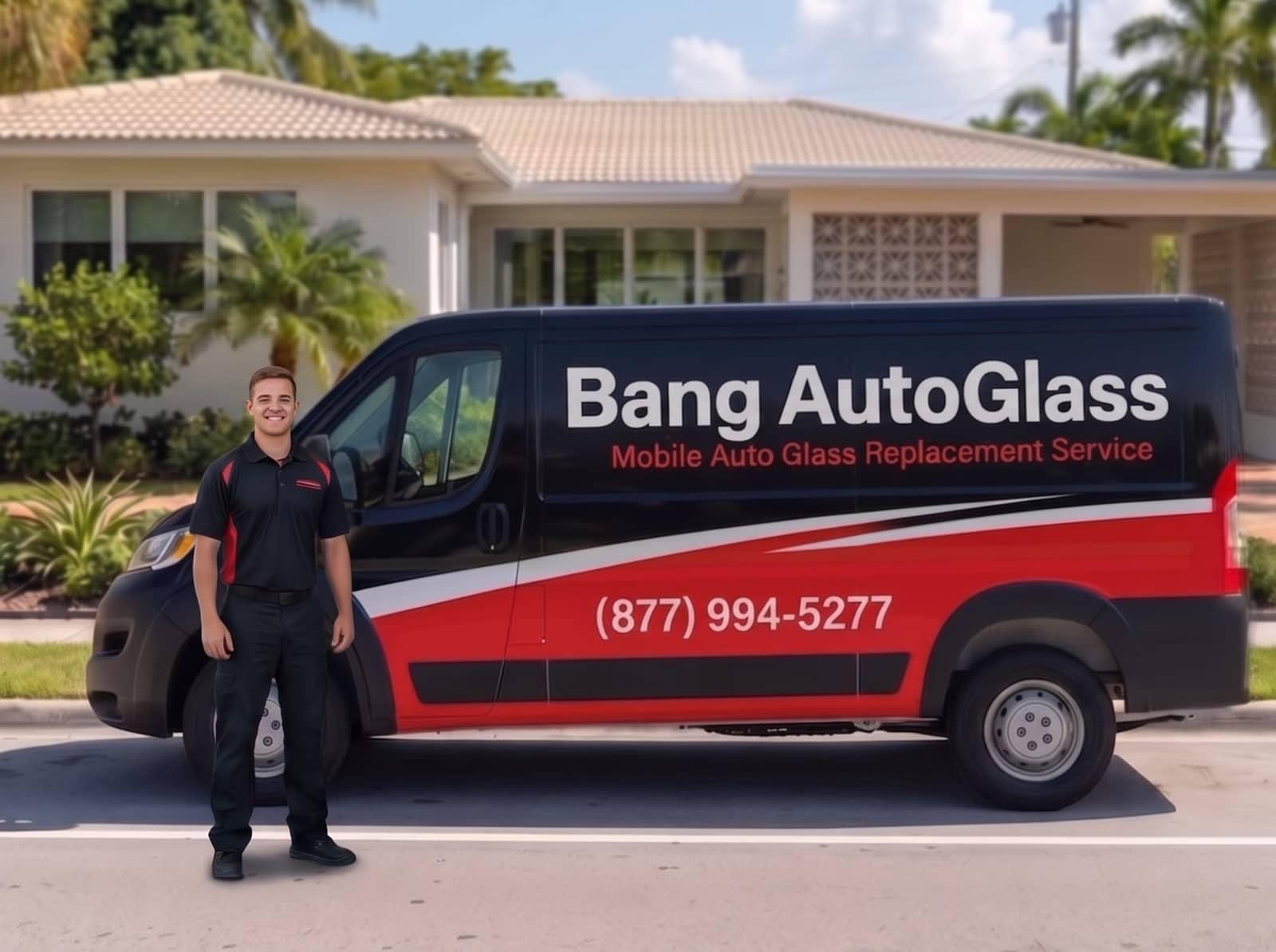
Bang AutoGlass provides mobile auto glass service in Arizona and Florida, meaning a certified technician comes directly to your home, your workplace, or wherever your vehicle is located — no need to drop off the car or sit in a waiting room.
When you schedule an appointment, the technician arrives with the correct OEM-quality replacement glass and all necessary materials for your specific Genesis model and trim. The process typically takes around 30 to 45 minutes for the glass installation itself. After that, the adhesive needs approximately one hour to cure before the vehicle is safe to drive — though the exact timing can vary based on the type of adhesive used, the ambient temperature, and the specific glass panel being replaced. Your technician will let you know when the vehicle is ready.
If your Genesis windshield requires ADAS recalibration, that step is performed after the glass is installed and adds a short amount of time to the visit. Next-day appointments are available when scheduling allows, so you are not left waiting long with damaged glass.
Every replacement is backed by a lifetime workmanship warranty. If there are any issues related to the quality of the installation — leaks, rattles, or fitment problems — they are covered. The replacement glass itself meets OEM-quality standards, matching the specifications of what Genesis installed at the factory.
Does Insurance Cover Genesis Auto Glass Replacement?
In many cases, yes — comprehensive auto insurance policies typically include coverage for glass damage. Whether your specific claim is covered, and how much you may owe out of pocket, depends on your policy details, your deductible, and your insurance provider's terms.
The Bang AutoGlass team can assist you with understanding the claims process and walking through what information your insurer will likely need. While you are ultimately the policyholder who works directly with your insurance company, having a knowledgeable team in your corner makes the process significantly less stressful. It is always worth a quick call to your provider to understand your coverage before assuming glass damage is an out-of-pocket expense.
Why OEM-Quality Glass and Precise Fitment Matter for Genesis Owners
Luxury vehicles like those in the Genesis lineup are designed as complete, integrated systems. Every component — including the glass — is specified to tight tolerances that affect noise levels, thermal comfort, structural integrity, and the performance of electronic systems. Installing glass that does not match the original specification can introduce cabin noise into a vehicle engineered for near-silence, compromise the performance of safety cameras, cause HUD images to ghost or blur, or disable features like heated glass zones and rain-sensing wipers.
OEM-quality glass ensures that the replacement panel matches the original in every relevant dimension: thickness, curvature, coating type, acoustic properties, and feature compatibility. This is not a luxury upgrade — it is the baseline standard for any Genesis replacement that is done correctly.
Precise installation technique matters just as much as the glass itself. Urethane adhesive must be applied evenly and in the right quantity; cure time must be respected before the vehicle is driven; sensors and mounting brackets must be re-seated correctly; and calibration must be completed where required. Cutting corners on any of these steps introduces risk to both the vehicle and its occupants.
Keeping Your Genesis Glass in the Best Condition
A few simple habits can extend the life of your glass and reduce the likelihood of damage requiring replacement. Keep a reasonable following distance on highways and gravel roads to reduce chip risk from road debris. Avoid parking in direct sun for extended periods when possible — extreme heat accelerates the spread of existing chips and cracks. Use quality glass cleaner and a soft microfiber cloth to avoid scratching the surface. And if you do notice a chip, have it evaluated promptly: a repairable chip that is ignored can become an unrepairable crack that requires full replacement.
For Genesis owners, protecting the glass is also protecting the sophisticated technology built into it — and that is an investment well worth making.
Related services