Why Every Pane of Glass on Your GMC Sierra 1500 Matters
The GMC Sierra 1500 is a full-size pickup built for work, towing, and everyday driving. Like any hardworking truck, its glass takes a beating — highway gravel pings the windshield, job-site debris strikes the side windows, and weather events can crack or shatter the rear glass. Yet many Sierra owners treat auto glass as an afterthought until a small chip becomes a structural problem or a shattered window leaves the cab exposed.
Understanding what each piece of glass does, how it's constructed, and when a repair or full replacement is the right call helps you make confident decisions and keeps your Sierra safe and watertight. This guide walks through every major glass panel on the Sierra 1500 — windshield, front and rear door glass, rear back glass, quarter windows, and the optional sunroof — covering construction, key features, signs of trouble, and what a professional mobile replacement visit looks like.
Laminated vs. Tempered Glass: The Foundation of Every Decision
Before diving into individual panels, it helps to understand the two types of auto glass found on your Sierra 1500, because the type dictates whether a repair is even possible.
Laminated Glass
Laminated glass is made from two plies of glass bonded to a PVB (polyvinyl butyral) interlayer in the middle. When it breaks, the interlayer holds the pieces together — the windshield cracks but stays in place rather than collapsing inward. That structural integrity is the whole point. Because of this construction, small chips and short cracks in laminated glass can sometimes be repaired by injecting a clear resin, as long as the damage hasn't spread into the driver's critical sightline and the crack hasn't penetrated fully through both glass plies.
Tempered Glass
Tempered glass is heat-treated to be significantly stronger than standard glass, but when it does break, it shatters into small, relatively harmless cubes rather than sharp shards. That's by design — it reduces injury risk. The trade-off is that tempered glass cannot be repaired. Any damage means a full replacement.
On your Sierra 1500, the windshield is laminated. Door glass, rear glass, and most quarter windows are tempered. Sunroof panels — especially panoramic ones — are typically laminated, though construction varies by trim and model year.
GMC Sierra 1500 Windshield: The Most Feature-Dense Panel
The windshield is the most complex piece of glass on your Sierra, and modern Sierra trims have packed it with technology that affects both how the glass is made and what's required when it's replaced.
Repair vs. Replacement
A chip smaller than a quarter and a crack shorter than a few inches — when located away from the edges and outside the driver's direct sightline — may qualify for a resin repair. Repairs are faster and preserve the original factory seal. However, if the damage is at the edge of the windshield, spreads across the driver's view, or has penetrated both layers of the laminate, a full replacement is the only safe option. Temperature swings and vibration from driving a truck can spread a small crack surprisingly quickly, so early evaluation matters.
ADAS Forward Camera
Many Sierra 1500 trims — particularly from the late 2010s onward — feature a forward-facing ADAS (Advanced Driver Assistance Systems) camera mounted at the top center of the windshield. This camera powers critical safety features including automatic emergency braking, lane-keep assist, forward collision warning, and adaptive cruise control.
Replacing the windshield requires that this camera be recalibrated afterward. Calibration is an OEM-specified process: it may involve parking the vehicle with manufacturer-approved target boards and a scan tool (static calibration), a technician driving the truck at set speeds while the system relearns (dynamic calibration), or both — depending on your specific trim and model year. Skipping calibration isn't an option; an uncalibrated camera can activate safety features at the wrong moment or fail to activate them when needed. Calibration adds a short additional amount of time to the service visit but is a non-negotiable part of a safe, complete windshield replacement.
Rain and Light Sensors
Sierra trims equipped with automatic wipers and automatic headlights use a sensor cluster that sits behind the rearview mirror and couples optically to the windshield through a single-use gel pad. That gel pad must be replaced — not reused — every time the windshield is swapped. Reusing it causes hazing that leads to erratic auto-wiper behavior and auto-headlight faults. A proper replacement always includes a fresh pad.
Solar and IR-Reflective Glass
Many Sierra 1500 windshields include a solar or infrared-reflective coating that helps reject heat. This is a genuine practical benefit for a truck that sits in the sun, and it's especially relevant in hot climates. Replacement glass must match this coating; a plain clear substitute lets noticeably more heat into the cab. Some solar coatings include a small uncoated window — often near the top center — to preserve GPS, toll-tag, and cellular signal clarity, because certain metallic coatings can interfere with those signals.
HUD-Equipped Trims
Higher Sierra trims with a head-up display (HUD) require a windshield with a specially shaped (wedge) interlayer that prevents a ghost double image from appearing on the projected display. A standard windshield is not interchangeable with a HUD windshield — using the wrong glass produces a distracting doubled projection. Always confirm whether your Sierra has HUD before any windshield replacement.
Door Glass: Front and Rear Side Windows
The Sierra 1500's door glass is tempered, which means any crack, shatter, or impact break requires a full replacement — there is no repair option. The most common causes of door glass failure on trucks like the Sierra are attempted break-ins, impact from flying debris, and mechanical failures within the door itself.
The Regulator Connection
It's worth noting that a window stuck in the down position isn't always caused by broken glass. The window regulator — the mechanical assembly inside the door that raises and lowers the glass — can fail independently of the glass itself. A failed regulator can make it appear as though the window is jammed, when in reality the glass is intact. A thorough diagnosis before replacement saves time and ensures the right component is addressed.
Framed Door Design
The Sierra 1500 uses a framed door design, meaning the glass runs up into a metal door frame that holds it in place at the top. This is the standard full-size truck configuration and is generally more straightforward to work with than frameless designs found on coupes or sports cars.
Acoustic Glass on Higher Trims
Some higher Sierra trims — particularly Denali and other premium configurations — may use laminated acoustic glass in the front doors. Acoustic glass adds a specialized PVB interlayer that dampens wind and road noise for a quieter cab. If your truck has this feature, the replacement glass must match the acoustic spec; swapping in a standard tempered pane would allow noticeably more road noise into the cabin and sacrifice a comfort feature you paid for. Whether a specific trim has acoustic door glass varies by model year and configuration.
Rear Back Glass: More Than Just a Window
The rear glass on the Sierra 1500 spans the full width of the cab and is tempered. Because it shatters rather than cracks, any break requires full replacement. But the rear glass on the Sierra isn't just a pane — it carries several features that the replacement must match exactly.
Sliding Rear Window
Many Sierra 1500 configurations offer a sliding rear window — either a manual slider or a power-operated version. Power rear sliders add electrical components that must be properly reconnected during replacement. The replacement assembly must match the original's slider configuration; substituting a fixed pane for a sliding unit eliminates a functional feature and may also affect cab ventilation and airflow management while towing.
Rear Defroster Grid
The defroster grid is printed directly onto the inside surface of the rear glass. Replacement glass must include a matching grid layout and the correct connectors so that the defroster circuit reconnects properly. A pane without the matching grid leaves you without rear defroster function — a real safety problem in cold or foggy conditions.
Integrated Antenna
On many Sierra trims, the AM/FM antenna — and in some cases additional signal lines — is integrated into the rear defroster grid. The replacement glass must carry the same antenna design and connector points; otherwise, radio reception degrades or disappears entirely.
Quarter Glass: Small Panel, Important Fitment
Quarter windows on the Sierra 1500 are the smaller fixed panes typically located behind the rear doors or at the rear corners of the cab, depending on the cab configuration (regular, double, or crew cab). They are tempered and replace-only when damaged.
Quarter glass on trucks is typically bonded — set in urethane adhesive — and often comes encapsulated with its trim molding as part of the assembly. The encapsulated design means the glass and its surrounding rubber or plastic surround arrive as a single unit. Getting the right assembly for the specific cab configuration and trim level is important, because fitment varies across Sierra 1500 body styles and model years.
Sunroof and Panoramic Roof Glass
The GMC Sierra 1500 is available with sunroof and moonroof options depending on the trim and package selected. Sunroof glass is typically laminated, especially on larger panoramic panels, which means it holds together when broken rather than shattering across the headliner and occupants — an important safety distinction.
Common Causes of Sunroof Glass Damage
Sunroof panels are more vulnerable to overhead impact than most owners realize. Overhead garage clearance issues, car wash brushes, falling branches, and debris from other vehicles on the highway are all common culprits. Stress fractures — cracks that appear without any obvious impact — can also develop over time, particularly along the edges of the panel.
Seals and Drains Matter Too
When a sunroof glass replacement is performed, the rubber seals and the corner drain tubes that channel water away from the opening deserve inspection. Clogged drains are among the most common causes of interior water leaks after a sunroof replacement and have nothing to do with the quality of the glass itself. Ensuring the drains are clear during the replacement visit protects the interior of your Sierra from water damage.
Signs It's Time to Stop Waiting and Schedule a Replacement
- A chip or crack that's spreading — temperature changes, vibration from driving, and even a car wash can cause a small crack to grow. Once it reaches a critical length or crosses the driver's sightline, repair is no longer an option.
- Edge cracks on the windshield — cracks that start at the edge of the glass compromise the windshield's structural role in a collision and almost always require immediate replacement.
- Shattered or missing glass — tempered glass that has already broken needs to be replaced promptly to keep the cab secure, weathertight, and safe from further debris entry.
- Fogging or delamination inside the windshield — a hazy or bubbly area between the two plies of the laminate indicates that the interlayer has begun to fail. This cannot be repaired and requires replacement.
- Water leaks around the glass — a failing urethane seal or damaged rubber trim around any glass panel can allow water intrusion that damages the interior, promotes mold, and weakens the bond over time.
- Scratched or pitted glass impairing visibility — surface scratches from worn wiper blades or road grit that create glare, especially at night or in direct sun, are a visibility and safety concern.
What to Expect From a Mobile Glass Replacement
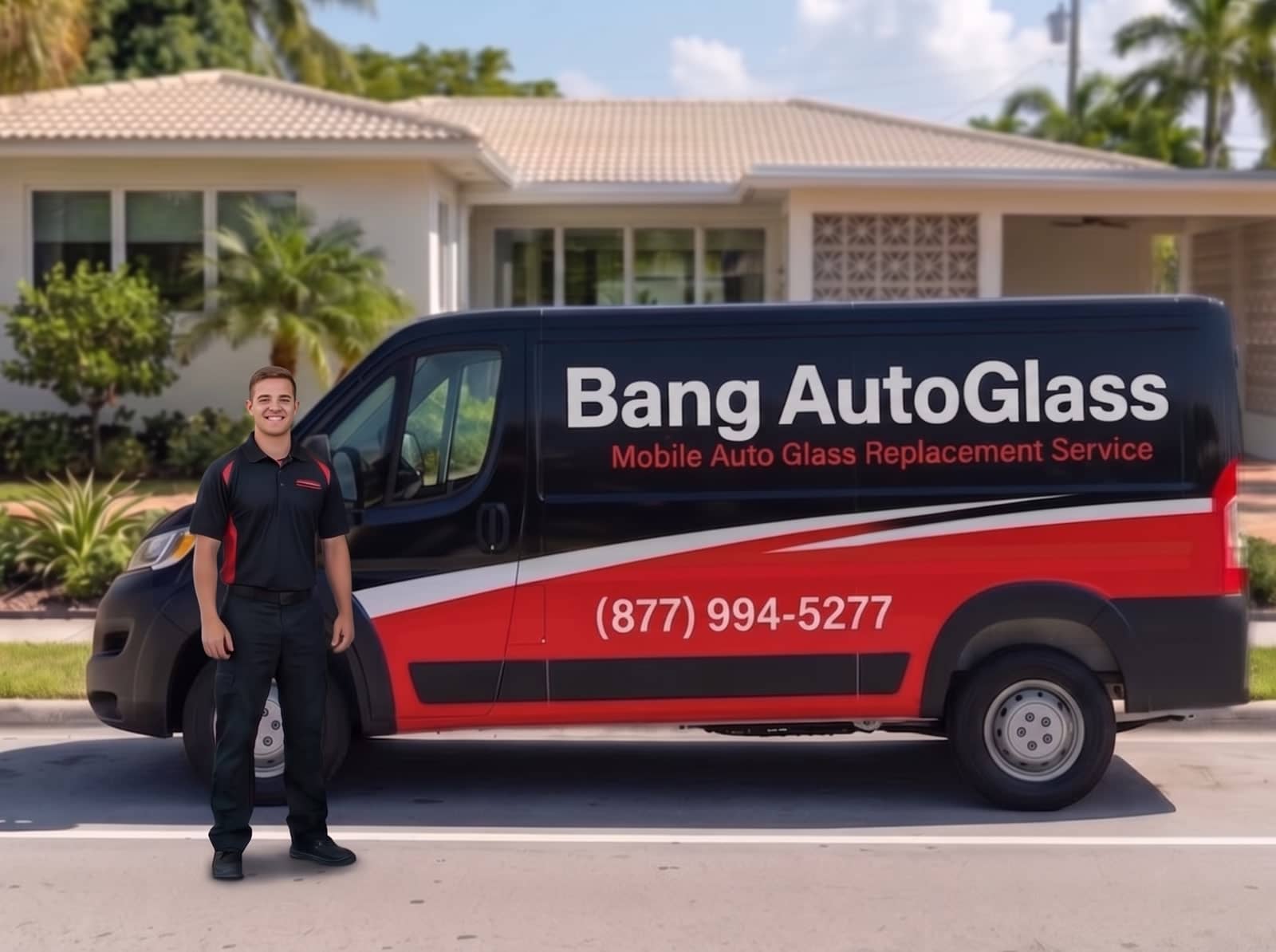
Bang AutoGlass offers mobile service throughout Arizona and Florida, meaning a certified technician comes to your location — your driveway, your workplace parking lot, or roadside — rather than requiring you to bring the truck in.
The Replacement Process
For a windshield replacement, the technician removes the existing glass, prepares the pinch weld by cleaning and priming it, installs new OEM-quality glass with fresh urethane adhesive, and reattaches all sensors, brackets, and trim. Most windshield replacements take approximately 30 to 45 minutes to complete. After installation, the adhesive requires about one hour to cure before the truck should be driven — this allows the urethane to set properly so the windshield performs its full structural role in a collision. On ADAS-equipped trims, calibration follows the glass installation and adds a short additional window to the visit.
OEM-Quality Materials and Lifetime Warranty
Every replacement uses OEM-quality glass and materials engineered to match the original specifications of your Sierra 1500 — whether that means matching a solar coating, an acoustic interlayer, a HUD-compatible wedge, or the correct defroster grid and antenna for the rear glass. Every job is backed by a lifetime workmanship warranty, so if an installation issue ever develops, it's covered.
Insurance Assistance
If you plan to use your comprehensive auto insurance to cover the replacement, the team at Bang AutoGlass can assist you with the claim process — walking you through what information you'll need and helping you understand your coverage — so the experience is as straightforward as possible.
How to Prepare for Your Appointment
- Confirm your trim level and options — knowing whether your Sierra has HUD, ADAS, a power rear slider, acoustic door glass, or a sunroof helps ensure the correct glass is ordered before the technician arrives.
- Park in a clean, covered area if possible — a shaded driveway or covered parking spot gives the technician the best working conditions, especially in extreme heat, and supports a proper adhesive cure.
- Remove loose items near the work area — clearing the dash and rear shelf of valuables and items that could shift during the repair keeps the workspace clean and reduces the chance of anything getting in the way.
- Plan around the cure window — build in roughly an hour after the installation before you need to drive, and let the technician know upfront if you have a hard departure time so the schedule can be set accordingly.
- Have your insurance information ready — if you're filing a comprehensive claim, having your policy number, insurer contact, and vehicle VIN handy speeds up the assistance process.
Precise Fitment Is the Whole Point
A GMC Sierra 1500 is a significant investment, and every piece of glass on it was engineered to work within a precise set of structural, safety, and feature requirements. Installing a windshield that doesn't match the original solar coating, acoustic spec, or HUD compatibility isn't a minor inconvenience — it quietly degrades the performance and value of the truck. The same logic applies to rear glass with mismatched defroster grids, door glass that doesn't match the acoustic spec of a Denali interior, or a sunroof panel installed without checking the drain tubes.
That's why getting OEM-quality glass matched to your specific Sierra trim and model year — installed by a technician who understands every feature involved — makes a real difference. When the job is done right, your Sierra looks factory-correct, every feature works as intended, and you drive away with confidence rather than questions.
Ready to schedule? Next-day appointments are available when possible. Reach out to Bang AutoGlass to get started.