Hummer Sunroof Glass Replacement
Bang AutoGlass replaces Hummer sunroof and removable Sky Panel glass on H2, H3, and Hummer EV with OEM-spec panels, fresh weather seals, and full drainage-tube inspection. Mobile service in Arizona and Florida includes precise alignment, leak testing, and lifetime workmanship warranty.
Hummer Sunroof Glass Replacement
When the sunroof glass on your Hummer cracks, shatters, or develops a leak, you need a replacement service that understands the unique engineering behind these iconic vehicles. From the rugged H2 and H3 sport utilities to the cutting-edge GMC Hummer EV with its modular Infinity Roof and Sky Panels, every generation of Hummer has its own sunroof design, glass specifications, and installation requirements. At Bang AutoGlass, we specialize in Hummer sunroof glass replacement that restores both function and factory-fresh appearance, and we come directly to your home, office, or job site to do it.
Why Hummer Sunroof Glass Replacement Requires Specialized Care
Hummer vehicles are built differently than nearly anything else on the road. Their reinforced frames, elevated roof heights, and oversized body panels mean that the sunroof systems were engineered to specific tolerances that don't always translate from one make to another. A generic replacement approach will not work on a Hummer, which is why owners across the country search specifically for Hummer sunroof glass replacement when their roof glass is damaged. The seals are thicker, the glass panels are typically larger or shaped uniquely, and the drainage channels behind the headliner must align perfectly to prevent water intrusion. Our technicians have hands-on experience with every Hummer generation, and we use OEM-quality glass and sealants to ensure your sunroof performs exactly as it did when it left the factory.
Hummer H2 Sunroof Glass Replacement
The Hummer H2, produced from 2003 to 2009, was offered with a factory power sunroof that became one of the most-loved features of the vehicle. Because the H2 sits high and is frequently driven in off-road environments, the sunroof glass is particularly vulnerable to falling branches, hail, gravel kicked up from work sites, and even careless garage clearance. Replacing H2 sunroof glass requires removing portions of the headliner, disconnecting the motor assembly carefully, and lifting the cracked panel out without damaging the surrounding frame or trim. Our team handles this with practiced precision and pairs the original-fit glass with the correct urethane sealant rated for the H2's weight and exposure profile.
Hummer H3 Sunroof Glass Replacement
The H3 and H3T, sold from 2005 through 2010, offered a smaller but equally capable factory sunroof on many trims. H3 owners often come to us with shattered sunroof glass from branches during off-roading or from temperature stress cracks that develop slowly over years of heat and cold cycling. The H3 sunroof glass replacement process involves a slightly different bracket configuration than the H2 and requires careful track alignment after installation. We use OEM-quality glass cut to factory specifications so your new sunroof slides, tilts, and seals exactly the way it should.
Hummer EV Sky Panel and Infinity Roof Replacement
The 2022 and newer GMC Hummer EV introduced the revolutionary Infinity Roof, a four-piece modular system of transparent Sky Panels that can be removed individually and stored in the frunk. While this design is breathtaking when intact, it also means that a single cracked panel can dramatically reduce the visual and functional appeal of the entire vehicle. We replace individual Sky Panels with OEM-quality glass that matches the original tint, clarity, and structural rating, ensuring the panel locks securely into the latching system and maintains a watertight seal at highway speeds. Whether one panel is damaged or you need a full set replaced after a major incident, we can handle it on site.
Common Causes of Hummer Sunroof Glass Damage
Hummer vehicles see more punishment than the average SUV because their owners actually use them. Whether you commute through construction zones, take weekend trail trips, or just park outdoors in changing weather, your sunroof glass takes constant abuse. The most common causes of damage we see on Hummer sunroof glass include:
- Falling tree branches, acorns, and storm debris that strike the elevated roof
- Hailstorms that batter the large, exposed glass surface
- Rocks and gravel kicked up by other vehicles on highways and dirt roads
- Sudden temperature shifts that stress already-weakened or chipped glass
- Failed factory seals that allow water to seep in and corrode the frame
- Vandalism or attempted break-ins targeting the sunroof as an entry point
- Accidental impacts during loading, garage entry, or low-clearance situations
- Age-related delamination on older H2 and H3 sunroof panels
No matter the cause, putting off a replacement allows small chips and cracks to spread, lets moisture damage the headliner and electronics, and turns a straightforward glass swap into a much larger repair job. Calling us early saves you time, money, and the integrity of your vehicle's interior.
Signs You Need a Hummer Sunroof Glass Replacement
Sometimes the need for a replacement is obvious, like when a branch falls and shatters the glass entirely. Other times, the warning signs are subtle and easy to miss until the damage becomes serious. Below are the most common indicators that your Hummer needs a new sunroof glass panel, and recognizing them early can save you from far more expensive repairs down the road.
Visible Cracks, Chips, or Shattered Glass
Any visible damage to the sunroof glass is a candidate for replacement. Even a small chip can spread quickly across the panel as temperatures fluctuate and the vehicle flexes over uneven surfaces. Tempered glass, which is what most Hummer sunroof panels are made of, can also fail catastrophically with little warning once the structural integrity has been compromised.
Water Leaks Inside the Cabin
If you notice damp carpet, water stains on the headliner, or drips coming through the sunroof seal during rain or car washes, the glass or the seal around it has failed. Left unaddressed, sunroof leaks can damage the headliner, ruin electronics, soak through to the floor, and even cause mold growth inside the cabin of your Hummer.
Wind Noise at Highway Speeds
A properly sealed Hummer sunroof should be nearly silent at highway speeds. If you hear whistling, rushing air, or a low hum coming from above the cabin, the seal between the glass and the frame has either cracked or pulled away, and the glass panel often needs to be removed and reseated or replaced entirely.
The Sunroof Won't Open, Close, or Tilt Correctly
While some operational issues come from the motor or track, a cracked or warped glass panel can prevent the sunroof from cycling correctly. If your Hummer's sunroof binds, clicks, or only moves part of the way, the glass may be out of square and need replacement before further damage occurs to the motor or rails.
Foggy, Cloudy, or Discolored Glass
On older H2 and H3 sunroofs, the laminated layers inside the glass can begin to separate, producing a foggy or cloudy appearance that no amount of cleaning will remove. This delamination weakens the panel and is a clear sign that the glass has reached the end of its service life and should be replaced before it fails outright.
Our Hummer Sunroof Glass Replacement Process
We follow a careful, step-by-step process that protects your vehicle and ensures a perfect fit every time. From the moment we arrive to the moment we hand you back your keys, you can expect the following:
- Arrival at your location and a full inspection of the damaged sunroof, surrounding trim, and drainage system
- Protection of the interior with covers and barriers to keep glass fragments, dust, and sealant off your seats and electronics
- Careful removal of the headliner trim and any necessary brackets to access the sunroof glass
- Extraction of the damaged glass panel and complete cleaning of the frame to remove old adhesive and debris
- Installation of the new OEM-quality glass panel with automotive-grade urethane sealant
- Reattachment of all trim, brackets, and motor connections, followed by a function test of the sunroof in every operating position
- Final water test and visual inspection to confirm the seal is perfect and the panel sits flush
Inspection and Assessment
Before any work begins, our technician carefully assesses your Hummer's sunroof, surrounding trim, and weather seals. We check for related damage that you may not have noticed, such as bent tracks, cracked drain tubes, or compromised mounting points. If we discover anything beyond a straightforward glass replacement, we explain it clearly before we begin so there are no surprises.
Removing the Damaged Glass
Glass removal on a Hummer is more involved than on a standard sedan because of the way the headliner, brackets, and motor assembly are integrated. Our technicians take their time to disconnect each component without forcing it, which prevents damage to surrounding trim and electronics. All removed glass is bagged and disposed of responsibly so no shards remain in your vehicle or driveway.
Installing the New Glass
We use only OEM-quality replacement glass that matches your Hummer's original specifications for thickness, tint, and curvature. The new panel is bonded with high-strength automotive urethane that meets or exceeds factory standards, ensuring a watertight seal and proper structural support. Every bracket, clip, and trim piece is reinstalled to factory torque specifications.
Sealing and Curing
After the glass is installed, the urethane needs approximately one hour to cure before the vehicle is safe to drive. This curing time is not optional because driving too soon can shift the glass and compromise the seal. Including the curing window, the entire Hummer sunroof glass replacement typically takes about 30 to 45 minutes of active work plus the one-hour cure time.
How Long Does Hummer Sunroof Glass Replacement Take?
Most Hummer sunroof glass replacements are completed in 30 to 45 minutes of hands-on work, followed by a one-hour adhesive cure time before the vehicle can be safely driven. That means in most cases, your Hummer is ready to go within about an hour and a half to two hours of the technician arriving on site. We always confirm timing in advance based on the specific Hummer model and the condition of the surrounding components, so you can plan your day with confidence and avoid waiting around longer than necessary.
Mobile Hummer Sunroof Glass Replacement Service
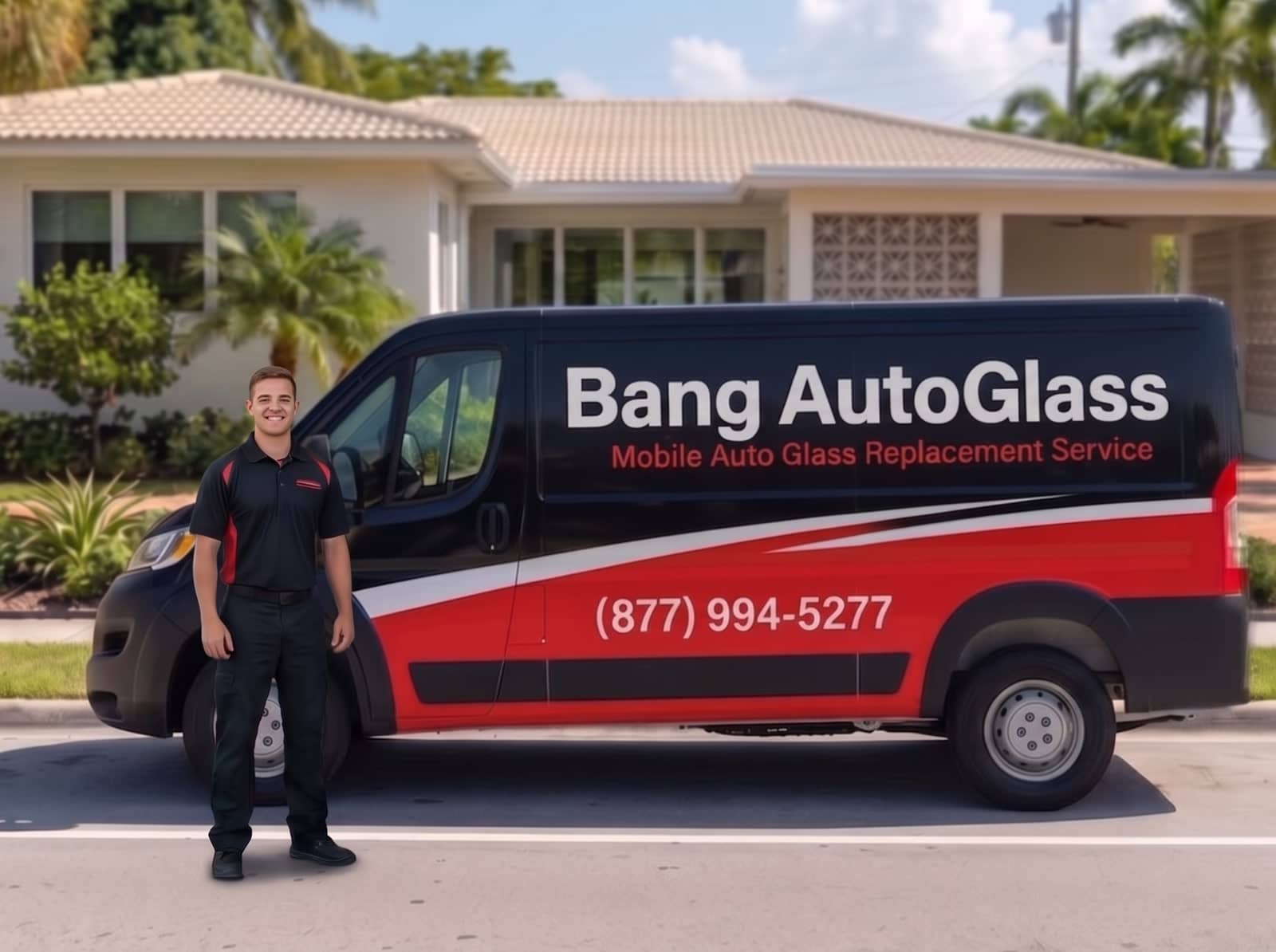
Bang AutoGlass is a fully mobile auto glass service, which means we come to you. There is no need to drive a vehicle with a cracked or shattered sunroof to a shop and risk further damage on the way. Instead, schedule an appointment and our technician will arrive at your driveway, parking lot, or job site fully equipped to complete the replacement on the spot. This is especially valuable for Hummer owners because these vehicles are tall, often modified, and not always easy to fit into traditional shop bays. By bringing our service to you, we eliminate the hassle of finding a Hummer-friendly facility and let you continue with your day while we work.
Next-Day Appointments for Hummer Sunroof Glass Replacement
We know that a damaged sunroof is not something you want to live with. That is why we offer next-day appointments on most Hummer sunroof glass replacement jobs, so you do not have to wait days or weeks to get back on the road with a fully sealed, fully functional sunroof. Just give us a call, share your Hummer's year and model, and we will lock in a time that works for you and have one of our trained mobile technicians out to your location.
OEM-Quality Glass for Your Hummer
Every Hummer sunroof replacement we perform uses OEM-quality glass that meets the original equipment specifications for your specific model and year. That means correct thickness, factory-matched tint, the same UV filtration, and the same structural rating as the panel that came on your Hummer from the factory. Using OEM-quality materials is what separates a replacement that looks and feels original from one that feels like a downgrade, and it is one of the reasons our customers choose us for their Hummer sunroof needs.
Lifetime Workmanship Warranty
Every Hummer sunroof glass replacement performed by Bang AutoGlass is backed by our lifetime workmanship warranty. As long as you own the vehicle, our installation work is covered. If a seal we installed leaks, a bracket we attached comes loose, or any aspect of our workmanship fails, we will return and make it right at no additional cost. This warranty reflects our confidence in our technicians and the materials we use, and it gives you long-term peace of mind that your investment is protected.
Insurance Claims Assistance for Hummer Sunroof Glass Replacement
If your Hummer sunroof was damaged in a covered event, your auto insurance policy may pay for some or all of the replacement cost. We help you with the insurance claim from start to finish and make the process as smooth as possible. We can provide the documentation, photos, and estimates your insurance carrier will request, and we can walk you through what information to share when you call your provider. Many comprehensive insurance policies cover glass damage with a low deductible or sometimes no deductible at all, so a quick call to your carrier before scheduling your Hummer sunroof glass replacement is often well worth the effort.
What to Expect on the Day of Your Appointment
On the day of your appointment, our technician will arrive at the scheduled time with all the tools, OEM-quality glass, and materials needed to complete the job. We ask that the Hummer be parked in a level area with enough space around it for the technician to work comfortably. Indoor garages, covered carports, and shaded driveways are ideal but not required. Once on site, we will walk you through the work, get your approval, and complete the replacement while you go about your day. When we finish, we will demonstrate the sunroof's full range of motion, point out the one-hour cure time, and answer any questions you have about caring for the new glass.
Caring for Your New Hummer Sunroof Glass
After your Hummer sunroof glass replacement, a few simple steps will help your new panel last for years. Avoid running the sunroof through automated car washes for the first 24 hours so the seal can fully set. Do not slam doors hard during the first hour while the adhesive is still curing, since pressure changes inside the cabin can stress the seal. Clean the new glass with a non-ammonia automotive glass cleaner and a microfiber cloth to preserve any factory coatings, and periodically clear leaves and debris from the sunroof drainage channels to keep water flowing where it should.
Frequently Asked Questions About Hummer Sunroof Glass Replacement
Can I drive my Hummer right after the sunroof glass is replaced?
We ask that you wait the full one-hour cure time after installation before driving. This allows the adhesive to bond securely and ensures a watertight, structurally sound seal around the new glass panel.
Will replacing the sunroof glass affect my Hummer's factory warranty?
No. Replacing a damaged sunroof glass panel with OEM-quality glass installed by a qualified mobile technician does not void your factory warranty.
How quickly can you replace my Hummer sunroof?
In most cases, we can schedule a next-day appointment for your Hummer sunroof glass replacement. Call us with your Hummer's year and model and we will confirm an exact time.
Do you replace just the glass, or the whole sunroof assembly?
We replace the glass panel itself. If the motor, tracks, or frame are also damaged, we can identify that during the on-site inspection and let you know what additional work may be needed.
Is your Hummer sunroof glass replacement covered by a warranty?
Yes. Every Hummer sunroof glass replacement we perform is backed by our lifetime workmanship warranty for as long as you own the vehicle.
Schedule Your Hummer Sunroof Glass Replacement Today
A cracked, leaking, or shattered Hummer sunroof is not something to put off. Whether you drive a classic H2, a rugged H3, or the latest GMC Hummer EV, Bang AutoGlass is ready to come to your location, install OEM-quality glass with our lifetime workmanship warranty, and have you back on the road with a next-day appointment. Reach out using the contact information at the top of this page or fill out the quick sign-up form, and we will lock in your next-day appointment for fast, reliable Hummer sunroof glass replacement service you can trust.
Hummer Sunroof Glass Replacement — common questions
What is involved in Hummer sunroof glass replacement?
We remove the damaged sunroof panel and replace it with OEM-quality glass, then reinstall it with factory-grade adhesive and materials. The new glass is tempered and fully sealed to restore function and weatherproofing.
How long does Hummer sunroof replacement take?
The replacement itself takes about 30-45 minutes to complete. The adhesive then needs time to set — about an hour is typical, and your technician confirms the exact safe drive-away time. Plan for roughly 1.5-2 hours total at your location.
Is sunroof glass covered by comprehensive insurance?
Comprehensive coverage typically covers sudden damage from hail, debris, or accidents, so many customers pay nothing out of pocket. We can help you file or start your claim if needed.
Does my new sunroof glass come with a warranty?
Yes, every replacement is backed by a lifetime workmanship warranty, covering the glass and installation. This protects you against any defects in our work.
Where we do Hummer auto glass
Bang AutoGlass is a mobile auto glass company serving Arizona and Florida. We don't have a shop you drive to — we come to your home, your job, or wherever the car is sitting, with next-day appointments in most areas. In Arizona that means the whole Valley — Phoenix, Mesa, Scottsdale, Chandler, Gilbert, Tempe, Glendale and out to Tucson and Prescott. In Florida we cover Tampa Bay, Orlando and Miami, from St. Petersburg and Clearwater across to Kissimmee, Winter Park and Fort Lauderdale.
Browse every city we serve in Arizona and Florida, or read how coverage works under Arizona's glass statutes and Florida's § 627.7288.
Mobile auto glass — cities we serve
4.8★ on Google · 350+ reviews from AZ & FL drivers
“I needed my windshield replaced and they made the entire process easy. Bang AutoGlass is the best!”
“Top-notch auto glass service. They handled my windshield replacement quickly and professionally.”
“Bang AutoGlass made my windshield replacement simple from start to finish.”
Need Hummer Sunroof Glass Replacement?
We come to you across Arizona and Florida — often $0 with insurance.
We reply within minutes during business hours.