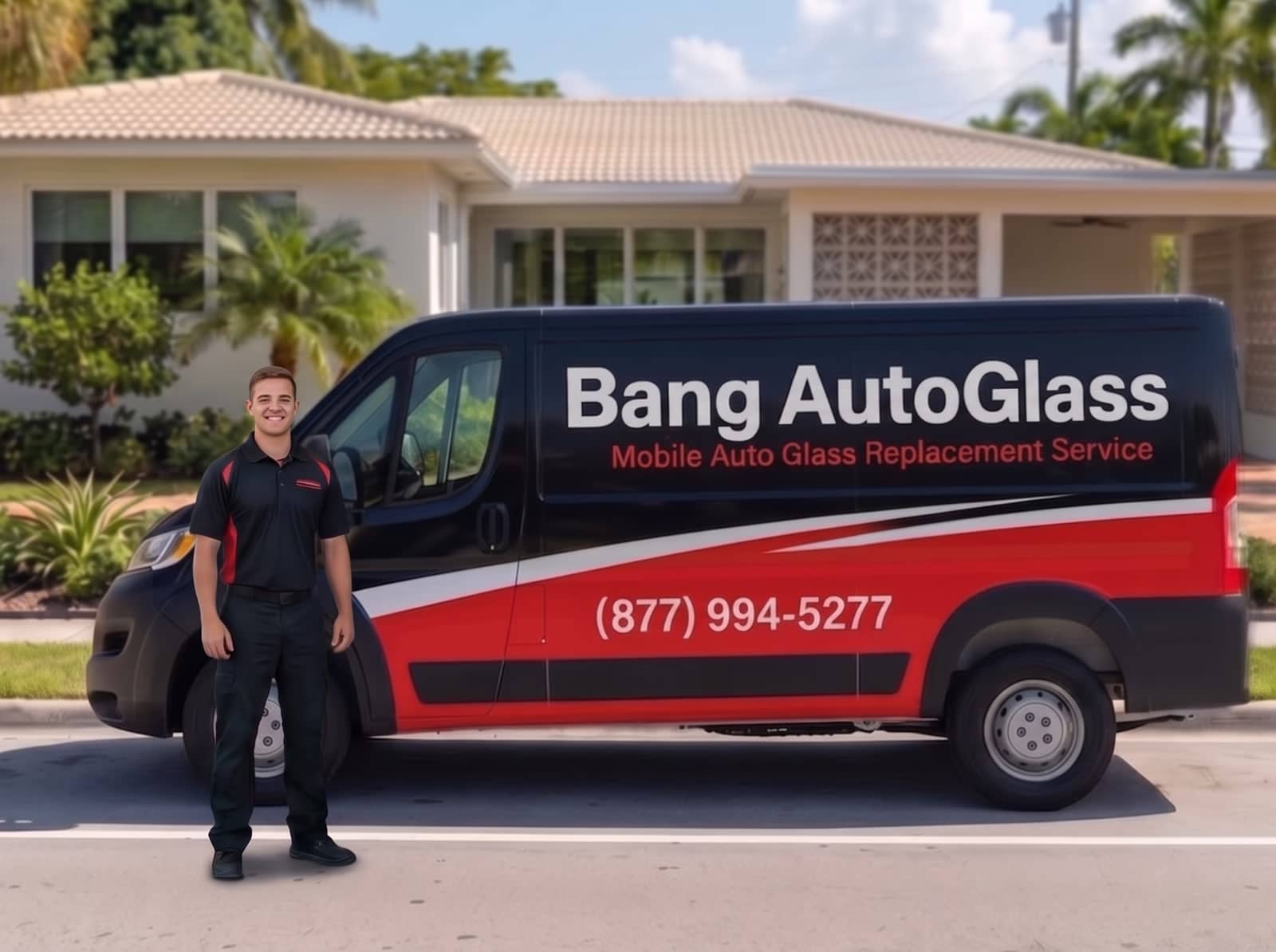
Bentley Door Glass Replacement
Bang AutoGlass replaces Bentley door glass on Continental GT, Flying Spur, and Bentayga with OEM-quality tempered side windows shaped to hand-finished body lines—including frameless coupe panes. Mobile service in Arizona and Florida includes vacuum cleanup, regulator check, and lifetime warranty.
Bentley Door Glass Replacement: Precision Mobile Service for Every Model
When the side window on your Bentley breaks, cracks, or stops functioning correctly, you need more than a standard auto glass shop. You need a specialist who understands the engineering, materials, and craftsmanship that go into every Bentley ever built. At Bang AutoGlass, our Bentley door glass replacement service is designed around the unique demands of these handcrafted British luxury vehicles, whether you drive a Continental GT, Flying Spur, Bentayga, or one of the heritage models like the Mulsanne or Arnage. We deliver dealership-level results with the convenience of mobile service, so your Bentley never has to leave your driveway, office, or private garage. From the moment we confirm your VIN to the final wipe-down of the glass, every step of our process is built around the standard of care that Bentley owners expect.
Understanding What Makes Bentley Door Glass So Different
Bentley door glass is not interchangeable with the side glass found on mainstream vehicles. Every pane is engineered for acoustic insulation, occupant safety, climate efficiency, and the unmistakable "vault-like" feel that Bentley drivers experience when they close the door. Replacing Bentley door glass correctly takes specialized knowledge of the model, year, trim, and even regional production details that influence the exact glass specification fitted at the Crewe factory. A general shop that treats a Bentley window like a sedan window will almost always create more problems than it solves.
Acoustic and Laminated Side Glass Construction
Most modern Bentley vehicles use multi-layer laminated side glass with an acoustic interlayer, typically a polyvinyl butyral film sandwiched between two pieces of glass. This construction reduces wind noise, road noise, and exterior conversation intrusion at highway speeds, contributing to Bentley's famously hushed cabin. When this glass is replaced with the wrong material, the difference is immediately audible: more wind hiss, more outside chatter, and a noticeable loss of the refined character the car was designed to deliver. Our team sources OEM-quality laminated and acoustic Bentley door glass that matches the original specification, so your cabin continues to sound exactly the way the factory intended.
Frameless Window Design on Continental GT and GTC
The Bentley Continental GT coupe and Continental GTC convertible feature frameless side windows that drop slightly when the door is opened and then automatically rise to seal against the weather stripping when the door closes. This auto-cinch behavior requires precise alignment of the glass within the regulator channels and proper communication with the door control module. A poorly installed frameless window will leak air, leak water, whistle at speed, or fail to seat against the seal. Our technicians are trained to recalibrate the auto-up and auto-drop functions, verify the index height to factory tolerances, and confirm that the glass tracks smoothly through its entire travel without binding.
Factory Tint, UV Protection, and Solar Coatings
Bentleys come from the factory with privacy glass on many trims, infrared-reflective coatings on others, and an integrated UV filter that protects the leather, wood veneers, and Alcantara surfaces inside the cabin. Replacing the door glass with a standard pane discolors the rest of the interior's appearance over time and removes the UV protection your cabin depends on. We match the factory tint percentage, solar performance, and visual appearance so your replacement Bentley door glass is indistinguishable from the original. This attention to factory specification is one of the reasons our clients return to us for their entire fleet.
Common Reasons Bentley Owners Need Door Glass Replacement
There are several reasons a Bentley driver may find themselves searching for door glass replacement, and most of them have nothing to do with driver error. Bentley side glass typically needs replacement for the following reasons:
- Break-ins and smash-and-grab incidents, especially in urban parking structures and valet lots
- Vandalism, including thrown objects, hammers, or sharp impact tools
- Road debris kicked up by commercial trucks, construction zones, or gravel haulers
- Stress fractures from extreme temperature swings or a chipped edge that propagates
- Window regulator failure that drops the glass into the door cavity and chips or cracks it
- Failed pinch sensors that allow the window to bind against the frame on auto-up
- Aging weather stripping that allows the glass to vibrate and develop edge damage
- Hail strikes during severe weather events that fracture the laminated layers
- Collision damage where the door panel or B-pillar was compromised
Whatever the cause, our process for diagnosing and replacing Bentley door glass remains the same: identify the exact part, verify availability, and install with the precision the car deserves.
Bentley Models We Service for Door Glass Replacement
We perform door glass replacement on the full Bentley lineup, both current production and heritage models. Each platform has its own quirks, and our technicians are familiar with the specific procedures, regulator types, fastener locations, and trim removal sequences each one requires.
Bentley Continental GT and Continental GTC Door Glass
The Continental GT and Continental GTC are among the most common Bentleys we see for door glass replacement, in part because their frameless design and large side glass make them more visible targets in urban areas. The GTC convertible is particularly sensitive to glass alignment because the soft top relies on a perfect seal against the side window when raised. We handle every generation of Continental door glass with the same factory-level precision.
First-Generation Continental GT (2003-2011)
The original Continental GT and GTC use a slightly different regulator design and frameless geometry than later cars, and the laminated glass on these models is increasingly hard to find from generic suppliers. We maintain sourcing relationships that let us deliver OEM-quality glass for these first-generation cars without the long wait times that other shops quote.
Second-Generation Continental GT (2011-2018)
The second-generation Continental GT introduced refined acoustic glass and more sophisticated door electronics, including upgraded pinch protection and updated auto-cinch behavior. Our technicians know the exact relearn procedure required after a glass replacement on these cars so you don't end up with a window that refuses to auto-up.
Third-Generation Continental GT (2018-Present)
The current Continental GT and GTC use the largest and most acoustically refined side glass Bentley has ever fitted to the model. The laminated construction is thicker, the curvature is more pronounced, and the calibration tolerances are tighter. We use the correct OEM-quality specification for these cars every time.
Bentley Flying Spur Door Glass
The Flying Spur uses framed side glass on both front and rear doors, with laminated construction for cabin quietness and a chrome window surround that has to be removed and reseated correctly during the replacement. The rear door glass on Flying Spur sedans is larger and heavier than the side glass on most mainstream luxury cars, and we handle it with the two-person procedure it requires to avoid stress damage during installation.
Bentley Bentayga Door Glass
The Bentayga, Bentley's luxury SUV, features tall side glass with laminated and acoustic construction across all four doors. Many Bentayga trims include privacy glass on the rear doors and infrared-reflective coatings on the fronts, both of which we match precisely during replacement. The Bentayga's door panel removal procedure involves several hidden fasteners and clipped trim pieces, and our technicians know the exact sequence to avoid damaging the leather, piano black trim, and wood veneers.
Bentley Mulsanne, Arnage, Azure, and Brooklands Door Glass
Heritage and discontinued Bentleys are a specialty of ours. The Mulsanne, Arnage, Azure, and Brooklands all use unique door glass configurations, and sourcing the correct replacement requires patience and established supplier relationships. We've replaced glass on cars where the original part number had been discontinued by the manufacturer, and we know how to find a current OEM-quality equivalent that fits perfectly, looks original, and preserves the value of these collectible Bentleys.
Our Bentley Door Glass Replacement Process
Every Bentley door glass replacement we perform follows a structured process built around the precision the car deserves. We do not rush, we do not cut corners, and we do not leave a job until the glass functions exactly the way it did when the car rolled off the line.
Initial Inspection and Glass Identification
Before we order any glass, our technician inspects the damaged door, verifies the VIN, decodes the build specification, and confirms the exact part number for your specific Bentley. Bentley uses different glass on different trims, different production years, and even different markets, so the wrong glass simply will not seat correctly. We confirm laminated versus tempered, acoustic versus standard, tint percentage, solar coating, and any unique features like embedded antennas or rain sensors.
Careful Removal of the Damaged Door Glass
Once the correct replacement arrives, our technician removes the door panel using model-specific procedures to protect the leather, wood veneer, Alcantara, and any embedded electronics. We vacuum every shard of broken glass out of the door cavity, regulator channel, and weatherstrip groove before any new glass goes in. Skipping this step is the most common cause of premature regulator failure on Bentleys, and we never skip it.
Installation of OEM-Quality Bentley Replacement Glass
We install your new Bentley door glass using OEM-quality materials that match the original specification in thickness, curvature, tint, coating, and acoustic performance. The glass is bonded or clipped into the regulator based on your specific model, then the regulator is cycled multiple times to verify smooth travel. On frameless designs, we set the index height precisely and verify the auto-cinch function before reassembling the door.
Calibration, Final Testing, and Quality Check
After installation, we recalibrate the window's pinch protection sensors, test the auto-up and auto-down functions, verify the seal against the weather stripping, and confirm there are no wind or water leaks. We also clean the glass inside and out, wipe down the door panel, and walk you through the work before we leave so you know exactly what was done and why.
Mobile Bentley Door Glass Replacement: We Come to You
Bang AutoGlass is a fully mobile service, which means we bring our shop to your Bentley. Whether your car is parked at your home, your office, a hotel valet, a country club, or a private garage, we arrive with everything needed to complete a dealership-quality door glass replacement on site. Most replacements take 30 to 45 minutes of active work, and because movable door glass is carried by the window regulator rather than adhesive, there is no cure wait before the window can be operated at full speed. This convenience matters even more for Bentley owners, because driving a car with broken side glass exposes the interior to weather, theft, and additional damage, and trailering a Bentley to a shop is rarely an attractive option.
How Long Does Bentley Door Glass Replacement Take?
Total appointment time for a typical Bentley door glass replacement is usually about an hour from our arrival to drive-away readiness. The active replacement itself is generally 30 to 45 minutes, and only a bonded panel such as vent or quarter glass adds a cure window, since movable door glass is held by hardware. After the install we run our final tests, clean the car, and answer any questions you have. We offer next-day appointments in most cases, so you do not have to wait days or weeks to get your Bentley back to its proper condition.
OEM-Quality Materials and a Lifetime Workmanship Warranty
Every Bentley door glass replacement we perform is backed by a lifetime workmanship warranty. That means if anything we installed ever fails because of how it was installed, including seal leaks, regulator clip issues, alignment drift, or anything similar, we will correct it at no cost to you for as long as you own the vehicle. We pair that warranty with OEM-quality glass that matches the original specification in every way that matters, including optical clarity, tint, acoustic dampening, UV protection, thickness, and curvature. Our materials are sourced from manufacturers that supply the same caliber of glass found on luxury European vehicles from the factory, and we never compromise on this standard for any Bentley we service.
Insurance Claim Assistance for Bentley Door Glass Replacement
Many Bentley door glass replacements are covered by comprehensive auto insurance, and most owners are surprised to learn that glass claims often carry a low or even zero deductible depending on the policy. We help you with the insurance claim from start to finish and make the process as smooth as possible. That includes documenting the damage, providing a written estimate, supplying the correct OEM-quality part numbers, and walking you through what your insurer will ask for. Once your claim is approved, we coordinate directly with the insurance company on billing so you do not have to chase paperwork after the work is complete. The result is a smooth, low-friction experience that keeps your out-of-pocket cost as low as possible while preserving the integrity of your Bentley.
Why Bentley Owners Choose Bang AutoGlass
Bentley ownership comes with high expectations, and the people who service your car should meet those expectations every time. Bang AutoGlass is built around precision work, premium materials, and convenience that respects your schedule. Our technicians have replaced door glass on every major Bentley platform, we source OEM-quality parts that match factory specification, and we stand behind every job for as long as you own the vehicle. We come to you, we work cleanly, and we leave your Bentley in better condition than we found it. For owners of Continental GT, Continental GTC, Flying Spur, Bentayga, Mulsanne, Arnage, Azure, and Brooklands models, we are the mobile Bentley auto glass partner you can count on.
Schedule Your Bentley Door Glass Replacement Today
If your Bentley has a broken, cracked, or malfunctioning door window, the sooner you book a replacement, the better protected your car and interior will be. Bang AutoGlass offers next-day mobile appointments, OEM-quality Bentley glass, a lifetime workmanship warranty, and complete insurance claim assistance for every Bentley door glass replacement we perform. Reach out today to confirm your part availability, request a quote, and schedule a time that works for you. Whether you drive a Continental GT, Flying Spur, Bentayga, or one of the heritage Bentleys, we will have your car back to factory-standard quietness, sealing, and appearance in a single appointment, right where your Bentley is parked.
Bentley Door Glass Replacement — common questions
How does mobile door glass replacement work for my Bentley?
Our fully-equipped technicians come to your home, work, or roadside and complete the entire Bentley door glass replacement on-site with the same quality as a traditional shop. We vacuum out the shattered glass and reinstall your window regulator hardware.
How long does Bentley door glass replacement take?
The replacement itself takes about 30–45 minutes. Since door glass is held by hardware rather than adhesive, you can typically drive your Bentley away immediately after we're done.
Do you use OEM-quality materials for Bentley door glass?
Yes, every Bentley door glass replacement uses OEM-quality glass and materials backed by a lifetime workmanship warranty, ensuring durability and your peace of mind.
Is Bentley door glass covered by insurance?
Many comprehensive insurance policies cover door glass damage. We'll help you file or start your claim if needed, and we work with your insurer to keep costs manageable.
Where we do Bentley auto glass
Bang AutoGlass is a mobile auto glass company serving Arizona and Florida. We don't have a shop you drive to — we come to your home, your job, or wherever the car is sitting, with next-day appointments in most areas. In Arizona that means the whole Valley — Phoenix, Mesa, Scottsdale, Chandler, Gilbert, Tempe, Glendale and out to Tucson and Prescott. In Florida we cover Tampa Bay, Orlando and Miami, from St. Petersburg and Clearwater across to Kissimmee, Winter Park and Fort Lauderdale.
Browse every city we serve in Arizona and Florida, or read how coverage works under Arizona's glass statutes and Florida's § 627.7288.
Mobile auto glass — cities we serve
4.8★ on Google · 350+ reviews from AZ & FL drivers
“I needed my windshield replaced and they made the entire process easy. Bang AutoGlass is the best!”
“Top-notch auto glass service. They handled my windshield replacement quickly and professionally.”
“Bang AutoGlass made my windshield replacement simple from start to finish.”
Need Bentley Door Glass Replacement?
We come to you across Arizona and Florida — often $0 with insurance.
We reply within minutes during business hours.