Nissan Windshield Replacement
Bang AutoGlass installs Nissan windshields on Altima, Sentra, Maxima, Rogue, Murano, Pathfinder, Armada, Frontier, and Ariya with OEM-spec laminated glass supporting ProPILOT Assist camera, rain sensor, and HUD. Mobile service in Arizona and Florida includes ADAS recalibration and lifetime warranty.
Nissan Windshield Replacement: Expert Mobile Service for Every Nissan Model
A cracked or damaged windshield on your Nissan is more than a cosmetic issue, it's a safety concern that demands prompt attention. Whether you drive a fuel-efficient Nissan Sentra, a family-ready Nissan Rogue, a rugged Nissan Frontier, or a performance-tuned Nissan Z, the windshield plays a critical structural role in your vehicle. At Bang AutoGlass, we specialize in professional Nissan windshield replacement using OEM-quality materials, with the convenience of mobile service that comes directly to your home, office, or jobsite. Our team understands the unique engineering of Nissan vehicles, including the advanced driver assistance technology built into many of today's models, and we deliver every replacement with the precision your Nissan deserves.
Why Professional Nissan Windshield Replacement Matters
A windshield is far more than a piece of glass between you and the road. Modern Nissan windshields are engineered to support up to thirty percent of a vehicle's structural integrity, especially in the event of a rollover collision. They also serve as the backstop for proper airbag deployment, ensuring your passenger-side airbag inflates against the windshield instead of pushing it outward. Cutting corners on installation or using subpar glass can compromise these life-saving features and leave you vulnerable in the moments that matter most.
Structural Safety and Crash Performance
When Nissan engineers designed vehicles like the Altima, Pathfinder, and Murano, they accounted for the windshield's role in maintaining cabin integrity during a collision. A poorly installed windshield can pop out under impact, eliminating that structural support and dramatically increasing the risk of roof crush or occupant ejection. We use only premium urethane adhesives that meet or exceed Federal Motor Vehicle Safety Standards, ensuring your new windshield bonds permanently to your Nissan's pinch weld for maximum strength.
Preserving Your Nissan's Advanced Driver Assistance Systems
Many newer Nissans come equipped with Nissan Safety Shield 360 and ProPILOT Assist, both of which rely on a forward-facing camera mounted directly to the windshield. Replacing the glass without recalibrating these systems can cause lane departure warnings, automatic emergency braking, and adaptive cruise control to malfunction. Our technicians understand which Nissan models require ADAS recalibration after windshield replacement and coordinate that process to keep your safety technology operating exactly as Nissan intended.
Common Reasons Nissan Owners Need Windshield Replacement
Windshield damage happens to even the most cautious drivers, and understanding the cause helps you make smarter decisions about replacement versus repair. Nissan owners across the country face a range of common windshield issues that stem from everyday driving conditions, weather, and unfortunate roadway incidents.
Rock Chips and Highway Debris
The most frequent cause of Nissan windshield damage is flying debris kicked up by other vehicles. Gravel from construction zones, rocks dislodged from truck tires, and loose pavement fragments can strike your windshield at highway speed with surprising force. What starts as a small chip on your Nissan Rogue or Nissan Kicks can spread into a long crack within days, especially when temperatures fluctuate.
Temperature Stress Cracks
Nissan windshields, particularly on vehicles parked outdoors year-round, are susceptible to stress cracks caused by rapid temperature changes. Blasting the defroster on a cold morning or running the air conditioner on a hot summer day can cause the glass to expand and contract unevenly, leading to cracks that seem to appear out of nowhere.
Accident Damage and Vandalism
Collisions, fender benders, and acts of vandalism can leave Nissan windshields shattered or severely compromised. Even minor impacts can create cracks that extend across the driver's line of sight, making replacement the only safe option.
Nissan Models We Replace Windshields For
Bang AutoGlass services the entire Nissan lineup, and our technicians stay current on the specific requirements of every model and trim level. From compact commuters to full-size SUVs, we have the experience and the OEM-quality glass to match your vehicle precisely.
Nissan Sedans
Our team regularly handles windshield replacement on the Nissan Altima, Nissan Sentra, Nissan Maxima, and Nissan Versa. The Altima and Maxima, in particular, often feature acoustic glass that reduces road noise inside the cabin, and we source matching acoustic windshields to preserve that quiet, premium ride experience Nissan owners love.
Nissan SUVs and Crossovers
The Nissan Rogue, Nissan Murano, Nissan Pathfinder, Nissan Armada, Nissan Kicks, and the all-electric Nissan Ariya all come through our mobile service regularly. Many of these crossovers feature larger windshields with rain-sensing wipers, automatic high beam sensors, and ADAS cameras that demand precise installation and calibration. Our technicians know exactly how to handle the wiring harnesses, sensor brackets, and bonding requirements for each one.
Nissan Trucks
The Nissan Frontier and Nissan Titan are workhorses, and they often see more windshield damage than passenger cars simply because they spend more time on rough roads, jobsites, and gravel surfaces. We replace windshields on both the standard and crew cab configurations, and we are familiar with the body-on-frame construction that distinguishes Nissan trucks from their unibody counterparts.
Nissan Performance and Electric Models
Performance vehicles like the Nissan Z and the legendary Nissan GT-R require specialized care during windshield replacement due to their lower stance, aggressive rake, and in some cases, integrated heads-up display systems. We also service the Nissan Leaf, the original mass-market electric vehicle, ensuring battery and charging systems are protected throughout the replacement process.
Understanding Your Nissan Windshield's Advanced Features
Modern Nissan windshields are sophisticated pieces of automotive engineering, and knowing what's built into yours helps you appreciate why proper replacement matters so much. Not every Nissan has every feature, but it pays to know what your specific vehicle includes.
Forward-Facing Camera and ADAS Calibration
If your Nissan is equipped with ProPILOT Assist, Intelligent Lane Intervention, Intelligent Forward Collision Warning, or Intelligent Cruise Control, there is a camera mounted behind your rearview mirror that reads lane markings, traffic signs, and the vehicles ahead of you. After replacing the windshield, this camera must be recalibrated using either static targets in a controlled environment or dynamic calibration on the road. Skipping this step is not an option for vehicles equipped with these systems.
Acoustic and Solar Glass
Many Nissan Maxima, Murano, and Armada models come with acoustic windshields that feature a layer of sound-dampening polyvinyl butyral between two panes of glass. Some trims also include solar coating that reflects infrared light, keeping your cabin cooler in summer. We match these features exactly when replacing your windshield so you don't lose the comfort and quiet you paid for.
Rain-Sensing Wipers and Light Sensors
Higher trim Nissan models often include rain-sensing wipers that automatically adjust speed based on precipitation, along with automatic headlight sensors. These features depend on a small optical sensor bonded to the inside of the windshield, and we transfer or replace these components carefully during every installation.
Heated Wiper Park Area
Some Nissans sold in colder climates include a heated wiper park area, a thin grid of resistive elements at the base of the windshield that prevents wiper blades from freezing to the glass overnight. We make sure these electrical connections are reattached properly so your defrosting features work flawlessly the next time winter arrives.
Our Mobile Nissan Windshield Replacement Process
One of the biggest advantages of choosing Bang AutoGlass for your Nissan windshield replacement is that we come to you. Mobile service eliminates the hassle of driving a damaged vehicle to a shop and waiting in a lobby, and it lets you stay productive while we handle the work.
What to Expect During Your Appointment
Our typical Nissan windshield replacement takes thirty to forty-five minutes from start to finish, followed by a one hour safe drive-away time to allow the urethane adhesive to cure properly. Here is what our technicians do during your mobile appointment:
- Inspect the damage and confirm the correct OEM-quality windshield for your specific Nissan model, trim, and feature package
- Protect the surrounding paint, dashboard, and interior with covers and tape before any cutting begins
- Carefully remove the damaged windshield using cold knife or wire-out techniques that preserve your pinch weld
- Clean and prepare the bonding surface, treating any exposed metal with primer to prevent corrosion
- Apply a uniform bead of premium urethane adhesive rated for Nissan applications
- Set the new windshield in place using suction tools and alignment guides for a factory-perfect fit
- Reinstall moldings, cowl panels, rain sensors, cameras, and any trim pieces removed during the process
- Allow the adhesive to cure for one hour before the vehicle is safe to drive
Why Mobile Service Works for Nissan Owners
Whether you're at home with the kids, working a shift at your office, or parked at a hotel during a road trip, we can replace your Nissan windshield on site as long as we have safe access to the vehicle. We typically offer next-day appointments, so you're not waiting weeks to get back on the road safely.
OEM-Quality Glass and Premium Materials
The glass itself is the heart of any windshield replacement, and we never compromise on quality. Every Nissan we service receives OEM-quality glass that matches the original specifications of your vehicle, including any acoustic, solar, heated, or sensor-equipped features your trim originally included.
Glass Sourcing and Quality Control
The windshields we install are manufactured to the same DOT safety standards as the glass that came from the factory. Optical clarity, thickness, curvature, and bonding edge geometry all match your Nissan's original specifications, which means proper fitment, no wind noise, and full compatibility with your ADAS sensors and rain detectors.
Urethane Adhesive Standards
The bond between your new windshield and your Nissan's body is created by automotive-grade urethane, and the quality of that adhesive determines how safely your windshield will perform in a crash. We use urethane formulations that meet Nissan's bonding requirements and deliver a one hour safe drive-away time under normal conditions.
Insurance Claims Assistance for Nissan Windshield Replacement
Dealing with insurance after windshield damage can feel overwhelming, but it doesn't have to be. Most comprehensive auto insurance policies cover windshield replacement, often with little or no out-of-pocket cost depending on your deductible and your state's glass coverage laws.
How Comprehensive Coverage Works
Comprehensive coverage typically pays for glass damage from rocks, weather, vandalism, and other non-collision events. Some states even mandate zero-deductible windshield replacement, meaning insurance covers the entire cost. We work with virtually every major insurance carrier and can help you understand what your specific policy includes.
Our Role in Your Claim
If you haven't filed a claim yet, we are happy to walk you through the process and assist you in making the claim with your insurance company. We help you with the insurance claim from start to finish and make the process as smooth as possible.
Our Lifetime Workmanship Warranty
Every Nissan windshield replacement we perform comes backed by our lifetime workmanship warranty. That means as long as you own your Nissan, we stand behind our installation. If you ever experience air leaks, water leaks, wind noise, or any other issue related to our workmanship, we'll come back out and make it right at no cost. This warranty reflects the confidence we have in our technicians and the quality of the materials we use on every job.
Next-Day Appointments and Convenience You Can Count On
Time matters when you have a damaged windshield. Cracks spread, debris can enter the cabin, and your visibility may be compromised. That's why we offer next-day appointments for Nissan windshield replacement whenever possible. You don't need to rearrange your week or take a day off work, just tell us where your Nissan will be parked and we'll handle the rest.
Caring for Your New Nissan Windshield
Once your replacement is complete, a little care during the first day or two will help ensure a perfect long-term bond. The urethane continues curing for up to twenty-four hours, even though your Nissan is safe to drive after one hour.
First Twenty-Four Hours
Follow these simple guidelines after your replacement to protect the bond and the seal:
- Wait at least one hour before driving your Nissan to allow the urethane to reach safe drive-away strength
- Leave a window cracked slightly for the first twenty-four hours to equalize cabin pressure
- Avoid automatic car washes, high-pressure washing, and slamming doors for at least one full day
- Leave any retention tape in place for twenty-four hours to keep moldings seated while the adhesive sets
- Avoid driving on rough roads or gravel surfaces when possible during the first twelve hours
Long-Term Windshield Care
Beyond the initial cure period, your new windshield should be cared for like any other glass surface. Use quality wiper blades, replace them when they streak, and keep your washer fluid topped off. Park in shaded or covered areas when possible, especially during extreme temperature swings, to reduce thermal stress on the glass.
When to Replace Versus Repair Your Nissan Windshield
Not every chip or crack requires a full replacement, but knowing the difference helps you make the right call. Chips smaller than a quarter and cracks shorter than three inches can often be repaired, while damage in the driver's primary viewing area, multiple chips, or any crack longer than six inches generally calls for replacement. If you're unsure, send us a photo and we'll give you an honest assessment based on what we see.
Schedule Your Nissan Windshield Replacement With Bang AutoGlass
When your Nissan needs windshield replacement, you deserve a service that combines convenience, quality, and confidence. Bang AutoGlass brings mobile service to you, completes most replacements in thirty to forty-five minutes plus one hour of cure time, offers next-day appointments, installs OEM-quality glass, and backs every job with a lifetime workmanship warranty. From the Nissan Altima to the Nissan Titan, the Nissan Leaf to the Nissan GT-R, we've replaced thousands of Nissan windshields and we're ready to help you get back on the road safely. Reach out today through the contact information at the top of this page or fill out our quick sign-up form to lock in your appointment.
Nissan Windshield Replacement — common questions
How long does a Nissan windshield replacement take?
Most Nissan windshield replacements take about 30-45 minutes to complete, then time for the adhesive to set — about an hour is typical, and your technician confirms the exact safe drive-away time. If your vehicle has ADAS safety cameras, calibration adds roughly 15-30 minutes to keep features like lane-keeping accurate.
Is the windshield covered by insurance?
Many comprehensive insurance policies cover windshield damage with little or no out-of-pocket cost. We'll help you start your claim if needed. Florida waives deductibles for windshield replacement, and Arizona offers optional no-deductible coverage that many drivers have.
What is included in your lifetime warranty?
Every Nissan windshield replacement is backed by our lifetime workmanship warranty, covering the quality of the installation. We also use OEM-quality glass and materials to match your vehicle's original specifications.
Can you replace my Nissan windshield at my location?
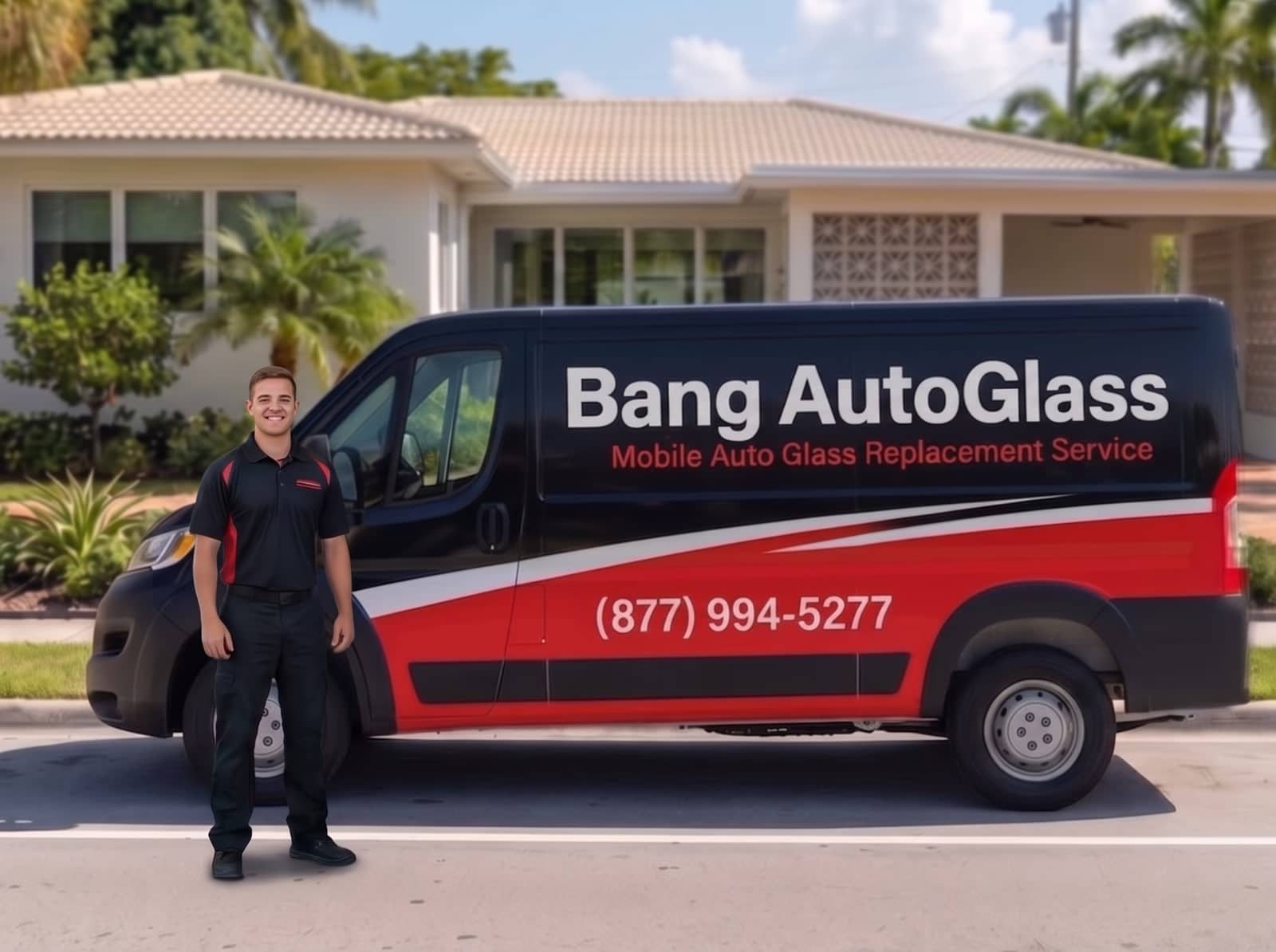
Yes, we're fully mobile. Our technicians come to your home, workplace, or roadside with a fully-equipped vehicle and complete the replacement on-site with the same quality as a traditional shop.
Where we do Nissan auto glass
Bang AutoGlass is a mobile auto glass company serving Arizona and Florida. We don't have a shop you drive to — we come to your home, your job, or wherever the car is sitting, with next-day appointments in most areas. In Arizona that means the whole Valley — Phoenix, Mesa, Scottsdale, Chandler, Gilbert, Tempe, Glendale and out to Tucson and Prescott. In Florida we cover Tampa Bay, Orlando and Miami, from St. Petersburg and Clearwater across to Kissimmee, Winter Park and Fort Lauderdale.
Browse every city we serve in Arizona and Florida, or read how coverage works under Arizona's glass statutes and Florida's § 627.7288.
Mobile auto glass — cities we serve
4.8★ on Google · 350+ reviews from AZ & FL drivers
“I needed my windshield replaced and they made the entire process easy. Bang AutoGlass is the best!”
“Top-notch auto glass service. They handled my windshield replacement quickly and professionally.”
“Bang AutoGlass made my windshield replacement simple from start to finish.”
Need Nissan Windshield Replacement?
We come to you across Arizona and Florida — often $0 with insurance.
We reply within minutes during business hours.