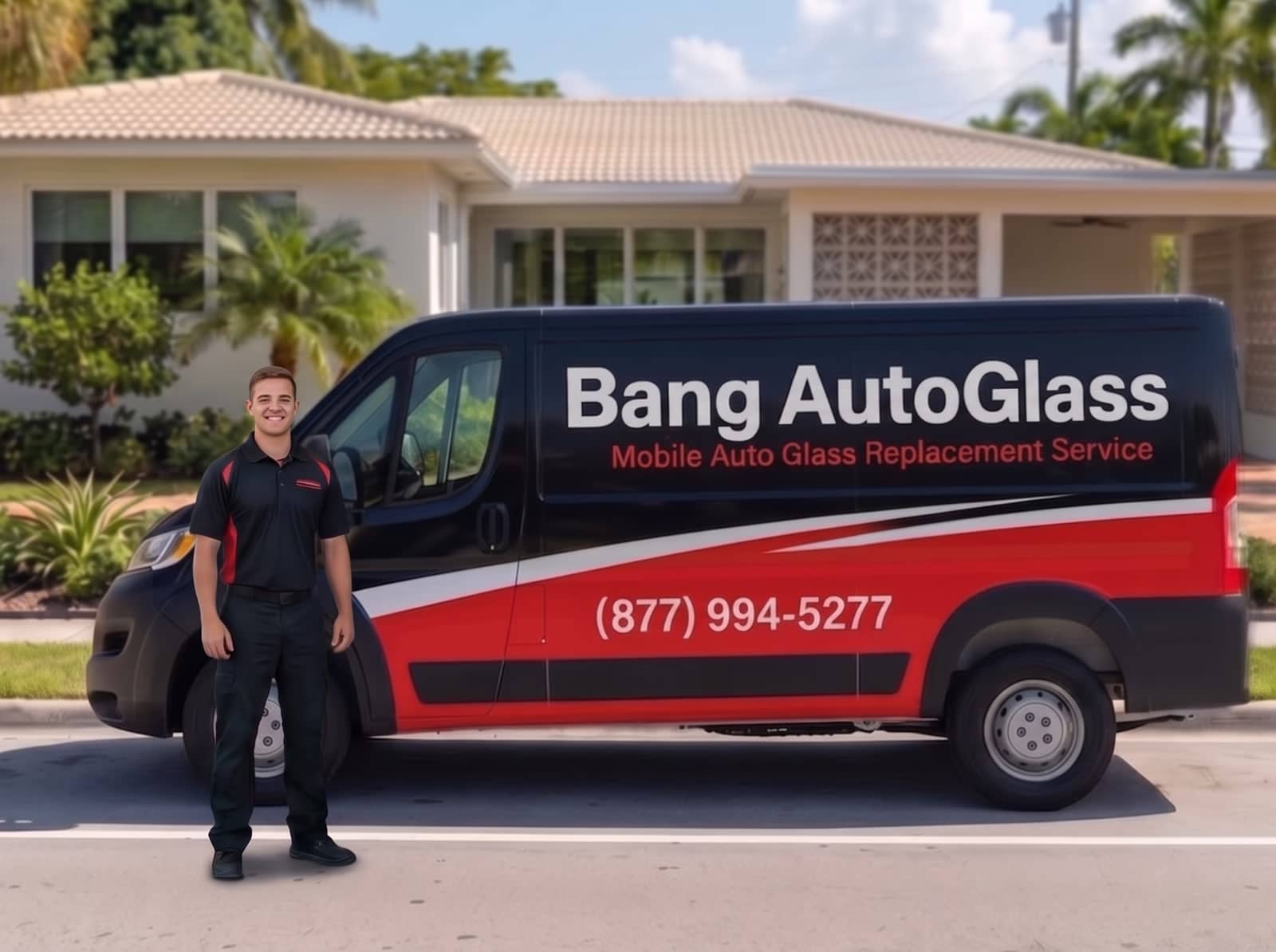
Subaru Door Glass Replacement
Bang AutoGlass replaces Subaru door glass on Outback, Forester, Impreza, Legacy, Crosstrek, Ascent, and WRX with OEM-fit tempered side windows shaped to factory curvature. Mobile service in Arizona and Florida includes vacuum cleanup, regulator inspection, and a lifetime workmanship warranty.
Subaru Door Glass Replacement: Fast, Mobile, and Built Around Your Schedule
When the side window of your Subaru shatters, gets smashed in a break-in, or simply stops sealing the way it should, you need a repair partner who understands the vehicle as well as you do. Subaru owners tend to be loyal for a reason. These cars are engineered for adventure, all-weather safety, and longevity, and the door glass is a quietly important part of that experience. At Bang AutoGlass, we specialize in mobile Subaru door glass replacement, bringing OEM-quality materials, professional installation, and a lifetime workmanship warranty directly to your driveway, office parking lot, or jobsite. Whether you drive a Subaru Outback, Forester, Impreza, Crosstrek, Legacy, Ascent, WRX, or BRZ, our experienced mobile technicians can restore your side glass quickly, properly, and without the hassle of taking your car to a brick-and-mortar shop.
Understanding Subaru Door Glass and Why It Matters
Subaru door glass plays a much bigger role in your daily drive than most owners realize. It seals the cabin against wind, rain, road noise, and dust. It supports the structural integrity of the door in the event of a side impact. It interacts with the door's weather strip, regulator, and motor to deliver smooth, reliable up-and-down operation. And in many newer Subaru models, the front door glass is also engineered with acoustic and laminated properties to reduce cabin noise and improve safety. When that glass cracks, shatters, or gets compromised, the entire system suffers, which is why precise replacement using the correct part for your specific model year is essential.
The Role of Side Door Glass in Your Subaru
Door glass on a Subaru is more than a window. It is a load-bearing safety component that helps maintain cabin pressure during a collision, contributes to airbag deployment dynamics, and prevents passengers from being ejected during a rollover. Subaru engineers design each pane to fit a precise channel and regulator path, which is why poorly installed or incorrectly specced glass tends to rattle, leak, or fail prematurely. Our mobile technicians always confirm the right part by VIN before we ever begin the job.
Common Subaru Models We Service for Door Glass Replacement
We replace door glass on virtually every modern Subaru on the road today. Each model has its own quirks, and our technicians know what to look for.
Subaru Outback Door Glass
The Subaru Outback has seven separate glass components, including front and rear door glass, front and rear vent glass, quarter panel glass, the windshield, and the rear window. Outbacks from 2018 forward use laminated front door glass for sound damping, which is not interchangeable with 2015-2017 Outback front door panes. We always pull the correct laminated or tempered pane based on your VIN so the seal, fit, and acoustic performance are preserved.
Subaru Forester Door Glass
The Forester's tall greenhouse design means the side windows are larger than average, which creates more surface area for impact damage but also more visibility for passengers. Forester door glass is typically tempered on rear doors and laminated on front doors in newer trims. Our team carries replacement panes for every Forester generation from the SH and SJ chassis through the current SK and the redesigned 2025 and 2026 models.
Subaru Impreza and Crosstrek Door Glass
Impreza and Crosstrek share a platform, which means the door glass dimensions and regulator setups are nearly identical across both models. The most common replacement requests we see are rear door glass shatters from break-ins and front door glass damage from road debris. Both vehicles use a frameless mounting style around the glass that demands precise alignment to avoid wind noise after the install.
Subaru Legacy, Ascent, WRX, and BRZ Door Glass
The Legacy and Ascent share the larger global platform with the Outback, so many parts and procedures overlap. The WRX uses sport-tuned door hardware that benefits from careful regulator handling during reassembly. The BRZ, with its coupe styling, has uniquely shaped door glass that requires patient alignment to seat correctly inside the door cavity. Whatever model you drive, we have the experience and inventory to handle it on the first visit.
Common Causes of Subaru Door Glass Damage
Understanding what causes the damage helps you prevent it next time and choose the right service the first time.
Break-Ins and Vandalism
By far the most common reason for Subaru door glass replacement is theft. Subarus are popular outdoor and overland vehicles, which means they often carry visible cargo like coolers, camping gear, ski equipment, work tools, or laptops. A thief with a spring-loaded center punch can shatter a tempered side window in under a second. We get same-week and next-day calls for this constantly, especially for the Outback, Forester, and Crosstrek.
Road Debris and Flying Objects
Gravel kicked up by a passing truck, a stray baseball, or a falling tree branch can crack or shatter door glass without warning. Because tempered glass is engineered to break into small, blunt pieces for safety, even a small impact often turns into a full replacement rather than a repair.
Weather and Temperature Stress
Subarus are built for harsh climates, but extreme cold combined with a sudden hot blast of defrost can cause stress fractures, especially in older laminated glass. Hailstorms can pit and crack side windows just as easily as they can damage a windshield.
Failed Window Regulators
Sometimes the glass itself is intact but the regulator that raises and lowers it has failed, causing the pane to drop into the door or jam at an angle. When that happens, the glass often gets chipped or cracked in the process. We can replace the regulator and the glass in the same visit, which saves you a second appointment.
Types of Subaru Door Glass We Replace
Not all door glass is the same, and Subaru uses several distinct pieces in each vehicle.
Front Door Glass
Front door glass is the largest movable window on your Subaru. On most newer models, this pane is laminated to reduce road noise and add an extra layer of safety. Our techs carefully remove the door panel, disconnect the regulator, and install the correct laminated or tempered replacement to factory spec.
Rear Door Glass
Rear door glass is typically tempered on Subaru sedans, wagons, and SUVs. It tends to be smaller than the front pane but still requires the same careful regulator handling and seal alignment. We often see rear door glass replacement requests after smash-and-grab incidents because the rear seat is where most owners stash valuables.
Vent Glass, Front and Rear
Vent glass is the smaller fixed pane at the front or rear of the door, separated from the main movable window by a vertical divider. Subaru Outback, Forester, and Ascent all use vent glass on their rear doors. Replacing vent glass is more involved than it looks because on many Subaru models the main door glass needs to be removed first to access and seat the new vent pane properly.
Quarter Glass
Quarter glass refers to the small fixed window panels found behind the rear doors on certain Subaru body styles, particularly the Outback and Forester. These panes are bonded to the body and require urethane adhesive for installation, much like a windshield, and they call for proper cure time before the vehicle is exposed to wash bays or rough roads.
Tempered vs. Laminated Subaru Door Glass
Most Subaru door glass falls into one of two categories. Tempered glass is heat-treated to be strong and to break into small, dull pebbles for safety. Laminated glass uses two thin layers of glass bonded together with a clear plastic interlayer, which holds the pane together if it cracks and significantly reduces road noise.
Why Laminated Door Glass Matters in Newer Subarus
Starting with the 2018 Outback and continuing across the lineup in higher trims, Subaru began using laminated front door glass to improve cabin acoustics and add a layer of theft resistance. Laminated panes are harder to shatter quickly, which can deter break-ins, and they keep the cabin noticeably quieter at highway speeds. When we replace this style of glass, we always use OEM-quality laminated panes that match the original specifications. Installing a tempered pane in place of a laminated one will undo the acoustic and safety benefits Subaru built into the vehicle, so the correct part matters.
Our Mobile Subaru Door Glass Replacement Process
Bang AutoGlass is a fully mobile auto glass service. That means our technician comes to you. You do not have to take time off work, sit in a waiting room, or arrange a ride home. Here is what to expect when you book a Subaru door glass replacement with us.
- You contact us with your year, make, model, and a quick description of the damage, and we confirm the correct OEM-quality pane by VIN.
- We schedule a next-day appointment in most cases at the location of your choice, whether that is your home, office, or another safe parking spot.
- Our experienced technician arrives in a fully stocked mobile unit with the exact replacement glass, primers, urethane, and tools needed for your Subaru.
- We carefully remove the interior door card, vapor barrier, and any trim required to access the regulator and broken glass.
- We vacuum every shard of broken glass from inside the door cavity, the seat, the carpet, and the door tracks so you do not find pieces weeks later.
- We install the new pane, reconnect the regulator, test the up-and-down motion, and reseat the door card and trim.
- We inspect the seal, run the window through several full cycles, and make sure the auto-up and auto-down features still work correctly on your specific Subaru model.
The entire replacement typically takes 30 to 45 minutes, with an additional one hour of cure time for any urethane adhesive used on bonded panes like quarter glass or vent glass. For standard front and rear door glass, you can usually drive your Subaru immediately after the install is complete.
How Long Does Subaru Door Glass Replacement Take?
Most Subaru door glass replacements take between 30 and 45 minutes from start to finish. If your job involves bonded glass such as quarter glass, vent glass, or a fixed pane, we recommend allowing one full hour for the urethane adhesive to cure before driving at highway speeds or putting the vehicle through a car wash. That cure time is what ensures the seal stays watertight and the glass stays securely bonded to the body for the life of the vehicle.
What to Expect After Service
Right after your replacement, you may notice a faint smell of new urethane if a bonded pane was installed. That smell fades within a few hours. We ask that you avoid slamming the door for the first day, leave the window slightly cracked for the first few hours if a bonded pane was used, and avoid pressure car washes for at least 24 hours. With standard door glass replacements, none of these restrictions apply and you can use the vehicle normally as soon as we are done.
OEM-Quality Materials and Lifetime Workmanship Warranty
Every Subaru door glass replacement we perform uses OEM-quality glass that matches the fit, thickness, tint, acoustic properties, and safety standards of the original pane. We do not cut corners on glass, urethane, primers, or seals because we know that the wrong part on a Subaru can lead to wind noise, water leaks, regulator strain, and even premature failure of the door motor. Our materials meet or exceed the original equipment specifications, which is what allows us to offer a lifetime workmanship warranty on every install.
What Our Lifetime Warranty Covers
Our lifetime workmanship warranty covers any defect related to how we installed the glass for as long as you own the vehicle. That includes leaks around the seal, wind noise caused by improper alignment, regulator engagement issues, and any other workmanship-related concern. If something is not right, we come back out and fix it at no charge. The warranty does not cover new damage from break-ins, accidents, road debris, or normal wear, but it does give you peace of mind that the install itself will hold up for the long haul.
Subaru Door Glass Replacement and Insurance Claims
Many Subaru owners are surprised to learn that comprehensive auto insurance often covers side window replacement, sometimes with a low deductible or even no deductible depending on the state and policy. We help you with the insurance claim from start to finish and make the process as smooth as possible.
How We Assist You with the Claims Process
We help you with the insurance claim from start to finish and make the process as smooth as possible. We will help you identify the right phone number for your carrier's glass claims line, explain what information you need to have ready, and provide all the documentation, invoices, and shop information your insurer will request. Many of our Subaru customers complete the claims call in under ten minutes with our guidance. Once the claim is approved, we handle billing directly with your insurance company so you do not have to pay upfront and wait for reimbursement.
When You May Want to Pay Out of Pocket
If your deductible is higher than the cost of the replacement, or if you would prefer not to involve your insurance carrier, paying out of pocket is often the better choice. Our pricing for Subaru door glass replacement is straightforward and competitive, and we can give you a firm quote up front before we ever schedule the appointment.
Why Subaru Owners Choose Bang AutoGlass
When you compare us to chain shops or dealer service centers, the differences add up quickly. Here is what sets our Subaru door glass replacement service apart.
- Fully mobile service that comes to your home, office, or wherever your Subaru is parked, so you never have to disrupt your day.
- Next-day appointments in most cases, so you are not driving around with a taped-up window for a week.
- OEM-quality glass and adhesives matched to your exact Subaru year, model, and trim by VIN.
- Lifetime workmanship warranty backing every install for as long as you own the vehicle.
- Replacement times of just 30 to 45 minutes, plus one hour of cure time when bonded panes are involved.
- Direct billing with all major insurance carriers and hands-on assistance walking you through the claims process.
- Technicians experienced with the full Subaru lineup, from older Imprezas and Foresters to the newest Outbacks, Ascents, Crosstreks, and Solterras.
Schedule Your Subaru Door Glass Replacement Today
A broken Subaru door window is more than an inconvenience. It exposes your interior to weather, makes your vehicle a target for further theft, and leaves a safety gap in a vehicle that was engineered to protect you. The good news is that with Bang AutoGlass, fixing it does not require taking your Subaru anywhere. We come to you, install OEM-quality glass in 30 to 45 minutes, back the work with a lifetime workmanship warranty, and help you navigate insurance every step of the way. Whether you need Subaru Outback door glass replacement, Subaru Forester rear window replacement, Subaru Crosstrek vent glass replacement, or any other side glass service across the Subaru lineup, our team is ready to help. Reach out today through the form above or give us a call to lock in your next-day mobile appointment and get your Subaru back to feeling like new.
Subaru Door Glass Replacement — common questions
How long does Subaru door glass replacement take?
The replacement typically takes about 30-45 minutes to complete. Since door glass is held by a window regulator (hardware, not adhesive), you can usually drive right away once the job is done.
What's included in door glass replacement for my Subaru?
We replace the tempered glass panel, vacuum out all shattered glass from the door and interior, and ensure the window regulator works properly. Every replacement uses OEM-quality materials and is backed by a lifetime workmanship warranty.
Is Subaru door glass replacement covered by insurance?
Comprehensive insurance typically covers door glass damage from theft, vandalism, or collision. We help you file or start your claim so you understand what's covered. Many customers pay nothing out of pocket.
Is mobile door glass replacement the same quality as a shop?
Yes. Our fully-equipped technicians perform the complete replacement at your location with the same OEM-quality materials and workmanship warranty as any shop would provide.
Where we do Subaru auto glass
Bang AutoGlass is a mobile auto glass company serving Arizona and Florida. We don't have a shop you drive to — we come to your home, your job, or wherever the car is sitting, with next-day appointments in most areas. In Arizona that means the whole Valley — Phoenix, Mesa, Scottsdale, Chandler, Gilbert, Tempe, Glendale and out to Tucson and Prescott. In Florida we cover Tampa Bay, Orlando and Miami, from St. Petersburg and Clearwater across to Kissimmee, Winter Park and Fort Lauderdale.
Browse every city we serve in Arizona and Florida, or read how coverage works under Arizona's glass statutes and Florida's § 627.7288.
Mobile auto glass — cities we serve
4.8★ on Google · 350+ reviews from AZ & FL drivers
“I needed my windshield replaced and they made the entire process easy. Bang AutoGlass is the best!”
“Top-notch auto glass service. They handled my windshield replacement quickly and professionally.”
“Bang AutoGlass made my windshield replacement simple from start to finish.”
Need Subaru Door Glass Replacement?
We come to you across Arizona and Florida — often $0 with insurance.
We reply within minutes during business hours.