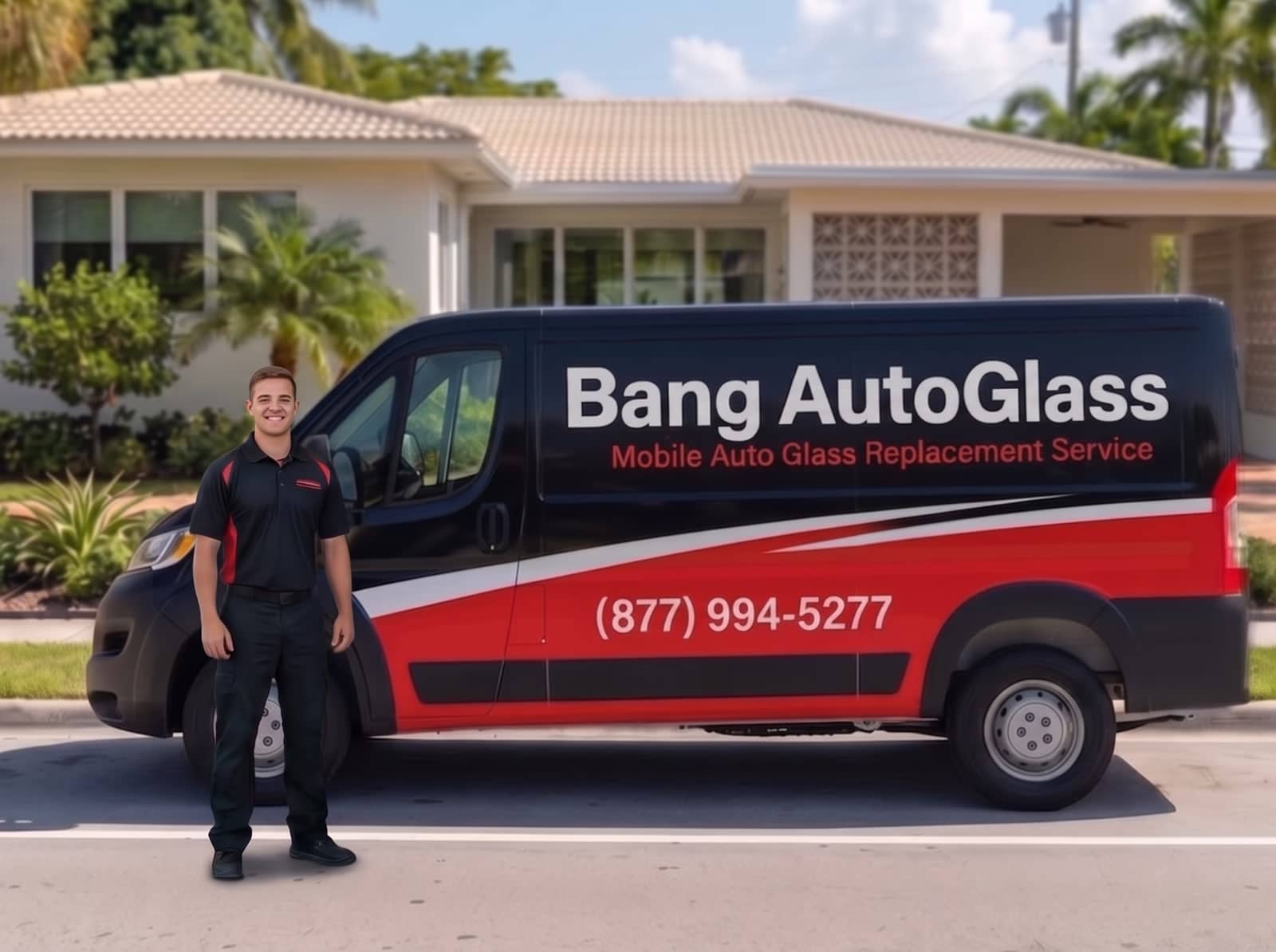
Jeep Quarter Glass Replacement
Bang AutoGlass replaces Jeep quarter glass on Wrangler, Grand Cherokee, Cherokee, Wagoneer, and Compass with OEM-fit tempered safety glass set in fresh urethane for a watertight, factory-matched seal. Mobile service in Arizona and Florida includes careful trim work and lifetime workmanship warranty.
Jeep Quarter Glass Replacement: Complete Guide for Every Jeep Model
Your Jeep was built to take you places other vehicles can't go, but that adventurous spirit comes with a tradeoff. Quarter glass damage is one of the most common auto glass issues Jeep owners face, whether you're rolling through the trails in a Wrangler, hauling the family in a Grand Cherokee, or commuting in a Cherokee or Compass. At Bang AutoGlass, we specialize in mobile Jeep quarter glass replacement and bring OEM-quality materials, and a lifetime warranty directly to your driveway. This guide walks you through everything you need to know about Jeep quarter glass replacement, from identifying the damage to scheduling next-day mobile service.
What Is Jeep Quarter Glass and Where Is It Located?
Quarter glass refers to the smaller, fixed (and occasionally vented) windows positioned on the rear quarter panel of your Jeep, typically behind the rear doors or alongside the cargo area. Unlike your door windows, quarter glass does not roll up or down on most Jeep models. It's bonded to the vehicle frame using high-strength urethane adhesive, which means a proper replacement requires precision, the right tools, and adequate cure time, all things our experienced mobile technicians deliver on every job.
Jeep quarter glass plays a bigger role than most owners realize. It contributes to the structural integrity of the cabin, helps maintain weather sealing, supports proper airbag deployment in side-impact scenarios, and gives your Jeep that signature visibility and styling. When it cracks, shatters, or gets knocked out completely, replacing it properly is critical.
Quarter Glass Locations on Different Jeep Models
Every Jeep model has its own quarter glass layout, and understanding where yours is helps you describe the damage clearly when you call us for an estimate.
Wrangler Quarter Glass
Jeep Wrangler quarter glass is found on the hardtop, located on each side just behind the rear doors (on four-door Wrangler Unlimited models) or behind the front doors (on two-door models). Wrangler quarter glass tends to be tempered glass that's bonded into the hardtop panel itself. Because Wrangler hardtops are removable, the quarter glass replacement process for JK, JL, and TJ Wranglers requires special care to maintain the seal between the glass and the fiberglass or composite hardtop panel. We work on all generations including the YJ, TJ, JK, JL, and the 4xe hybrid variant.
Grand Cherokee Quarter Glass
Jeep Grand Cherokee quarter glass sits behind the rear passenger doors, framing the C-pillar. The WJ, WK, WK2, and the newer WL generations all use bonded quarter glass with privacy tint on most trim levels. Grand Cherokee quarter glass replacement requires care around the headliner trim and the rear seatbelt anchor points.
Cherokee Quarter Glass
The Cherokee, spanning XJ, KJ Liberty-era, KL, and the newer Cherokee generations, uses quarter glass on the rear quarter panel between the rear door and the tailgate. Cherokee quarter glass is typically tempered with factory privacy tint and can be more affordable to replace than Grand Cherokee variants due to the smaller surface area.
Compass, Patriot, and Renegade Quarter Glass
These compact Jeep SUVs feature quarter glass on the rear quarter panel near the D-pillar. Renegade quarter glass, in particular, has a distinctive squared-off shape that requires the exact OEM-quality match to fit properly. Patriot quarter glass is shared across many model years from 2007 through 2017, making sourcing fast and affordable.
Gladiator and Liberty Quarter Glass
Jeep Gladiator quarter glass is integrated into the rear cab section, similar to the Wrangler hardtop but smaller. Liberty quarter glass varies between the KJ (2002-2007) and KK (2008-2012) platforms, each with unique frame geometry. Wagoneer and Grand Wagoneer quarter glass is also part of our regular replacement work, with larger pane sizes that mirror the SUV's premium build.
Common Causes of Jeep Quarter Glass Damage
Understanding what damaged your quarter glass can help you avoid repeat issues and inform whether you should file an insurance claim. Jeep owners deal with a unique set of risk factors compared to sedan or crossover drivers.
Off-Road Hazards
If you take your Wrangler, Gladiator, or Cherokee Trailhawk off-road, flying rocks, low-hanging branches, and trail debris are the leading cause of quarter glass damage. A single chunk of gravel kicked up at the right angle can shatter tempered quarter glass instantly.
Break-Ins and Vandalism
Quarter glass is a favorite target for thieves because it's smaller, often less visible from the street, and breaking it draws less attention than smashing a door window. Jeep Wranglers and Grand Cherokees parked at trailheads, gyms, and shopping centers are frequently hit.
Accidents and Impact Damage
Side-swipes, rear collisions, and parking lot fender benders can all crack quarter glass, sometimes without obvious damage to the surrounding bodywork. Even a minor impact transferred through the frame can stress the glass enough to cause cracks days or weeks later.
Weather and Environmental Factors
Hailstorms, falling tree limbs, and extreme temperature swings can all compromise quarter glass. Older Jeep models with sun-aged urethane around the quarter glass perimeter are especially vulnerable to seal failures that lead to cracks.
Why You Shouldn't Delay Jeep Quarter Glass Replacement
A broken or cracked quarter glass might seem like a minor issue compared to a windshield crack, but waiting can cost you in ways most Jeep owners don't expect.
Safety Concerns
Quarter glass contributes to the side-impact crash structure of your Jeep. In an accident, properly bonded quarter glass helps the cabin maintain its shape and provides a surface for side curtain airbags to deploy against. A missing or compromised quarter window weakens that system.
Security Risks
Even a small crack in your Jeep quarter glass is an invitation for theft. Thieves know that cracked glass is easier to break through and that the noise of breaking glass is masked by existing damage. Beyond theft, a missing quarter glass leaves your cabin completely open to anyone walking by.
Interior Damage Prevention
Rain, dust, road salt, and UV exposure can destroy your Jeep's interior in days. Leather seats crack, electronics short out, carpets mildew, and headliner adhesive fails when water gets inside. Replacing the quarter glass quickly protects costly interior components.
Our Jeep Quarter Glass Replacement Process
Bang AutoGlass has refined the quarter glass replacement process so that you get back on the road, or on the trail, with minimal disruption to your day.
Scheduling Your Appointment
We offer next-day appointments for Jeep quarter glass replacement, which means you don't have to drive around with cardboard and tape for a week waiting for a shop slot. When you call or message us, we'll confirm your Jeep year, model, and trim, identify the exact quarter glass you need, and lock in a time that works for you.
On-Site Mobile Service
We come to you. Whether you're at home, at work, or at a worksite, our mobile technicians arrive with all the equipment, OEM-quality glass, and adhesives needed to complete your Jeep quarter glass replacement in your driveway. No towing fees, no rental cars, no shop visits.
Replacement and Cure Time
The actual glass replacement takes 30 to 45 minutes from start to finish. After installation, the urethane adhesive needs approximately one hour of cure time before your Jeep is safe to drive. During that hour, you can stay home, work, or grab lunch, your call. Total appointment time is typically under two hours from the moment our technician pulls up.
OEM-Quality Materials for Every Jeep
Not all replacement glass is the same. The quality of materials and the technician's skill determine whether your replacement looks factory-fresh and lasts the life of your Jeep, or starts leaking and rattling within months.
Why OEM-Quality Matters
We use OEM-quality glass on every Jeep quarter glass replacement. That means the thickness, curvature, tint shade, and frit pattern (the black dotted border) match the original glass from the Jeep factory. Cheap glass often has subtle distortions, incorrect tint tones, or improper edge molding that creates wind noise, water leaks, and a visibly wrong appearance.
Our urethane adhesives meet or exceed Jeep's original specifications, with proper bonding strength to maintain structural integrity and ensure your side curtain airbags can deploy correctly in an accident.
Tinting and Privacy Glass Considerations
Most Jeep quarter glass comes from the factory with privacy tint, especially on Grand Cherokee Limited, Overland, and Summit trims, as well as Cherokee Latitude, Trailhawk, and Limited models. We match the factory tint shade exactly, so your replacement quarter glass blends seamlessly with the rest of your Jeep's windows. If you want darker aftermarket tint applied after replacement, we'll let the urethane fully cure first.
Cost of Jeep Quarter Glass Replacement
Pricing for Jeep quarter glass replacement varies based on a few key factors. Here's a transparent breakdown of what affects your final cost.
The variables that influence Jeep quarter glass replacement pricing include:
- Jeep model and year (Grand Cherokee quarter glass typically costs more than Compass or Patriot quarter glass)
- Whether the glass has factory privacy tint, defrost lines, or antenna integration
- Driver side versus passenger side (some models have asymmetric pricing due to molding differences)
- Accessibility of the install location (most driveways and parking lots work fine)
- Whether surrounding moldings, clips, or trim need to be replaced alongside the glass
Insurance Coverage Options
If you have comprehensive auto insurance, your Jeep quarter glass replacement is often covered with little to no out-of-pocket cost beyond your deductible. Florida's deductible waiver covers windshield replacement only, so quarter glass takes your normal deductible, while an Arizona driver who elected the optional zero-deductible glass coverage may owe nothing.
How We Help With Claims
We help you with the insurance claim from start to finish and make the process as smooth as possible. We'll provide the documentation your insurer needs, including the damage description, the OEM-quality glass part number, and the labor estimate. Once your claim is approved, we coordinate with your insurer directly for payment so you're not stuck waiting on reimbursement. We help you with the insurance claim from start to finish and make the process as smooth as possible.
Out-of-Pocket Pricing
If you don't have comprehensive coverage or your deductible is higher than the replacement cost, paying out of pocket is straightforward. Jeep quarter glass replacement typically falls in a moderate price range for most models, and we provide upfront quotes with no hidden fees, surcharges, or surprise add-ons.
Mobile Jeep Quarter Glass Replacement Benefits
There's a reason mobile auto glass service has become the preferred option for Jeep owners across our service area. Here's what you gain when you skip the shop.
Service at Your Location
We replace your Jeep quarter glass at your home, your workplace, or wherever your Jeep happens to be parked. You don't lose half a day driving to a shop, waiting in a lobby, and arranging a ride. We handle the logistics so you handle your day.
Next-Day Appointments
Every Jeep quarter glass replacement we schedule is available as soon as the next day. We know that driving with a broken quarter glass isn't an option for long, especially in rain, cold, or unsafe neighborhoods. Same-week service is the industry standard, but we move faster than that.
Lifetime Workmanship Warranty
Every Jeep quarter glass replacement we perform is backed by a lifetime workmanship warranty. That means if your installation ever leaks, develops wind noise from the seal, or experiences any defect related to our work, we'll come back and fix it at no charge for as long as you own the Jeep. The warranty covers the labor and the bond, ensuring your peace of mind for years to come.
Jeep Model-Specific Quarter Glass Tips
Different Jeep models have unique characteristics that influence how the quarter glass replacement should be approached.
Wrangler Owners
If you own a Wrangler with a removable hardtop, the quarter glass is part of the hardtop assembly. We can perform the replacement with the hardtop on the vehicle or, in some cases, with the hardtop removed if you've already taken it off for the season. Either way, our technicians know how to protect the hardtop's fiberglass or composite finish during the work.
Grand Cherokee Owners
Newer Grand Cherokee models, especially WK2 and WL generations, often have rain sensors, lane-departure cameras, and other electronics near the quarter glass area. We work carefully around all sensors and trim to ensure nothing is disturbed during installation. Quarter glass replacement on these models does not typically require calibration, but if anything was damaged in the original incident, we'll let you know.
Cherokee and Compass Owners
The unibody construction of the Cherokee KL and Compass MP means precise glass placement is critical for proper sealing. These models can be more sensitive to imperfect installations, which is exactly why our experienced technicians use the right urethane, primer, and bonding techniques to ensure a leak-free seal that lasts.
Aftercare for Your New Jeep Quarter Glass
Caring for your new quarter glass during the first day after installation ensures the urethane cures fully and the seal lasts the life of your Jeep.
First 24 Hours
After our technician completes your installation and the one-hour cure time has passed, your Jeep is safe to drive. However, for the first 24 hours we recommend you avoid automatic car washes, high-pressure water sprays, and slamming doors hard. The urethane continues curing for 24 hours, and minimizing pressure changes during that window helps the bond reach full strength.
Long-Term Care
After the first day, your new Jeep quarter glass is as durable as the original factory glass. Wash it normally, hit the trails, drive in the rain, and enjoy your Jeep as you always have. If you ever notice a leak, wind noise, or any issue at all, contact us under your lifetime workmanship warranty and we'll make it right.
Frequently Asked Questions About Jeep Quarter Glass Replacement
Can I drive my Jeep with a broken quarter glass?
Technically yes, but it's not recommended. You risk theft, interior damage, and reduced structural integrity. Schedule a replacement as soon as possible.
Does Jeep quarter glass replacement affect my warranty?
A properly performed quarter glass replacement using OEM-quality materials and careful workmanship does not void your Jeep's warranty. Our installation is performed to factory specifications.
Is mobile Jeep quarter glass replacement as good as shop service?
Yes, when performed by experienced technicians using OEM-quality materials, mobile service delivers identical results to shop service. The same glass, the same adhesive, and the same techniques are used.
How long does the glass last?
When installed correctly with quality materials, replacement quarter glass lasts as long as the original factory glass, often the entire remaining life of the Jeep.
What if I have a Wrangler with the hardtop off?
We can still replace the quarter glass. In some cases, technicians actually prefer working on a removed hardtop because access is easier. Just let us know when you book.
Schedule Your Jeep Quarter Glass Replacement Today
If your Jeep quarter glass is cracked, shattered, or missing, Bang AutoGlass is ready to help. Our mobile technicians bring OEM-quality materials, and a lifetime warranty directly to you, usually as soon as the next day. The replacement itself takes 30 to 45 minutes, plus one hour for the adhesive to fully cure, so you're back on the road in under two hours total. Contact us today using the form above to book your next-day appointment and get your Jeep back to factory-fresh condition with zero hassle.
Jeep Quarter Glass Replacement — common questions
What is quarter glass on a Jeep?
Quarter glass is the fixed window panel on either side of your Jeep behind the rear door. It's a small, permanently sealed piece of tempered glass that cannot be rolled down or repaired—if it's damaged, it must be fully replaced.
How long does Jeep quarter glass replacement take?
The replacement itself takes about 30-45 minutes to complete. Since it's bonded with adhesive, allow about 1 hour for the adhesive to set before driving, so plan for roughly 1.5-2 hours total for the appointment.
Is Jeep quarter glass replacement covered by insurance?
Yes, comprehensive auto insurance typically covers quarter glass damage from accidents, hail, or debris. Many customers with comprehensive coverage pay nothing out of pocket, and we can help you file or start your claim.
Does my Jeep quarter glass come with a warranty?
Every replacement is backed by a lifetime workmanship warranty using OEM-quality materials and glass, so you're protected against defects in craftsmanship for as long as you own your vehicle.
Where we do Jeep auto glass
Bang AutoGlass is a mobile auto glass company serving Arizona and Florida. We don't have a shop you drive to — we come to your home, your job, or wherever the car is sitting, with next-day appointments in most areas. In Arizona that means the whole Valley — Phoenix, Mesa, Scottsdale, Chandler, Gilbert, Tempe, Glendale and out to Tucson and Prescott. In Florida we cover Tampa Bay, Orlando and Miami, from St. Petersburg and Clearwater across to Kissimmee, Winter Park and Fort Lauderdale.
Browse every city we serve in Arizona and Florida, or read how coverage works under Arizona's glass statutes and Florida's § 627.7288.
Mobile auto glass — cities we serve
4.8★ on Google · 350+ reviews from AZ & FL drivers
“I needed my windshield replaced and they made the entire process easy. Bang AutoGlass is the best!”
“Top-notch auto glass service. They handled my windshield replacement quickly and professionally.”
“Bang AutoGlass made my windshield replacement simple from start to finish.”
Need Jeep Quarter Glass Replacement?
We come to you across Arizona and Florida — often $0 with insurance.
We reply within minutes during business hours.