Porsche Windshield Replacement
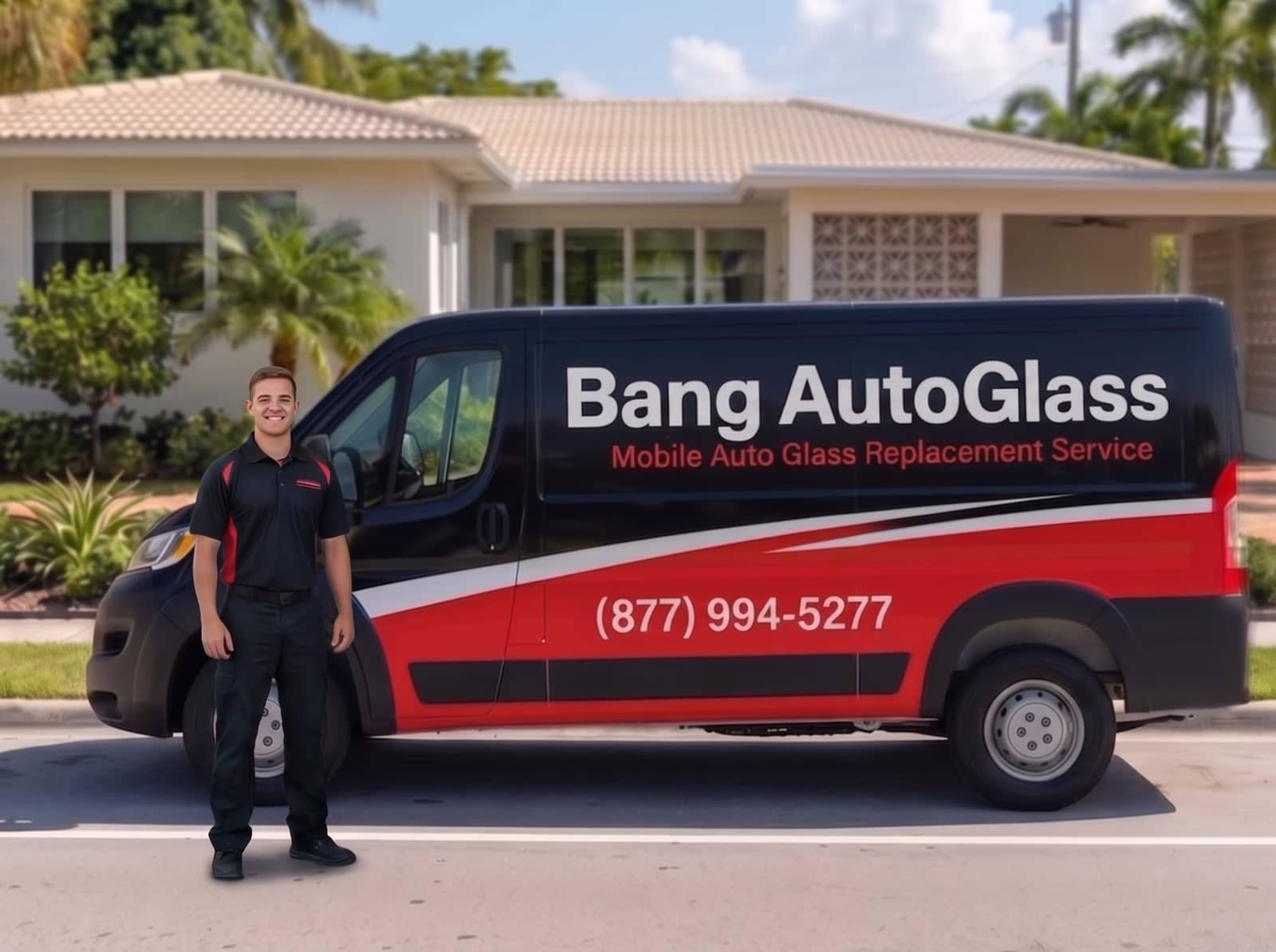
Bang AutoGlass installs Porsche windshields on 911, Cayenne, Macan, Panamera, Taycan, and Boxster with OEM-spec laminated acoustic glass supporting InnoDrive camera, rain sensor, and HUD on Panamera and Taycan. Mobile service in Arizona and Florida includes ADAS recalibration and lifetime warranty.
Porsche Windshield Replacement: Premium Mobile Service Built for Performance Vehicles
When you own a Porsche, every component on your vehicle works together to deliver the precision, safety, and luxury the brand is known for — and your windshield is no exception. A Porsche windshield is far more than a piece of glass; it is an engineered safety structure packed with acoustic insulation, advanced driver-assistance sensors, solar coatings, and on certain models, head-up display projection layers. At Bang AutoGlass, we specialize in mobile Porsche windshield replacement that meets the same exacting standards Porsche owners expect from their vehicles. Whether you drive a 911, Cayenne, Macan, Panamera, Taycan, or 718 Boxster/Cayman, our mobile auto glass technicians come directly to your home or office with OEM-quality glass, professional-grade urethane adhesives, and the calibration equipment necessary to restore your vehicle to factory specifications.
Why Porsche Windshields Require Specialized Replacement
Porsche vehicles are engineered with a level of precision that demands specialized attention during any auto glass service. The windshield is structurally integrated into the chassis, contributing to torsional rigidity, airbag deployment performance, and roof crush resistance in the event of a rollover. For Porsche owners, this means a Porsche windshield replacement must be performed by technicians who understand not just glass installation, but the integrated electronic and structural systems built into modern German performance vehicles. Cutting corners with subpar glass, generic adhesives, or skipping ADAS recalibration can affect everything from cabin noise to crash safety, which is why selecting a specialist matters so much on a vehicle like yours.
Advanced Acoustic and Solar Glass Technology
Most Porsche models come equipped with acoustic laminated windshields that include a sound-dampening interlayer between the two glass panes. This interlayer reduces wind noise, road noise, and engine sound to create the refined cabin environment Porsche is known for. Many Porsches also feature infrared-reflective solar coatings that reduce cabin heat soak and protect interior materials from UV degradation, while certain trims add heated wiper park zones at the base of the glass. When you choose Bang AutoGlass for your Porsche windshield replacement, we install OEM-quality glass that matches these acoustic and solar properties, ensuring your cabin sounds, feels, and performs exactly as it did from the factory.
Integrated ADAS Components and Sensors
Modern Porsche windshields house a sophisticated array of sensors and cameras for advanced driver-assistance systems (ADAS). These include forward-facing cameras for lane departure warning and lane keep assist, rain and light sensors, humidity sensors, and on some trims, infrared cameras supporting night vision. Replacing the windshield without proper recalibration of these systems can cause inaccurate warnings, failed automatic braking, or disabled lane assistance features. We handle every aspect of the recalibration process as part of our Porsche windshield replacement service so your safety technology performs to Porsche's original specifications.
Precision Bonding and OEM-Quality Standards
Porsche specifies high-modulus urethane adhesives and precise bead profiles to ensure the windshield contributes properly to crash safety. At Bang AutoGlass, we use premium urethane adhesives that meet or exceed Porsche's bonding specifications, paired with OEM-quality windshield glass that matches factory thickness, curvature, and optical clarity. This combination preserves the structural integrity and safety performance your Porsche was engineered to deliver, and it also prevents the wind noise and water leak issues commonly associated with low-grade installations.
Porsche Models We Service
Bang AutoGlass provides mobile windshield replacement for every Porsche model on the road today. Each model has its own glass specifications, sensor arrangements, and trim considerations, and we come prepared with the correct parts, adhesives, and calibration tools for your specific vehicle.
Porsche 911 Windshield Replacement
The iconic Porsche 911 — across the 992, 991, 997, and earlier generations — features a steeply raked windshield with tight curvature, acoustic glass, and depending on the trim, integrated rain sensors and forward cameras. Newer 911 Carrera, Targa, Turbo, and GT models include lane departure warning and adaptive cruise control sensors that require recalibration after any glass replacement. Our technicians are experienced with the specific bonding profiles and sensor mounting requirements of the 911, ensuring a precise fit and full restoration of all driver-assist features.
Porsche Cayenne Windshield Replacement
The Cayenne SUV is one of the most common Porsche models we service, due in part to its frequent highway use where rock chips and debris damage are more likely. Cayenne windshields often include acoustic laminate, rain sensors, humidity sensors, lane keep assist cameras, and on Cayenne Turbo and E-Hybrid trims, the optional head-up display projector window. Our team handles full Cayenne windshield replacement, including dynamic or static ADAS calibration as required by your specific model year and trim package.
Porsche Macan Windshield Replacement
The Macan compact SUV is another model frequently in our service queue. Macan windshields typically feature acoustic glass, rain and light sensors, and forward-facing ADAS cameras supporting Porsche InnoDrive and adaptive cruise control. Whether you drive a Macan, Macan S, Macan GTS, or the all-electric Macan, we install OEM-quality glass calibrated to your vehicle's exact specifications, and we ensure the camera bracket and sensor pad transfer cleanly to the new windshield.
Porsche Panamera Windshield Replacement
The Panamera sedan and Sport Turismo wagon often come equipped with the most feature-rich windshields in the Porsche lineup. Common features include head-up display projection layers, acoustic and IR-reflective coatings, night vision infrared sensors on select trims, lane keep assist cameras, and rain sensors. Our Panamera windshield replacement service accounts for every one of these features, including HUD calibration and night vision system alignment to keep your suite of luxury and safety features fully operational.
Porsche Taycan Windshield Replacement
The all-electric Taycan brings unique windshield considerations due to its emphasis on aerodynamics and cabin quietness. Taycan windshields are typically acoustic laminated with strong IR coatings to reduce HVAC load and improve battery range. Many Taycan trims include head-up display projection, lane assistance cameras, and integrated antennas for connectivity. We supply OEM-quality Taycan glass and recalibrate every system, including HUD alignment, so your EV continues to deliver the silent, efficient driving experience you expect.
Porsche 718 Boxster and Cayman Windshield Replacement
The mid-engine 718 Boxster and Cayman sports cars feature compact, steeply curved windshields with acoustic glass and, on newer model years, optional rain sensors and lane departure warning cameras. The convertible Boxster's windshield serves as a critical structural component supporting the windshield frame, so precision installation is essential. Our team has the experience and equipment necessary to handle 718 windshield replacement with full attention to fit, finish, and safety.
Common Reasons Porsche Owners Need Windshield Replacement
Even the best-cared-for Porsche can fall victim to windshield damage. Understanding the common causes can help you respond quickly and minimize the risk of larger repair costs down the road.
Rock Chips and Stress Cracks
Highway driving exposes any vehicle to rock chips, but Porsche windshields are particularly susceptible to developing stress cracks from small chips. The combination of curved glass, thermal cycling, and chassis flex can cause a small chip to spread into a crack that runs across the entire windshield within days. If you notice a chip, scheduling prompt service can sometimes allow for a repair instead of replacement — but once the crack exceeds the size of a dollar bill or enters the driver's line of sight, full Porsche windshield replacement becomes the only safe option.
Impact Damage from Road Debris
Tire-tossed rocks, falling cargo, construction zone debris, and gravel kicked up by other vehicles cause the majority of impact damage we see on Porsche windshields. Even a small impact at highway speed can generate a star-pattern break or bullseye that compromises the structural integrity of the glass. Because Porsche windshields are part of the vehicle's safety cage, even minor impact damage warrants prompt evaluation by a qualified technician.
Weather-Related Damage
Severe temperature swings, hailstorms, and even direct sunlight after a cold night can cause existing chips to spread or new cracks to develop. Many Porsche owners discover overnight cracks after their vehicle has been parked outdoors during weather extremes. Our mobile windshield replacement service is the ideal solution for these situations — we come to wherever your vehicle is parked, so you do not have to drive a damaged Porsche to a brick-and-mortar shop.
Our Mobile Porsche Windshield Replacement Process
At Bang AutoGlass, we have refined our mobile Porsche windshield replacement process to be efficient, precise, and convenient. Most replacements take just 30 to 45 minutes from start to finish, followed by a one-hour minimum cure time before the vehicle is safe to drive.
Scheduling and Next-Day Availability
We understand that a damaged windshield can disrupt your plans, which is why we offer next-day appointments for most Porsche windshield replacement services. When you contact us, our team confirms your model, trim, and any windshield features such as HUD, rain sensor, or lane assist so we arrive with the correct OEM-quality glass on the first visit and avoid any delays.
On-Site Inspection and Preparation
When our technician arrives, the first step is a complete inspection of the windshield, the pinch weld, the cowl panel, and surrounding trim. We verify the part number, confirm sensor mounting points, and protect the paint, dashboard, and interior with covers and tape before any work begins. This level of preparation is essential on a Porsche, where a single nick to a painted surface or a fingerprint on a leather dash can be a costly mistake.
Removal of the Damaged Windshield
Using precision cutting tools and cold-knife or wire-cut techniques as appropriate, we carefully remove the existing windshield without damaging the painted pinch weld or trim. This step is critical on a Porsche — any damage to the pinch weld can compromise the bond of the new windshield and lead to leaks or corrosion. We trim any old urethane to factory specification and prep the bonding surface for a fresh bead.
Installation of OEM-Quality Glass
We dry-fit the new OEM-quality windshield to confirm proper alignment, then apply a high-modulus urethane adhesive bead to manufacturer specifications. The new windshield is set into place with precision suction tools, ensuring even pressure across the entire bond line. All clips, moldings, cowl pieces, and trim are reinstalled to factory finish so the final result is visually and structurally indistinguishable from the original installation.
ADAS Calibration and Final Inspection
After the adhesive has set, we transfer or replace the rain sensor, forward-facing camera, and any other windshield-mounted electronics. We then perform the required ADAS calibration to restore lane assist, adaptive cruise control, automatic emergency braking, and any other camera-dependent systems to factory accuracy.
Static vs Dynamic Calibration
Some Porsche models require static calibration, performed on level ground with manufacturer-specified targets at precise distances. Others require dynamic calibration, performed during a controlled road test at specific speeds. Many newer Porsche models require both procedures to fully reset the camera. Our technicians determine the correct calibration sequence based on your specific vehicle and complete the process as part of the service.
ADAS Recalibration After Porsche Windshield Replacement
Modern Porsches are loaded with safety technology that depends on a properly calibrated windshield camera. Skipping recalibration after a Porsche windshield replacement can render these features inaccurate or fully nonfunctional, which is why Bang AutoGlass includes recalibration as a standard part of our service.
Lane Departure Warning and Lane Keep Assist
The forward camera detects lane markings and provides steering input or alerts when the vehicle drifts. Even small misalignment after windshield installation can cause false alerts or missed corrections, which is why precise calibration is essential on every Porsche windshield replacement.
Adaptive Cruise Control
Adaptive cruise control uses radar and the forward camera to maintain a safe following distance. Proper calibration ensures the system can detect and respond to traffic at any speed without phantom braking or delayed acceleration.
Automatic Emergency Braking
This life-saving system relies on the camera to identify potential collisions and trigger braking. Misaligned camera angles can lead to failed activation or unwarranted braking events, and we make sure your AEB system is fully validated before we leave.
Rain and Light Sensors
Located behind the windshield near the rearview mirror, these sensors control automatic wipers and headlights. We carefully transfer or replace these sensors and verify proper function before completing the service so your wipers and lights behave exactly as Porsche intended.
Head-Up Display (HUD) Alignment
Porsche models equipped with HUD project information directly onto a special layer within the windshield. Improper glass or misalignment can cause ghosting or unreadable display elements. We use HUD-specific OEM-quality glass for all HUD-equipped Porsches and verify projection clarity as part of our final inspection.
How Long Does a Porsche Windshield Replacement Take?
Most Porsche windshield replacements at Bang AutoGlass take 30 to 45 minutes to complete from arrival to final inspection. After installation, your vehicle requires a minimum of one hour for the urethane adhesive to reach safe drive-away strength.
Safe Drive-Away Time
Safe drive-away time is the period required before your vehicle's windshield can support airbag deployment forces in a crash. Driving before this time elapses can be unsafe, which is why we never rush the cure process. After one hour, your Porsche is ready to be driven normally, though we recommend avoiding automatic car washes and slamming doors for the first 24 to 48 hours to allow the bond to fully strengthen.
Cost Factors for Porsche Windshield Replacement
Porsche windshield replacement costs vary based on model, trim, and the specific features integrated into your glass. Several factors influence the final price, and our team walks you through the breakdown before any work is scheduled.
Features That Affect Pricing
Glass with acoustic interlayers, IR-reflective coatings, HUD projection layers, heated wiper park areas, antenna integration, and embedded sensors costs more than basic laminated glass. Calibration requirements also add to the total — particularly for vehicles requiring both static and dynamic procedures. Model year and trim level also play a major role, since Porsche has expanded its standard ADAS content significantly in recent generations.
Insurance and Out-of-Pocket Options
Many comprehensive auto insurance policies cover Porsche windshield replacement, often with little or no deductible depending on your state and policy. For customers choosing to pay out-of-pocket, we provide transparent pricing for your specific Porsche before any work begins so there are no surprises on the final invoice.
Filing an Insurance Claim for Your Porsche Windshield
If you have not already opened a glass claim with your insurance carrier, we can guide you through the process to make it as easy as possible.
How We Assist with the Claims Process
We help you with the insurance claim from start to finish and make the process as smooth as possible. We walk you through the questions your insurer will ask, provide our shop information and any required documentation, and answer questions about coverage limits, deductibles, and approved parts. Once your claim is opened, we coordinate directly with the insurer for billing so you do not have to handle any paperwork after the initial call.
OEM-Quality Materials and Lifetime Workmanship Warranty
Every Porsche windshield replacement performed by Bang AutoGlass uses OEM-quality glass and premium urethane adhesives. We back our work with a lifetime workmanship warranty, giving you confidence that your investment is protected for as long as you own your Porsche.
What Our Warranty Covers
Our lifetime workmanship warranty covers any installation-related issues including leaks, wind noise from improper sealing, and trim or molding fit issues attributable to our work. If anything we installed develops a problem related to workmanship, we make it right at no charge — for as long as you own the vehicle. This is the kind of long-term commitment Porsche owners deserve from an auto glass partner.
Preventing Future Porsche Windshield Damage
While you cannot eliminate every risk on the road, a few simple habits can extend the life of your new windshield:
- Maintain a safe following distance behind trucks, construction vehicles, and any car with visible cargo to reduce exposure to airborne debris.
- Park in shaded or covered areas when possible to limit thermal stress on the glass.
- Replace wiper blades every six to twelve months to prevent scratching that can weaken the windshield surface.
- Address small chips immediately — prompt chip repair can prevent the need for full Porsche windshield replacement.
- Avoid slamming doors when windows are fully closed, since the pressure spike can stress the glass and bond line.
- Use a windshield sun shade during hot months to reduce interior heat and UV exposure on the laminate.
Why Choose Bang AutoGlass for Your Porsche Windshield Replacement
When it comes to your Porsche, you want a glass partner that understands the precision and care your vehicle demands. Here is what sets Bang AutoGlass apart from generic auto glass shops:
- Mobile service that comes to your home, office, or any location of your choosing — no driving a damaged Porsche to a shop.
- Next-day appointment availability for most Porsche windshield replacement requests.
- Fast 30 to 45 minute installation times with a one-hour minimum safe drive-away time.
- OEM-quality glass matched to your exact Porsche model, trim, and feature set.
- Full ADAS recalibration including lane keep assist, adaptive cruise, automatic emergency braking, and head-up display alignment.
- Premium urethane adhesives that meet or exceed Porsche bonding specifications.
- Lifetime workmanship warranty that protects you for as long as you own your Porsche.
- Friendly insurance claim assistance so you can navigate the process with confidence.
Schedule Your Porsche Windshield Replacement Today
Do not let a damaged windshield compromise the safety, performance, or beauty of your Porsche. Bang AutoGlass is ready to provide premium mobile windshield replacement with OEM-quality glass, expert ADAS recalibration, and a lifetime workmanship warranty — all backed by a team that treats every Porsche with the precision it deserves. Contact us today using the form above to schedule your next-day appointment and get back to driving the vehicle you love.
Porsche Windshield Replacement — common questions
How long does a Porsche windshield replacement take?
Most Porsche windshield replacements take about 30–45 minutes to complete, plus time for the adhesive to set — about an hour is typical, and your technician confirms the exact safe drive-away time. Total visit is typically 1.5–2 hours. If your Porsche has a safety camera (most modern models), ADAS calibration adds about 15–30 minutes to ensure lane-keeping and automatic braking stay accurate.
Will a replacement windshield be OEM quality?
Yes. Every Porsche windshield replacement uses OEM-quality glass and materials, and comes with a lifetime workmanship warranty. You get the same quality at your location as you would at a shop, with the convenience of mobile service.
Is a Porsche windshield replacement covered by insurance?
Most comprehensive insurance policies cover windshield damage. In Florida, Fla. Stat. 627.7288 waives the comprehensive deductible on windshield replacement, so you pay nothing out of pocket. In Arizona, many policies include optional no-deductible coverage. We help you file or start your claim if needed.
Can I drive my Porsche right after the windshield is replaced?
You need to wait about 1 hour after completion for the adhesive to fully set before driving. We'll let you know when it's safe. This ensures the windshield stays securely bonded and your vehicle is safe to operate.
Where we do Porsche auto glass
Bang AutoGlass is a mobile auto glass company serving Arizona and Florida. We don't have a shop you drive to — we come to your home, your job, or wherever the car is sitting, with next-day appointments in most areas. In Arizona that means the whole Valley — Phoenix, Mesa, Scottsdale, Chandler, Gilbert, Tempe, Glendale and out to Tucson and Prescott. In Florida we cover Tampa Bay, Orlando and Miami, from St. Petersburg and Clearwater across to Kissimmee, Winter Park and Fort Lauderdale.
Browse every city we serve in Arizona and Florida, or read how coverage works under Arizona's glass statutes and Florida's § 627.7288.
Mobile auto glass — cities we serve
4.8★ on Google · 350+ reviews from AZ & FL drivers
“I needed my windshield replaced and they made the entire process easy. Bang AutoGlass is the best!”
“Top-notch auto glass service. They handled my windshield replacement quickly and professionally.”
“Bang AutoGlass made my windshield replacement simple from start to finish.”
Need Porsche Windshield Replacement?
We come to you across Arizona and Florida — often $0 with insurance.
We reply within minutes during business hours.