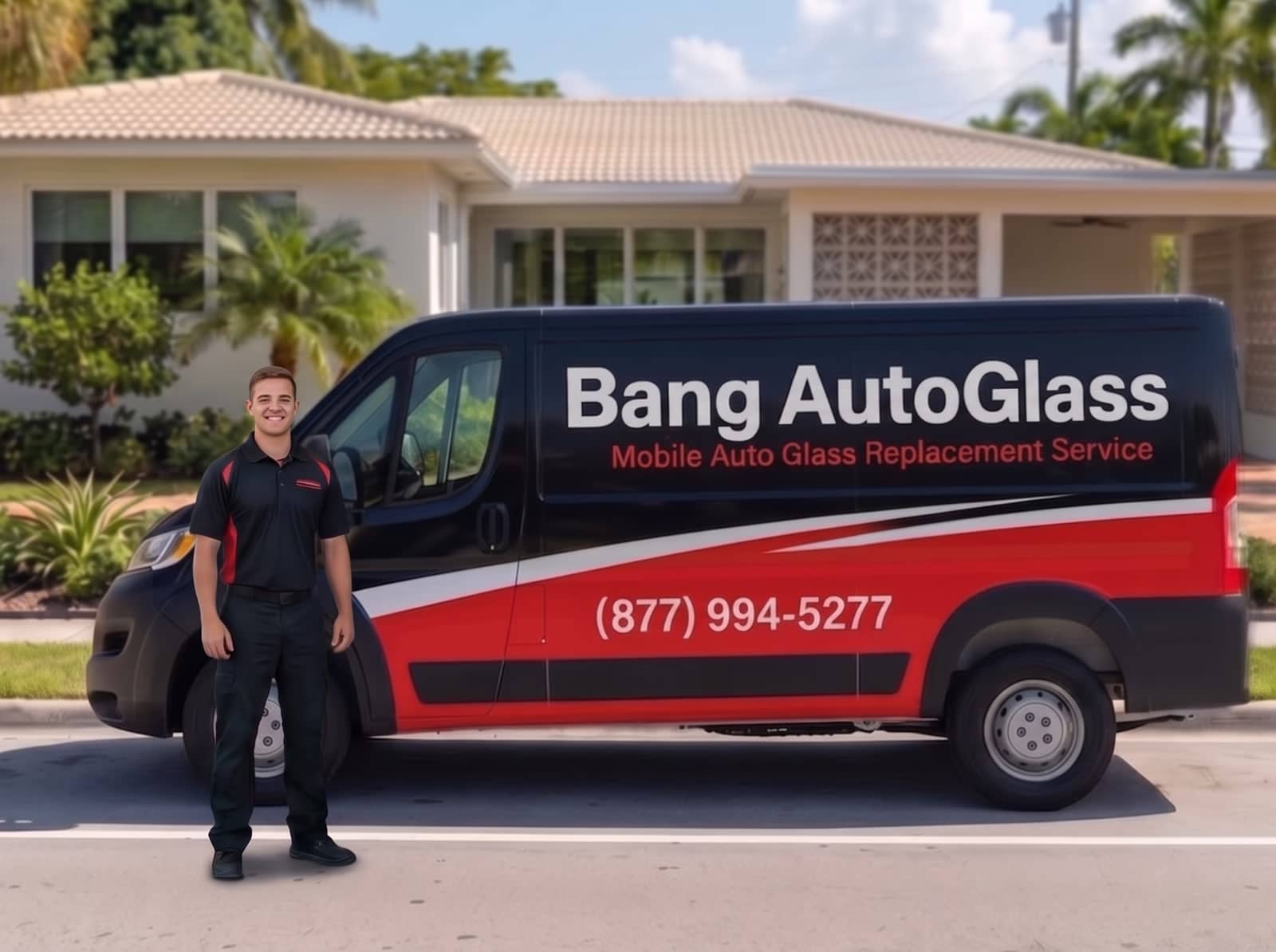
Chrysler Windshield Replacement
Bang AutoGlass installs mobile Chrysler windshields on Pacifica, Voyager, and 300 across Arizona and Florida with OEM-spec laminated glass supporting SafetyTec forward camera, rain sensor, and acoustic dampening. Every install includes urethane bonding, ADAS recalibration, and lifetime warranty.
Professional Chrysler Windshield Replacement Services Near You
When your Chrysler's windshield is damaged, you need a replacement service that understands the specific engineering, safety features, and quality standards that come with the Chrysler brand. At Bang AutoGlass, we specialize in Chrysler windshield replacement and bring our mobile auto glass service directly to your home, office, or job site. Whether you drive a luxurious Chrysler 300, a family-friendly Pacifica, or a versatile Voyager, our experienced technicians deliver fast, reliable windshield replacements backed by OEM-quality materials and a lifetime workmanship warranty.
A cracked, chipped, or shattered windshield isn't just a cosmetic issue — it's a serious safety concern that compromises the structural integrity of your Chrysler and can interfere with modern driver-assist technologies. Our team understands that Chrysler vehicles are built with precision, and replacing the windshield requires the same level of care, the right glass specifications, and proper calibration of any installed safety systems. With next-day appointments available, you won't have to drive around with a dangerous windshield for long.
Why Chrysler Windshields Require Specialized Replacement
Chrysler has consistently engineered its vehicles with a focus on comfort, technology, and safety. The windshield plays a critical role in supporting all three. Replacing it isn't a one-size-fits-all job, and choosing the right auto glass company makes a major difference in performance, appearance, and long-term durability.
Advanced Safety Features in Modern Chrysler Vehicles
Most modern Chrysler models, especially the 300, Pacifica, and Voyager, come equipped with Advanced Driver Assistance Systems (ADAS). These systems rely on cameras and sensors mounted at or near the windshield. Features like Forward Collision Warning, Lane Departure Warning, Adaptive Cruise Control, and Automatic Emergency Braking all depend on a properly installed and calibrated windshield. Even a small misalignment can throw off these systems, which is why precision matters during every Chrysler windshield replacement.
Acoustic Glass Technology and Cabin Comfort
Many Chrysler vehicles, particularly the Chrysler 300 and Pacifica, are designed with acoustic laminated glass. This special multi-layer glass reduces wind and road noise, giving the interior its signature quiet ride. When we replace your Chrysler windshield, we use OEM-quality acoustic glass that matches the original specifications, preserving the cabin comfort you expect from your vehicle.
Structural Integrity Considerations
The windshield contributes up to 30 percent of your Chrysler's overall structural integrity, particularly in a rollover or front-end collision. It also supports proper airbag deployment. A poorly installed windshield can fail in an accident, putting you and your passengers at risk. Our experienced technicians follow strict installation protocols, use premium urethane adhesives, and allow the proper cure time so your Chrysler is just as strong after the replacement as it was the day you bought it.
Chrysler Models We Service for Windshield Replacement
Bang AutoGlass provides mobile windshield replacement for every Chrysler model on the road, from current production vehicles to older classics. Below are some of the most common Chrysler windshield replacements we handle.
Chrysler 300 Windshield Replacement
The Chrysler 300 is a flagship full-size sedan known for its bold styling and refined interior. Many trims feature acoustic glass, rain-sensing wipers, and a forward-facing camera for safety features. Our team is experienced in handling the specific glass and bracket configurations of every 300 generation, ensuring your replacement looks and performs exactly like the factory original.
Chrysler Pacifica Windshield Replacement
The Chrysler Pacifica is a family-focused minivan packed with technology. Pacifica windshields often include rain sensors, lane departure cameras, humidity sensors, and a heating element for the wiper park area. We use OEM-quality glass that supports every one of these features, and we recalibrate ADAS systems whenever required to keep your family safe on every drive.
Chrysler Voyager Windshield Replacement
The Chrysler Voyager shares much of its platform with the Pacifica but is positioned as a more accessible family minivan. It still relies on advanced safety features that route through the windshield, so a proper replacement with quality glass and accurate calibration is essential. Our mobile service makes it easy for busy families to get their Voyager back on the road without disrupting their schedule.
Chrysler 200 Windshield Replacement
Though no longer in production, the Chrysler 200 remains a popular midsize sedan. We routinely replace 200 windshields, including those with rain sensors and forward-facing cameras on higher trims. Our OEM-quality glass restores both the look and the function of your 200 at a price that makes sense.
Chrysler Town and Country Windshield Replacement
For owners of the beloved Chrysler Town and Country, we have you covered. While these vans have aged out of new production, parts availability remains strong, and our technicians know these vehicles inside and out. We deliver fast, durable Town and Country windshield replacements that get you back to hauling the family or running errands without delay.
Signs Your Chrysler Needs a Windshield Replacement
Not every chip or crack requires a full windshield replacement, but ignoring the signs can lead to a much bigger problem. Here are the most common signals that your Chrysler needs windshield replacement rather than a simple repair:
- A crack longer than six inches, or one that has spread to the edge of the glass
- Multiple chips or cracks that compromise the strength of the windshield
- Damage directly in the driver's line of sight that cannot be safely repaired
- Pitting, hazing, or deep scratches that cause glare at night or during sunrise and sunset
- Interior delamination where the layers of the laminated glass begin to separate
- Damage that affects the ADAS camera area or sensor mounting points
- Leaks where water or air is entering the cabin around the windshield seal
- A previous repair that has failed or continued to spread despite resin injection
If you notice any of these signs in your Chrysler, scheduling a windshield replacement quickly helps prevent further damage and keeps your driving experience safe.
Our Mobile Chrysler Windshield Replacement Process
Bang AutoGlass is a fully mobile auto glass company, which means we come to you. There's no need to take time off work or rearrange your day to sit in a shop waiting room. We bring our tools, materials, and expertise directly to your location, whether that's your driveway, office parking lot, or anywhere else convenient for you.
Scheduling Your Next-Day Appointment
We understand that windshield damage is stressful and time-sensitive. That's why we offer next-day appointments for Chrysler windshield replacements. Reach out by phone, fill out our quick sign-up form, and our team will confirm a time that works for you. We'll gather your Chrysler's year, model, and trim details to make sure we arrive with the exact OEM-quality glass that fits your vehicle.
On-Site Inspection and Preparation
When our technician arrives, the first step is a thorough inspection of your windshield, surrounding moldings, and any ADAS components. We protect your dashboard, hood, and surrounding paint with covers before beginning any work. This careful preparation prevents accidental damage during the removal process.
Professional Removal and Installation
Removing a windshield from a Chrysler requires precision. We carefully cut through the original urethane bond, lift out the damaged glass, and clean and prepare the pinch weld to receive the new windshield. We apply premium-grade urethane adhesive, set the new OEM-quality glass into place using proper alignment techniques, and reinstall any moldings, sensors, or brackets that were part of the original assembly.
Replacement Timeframe and Curing Time
Most Chrysler windshield replacements take between 30 and 45 minutes from start to finish. Once the new glass is set, the urethane adhesive needs approximately one hour to reach the safe drive-away time. During this curing period, your technician will walk you through aftercare instructions to make sure the seal forms perfectly.
OEM-Quality Materials for Every Chrysler Windshield Replacement
The quality of the materials used in your windshield replacement directly affects how the new glass performs, how long it lasts, and how well it integrates with your Chrysler's existing systems. At Bang AutoGlass, we never cut corners on materials.
Glass Quality and Specifications
We use OEM-quality glass for every Chrysler windshield replacement. That means the glass we install meets the same thickness, optical clarity, curvature, and feature specifications as the original. Whether your Chrysler 300 has acoustic glass, your Pacifica has a rain sensor, or your Voyager has a forward-facing camera mount, the replacement glass will match those features exactly so everything functions as designed.
Premium Adhesives and Sealants
The adhesive that holds your windshield in place is just as important as the glass itself. We use professional-grade urethane adhesives that meet or exceed federal safety standards. This ensures your windshield bonds securely to the body of your Chrysler and remains watertight and structurally sound for the life of the vehicle.
ADAS Calibration for Chrysler Vehicles
Advanced Driver Assistance Systems are one of the most important reasons to choose a qualified auto glass specialist for your Chrysler windshield replacement. After the glass is replaced, the cameras and sensors that work through the windshield must be recalibrated to function correctly.
What ADAS Calibration Involves
ADAS calibration aligns the forward-facing camera and any related sensors so they read the road, traffic, and lane markings accurately. There are two main types of calibration. Static calibration is performed with the vehicle stationary and uses targets placed at specific distances and angles. Dynamic calibration is performed while driving the vehicle under controlled conditions. Some Chrysler vehicles require one type, others require both.
Why Calibration Matters After Replacement
Without proper calibration, your Chrysler's lane departure warning, adaptive cruise control, and emergency braking systems may not function correctly. The car could brake too late, drift in its lane, or fail to detect obstacles. Our team makes sure your ADAS systems are accurately calibrated before we consider the job complete, giving you full confidence in every safety feature your Chrysler is equipped with.
Insurance Coverage and Claims Assistance
Many drivers don't realize that their auto insurance policy may cover the full cost of a Chrysler windshield replacement, often without affecting their premium. Comprehensive coverage typically includes glass damage, and depending on your state and policy, you may have zero out-of-pocket expense.
Understanding Your Coverage
Comprehensive insurance policies generally cover glass repair and replacement caused by road debris, weather, or other non-collision events. Some states even have laws that waive the deductible for windshield replacement entirely. We're happy to talk through the basics of how glass coverage typically works so you have a better understanding before you contact your insurance provider.
How Bang AutoGlass Assists with the Claims Process
We help you with the insurance claim from start to finish and make the process as smooth as possible. Here's how we help:
- We provide all the information you need about your Chrysler and the damage, including the specific glass type, model details, and any features that affect the replacement cost.
- We walk you through the typical claim process so you know what to expect when you call your insurance company.
- We coordinate directly with your insurance company once your claim is approved, providing them with the necessary documentation and invoicing details.
- We schedule your replacement around the timeline of your claim so there's no unnecessary delay.
- We make sure all paperwork and warranties are completed accurately so your records are clean and complete.
With our assistance, filing a glass claim for your Chrysler windshield replacement becomes much less stressful.
Lifetime Workmanship Warranty on Every Chrysler Windshield Replacement
Every Chrysler windshield replacement performed by Bang AutoGlass comes with a lifetime workmanship warranty. That means as long as you own the vehicle, we stand behind the quality of our installation. If you ever experience leaks, wind noise, or any other issue tied to our workmanship, we'll make it right at no cost to you. This warranty reflects our confidence in our technicians, our materials, and our process.
Why Choose Bang AutoGlass for Your Chrysler Windshield Replacement
There are many auto glass companies out there, but Bang AutoGlass stands apart because of our mobile-first approach, our commitment to quality, and the way we treat every customer.
Mobile Convenience That Fits Your Schedule
Our service comes to you. Whether you're at home with the kids, working a long shift at the office, or stuck on a job site, we can perform your Chrysler windshield replacement without you ever having to drive into a shop. This is especially important when your windshield damage is severe enough that driving the vehicle isn't safe.
Fast Turnaround With Next-Day Appointments
Other companies might make you wait days or even weeks. We offer next-day appointments for Chrysler windshield replacements, and the actual replacement takes only 30 to 45 minutes plus an hour for the adhesive to cure. That means you can have a brand-new windshield installed and ready to drive on within just a couple of hours total.
Experienced Technicians Who Know Chrysler Vehicles
Our technicians have replaced windshields on every Chrysler model you can think of. They understand the unique trim levels, the bracketry behind the glass, the wiring for sensors, and the molding configurations that make each model distinct. That experience translates to a cleaner installation, a better fit, and a longer-lasting result.
Transparent Pricing With No Surprises
We provide clear, upfront pricing for every Chrysler windshield replacement. Whether you're paying out of pocket or going through insurance, you'll know exactly what to expect before any work begins. No hidden fees, no last-minute add-ons, and no pressure.
Caring for Your New Chrysler Windshield
Once your new windshield is installed, a few simple steps will help ensure it lasts as long as possible and continues to look and perform like factory original glass.
The First 24 Hours After Replacement
For the first hour, avoid driving the vehicle so the adhesive can fully cure. After that, you can drive normally, but try to avoid slamming doors, going through high-pressure car washes, or driving on extremely rough roads for the first 24 hours. These activities can stress the seal before it fully bonds. Leave any retention tape on the windshield exterior for at least 24 hours to keep the molding seated properly.
Long-Term Windshield Care
In the long term, replace your wiper blades regularly to prevent scratches, avoid following too closely behind trucks that may throw debris, and address any small chips quickly before they spread. With proper care, your new Chrysler windshield can last for the life of the vehicle without issue.
Schedule Your Chrysler Windshield Replacement With Bang AutoGlass Today
Don't let a damaged windshield slow you down or put your safety at risk. Bang AutoGlass is ready to bring fast, professional, mobile Chrysler windshield replacement directly to you. With next-day appointments, OEM-quality materials, a lifetime workmanship warranty, and experienced technicians who specialize in Chrysler vehicles, we make the entire process simple, affordable, and stress-free. Reach out today using the contact information or sign-up form at the top of this page and let us handle the rest. Your Chrysler deserves nothing less than the very best.
Chrysler Windshield Replacement — common questions
How long does a Chrysler windshield replacement take?
Most replacements take about 30–45 minutes to complete, plus time for the adhesive to set — about an hour is typical, and your technician confirms the exact safe drive-away time. Total visit time is usually 1.5–2 hours.
Is a Chrysler windshield replacement covered by insurance?
Comprehensive insurance typically covers windshield damage. In Florida, state law waives the comprehensive deductible on windshield replacement, so you pay nothing out of pocket. We help you file your claim if needed.
What happens after my Chrysler windshield replacement?
We back every replacement with a lifetime workmanship warranty and use OEM-quality glass and materials. Once the adhesive sets, your windshield is safe to drive on — about an hour is typical, and your technician confirms the exact safe drive-away time.
Can I drive my Chrysler right after a windshield replacement?
No, you should wait for the adhesive to fully set — about an hour is typical, and your technician confirms the exact safe drive-away time. This ensures the windshield is safely bonded and your vehicle is secure.
Will my Chrysler need ADAS calibration after a windshield replacement?
If your Chrysler is equipped with a forward-facing camera or any windshield-mounted ADAS sensors, then yes, recalibration is required after the glass is replaced. We handle this as part of the service so your safety systems work exactly as they should.
What if my Chrysler is older or no longer in production?
We service every Chrysler model, including older vehicles like the 200, Town and Country, Sebring, and PT Cruiser. OEM-quality glass is available for nearly every Chrysler ever made, and we have the experience to install it correctly.
Where we do Chrysler auto glass
Bang AutoGlass is a mobile auto glass company serving Arizona and Florida. We don't have a shop you drive to — we come to your home, your job, or wherever the car is sitting, with next-day appointments in most areas. In Arizona that means the whole Valley — Phoenix, Mesa, Scottsdale, Chandler, Gilbert, Tempe, Glendale and out to Tucson and Prescott. In Florida we cover Tampa Bay, Orlando and Miami, from St. Petersburg and Clearwater across to Kissimmee, Winter Park and Fort Lauderdale.
Browse every city we serve in Arizona and Florida, or read how coverage works under Arizona's glass statutes and Florida's § 627.7288.
Mobile auto glass — cities we serve
4.8★ on Google · 350+ reviews from AZ & FL drivers
“I needed my windshield replaced and they made the entire process easy. Bang AutoGlass is the best!”
“Top-notch auto glass service. They handled my windshield replacement quickly and professionally.”
“Bang AutoGlass made my windshield replacement simple from start to finish.”
Need Chrysler Windshield Replacement?
We come to you across Arizona and Florida — often $0 with insurance.
We reply within minutes during business hours.