Chrysler ADAS Calibration
Bang AutoGlass coordinates Chrysler SafetyTec ADAS calibration after windshield service so Adaptive Cruise Control, Forward Collision Warning, Lane Departure Warning, and Blind Spot Monitoring read targets correctly on Pacifica, Voyager, and 300. Arizona and Florida mobile, warranty-backed.
Chrysler ADAS Calibration
Modern Chrysler vehicles are engineered with some of the most sophisticated safety technology on the road today, and at the heart of that technology is the Advanced Driver Assistance System, more commonly known as ADAS. From the family-friendly Chrysler Pacifica to the iconic Chrysler 300 sedan, these vehicles rely on a network of precisely aimed cameras, radar units, and sensors to keep drivers safe. When any of those components are disturbed, whether through a windshield replacement, a minor fender bender, or even a routine alignment, your Chrysler's ADAS must be recalibrated to factory specifications. Skipping this critical step can leave your safety systems pointing the wrong direction, reporting inaccurate data, or failing to activate when you need them most. Our Chrysler ADAS calibration service is designed to restore your vehicle's safety technology to peak performance using OEM-quality equipment, factory-approved procedures, and the convenience of fully mobile service.
What Is ADAS and Why Your Chrysler Depends On It
ADAS refers to a suite of electronic safety and convenience features that work together to reduce driver workload, prevent collisions, and minimize the severity of accidents when they occur. In Chrysler vehicles, ADAS is not a single component but rather an integrated network of forward-facing cameras mounted behind the windshield, radar sensors built into the front grille and rear bumper, ultrasonic parking sensors, and steering angle sensors. These components communicate with the vehicle's electronic control units dozens of times per second, processing data about lane position, surrounding traffic, pedestrian presence, and road conditions.
Because every Chrysler ADAS component is calibrated at the factory to within fractions of a degree, even the smallest misalignment can cause major issues. A forward-facing camera that is off by just one or two degrees may misread lane markings several car lengths ahead, leading to false lane departure warnings or, worse, no warning at all when one is genuinely needed. This is why Chrysler ADAS calibration is not optional after qualifying repairs, it is a manufacturer-required safety procedure.
Common Chrysler ADAS Features That Require Calibration
Chrysler models are equipped with a wide range of driver assistance features depending on the trim level and model year. The most common ADAS features that require recalibration include Forward Collision Warning Plus, Full Speed Forward Collision Warning, Adaptive Cruise Control with Stop and Go, LaneSense Lane Departure Warning Plus, Blind Spot Monitoring with Rear Cross Path Detection, ParkSense Front and Rear Park Assist with Stop, Automatic High Beam Headlamp Control, and the surround view camera system found on higher Pacifica trims. Each of these features relies on a sensor or camera that must be precisely aligned to function correctly.
When Your Chrysler Needs ADAS Calibration
Many Chrysler owners are surprised to learn how many service events trigger the need for an ADAS calibration. Understanding when calibration is required can help you avoid driving with compromised safety systems and ensure your vehicle continues to perform as the engineers intended.
After a Windshield Replacement
This is the most common trigger and the one most relevant to our mobile Chrysler glass service. The forward-facing camera on virtually every modern Chrysler is mounted directly to the inside of the windshield. When that windshield is removed and replaced, the camera's position relative to the road shifts, even if only by millimeters. Chrysler requires a static or dynamic calibration, and sometimes both, anytime the windshield is replaced on an ADAS-equipped vehicle. Our mobile technicians perform the windshield replacement in 30 to 45 minutes, allow the urethane adhesive a full hour to cure, and then proceed with the ADAS calibration on-site.
After a Front-End Collision or Body Repair
Even a low-speed front-end impact can knock the front radar sensor out of alignment. If your Chrysler has been in a collision, regardless of how minor, an ADAS calibration is strongly recommended to verify that all forward-facing systems are still aimed correctly.
After Suspension Work, Alignment, or Ride Height Changes
Because ADAS sensors are calibrated relative to the vehicle's geometry, any change to suspension height, control arm position, or wheel alignment can throw the system out of spec. This includes lift kits, lowering springs, and even worn suspension components that have shifted ride height over time.
After Camera, Sensor, or Module Replacement
Replacing any ADAS component, including the camera bracket, radar unit, or one of the body control modules that processes ADAS data, requires a full recalibration to teach the new component its position within the system.
Understanding the Chrysler ADAS Calibration Process
Not all calibrations are created equal, and Chrysler has specific procedures depending on the model, year, and which sensor is being calibrated. There are three primary types of calibration we perform on Chrysler vehicles.
Static Calibration
Static calibration is performed with the vehicle stationary, typically in a controlled environment with the vehicle parked on a flat, level surface. Precision targets are placed at exact distances and angles in front of the vehicle, and a factory-grade scan tool guides the camera or sensor through a self-alignment routine using those targets as reference points. Most Chrysler Pacifica and Chrysler 300 windshield replacements require static calibration of the forward-facing camera.
Dynamic Calibration
Dynamic calibration, sometimes called drive calibration, requires the technician to drive the vehicle at specific speeds on well-marked roads while the scan tool monitors the camera as it learns to recognize lane lines, road signs, and surrounding traffic. Dynamic calibration typically requires roads with clear, painted lane markings, moderate traffic, and a continuous drive of several miles at speeds between 35 and 65 miles per hour depending on the specifications for that model.
Dual Calibration
Some Chrysler models, particularly newer Pacifica trims with the most advanced ADAS package, require both a static calibration to set the baseline and a dynamic calibration to fine-tune the system in real-world conditions. Our technicians follow Chrysler's exact procedure for your specific year, make, model, and trim to ensure every calibration is completed to factory specifications.
Chrysler Models We Calibrate
Our team is equipped to handle ADAS calibration on the full range of modern Chrysler vehicles. Each model has its own quirks and specific requirements, and our technicians stay current with Chrysler's evolving calibration procedures.
Chrysler Pacifica ADAS Calibration
The Chrysler Pacifica and Pacifica Hybrid carry the most extensive ADAS package in the Chrysler lineup. Depending on the trim, the Pacifica may include Active Driving Assist, Intelligent Speed Assist, Traffic Sign Recognition, a 360-degree surround view camera, and Hands-Free Power Sliding Doors that rely on proximity sensors. Pacifica windshield replacements almost always require static calibration of the forward-facing camera, and many trims also need a dynamic calibration drive to finish the process.
Chrysler 300 ADAS Calibration
The Chrysler 300, particularly model years 2015 and newer, features Forward Collision Warning Plus, Adaptive Cruise Control, Blind Spot Monitoring, and LaneSense Lane Departure Warning Plus on most trims. After a windshield replacement, the 300's forward-facing camera needs static calibration to restore proper function of these systems.
Chrysler Voyager ADAS Calibration
The Chrysler Voyager shares much of its platform with the Pacifica and carries a similar set of ADAS features. Voyager calibrations follow nearly identical procedures to the Pacifica, with static calibration being the most common requirement after glass replacement.
Why Chrysler ADAS Calibration Matters for Safety
It is tempting to view ADAS calibration as a minor follow-up to a glass replacement, but the reality is that an improperly calibrated system can be more dangerous than no system at all. When your Chrysler's Forward Collision Warning triggers a false brake event in highway traffic, the result can be a rear-end collision. When LaneSense pulls your steering wheel in the wrong direction because the camera is misaligned, you could be steered into an adjacent vehicle. And when Adaptive Cruise Control fails to detect a stopped vehicle ahead because the radar is pointing slightly upward, the consequences can be catastrophic.
ADAS systems are designed to act as a second set of eyes, and drivers often come to trust them after months or years of reliable use. That trust becomes a liability when the system has been silently compromised by a missed calibration. Proper Chrysler ADAS calibration is the only way to restore that trust and ensure your safety technology behaves exactly as Chrysler engineered it to.
How Long Does Chrysler ADAS Calibration Take?
For most Chrysler ADAS calibrations performed alongside a windshield replacement, you can expect the entire appointment to take roughly 1.5 to 2 hours from start to finish. The windshield removal and installation takes 30 to 45 minutes, followed by a one-hour cure time for the urethane adhesive to reach safe drive-away strength. Once the adhesive has cured, the calibration itself typically adds another 15 to 30 minutes depending on whether the procedure is static, dynamic, or both. If a dynamic calibration drive is required, the technician will need access to a stretch of well-marked road near your location.
Our Mobile Chrysler ADAS Calibration Service
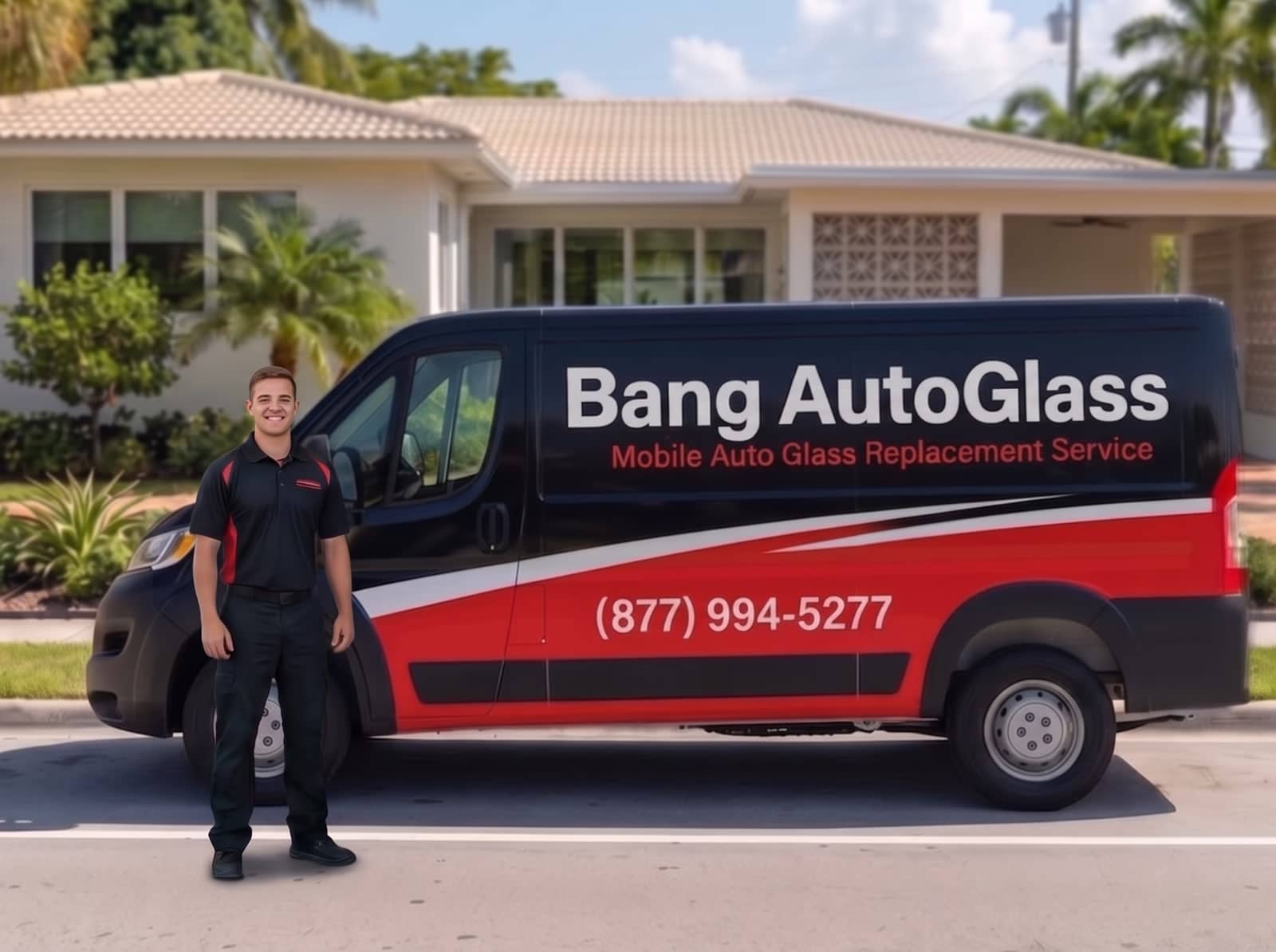
We bring our complete Chrysler ADAS calibration capability directly to your home, workplace, or any other location with adequate space and lighting. Our mobile service vehicles carry factory-grade scan tools, calibration targets, leveling equipment, and all the consumables needed to complete the job on-site. There is no need to drop your Chrysler off at a shop for a full day or to arrange alternate transportation while the work is being done. Most customers can continue with their daily routine while we work on the vehicle in their driveway or parking lot.
What to Expect During Your Appointment
When you book a Chrysler ADAS calibration with us, here is the sequence of events you can expect during your appointment:
- Our technician arrives at your scheduled location with all necessary equipment loaded and ready.
- We perform a pre-scan of your Chrysler's electronic systems to document the existing condition and identify any active fault codes.
- The windshield replacement is completed in 30 to 45 minutes using OEM-quality glass cut to factory specifications.
- We allow the urethane adhesive a full one-hour cure time to reach safe drive-away strength.
- We set up the calibration targets and equipment in front of your vehicle on a level surface.
- The static calibration procedure is run using a factory-grade scan tool that communicates directly with your Chrysler's ADAS modules.
- If your model requires it, we perform the dynamic calibration drive on nearby roads with clear lane markings.
- A post-calibration scan verifies all systems are functioning correctly and no fault codes remain.
OEM-Quality Materials and Lifetime Workmanship Warranty
Every Chrysler windshield we install is OEM-quality glass that meets or exceeds the original manufacturer specifications for thickness, optical clarity, acoustic dampening, and camera bracket positioning. The camera mounting bracket on the inside of the windshield must be located within tight tolerances for the ADAS camera to calibrate successfully, and inferior glass often fails to meet those tolerances, leading to repeated calibration failures and unsafe results. We use OEM-quality glass for every Chrysler we service.
Our workmanship is backed by a lifetime warranty for as long as you own the vehicle. If you ever experience a leak, a wind noise issue, or any other problem related to the installation, we will return and make it right at no additional cost. This warranty reflects our confidence in our technicians and our commitment to standing behind every job we complete.
Insurance and Chrysler ADAS Calibration Claims
Most comprehensive auto insurance policies cover ADAS calibration as part of a covered glass replacement claim. In many cases, the calibration is billed as a separate line item alongside the glass replacement itself, but both are typically covered when your policy includes comprehensive coverage. Some policies also waive your deductible entirely for glass-related claims, meaning you could pay nothing out of pocket for both the windshield and the calibration.
How We Assist With Your Insurance Claim
If you have not already filed a claim with your insurance carrier, we are happy to walk you through the process and help you gather everything you need to file successfully. We help you with the insurance claim from start to finish and make the process as smooth as possible. This includes explaining what information your insurer will ask for, providing the vehicle and damage details they need, and answering any questions they may have about the scope of work and required ADAS calibration.
Warning Signs Your Chrysler ADAS May Be Out of Calibration
Even if you have not had recent service work performed, there are several warning signs that your Chrysler's ADAS may need attention. Watch for any of the following:
- Lane departure warnings that trigger when you are clearly centered in your lane, or fail to trigger when you drift across a line.
- Adaptive cruise control that brakes suddenly for no apparent reason or fails to maintain proper following distance.
- Forward collision warnings that activate in normal traffic situations or fail to alert you to legitimate hazards.
- Blind spot monitoring that lights up when no vehicle is present or stays dark when a vehicle is clearly beside you.
- Dashboard warning lights related to ADAS, traction control, or service required messages.
- Park assist sensors that beep continuously or fail to detect nearby obstacles.
If you notice any of these symptoms in your Chrysler, schedule an ADAS calibration as soon as possible to restore proper system function.
Frequently Asked Questions About Chrysler ADAS Calibration
Can I Drive My Chrysler Before the ADAS Calibration Is Complete?
You can technically operate the vehicle, but you should not rely on any ADAS feature until the calibration is verified complete. Some Chrysler models will display a warning message or disable certain features automatically until the calibration is performed.
Does My Insurance Cover Chrysler ADAS Calibration?
In the majority of cases, yes. If your comprehensive insurance covers the windshield replacement, it typically covers the required ADAS calibration as well. We are happy to assist you in confirming coverage with your insurer before the appointment.
What Happens If I Skip ADAS Calibration?
Skipping calibration leaves your Chrysler with safety systems that may be inaccurate, unreliable, or completely non-functional. Beyond the safety risk, it can also create liability concerns in the event of a future collision and may void portions of your factory warranty.
Schedule Your Chrysler ADAS Calibration Today
Whether you need a Chrysler Pacifica ADAS calibration after a recent windshield replacement, a Chrysler 300 forward camera recalibration after suspension work, or a full Chrysler Voyager calibration following a minor collision, our mobile team is ready to help. We offer next-day appointments in most cases, complete the work right at your home or office, and back every job with our lifetime workmanship warranty and OEM-quality materials. Contact us today to get your Chrysler's safety technology back to factory specifications and back on the road with confidence.
Chrysler ADAS Calibration — common questions
What is Chrysler ADAS calibration and why is it needed?
Chrysler ADAS (Advanced Driver Assistance Systems) calibration realigns safety cameras and sensors after windshield replacement, repair, or collision so features like lane-keeping assist and automatic braking work correctly. Proper calibration ensures your safety systems function as designed.
How long does Chrysler ADAS calibration take?
ADAS calibration typically takes about 15-30 minutes once your windshield replacement is complete. The technician uses specialized equipment to verify that all safety cameras and sensors are properly aligned and functioning.
Is ADAS calibration covered by insurance?
ADAS calibration is included as part of your windshield replacement service and is covered by comprehensive insurance when your windshield is covered, with nothing out of pocket for many drivers. We help you file your claim if needed.
What Chrysler models require ADAS calibration?
Most newer Chrysler vehicles equipped with advanced safety features, typically 2018 and newer, require ADAS calibration after windshield work. Your technician will confirm if your vehicle needs it during the appointment.
Where we do Chrysler auto glass
Bang AutoGlass is a mobile auto glass company serving Arizona and Florida. We don't have a shop you drive to — we come to your home, your job, or wherever the car is sitting, with next-day appointments in most areas. In Arizona that means the whole Valley — Phoenix, Mesa, Scottsdale, Chandler, Gilbert, Tempe, Glendale and out to Tucson and Prescott. In Florida we cover Tampa Bay, Orlando and Miami, from St. Petersburg and Clearwater across to Kissimmee, Winter Park and Fort Lauderdale.
Browse every city we serve in Arizona and Florida, or read how coverage works under Arizona's glass statutes and Florida's § 627.7288.
Mobile auto glass — cities we serve
4.8★ on Google · 350+ reviews from AZ & FL drivers
“I needed my windshield replaced and they made the entire process easy. Bang AutoGlass is the best!”
“Top-notch auto glass service. They handled my windshield replacement quickly and professionally.”
“Bang AutoGlass made my windshield replacement simple from start to finish.”
Need Chrysler ADAS Calibration?
We come to you across Arizona and Florida — often $0 with insurance.
We reply within minutes during business hours.