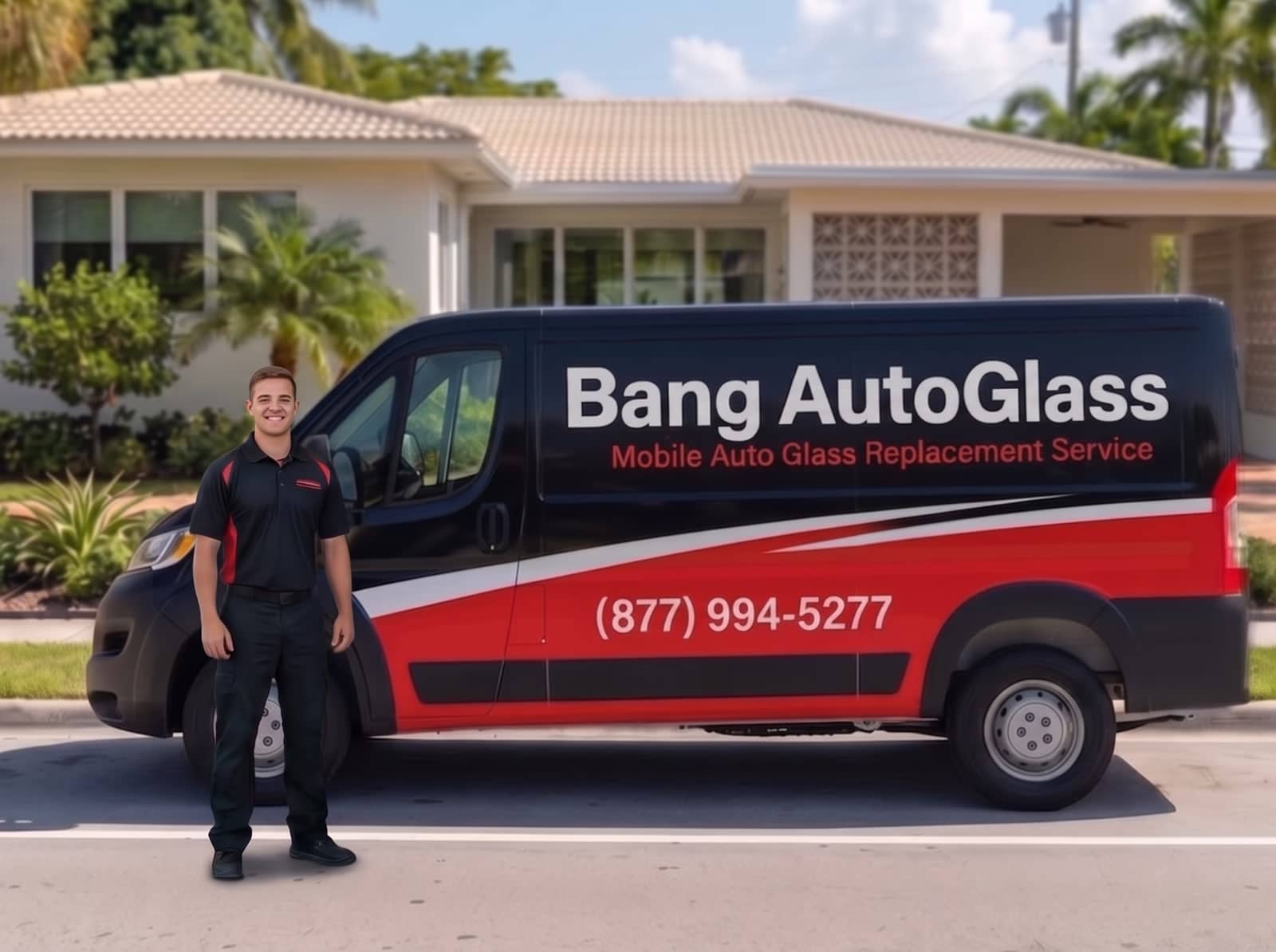
Cadillac Quarter Glass Replacement
Bang AutoGlass replaces Cadillac quarter glass on Escalade, XT5, XT6, and CT5 with OEM-fit tempered safety glass set in fresh urethane for a watertight, factory-matched seal. Mobile service across Arizona and Florida includes careful trim work, precise alignment, and lifetime workmanship warranty.
Cadillac Quarter Glass Replacement
When your Cadillac's quarter glass is cracked, shattered, or compromised in any way, getting it professionally replaced quickly is essential to maintaining the luxury, safety, and structural integrity of your vehicle. Cadillac is one of the most refined American luxury brands on the road, and the quarter glass on these vehicles isn't just a piece of automotive glass — it's an integral part of the cabin's design, soundproofing, and overall driving experience. At Bang AutoGlass, we specialize in Cadillac quarter glass replacement services using OEM-quality materials, expert installation, and a fully mobile process that brings the repair shop directly to you.
What Is Quarter Glass on a Cadillac?
Quarter glass refers to the small, often triangular or trapezoidal pieces of automotive glass located near the rear quarter panels of a vehicle, typically behind the rear doors or in front of the rear windshield. On most Cadillac models, the quarter glass is a fixed (non-moving) window that contributes to visibility, aesthetics, and the overall structural rigidity of the cabin. Unlike side windows that roll up and down, the quarter glass is bonded into place with industrial-grade urethane adhesive, making replacement a precision job that requires specialized tools, skilled technicians, and proper curing time.
Where Is the Quarter Glass Located on a Cadillac?
The exact location of the quarter glass varies depending on the Cadillac model. On SUVs such as the Cadillac Escalade, XT5, XT6, and XT4, the quarter glass is typically situated at the rear pillar, just behind the rear passenger door. On sedans like the Cadillac CTS, ATS, CT4, CT5, and CT6, the quarter glass may be embedded into the rear door frame itself or located in the C-pillar area. On classic Cadillacs such as the DeVille, Seville, Eldorado, and DTS, the quarter glass is often a defining design element that gives the vehicle its signature silhouette. Knowing the exact location matters because every model has its own glass curvature, tinting, and adhesive specifications.
Common Causes of Cadillac Quarter Glass Damage
Cadillac quarter glass can become damaged for a wide range of reasons, and unfortunately, even the most careful drivers can find themselves dealing with a broken window. Some of the most common causes we see include:
- Attempted break-ins or vehicle vandalism, where thieves target the smaller, less-reinforced quarter glass to gain access to the interior
- Flying road debris such as rocks, gravel, or construction materials kicked up by other vehicles on the highway
- Severe weather including hail storms, fallen tree branches, and strong winds that send objects into your vehicle
- Accidental impact from sports balls, garage doors, or items shifting in the cargo area
- Stress fractures caused by extreme temperature changes, especially common during winter and summer months
- Manufacturing defects or pre-existing micro-cracks that expand over time
- Collisions that damage the rear quarter panel and surrounding glass
- Improper prior installation that compromised the urethane seal
Regardless of how the damage occurred, replacement is almost always the only viable option for quarter glass — repair is rarely possible due to the size, shape, and bonded nature of these windows.
Cadillac Models We Service
We provide quarter glass replacement for virtually every Cadillac model on the road today, both modern and classic. Our technicians are trained on the unique specifications of each vehicle, ensuring a precise fit and finish every time.
Cadillac Escalade Quarter Glass Replacement
The Cadillac Escalade is one of the most iconic luxury SUVs in America, and its quarter glass is uniquely shaped to match its bold, squared-off styling. Whether you drive a 2002 first-generation Escalade or a brand-new 2025 model, we have access to OEM-quality quarter glass that matches your factory tint and curvature. The Escalade ESV, with its extended wheelbase, has slightly different quarter glass dimensions than the standard Escalade, and our technicians know exactly how to identify and source the correct piece.
Cadillac CTS and CT5 Quarter Glass Replacement
The CTS and its successor, the CT5, feature sleek sedan styling with rear quarter glass that contributes to the car's aerodynamic profile. These models often have heavily tinted privacy glass in the rear, and we ensure that every replacement matches the original tint percentage for a seamless appearance.
Cadillac XT5, XT6, and XT4 Quarter Glass Replacement
The XT-series crossovers are among Cadillac's best-selling vehicles, and we frequently service quarter glass replacements for all three models. Each model has its own unique glass shape, and we never substitute one for another. Proper sourcing is critical to ensuring a watertight seal and OEM-level fit.
Cadillac SRX Quarter Glass Replacement
The Cadillac SRX, produced from 2004 through 2016, has distinct quarter glass on both the first and second generations. We stock or can quickly source quarter glass for both body styles.
Cadillac DeVille, DTS, Seville, and STS Quarter Glass Replacement
For owners of classic and discontinued Cadillac sedans, finding the right quarter glass can be a challenge — but our network of suppliers gives us access to OEM-quality replacements for these legacy models. Whether you're restoring a vintage DeVille or maintaining your daily-driver DTS, we can help.
Cadillac Lyriq Quarter Glass Replacement
As Cadillac's flagship electric SUV, the Lyriq features cutting-edge design and uniquely shaped quarter glass that requires careful handling during replacement. Our technicians are trained on EV-specific glass replacement protocols.
Cadillac ATS, CT4, and CT6 Quarter Glass Replacement
These compact and mid-size luxury sedans each have their own quarter glass specifications, and we provide expert replacement services for all three.
Signs You Need Cadillac Quarter Glass Replacement
Sometimes the need for quarter glass replacement is obvious — a shattered or completely missing window leaves no doubt. But other times, the damage is more subtle. Here are the warning signs that indicate it's time to schedule a replacement. You may notice visible cracks running across the glass, even small hairline fractures that seem harmless. Chips along the edge of the glass are particularly concerning because they tend to spread quickly. Wind noise or whistling sounds while driving can indicate that the urethane seal has failed. Water leaks during rain or car washes are another telltale sign that the glass needs to be properly resealed or replaced. Finally, fogging or moisture trapped between glass layers suggests a compromised seal that allows humidity to enter the cabin.
Why Quarter Glass Repair Isn't an Option
Many customers ask us if their cracked quarter glass can simply be repaired rather than replaced. Unfortunately, in nearly every case, the answer is no. Quarter glass is typically made of tempered glass rather than the laminated glass used for windshields. Tempered glass is designed to shatter into small, less-dangerous pieces upon impact, which means once it's damaged — even slightly — its structural integrity is compromised throughout the entire pane. Unlike a windshield, where small chips can be filled with resin to restore strength and clarity, tempered quarter glass cannot be repaired. Replacement is the only safe and effective solution to restore your Cadillac to its original condition.
Our Cadillac Quarter Glass Replacement Process
At Bang AutoGlass, we follow a meticulous, multi-step process to ensure every Cadillac quarter glass replacement is performed to the highest standard.
- We begin with a thorough inspection of the damaged area, including the surrounding pinch weld, body panels, and interior trim, to identify any additional issues that need to be addressed.
- Our technician carefully removes the broken glass, taking great care to protect the paint, weatherstripping, and interior upholstery from scratches or damage.
- The pinch weld is cleaned and prepped with the appropriate primer to ensure maximum adhesion.
- A fresh bead of high-quality urethane adhesive is applied around the perimeter of the opening.
- The new OEM-quality quarter glass is precisely positioned and bonded into place.
- All trim pieces and weatherstripping are reinstalled to factory specifications.
- We perform a final quality inspection to verify proper alignment, sealing, and aesthetic finish.
- The vehicle is given a full hour of drying time before driving to allow the urethane to cure properly.
How Long Does Cadillac Quarter Glass Replacement Take?
One of the most common questions we get is how long the entire process takes. The actual replacement of your Cadillac quarter glass typically takes between 30 and 45 minutes from start to finish. After the installation is complete, we ask that the vehicle remain stationary for an additional one hour to allow the urethane adhesive to fully cure. This drying time is essential — driving too soon can compromise the seal and cause leaks or even glass dislodgement. So while the hands-on work is quick, plan for about an hour and a half to two hours total, including curing time. This is faster than most shops and a fraction of the time it would take to drop your vehicle off at a dealership.
OEM-Quality Materials for Your Cadillac
Cadillac is a luxury brand, and your vehicle deserves luxury-grade replacement parts. We exclusively use OEM-quality glass that matches the original specifications of your vehicle in every way. This includes the exact curvature, thickness, tint percentage, and any embedded features such as antennas or defrost lines. Our urethane adhesives are also of the highest grade, providing a permanent bond that meets or exceeds factory standards. When you choose Bang AutoGlass for your Cadillac quarter glass replacement, you can be confident that the finished product will look and perform exactly as it did the day your Cadillac rolled off the assembly line.
Mobile Cadillac Quarter Glass Replacement Service
We understand that your time is valuable, which is why Bang AutoGlass operates as a fully mobile auto glass replacement service. We come to you, whether you're at home, at work, at the gym, or anywhere else within our service area. There's no need to take time off, arrange alternate transportation, or sit in a dealership waiting room for hours on end. Our mobile units are fully equipped with all the tools, adhesives, and OEM-quality glass needed to complete your Cadillac quarter glass replacement on-site. All we need is a safe, level place to park and access to your vehicle, and we'll handle the rest.
Insurance Claims Assistance for Cadillac Quarter Glass Replacement
If your Cadillac quarter glass damage is covered by your auto insurance policy, we can help walk you through the claims process. We help you with the insurance claim from start to finish and make the process as smooth as possible. Our team can help you understand what information to provide your insurance company, walk you through what to expect, and provide all necessary documentation, invoices, and photos that your insurer may request. Many comprehensive auto insurance policies cover glass replacement with little to no deductible, so it's always worth checking with your provider before paying out of pocket.
Cost of Cadillac Quarter Glass Replacement
The cost of Cadillac quarter glass replacement varies based on several factors, including the specific model and year of your vehicle, the location of the damaged glass, the type of tinting required, and whether your glass includes any embedded features such as antennas or defrost grids. Newer luxury models like the Escalade and Lyriq tend to be slightly more expensive due to their advanced glass features, while older models like the DeVille or SRX may be more affordable. Bang AutoGlass offers competitive, transparent pricing with no hidden fees, and we're always happy to provide a free, no-obligation quote before any work begins.
Lifetime Workmanship Warranty
Every Cadillac quarter glass replacement performed by Bang AutoGlass comes with our lifetime workmanship warranty. This means that for as long as you own your vehicle, we stand behind the quality of our installation. If you ever experience any issues related to the workmanship of the replacement — such as leaks, wind noise, or improper sealing — we'll make it right at no additional cost to you. This warranty reflects our confidence in our technicians and our commitment to delivering luxury-grade service to every Cadillac owner we serve.
Next-Day Appointments Available
We know that broken auto glass can't wait, especially when it leaves your luxury vehicle exposed to the elements or vulnerable to further damage. That's why Bang AutoGlass offers next-day appointments for Cadillac quarter glass replacement in most cases. Just give us a call, and we'll do everything we can to get you back on the road in pristine condition as quickly as possible.
Why Choose Bang AutoGlass for Your Cadillac Quarter Glass Replacement?
Choosing the right auto glass company for your Cadillac matters. With Bang AutoGlass, you get the convenience of a fully mobile service, the quality of OEM-grade materials, the speed of next-day appointments, and the peace of mind of a lifetime workmanship warranty. We treat every Cadillac that comes through our service as if it were our own, paying attention to the smallest details and never cutting corners. From the latest Escalade to a vintage DeVille, our technicians have the experience, training, and equipment to deliver flawless results every time.
Cadillac Quarter Glass Replacement FAQs
Can I drive my Cadillac with a broken quarter glass?
While it's technically possible to drive with a broken quarter glass, it's strongly discouraged. Driving with damaged or missing glass exposes your interior to weather, theft, and additional debris. It can also be illegal in some jurisdictions. We recommend scheduling a replacement as soon as possible.
Does Cadillac quarter glass replacement affect my vehicle's warranty?
No. Replacement performed with OEM-quality materials by qualified technicians does not void any portion of your Cadillac factory warranty.
Will my new quarter glass match the rest of my Cadillac's windows?
Absolutely. We use OEM-quality glass that matches the original tint percentage, curvature, and finish of your factory windows for a seamless, undetectable replacement.
Can you replace quarter glass on a classic Cadillac?
Yes, we can replace quarter glass on most classic and discontinued Cadillac models, including the DeVille, Eldorado, Seville, and DTS. Lead times for sourcing the correct glass may vary depending on availability.
How soon can I roll down my windows after a Cadillac quarter glass replacement?
Since quarter glass is a fixed window that doesn't roll down, this isn't a concern. However, we do ask that you avoid slamming doors or driving on rough roads for at least 24 hours to allow the urethane to fully cure.
Is mobile Cadillac quarter glass replacement as good as in-shop service?
Yes. Our mobile units are fully equipped with the same professional tools, adhesives, and OEM-quality glass that you would find at a brick-and-mortar shop. The quality of the work is identical — only the convenience is different.
Schedule Your Cadillac Quarter Glass Replacement Today
If your Cadillac is in need of quarter glass replacement, don't wait. The longer you delay, the more vulnerable your luxury vehicle becomes to weather damage, theft, and further glass deterioration. Contact Bang AutoGlass today to schedule your next-day mobile appointment. With our expert technicians, OEM-quality materials, lifetime workmanship warranty, and convenient mobile service, you'll have your Cadillac back to pristine condition in no time. Call us, fill out our quick contact form, or reach out through our website to get started — we look forward to serving you and keeping your Cadillac looking and performing at its luxurious best.
Cadillac Quarter Glass Replacement — common questions
What is Cadillac quarter glass and can it be repaired?
Quarter glass is the small fixed window on the rear sides of your Cadillac, behind the rear doors. It's tempered and cannot be repaired—if it's cracked or shattered, it must be fully replaced with OEM-quality glass backed by our lifetime workmanship warranty.
How long does Cadillac quarter glass replacement take?
The replacement itself takes about 30–45 minutes to complete. Since the glass is bonded, the adhesive needs time to set — about an hour is typical, and your technician confirms the exact safe drive-away time. Plan for roughly 1.5–2 hours total for your vehicle to be ready.
Is Cadillac quarter glass replacement covered by insurance?
Many comprehensive insurance policies cover glass replacement. We help you file or start your claim if needed. Cost depends on your coverage and deductible, and we'll provide a clear, upfront quote before we begin work.
Why choose Bang AutoGlass for my Cadillac quarter glass?
We're a mobile-only service—our fully-equipped technicians come to your home, work, or roadside and complete the job with the same quality as a shop. Every replacement uses OEM-quality materials and carries a lifetime workmanship warranty.
Where we do Cadillac auto glass
Bang AutoGlass is a mobile auto glass company serving Arizona and Florida. We don't have a shop you drive to — we come to your home, your job, or wherever the car is sitting, with next-day appointments in most areas. In Arizona that means the whole Valley — Phoenix, Mesa, Scottsdale, Chandler, Gilbert, Tempe, Glendale and out to Tucson and Prescott. In Florida we cover Tampa Bay, Orlando and Miami, from St. Petersburg and Clearwater across to Kissimmee, Winter Park and Fort Lauderdale.
Browse every city we serve in Arizona and Florida, or read how coverage works under Arizona's glass statutes and Florida's § 627.7288.
Mobile auto glass — cities we serve
4.8★ on Google · 350+ reviews from AZ & FL drivers
“I needed my windshield replaced and they made the entire process easy. Bang AutoGlass is the best!”
“Top-notch auto glass service. They handled my windshield replacement quickly and professionally.”
“Bang AutoGlass made my windshield replacement simple from start to finish.”
Need Cadillac Quarter Glass Replacement?
We come to you across Arizona and Florida — often $0 with insurance.
We reply within minutes during business hours.