Buick Door Glass Replacement
Bang AutoGlass replaces Buick door glass on Enclave, Encore GX, and Envision with OEM-fit tempered side windows shaped to factory curvature. Mobile service across Arizona and Florida includes full glass vacuum cleanup, regulator inspection, weatherstrip check, and a lifetime workmanship warranty.
Professional Buick Door Glass Replacement Services
When your Buick's door glass cracks, shatters, or fails to seal properly, you need a repair partner who understands the engineering behind one of America's most refined vehicle brands. Bang AutoGlass specializes in Buick door glass replacement, delivering precision installations that restore your vehicle's signature quiet ride, weather protection, and security. Whether you drive a Buick Encore, Enclave, Envision, Regal, LaCrosse, or any other model in the lineup, our experienced mobile technicians come directly to your home or workplace with OEM-quality glass and the right tools for a flawless replacement.
Buick door glass replacement is not a one-size-fits-all service. Each model uses uniquely shaped, tinted, and tempered side glass designed to integrate with the brand's QuietTuning technology, framed door designs, and advanced window regulator systems. Our team brings make-specific knowledge to every appointment, ensuring your new Buick window fits the contour of your door, seats properly against the weatherstripping, and operates smoothly with your factory regulator and switch controls.
Why Buick Door Glass Replacement Demands Specialized Care
Buick has built its reputation on premium comfort and refinement, and the door glass plays a central role in delivering that experience. The tempered safety glass in your Buick door isn't just a window — it's an engineered component designed to support the brand's industry-leading cabin acoustics, advanced acoustic laminate options on higher trims, and tight-tolerance door seals that keep wind noise, road sound, and weather outside where they belong.
The QuietTuning Engineering Behind Buick Side Glass
Buick's QuietTuning technology is one of the brand's most recognized features, and door glass is one of its most important contributors. The factory glass on most modern Buicks works in concert with triple-layer door seals, sound-deadening foam injections in the body cavities, and precisely shaped glass curvature to reduce cabin noise to luxury-class levels. When replacement glass is improperly cut, poorly tinted, or seated incorrectly, that signature Buick quietness can be compromised. Our Buick door glass installations are performed to factory specifications so you do not lose the refined experience you paid for when you chose a Buick.
Door Glass and Vehicle Safety
Beyond comfort, your Buick door window is a critical safety component. In a side-impact collision, properly installed tempered side glass shatters into small, blunt cubes rather than dangerous shards. The glass also helps maintain structural rigidity of the door assembly and works alongside your side curtain airbags to keep occupants protected. A damaged or improperly installed Buick door window can compromise all of these safety systems, which is why a make-specific replacement matters.
Common Causes of Buick Door Glass Damage
Door glass damage rarely happens at a convenient time, and understanding what caused the break can help you decide on the right repair approach. We see Buick door glass damage from a wide range of sources, and our technicians are trained to identify whether the damage is isolated to the glass or whether other door components also need attention.
Break-ins and theft attempts are unfortunately one of the most common causes of Buick door glass damage we encounter. The Buick Enclave and Encore are popular family vehicles often parked in public lots, making them occasional targets. Thieves typically target the smallest, easiest-to-break window — often the rear passenger door — to access the cabin quickly. The good news is that tempered side glass shatters in a way that contains most of the debris, but the cleanup, regulator inspection, and Buick window replacement still require professional attention.
Road debris is another frequent culprit. Loose gravel, tire fragments from semi-trucks, and construction zone debris can strike side glass at highway speeds and cause cracks or full shattering. Buick owners who commute on busy interstates or live in regions with frequent road construction tend to report more frequent damage from this category.
Temperature extremes can stress factory glass over time. Rapid heating from direct sunlight followed by cold water or air conditioning can cause thermal shock cracks, especially if there's an existing chip or stress point in the glass. Northern climates also see issues with ice scrapers, frozen window seals, and forcing the window to operate when it's bonded to a frozen seal.
Window regulator failures sometimes mimic Buick door glass problems. If your Buick window suddenly drops into the door, refuses to roll up, or moves crookedly, the issue may be with the regulator rather than the glass itself. Our technicians inspect the regulator, run channels, and clips during every Buick door glass replacement to ensure you don't end up with a perfect new window in a failing mechanism.
Signs Your Buick Needs Door Glass Replacement
Some Buick door glass issues are obvious — a shattered window or a large crack running across the surface clearly needs immediate attention. Other warning signs are more subtle and can develop over weeks before the glass fails completely. Knowing what to watch for helps you schedule your Buick window replacement before a minor issue becomes a roadside emergency.
- Visible cracks, chips, or pitting across the door glass surface
- Glass that has shattered or fallen into the door cavity
- Window that won't roll up, roll down, or operates unevenly
- Whistling or wind noise around the Buick door at highway speeds
- Water leaking into the cabin during rain or car washes
- Loose glass that rattles when the door closes
- Visible separation between the glass and the door frame
- Fogging or moisture buildup between glass layers on laminated windows
If you notice any of these signs on your Buick, scheduling a replacement sooner rather than later prevents secondary damage to your door electronics, upholstery, and weatherstripping.
Buick Models We Service for Door Glass Replacement
Our technicians are equipped to handle Buick door glass replacement across the entire modern and recent-history Buick lineup. Each model has its own quirks, glass shapes, and installation procedures, and we maintain make-specific training so your vehicle gets the right approach the first time.
Buick Encore and Encore GX Door Glass Replacement
The Buick Encore and Encore GX are compact crossovers with tighter door geometry and shorter glass dimensions. Their compact design means the glass curvature is more pronounced than larger Buick SUVs, requiring careful handling to avoid stress fractures during installation. We commonly replace front and rear door glass on these models, including the small fixed quarter glass behind the rear doors on certain trims.
Buick Enclave Door Glass Replacement
The Buick Enclave is the brand's flagship three-row SUV, and its larger door glass panels require extra care during removal and installation. The Enclave's premium trim levels often include privacy-tinted rear glass that must be matched precisely to maintain the factory look. Our OEM-quality replacement glass matches the original tint percentage and curvature so your Enclave looks and performs exactly as it did from the factory.
Buick Envision Door Glass Replacement
The Envision is a midsize crossover with refined glass design on certain trims and laminated acoustic glass options on the Avenir trim. We carry the correct glass type for each Envision configuration so you don't lose the acoustic benefits of the higher trims after a Buick Envision door glass replacement.
Buick Regal and LaCrosse Door Glass Replacement
Both the Regal and LaCrosse use long, low-profile sedan door glass that tends to be more susceptible to flex during installation. Our technicians use specialized suction tools and door panel handling techniques to ensure these larger, thinner glass panels seat correctly without warping or stress.
Older Buick Models
We also service older Buick models including the Lucerne, Verano, Century, Park Avenue, Rendezvous, Rainier, and others. Sourcing glass for older Buicks sometimes requires a slightly longer lead time, but our parts network gives us access to a wide inventory of legacy Buick door glass at OEM-quality specifications.
Types of Buick Door Glass We Replace
A Buick has more glass panels than most owners realize, and each one serves a specific function. Knowing the difference helps when you call to schedule your Buick door glass replacement so we can bring the right part on the first visit.
Front Driver and Passenger Door Glass
The front door glass panels are the most commonly replaced on any Buick. They are the largest movable glass panels on the vehicle and take the most use throughout the life of the car. Driver-side glass tends to wear faster due to frequent operation at drive-through windows, parking gates, and toll booths.
Rear Door Glass
Rear door glass on Buick sedans and SUVs comes in two main configurations: a single movable panel or a movable panel plus a small fixed quarter glass at the rear of the door. Knowing which configuration your Buick uses determines the replacement cost and procedure, and our technicians verify the setup when you book your appointment.
Vent Glass and Quarter Glass
The small fixed glass panels on the rear quarter of many Buicks — particularly the Enclave, Encore, and older sedans like the Park Avenue — are bonded to the body rather than mounted in a regulator. These vent and quarter glass panels require urethane adhesive installation and have a different cure window than movable door glass, which we factor into your appointment scheduling.
Our Mobile Buick Door Glass Replacement Process
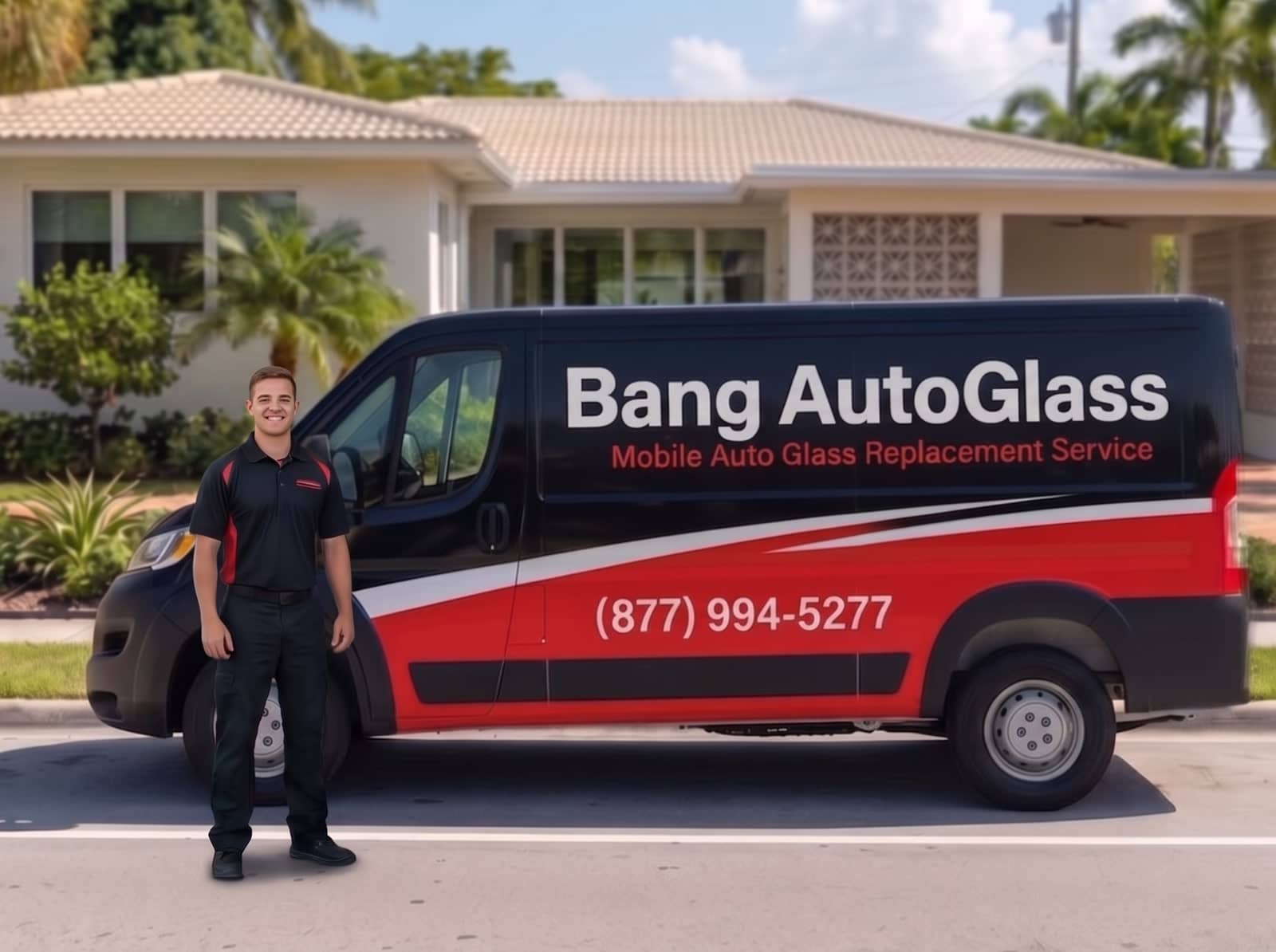
One of the biggest advantages of choosing Bang AutoGlass for your Buick door glass replacement is that we come to you. There's no need to arrange a tow, find a rental car, or rearrange your day around a shop appointment. Our fully equipped mobile service vans bring the parts, tools, and expertise directly to your driveway, parking lot, or workplace.
- Schedule your appointment by phone or through our quick sign-up form
- Our mobile technician arrives at your location with the correct OEM-quality glass for your specific Buick model
- The technician removes the interior door panel and any necessary trim
- The damaged glass is carefully removed and the door cavity is vacuumed and inspected
- The window regulator, run channels, and clips are inspected and cleaned
- The new Buick door glass is installed, aligned, and tested for smooth operation
- The door panel is reinstalled, trim is replaced, and the work area is cleaned
- You receive your lifetime workmanship warranty documentation
The actual glass replacement portion of the appointment typically takes 30 to 45 minutes, with an additional 1 hour required for the adhesive to fully dry on any bonded glass panels before normal use.
OEM-Quality Materials for Every Buick Replacement
Every Buick door glass we install is OEM-quality, meaning it meets or exceeds the specifications of the original equipment glass that came on your Buick from the factory. This includes matching the tint percentage, curvature, thickness, edge finish, and any acoustic or solar coatings that came standard on your model and trim.
Using OEM-quality glass matters because Buick engineers their door glass to integrate with the rest of the vehicle's systems. Lower-grade glass that doesn't match the original specifications can cause wind noise, water leaks, uneven window operation, regulator strain, and a visible difference in tint compared to the rest of the vehicle. Our materials prevent all of these issues and keep your Buick looking and operating like it did the day you drove it off the lot.
How Long Does Buick Door Glass Replacement Take?
Most Buick door glass replacements take 30 to 45 minutes from start to finish. After installation, we ask that you wait approximately 1 hour before operating bonded glass at full force or exposing the vehicle to high-pressure water, allowing the adhesive to dry properly. Movable door glass mounted in clips and the regulator can typically be operated more quickly, but our technician will give you specific guidance based on your particular installation.
This quick turnaround time is one of the reasons mobile Buick door glass replacement is so popular. You can have a damaged window taken care of during a lunch break, while you work from home, or during the kids' soccer practice — without missing a beat in your day.
Lifetime Workmanship Warranty on Every Buick Service
Every Buick door glass replacement we perform is backed by our lifetime workmanship warranty. As long as you own the vehicle, we stand behind the quality of our installation. If you ever experience a leak, wind noise, regulator misalignment, or any other issue related to our workmanship, we'll come back and make it right at no cost to you.
This warranty reflects the confidence we have in our technicians, our materials, and our process. It also reflects our commitment to building long-term relationships with Buick owners in our service area rather than chasing one-time transactions.
Insurance Claims Assistance for Buick Door Glass Replacement
If your Buick door glass damage is covered under your auto insurance policy, we make the claims process as smooth as possible. We help you with the insurance claim from start to finish and make the process as smooth as possible.
Most comprehensive auto insurance policies cover glass damage with no deductible or a low deductible, depending on your state and policy. Buick door glass replacement is often a covered loss under comprehensive coverage, especially when the damage is caused by break-ins, vandalism, or road debris. Our team helps you gather photos, damage descriptions, and quotes so your claim moves through approval without delays.
Next-Day Appointments for Urgent Buick Door Glass Needs
A broken Buick door window is more than an inconvenience — it leaves your vehicle exposed to weather, theft, and further damage. That's why we offer next-day appointments for Buick door glass replacement whenever possible. Call us today and most customers can have their replacement completed within 24 hours, often the very next day.
Our quick scheduling availability means you won't be stuck driving around with plastic sheeting taped to your door for weeks waiting on a shop appointment. We prioritize urgent glass needs and route our mobile technicians efficiently across the service area to minimize wait times.
Why Bang AutoGlass Is the Right Choice for Your Buick
Choosing the right auto glass company for your Buick comes down to four things: the quality of the materials, the expertise of the technicians, the convenience of the service, and the strength of the warranty. Bang AutoGlass delivers on all four. We use OEM-quality glass, our technicians are trained on make-specific procedures across the Buick lineup, our mobile service brings the appointment to you, and our lifetime workmanship warranty backs every installation.
We also believe in straightforward pricing, honest timelines, and treating every customer's vehicle like it's our own. When you trust us with your Buick door glass replacement, you're not just buying a window — you're buying peace of mind, security, and the continued enjoyment of the refined driving experience that made you choose a Buick in the first place.
Schedule Your Buick Door Glass Replacement Today
If you're ready to restore your Buick to its original condition, getting started is simple. Use the contact information at the top of this page to call our team directly, or complete the quick sign-up form to request your next-day mobile appointment. Tell us your Buick model, the year, and which window is damaged, and we'll bring the right OEM-quality glass to your location and have you back on the road in about an hour, with a one-hour cure window afterward for any bonded panels.
Your Buick deserves the best, and Bang AutoGlass is proud to deliver Buick door glass replacement that meets the brand's premium standards every single time.
Buick Door Glass Replacement — common questions
How long does a Buick door glass replacement take?
The replacement itself takes about 30-45 minutes. Since door glass is held by a window regulator (not adhesive), there's no cure time, so you can drive right away after the appointment.
Will a mobile technician come to me for door glass replacement?
Yes, we're mobile-only. A fully-equipped technician will come to your home, workplace, or roadside in Arizona or Florida to complete the replacement with the same quality as a shop.
What's included in a Buick door glass replacement?
We replace the tempered glass, vacuum out all shattered glass from the door and interior, and reinstall the window using OEM-quality materials. Every replacement is backed by a lifetime workmanship warranty.
Does insurance cover Buick door glass replacement?
Many comprehensive insurance policies cover glass damage. We'll help you file or start your claim, and if your policy covers it, you may have nothing out of pocket depending on your deductible and coverage.
Where we do Buick auto glass
Bang AutoGlass is a mobile auto glass company serving Arizona and Florida. We don't have a shop you drive to — we come to your home, your job, or wherever the car is sitting, with next-day appointments in most areas. In Arizona that means the whole Valley — Phoenix, Mesa, Scottsdale, Chandler, Gilbert, Tempe, Glendale and out to Tucson and Prescott. In Florida we cover Tampa Bay, Orlando and Miami, from St. Petersburg and Clearwater across to Kissimmee, Winter Park and Fort Lauderdale.
Browse every city we serve in Arizona and Florida, or read how coverage works under Arizona's glass statutes and Florida's § 627.7288.
Mobile auto glass — cities we serve
4.8★ on Google · 350+ reviews from AZ & FL drivers
“I needed my windshield replaced and they made the entire process easy. Bang AutoGlass is the best!”
“Top-notch auto glass service. They handled my windshield replacement quickly and professionally.”
“Bang AutoGlass made my windshield replacement simple from start to finish.”
Need Buick Door Glass Replacement?
We come to you across Arizona and Florida — often $0 with insurance.
We reply within minutes during business hours.