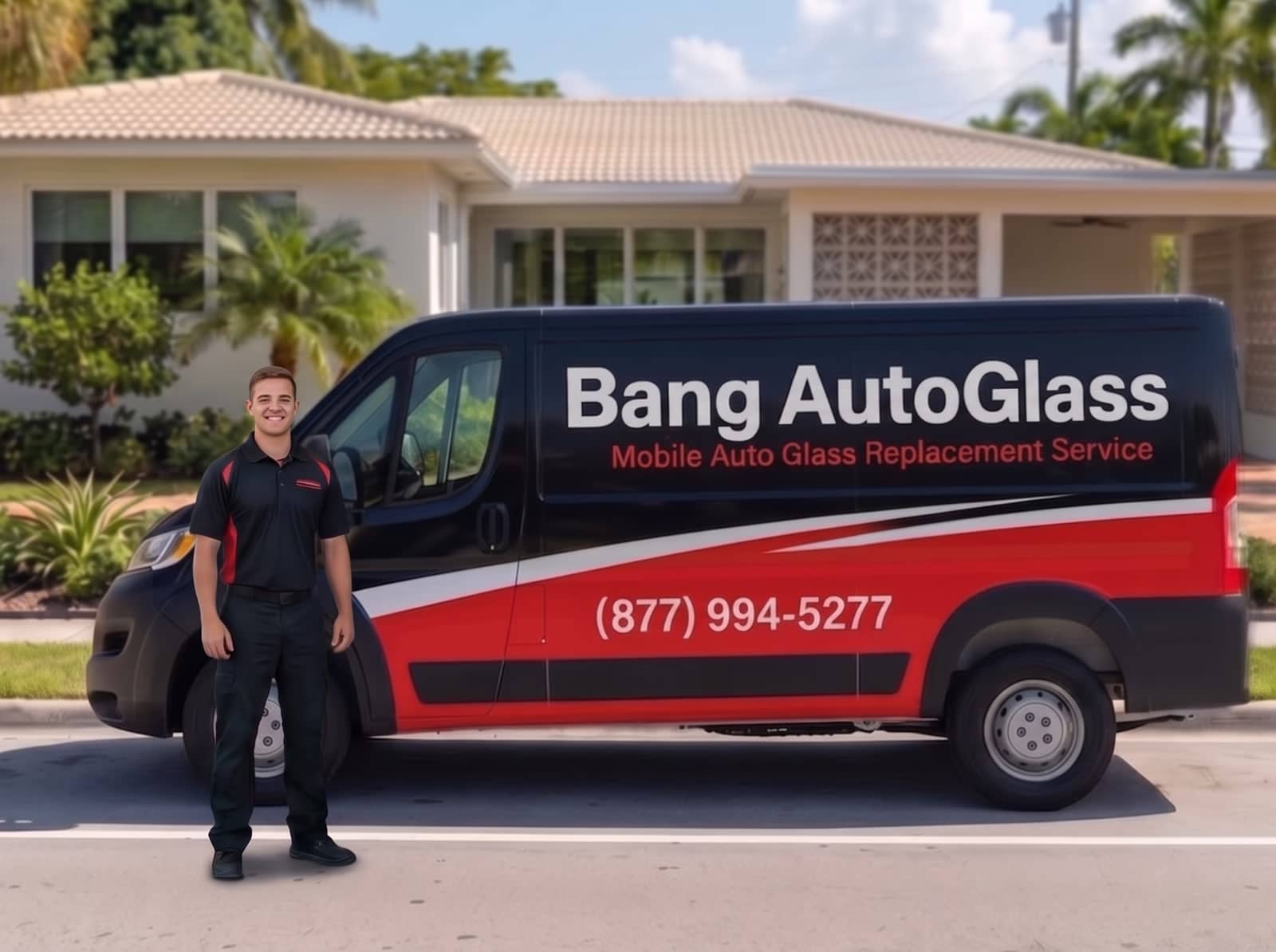
Chevrolet ADAS Calibration
Bang AutoGlass coordinates Chevy Safety Assist and Super Cruise ADAS calibration after windshield service so Forward Collision Alert, Lane Keep Assist, Adaptive Cruise, and Auto Emergency Braking read targets correctly on Silverado, Tahoe, Equinox, and Bolt. Arizona and Florida mobile.
Chevrolet ADAS Calibration: Restoring Precision to Your Vehicle's Safety Systems
Modern Chevrolet vehicles are engineered with some of the most sophisticated Advanced Driver Assistance Systems on the road today, and when those systems fall out of alignment, even by a fraction of a degree, the consequences can range from frustrating false alerts to dangerous failures during critical driving moments. At Bang AutoGlass, we specialize in mobile Chevrolet ADAS calibration services that bring factory-level precision directly to your driveway, garage, or workplace. Whether you drive a Silverado 1500, Equinox, Tahoe, Suburban, Traverse, Malibu, Blazer, Trailblazer, or any other ADAS-equipped Chevy, this guide will walk you through everything you need to know about how calibration works, why it matters, and what to expect when you book your appointment with our team.
What Is Chevrolet ADAS Calibration?
Chevrolet ADAS calibration is the precise technical process of realigning, recalibrating, and reprogramming the cameras, radar sensors, and lidar units that power your vehicle's safety technology. These sensors are the eyes and ears of your Chevy, and they must point at exact angles, see specific reference points, and communicate flawlessly with your onboard computer in order to function as the engineers in Detroit intended. Even the smallest disturbance, such as a windshield replacement, a minor fender bender, a suspension repair, or simply hitting a deep pothole, can knock these sensors out of their preset parameters and require a full recalibration.
Understanding ADAS in Chevrolet Vehicles
Chevrolet integrates ADAS into nearly every modern model through what General Motors calls the Driver Confidence Package and Safety Assist suites. These packages include forward-facing camera systems mounted behind your windshield, radar sensors in your front grille and rear bumpers, ultrasonic parking sensors, and on premium trims like the Silverado High Country or Tahoe Premier, even infrared driver-attention cameras for Super Cruise hands-free driving. Each of these components depends on calibration to operate correctly, and the forward-facing camera behind the windshield is the single most calibration-sensitive component of all.
Why Calibration Is Critical After Windshield Replacement
Your Chevrolet's forward-facing camera sits directly behind the windshield glass, and it is aimed through a specific optical zone designed by GM engineers. When the windshield is replaced, even with a perfect installation, the camera's view through the glass changes ever so slightly due to manufacturing tolerances in the new windshield, the thickness of the urethane adhesive, and the position of the bracket relative to the camera. Without recalibration, your Chevy may misjudge distances, fail to detect pedestrians, brake at the wrong time, or drift out of lane assist accuracy.
Chevrolet ADAS Features That Require Calibration
Chevy vehicles include a wide range of driver-assistance features, and most of them rely on properly calibrated sensors to function. Below are the primary features that demand recalibration whenever the windshield is replaced or the camera assembly is disturbed.
Forward-Facing Camera Systems
The forward-facing camera is the backbone of nearly every Chevrolet ADAS feature. Mounted at the top center of the windshield, it monitors lane markings, traffic signs, pedestrians, cyclists, and vehicles ahead. After any windshield replacement on a Chevy Silverado, Equinox, Tahoe, or Traverse, this camera must be statically calibrated, dynamically calibrated, or both, depending on the model year and trim level.
Front Pedestrian Braking and Forward Collision Alert
Chevrolet's Front Pedestrian Braking and Forward Collision Alert systems use both the forward camera and radar fusion data to detect imminent collisions. If calibration is even slightly off, your Chevy may apply emergency braking when there is no threat, or worse, fail to brake when a real hazard appears.
Lane Keep Assist with Lane Departure Warning
Lane Keep Assist gently steers your Chevy back into its lane when it detects unintentional drift. This system reads painted lane lines through the forward camera, and a miscalibrated camera can cause your steering wheel to tug at the wrong moments or ignore lane departures entirely.
Adaptive Cruise Control
Adaptive Cruise Control on Chevrolet vehicles uses radar combined with camera data to maintain a safe following distance. Calibration ensures your Chevy correctly identifies the vehicle ahead, the lane it occupies, and the closing speed needed to slow down smoothly.
Super Cruise Technology
On Chevrolet Bolt EUV, Silverado, Tahoe, Suburban, and Blazer EV models equipped with Super Cruise, hands-free driving depends on an even more demanding set of calibrations. Super Cruise uses lidar map data, a driver-attention infrared camera, and the forward camera in tandem, and all three must be perfectly aligned for the system to engage on compatible roads.
Types of ADAS Calibration for Chevrolet Vehicles
Not every Chevy uses the same calibration procedure. General Motors specifies different methods depending on the model, year, and ADAS package installed in your vehicle.
Static Calibration
Static calibration is performed in a controlled environment using precisely positioned targets, calibration boards, and laser-aligned floor mats. The vehicle must remain stationary on a perfectly level surface while specialized scan tools communicate with the camera and walk it through a target-recognition sequence. Many Chevy models, including the Silverado HD, Tahoe, Suburban, and Traverse, require static calibration following a windshield replacement.
Dynamic Calibration
Dynamic calibration is performed by driving the vehicle on a well-marked road at specific speeds, under specific lighting conditions, while a scan tool is connected to the OBD-II port and recording sensor input in real time. Models like the Chevy Equinox, Trax, Malibu, and certain Silverado trims rely on dynamic calibration to reset their forward-facing cameras.
Dual Calibration Procedures
Some Chevrolet models, particularly newer Silverado 1500, Tahoe, Suburban, and Blazer trims, require both static and dynamic calibration in sequence. The static portion sets the baseline angles, and the dynamic portion verifies real-world recognition of lane lines and traffic. Skipping either step can leave the system flagged with persistent fault codes.
When Does Your Chevrolet Need ADAS Calibration?
Calibration is not a maintenance item you schedule on a calendar. It is triggered by specific events that physically or digitally disturb your sensors.
After Windshield Replacement
This is the most common trigger and the reason most Bang AutoGlass customers book a Chevrolet ADAS calibration with us. Anytime the windshield is removed and reinstalled, the camera behind it shifts, and recalibration becomes mandatory to restore factory functionality.
Following a Collision or Body Repair
Even minor front-end collisions can knock the radar sensor in your Chevy's grille out of alignment, or shift the camera bracket attached to the windshield. After any body shop work involving the front bumper, fenders, or windshield surround, ADAS calibration should be performed.
After Suspension or Wheel Alignment Work
Many people don't realize that changing your Chevy's ride height through new struts, lifted suspensions on a Silverado, or even a four-wheel alignment can change the angle at which your forward camera looks at the road. Whenever the thrust angle changes, the camera's reference plane changes with it.
When Dashboard Warning Lights Appear
If your Chevrolet dashboard displays warnings such as Service Front Camera, Service Lane Keep Assist, Service Forward Collision System, or Service Adaptive Cruise Control, that is your vehicle telling you that calibration has been lost and the safety features have been disabled until recalibration is completed.
Chevrolet Models We Service for ADAS Calibration
Bang AutoGlass is equipped to perform mobile ADAS calibration on virtually every modern Chevrolet model on the road. Below are some of the most common vehicles we work on and the calibration nuances unique to each.
Chevrolet Silverado ADAS Calibration
The Silverado 1500, 2500HD, and 3500HD are among the most ADAS-rich pickups GM produces. Higher trims like the LTZ, High Country, and ZR2 include forward camera, front and rear radar, blind spot monitoring, rear cross traffic alert, trailering camera systems, and on select trims, Super Cruise. Silverado calibrations almost always require both static and dynamic procedures, and the ride height of the truck must be confirmed before any calibration begins.
Chevrolet Equinox ADAS Calibration
The Equinox is one of the most popular Chevy crossovers we calibrate, and the procedure is typically dynamic-only for model years 2018 and newer. After a windshield replacement on an Equinox, a road drive of approximately 15 to 30 minutes is usually required to relearn lane markings and bring the forward camera back into spec.
Chevrolet Tahoe and Suburban ADAS Calibration
These full-size SUVs share platforms and ADAS architectures. Tahoe and Suburban calibrations involve static targets for the forward camera and dynamic confirmation for the radar fusion system. Models with Super Cruise add an additional layer of map verification and driver-attention camera calibration.
Chevrolet Traverse ADAS Calibration
The Traverse uses a hybrid calibration approach where static targets are placed in front of the vehicle and then a dynamic road drive finishes the process. Higher trims with the Surround Vision system also require camera angle verification on all four corners.
Chevrolet Malibu, Trax, Trailblazer, and Blazer ADAS Calibration
These car and crossover models generally use dynamic calibration for the forward-facing camera, though the Blazer EV and newer Trailblazer trims may require static procedures depending on the ADAS package installed at the factory.
Our Mobile Chevrolet ADAS Calibration Process
Because Bang AutoGlass is a fully mobile service, we bring calibration capability directly to you. Here is how a typical Chevrolet ADAS calibration appointment unfolds.
Pre-Calibration Inspection
Before we begin, our technician verifies tire pressure, fuel level, ride height, and overall vehicle condition. Chevrolet specifies very particular pre-calibration requirements, and skipping these steps can produce inaccurate results.
Specialized Equipment and OEM-Quality Targets
We use professional-grade calibration rigs, laser alignment tools, and OEM-quality target boards designed to match GM service specifications. Every windshield we install is manufactured to OEM-quality standards, ensuring the optical zone is properly suited for camera function.
Post-Calibration Verification
After the calibration procedure is complete, we run a final scan of all relevant ADAS modules to confirm no fault codes remain and that every feature your Chevy left the factory with is once again fully operational.
Why Choose Bang AutoGlass for Chevrolet ADAS Calibration?
When it comes to something as important as your family's safety, the shop you choose matters. Here is what sets our team apart from typical auto glass and calibration providers:
- We are a fully mobile service, meaning we come to your home, office, or wherever your Chevy is parked, saving you a trip to a shop and hours of waiting around
- Most glass replacements take only 30 to 45 minutes to complete, followed by a 1-hour adhesive cure time before driving
- We offer next-day appointments so you don't have to wait a week or longer to get back on the road safely
- Every replacement includes a lifetime workmanship warranty that protects you against installation defects for as long as you own your Chevy
- We use OEM-quality materials on every job, ensuring your forward-facing camera looks through glass that meets the optical clarity standards required for accurate ADAS function
- Our technicians are trained on Chevrolet-specific calibration procedures and equipped with the scan tools and targets needed to complete the job correctly the first time
Insurance Coverage for Chevrolet ADAS Calibration
Most comprehensive auto insurance policies in the United States cover windshield replacement and the associated ADAS calibration on Chevrolet vehicles. In many cases, calibration is billed as a separate line item from the glass replacement itself, and insurance carriers recognize that the calibration is required by GM for the vehicle's safety systems to function. If you haven't already filed your claim, our team is happy to walk you through the process and provide assistance every step of the way. We help you with the insurance claim from start to finish and make the process as smooth as possible.
Risks of Skipping Chevrolet ADAS Calibration
Some drivers wonder whether ADAS calibration is truly necessary or whether it can be put off to save time. The answer from both General Motors and automotive safety researchers is unequivocal: calibration is not optional. Skipping it puts you and everyone in your vehicle at risk in several measurable ways:
- Forward Collision Alert may fail to warn you of an imminent crash, eliminating precious reaction time
- Automatic Emergency Braking may activate too late or not at all, increasing the severity of an impact
- Lane Keep Assist may steer you toward danger instead of away from it, particularly on curves or near construction zones
- Front Pedestrian Braking may not recognize people in your path, especially in low light
- Super Cruise will refuse to engage if calibration is incomplete, removing one of the premium features you paid for
- Insurance liability can shift to the vehicle owner if an accident occurs and calibration was knowingly skipped after a covered repair
Schedule Your Chevrolet ADAS Calibration Today
Whether you just had a windshield replaced, recently completed a body repair, or your Chevy is throwing service warnings on the dashboard, Bang AutoGlass is ready to restore your vehicle's safety systems to factory precision. Our mobile technicians bring everything needed to complete your Chevrolet ADAS calibration right where you are, and our combination of next-day availability, OEM-quality materials, and a lifetime workmanship warranty makes us the smart choice for drivers who care about both convenience and quality. Contact us today using the form above to book your appointment, and let our team get your Chevy seeing the road clearly again.
Chevrolet ADAS Calibration — common questions
What is ADAS calibration and why does my Chevrolet need it?
ADAS (Advanced Driver Assistance Systems) calibration ensures your Chevrolet's safety cameras, sensors, and features like lane-keeping assist and automatic braking work accurately after windshield replacement. Without recalibration, these systems may not function properly.
How long does Chevrolet ADAS calibration take?
ADAS calibration typically takes about 15-30 minutes and is performed at the same time as your windshield replacement. The total visit, including the windshield work and adhesive set time, is roughly 1.5-2 hours.
Is Chevrolet ADAS calibration covered by insurance?
ADAS calibration is included in your windshield replacement service at no additional charge. If comprehensive insurance covers your windshield, it covers the calibration as well, and you may have nothing out of pocket.
What Chevrolet models require ADAS calibration?
Most Chevrolet models from 2018 onward with safety camera systems require ADAS calibration after windshield replacement. Our technician will confirm whether your specific vehicle needs it when you book.
Where we do Chevrolet auto glass
Bang AutoGlass is a mobile auto glass company serving Arizona and Florida. We don't have a shop you drive to — we come to your home, your job, or wherever the car is sitting, with next-day appointments in most areas. In Arizona that means the whole Valley — Phoenix, Mesa, Scottsdale, Chandler, Gilbert, Tempe, Glendale and out to Tucson and Prescott. In Florida we cover Tampa Bay, Orlando and Miami, from St. Petersburg and Clearwater across to Kissimmee, Winter Park and Fort Lauderdale.
Browse every city we serve in Arizona and Florida, or read how coverage works under Arizona's glass statutes and Florida's § 627.7288.
Mobile auto glass — cities we serve
4.8★ on Google · 350+ reviews from AZ & FL drivers
“I needed my windshield replaced and they made the entire process easy. Bang AutoGlass is the best!”
“Top-notch auto glass service. They handled my windshield replacement quickly and professionally.”
“Bang AutoGlass made my windshield replacement simple from start to finish.”
Need Chevrolet ADAS Calibration?
We come to you across Arizona and Florida — often $0 with insurance.
We reply within minutes during business hours.