Why Ford Focus Auto Glass Deserves a Closer Look
The Ford Focus has earned a reputation as one of the most versatile compact cars on the road. Whether you're driving a base-trim sedan, a sporty ST hatchback, or a premium electric variant, every Focus depends on its glass for far more than just visibility. Your windows and windshield contribute to cabin structural integrity, weather sealing, safety system performance, and even noise insulation. When damage appears — a chip in the windshield, a shattered door window, a cracked rear glass — knowing exactly what you're dealing with makes all the difference between a quick fix and a costly mistake.
This complete guide walks through every glass panel on the Ford Focus, explains the difference between laminated and tempered glass, covers the safety technologies tied to the windshield, and helps you understand when repair is an option and when full replacement is the right call.
Laminated vs. Tempered Glass: The Foundation of Everything
Before diving into each specific panel, it helps to understand the two types of auto glass used across the Ford Focus — because the type determines what can be repaired, what must be replaced, and how each piece behaves when damaged.
Laminated Glass
Laminated glass is made from two layers of glass bonded together with a PVB (polyvinyl butyral) interlayer sandwiched in between. This construction means that when it cracks, the glass stays in place rather than shattering. The windshield on every Ford Focus is laminated. Some premium or EV-variant side glass may also be laminated, but this varies by trim and model year. Because laminated glass holds together after impact, small chips and short cracks can sometimes be repaired without replacing the entire pane — but only when the damage meets specific criteria.
Tempered Glass
Tempered glass is processed with heat to create internal stress, making it several times stronger than standard glass under normal conditions. When it does break, it shatters into small, blunt cubes rather than sharp shards — a deliberate safety feature. The door windows, rear glass, and quarter glass on a Ford Focus are all tempered. Because of how tempered glass fractures, it cannot be repaired. Any crack, chip, or break means the entire panel must be replaced.
Ford Focus Windshield: The Most Complex Panel on the Car
The windshield is the most technically involved piece of glass on your Focus. It's laminated, structurally bonded to the body with urethane adhesive, and on many model years it serves as the mounting point for one or more advanced safety systems.
When a Chip Can Be Repaired
A chip or small crack in the windshield doesn't automatically mean replacement. Repair is typically possible when the damage is small, located away from the driver's primary line of sight, not at the edge of the glass, and hasn't spread or contaminated with debris. A trained technician can inject a clear resin into the damaged area to restore structural integrity and improve clarity. However, if a chip is too large, too close to the edge, or directly in the driver's sightline, replacement is the safer and often required course of action.
ADAS Camera Calibration: A Critical Step
Many Ford Focus vehicles — particularly those from the mid-to-late 2010s onward — are equipped with a forward-facing ADAS (Advanced Driver Assistance Systems) camera mounted at the top center of the windshield. This camera powers features like automatic emergency braking, lane-keep assist, and adaptive cruise control. Because the camera is physically coupled to the windshield, replacing the glass disturbs its precise angle and position.
After any windshield replacement on an ADAS-equipped Focus, recalibration is required. Depending on the trim and model year, this may involve static calibration — where the vehicle is parked in a controlled environment with manufacturer-spec target boards and a diagnostic scan tool — dynamic calibration, where a technician drives the vehicle at set speeds while the system relearns, or in some cases both methods. Skipping calibration doesn't just leave a warning light on; it can cause safety systems to respond incorrectly or not at all. The method required varies by model year and trim, so a proper assessment is essential before the job is complete.
Calibration does add a short amount of time to the overall service visit, but it's a non-negotiable step for any ADAS-equipped vehicle.
Sensor Pads, Solar Coatings, and Other Windshield Features
The Ford Focus windshield can carry several other features depending on trim and model year. A rain-sensing wiper system relies on an optical sensor that couples to the glass through a single-use gel pad. That pad must be replaced every time the windshield is replaced — reusing the old pad can cause automatic wipers and headlights to malfunction. Some Focus trims also use a solar or IR-reflective coating in the windshield that helps block heat and UV rays — a genuine benefit in warm-weather climates. Replacement glass must match the original's solar or IR coating to preserve that performance. A plain substitute can cause noticeably more heat buildup inside the cabin.
Replacement windshield glass must match all of these original specifications. That's exactly why OEM-quality materials and precise fitment matter — a glass panel that doesn't account for your trim's specific features can compromise comfort, safety, or both.
Ford Focus Door Glass: Tempered, Functional, and Easily Overlooked
The front and rear door windows on the Ford Focus are tempered and are raised and lowered by an electric window regulator. When a door window breaks — whether from a collision, vandalism, or a sudden fracture — the entire pane must be replaced. There is no repair option for tempered glass.
The Regulator vs. the Glass
It's worth noting that a window that won't go up or down isn't always a glass problem. A failed window regulator — the mechanical assembly that drives the glass — is a common culprit. When a technician assesses your door window, they'll determine whether the glass itself is damaged or whether the regulator is the source of the issue. Sometimes it's both, especially after an impact or a forced entry.
Frameless Windows on Sport Trims
The Focus ST and certain hatchback body styles use frameless door glass — windows that lack a surrounding metal frame and instead rely on precise tolerances and door seals to create a weather-tight closure. Frameless windows often feature an "auto-drop" mechanism that lowers the glass slightly when the door opens to clear the seal, then raises it again when the door closes. Replacement glass for these trims must match the original profile exactly, and the auto-drop system may require adjustment after installation. This is another example of why trim-specific fitment is critical rather than a generic substitute.
Rear Glass on the Ford Focus: More Than Just a Back Window
The rear window on a Ford Focus is tempered and bonded directly to the body. Like all tempered glass, it cannot be repaired — any damage means a full replacement. But the rear glass on most Focus vehicles carries important embedded features that make the replacement process more involved than it might appear.
Defroster Grid and Antenna
Look closely at the inside of your rear window and you'll see thin printed lines running across the surface. These are the defroster grid, bonded directly to the glass. On many Focus vehicles, the AM/FM radio antenna is also integrated into this same grid of lines. Replacement rear glass must include matching defroster and antenna connections, or you'll lose rear defrost capability and potentially your radio signal. A technician will reconnect these circuits carefully as part of the installation process.
Rear Wiper and Third Brake Light
On Focus hatchback and wagon variants, the rear glass may incorporate a wiper mount and a third brake light. The replacement glass must account for these features and the associated seals and trim. On sedan models the configuration is different, so the replacement part varies by body style — another reason that a proper vehicle assessment matters before ordering glass.
Quarter Glass: Small Panel, Specific Fitment
Quarter glass refers to the small fixed panes located behind the rear doors on four-door sedans, or at the rear corners of hatchback and wagon body styles. On the Ford Focus, these panels are tempered and cannot be repaired — damage of any kind means replacement.
Quarter glass is typically either bonded in place with urethane (encapsulated) or set into a rubber gasket or trim channel, depending on the body style and position. Encapsulated panels often come with the surrounding trim molding already attached as a single unit. Getting the installation method right — and using the correct part for the specific body style and position — prevents leaks, rattles, and fitment problems down the road. This is one of those panels that looks simple from the outside but requires careful, precise work.
Sunroof and Panoramic Roof Glass: When the View Gets Complicated
Some Ford Focus trims, particularly higher-spec variants, are equipped with a sunroof or moonroof. These panels are typically laminated and bonded to the roof structure. While a single-panel sunroof is relatively straightforward compared to a large panoramic setup, both require careful handling because of the bonding and sealing involved.
If your sunroof glass is cracked or shattered, it should be replaced promptly. A compromised roof panel exposes the interior to weather, weakens the roof's structural contribution, and — depending on the damage — can create a wind noise issue at highway speeds. Replacement glass must match the original dimensions and any tinting or coating applied from the factory.
It's also worth checking the rubber seals and corner drains whenever sunroof work is performed. These are the most common sources of sunroof leaks, and addressing them at the same time as a glass replacement prevents future water intrusion.
Signs It's Time to Replace Your Ford Focus Auto Glass
Across all the glass panels on your Focus, there are several clear indicators that replacement — not a wait-and-see approach — is the right move.
- Spreading cracks: A crack that grows over time, especially with temperature changes or road vibration, will not stop on its own. Once it reaches the edge of the glass or enters the driver's sightline on the windshield, repair is no longer viable.
- Shattered or missing glass: Any tempered panel that has broken needs immediate replacement. Driving with open window openings exposes the interior to weather and is a security risk.
- Edge damage: Chips or cracks at the very edge of any glass panel compromise the bond between the glass and the vehicle body and almost always require replacement.
- Distortion or delamination: If the windshield shows visible distortion, hazing, or separation between layers (often appearing as a milky or bubbled edge), it has reached the end of its service life and needs replacing.
- Compromised seals: Water leaking around a window or sunroof after rain indicates a failed seal. Left unaddressed, this leads to interior water damage, mold, and electrical issues.
- Obstructed sensors: If your rain sensor, ADAS camera, or other sensor-dependent feature starts behaving erratically, damaged or improperly installed glass may be contributing to the problem.
What to Expect from a Mobile Glass Replacement Service
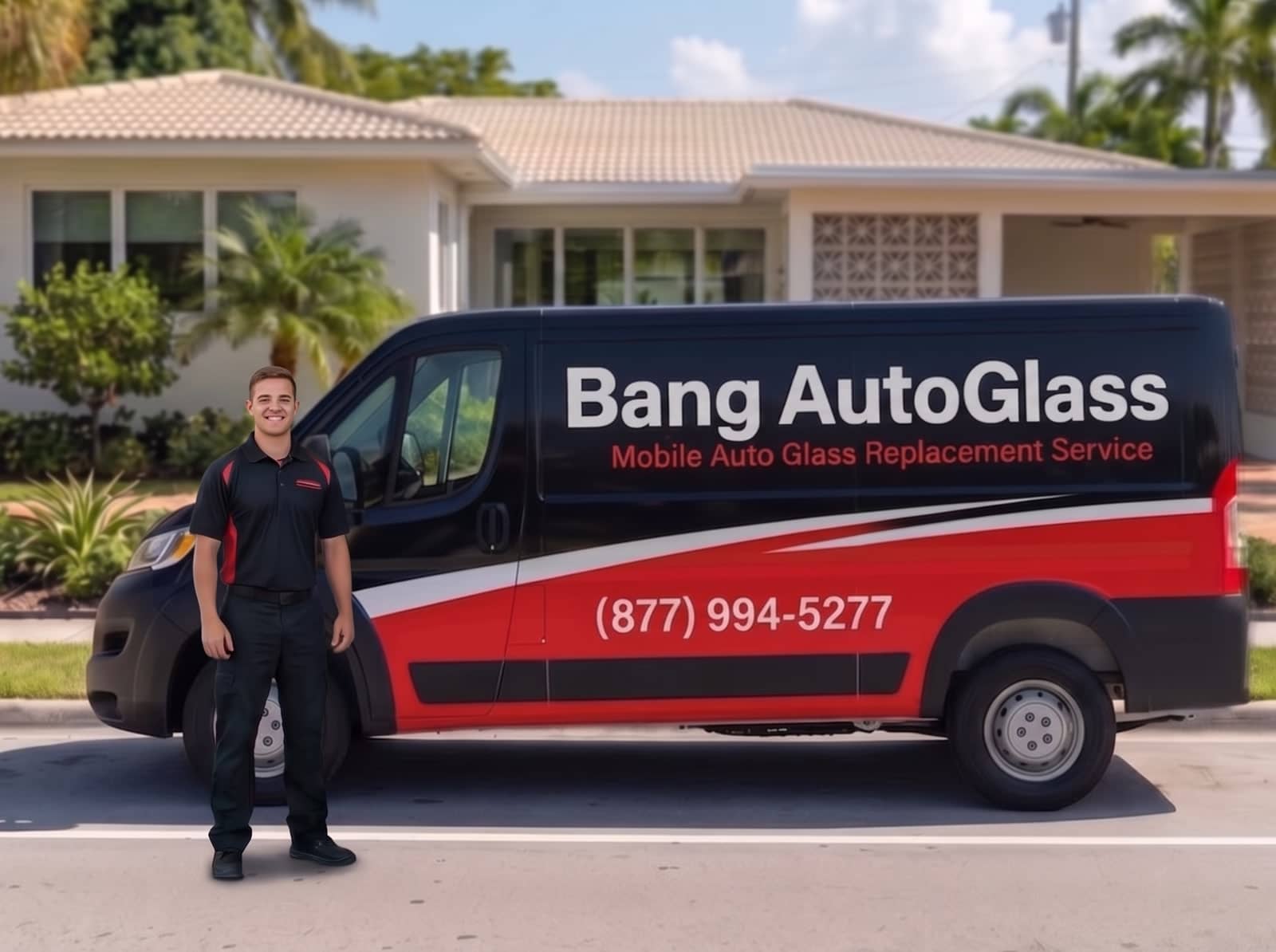
One of the most common questions Focus owners have is what the actual service experience looks like. Bang AutoGlass offers mobile service in Arizona and Florida, meaning a certified technician comes to you — at home, at work, or at the roadside — with all the tools and materials needed to complete the job on-site.
The Replacement Process
For a windshield replacement, the old glass is carefully removed, the pinch weld is cleaned and prepped, and fresh urethane adhesive is applied before the new OEM-quality glass is set in place. Sensor pads, trim clips, and any camera brackets are reinstalled during this process. Most replacements take approximately 30 to 45 minutes for the glass installation itself.
Adhesive Cure Time
After the new glass is bonded in place, the urethane adhesive needs time to cure before the vehicle is driven. This typically takes about one hour, though the exact safe-drive-away time can vary based on the adhesive used, temperature, and humidity. A technician will let you know when it's safe to get back on the road. Planning for this window of time ensures the bond sets properly and your glass performs as it should.
ADAS Calibration Timing
On Focus vehicles equipped with a forward-facing ADAS camera, calibration is performed after the windshield is installed and the adhesive is set. This adds a short amount of time to the overall visit but is completed on-site where conditions allow, or arranged as a follow-up step depending on the calibration method required for your specific vehicle.
Scheduling, Insurance, and the Warranty That Comes With Every Job
- Book your appointment: Next-day appointments are available when possible, so you won't be waiting long to get your Focus back to full condition. The scheduling process is straightforward — just provide your vehicle's year, model, and trim so the right glass can be sourced for your specific configuration.
- Check your insurance coverage: Many comprehensive auto insurance policies cover auto glass replacement, sometimes with no out-of-pocket cost depending on your deductible. Our team is happy to assist you with the insurance claim process — we'll help you understand what information to gather and how to work through the process, so it's as smooth as possible.
- Understand what's covered: Every replacement performed by Bang AutoGlass comes with a lifetime workmanship warranty. If there's ever an issue with the installation — a leak, a rattle, or a fitment problem — it's covered. We use OEM-quality glass and materials on every job, so the fit, performance, and appearance match what came on your Focus from the factory.
OEM-Quality Glass and Precise Fitment: Why It Matters for Your Focus
It can be tempting to treat auto glass as a commodity — glass is glass, right? For a vehicle like the Ford Focus, with its range of trims, body styles, and sensor-laden configurations, that assumption can lead to real problems. A windshield that lacks the correct solar coating will let more heat into the cabin. A rear window without the correct antenna connections will affect your radio reception. A door glass cut for the wrong body style won't seal properly and will create wind noise. A windshield that doesn't include the correct camera bracket will result in an improperly aimed ADAS camera, even after calibration.
OEM-quality glass sourced to match your specific Focus ensures that every feature works the way Ford designed it to. That's not just about comfort — it's about safety, reliability, and getting the full value out of a vehicle you depend on every day.
Get Your Ford Focus Auto Glass Replaced the Right Way
Whether it's a chip in the windshield, a shattered door window, a cracked rear glass, a damaged quarter pane, or a broken sunroof panel, every piece of glass on the Ford Focus has a specific role to play. Understanding what's involved — the glass type, the embedded features, the safety systems, and the proper installation process — puts you in the best position to make a confident decision when damage happens.
With mobile service that comes to you, OEM-quality materials, a lifetime workmanship warranty on every installation, and a team ready to help you navigate your insurance coverage, getting your Focus back to its best condition is simpler than you might expect.