Why Hyundai Ioniq Auto Glass Deserves a Closer Look
The Hyundai Ioniq — whether you drive the hybrid, plug-in hybrid, or fully electric variant — is a vehicle built around efficiency, technology, and driver safety. That engineering extends to every pane of glass on the car. From the windshield's role as the anchor point for advanced driver-assistance systems to the rear glass that carries your defroster grid and antenna, each panel serves a specific structural and functional purpose.
When one of those panels is damaged, understanding what type of glass it is, what features it contains, and what replacement actually involves helps you make the right decision quickly and confidently. This guide walks through every major glass surface on the Ioniq — windshield, door glass, rear glass, quarter glass, and sunroof — covering how each is constructed, what distinguishes a proper replacement, and the signs that it's time to stop waiting and schedule service.
Two Types of Auto Glass: Laminated vs. Tempered
Before diving into each panel, it helps to understand the two glass technologies used in modern vehicles, because they behave very differently when damaged.
Laminated Glass
Laminated glass is made from two layers of glass bonded together by a polyvinyl butyral (PVB) interlayer. When it breaks, the interlayer holds the shards in place — the glass cracks but stays largely intact as a sheet. Your windshield is always laminated. Because the structure holds together, small chips and certain short cracks in laminated glass can sometimes be repaired rather than replaced. However, if a chip is in the driver's direct line of sight, if a crack has spread significantly, or if the structural integrity of the glass is compromised, replacement is the appropriate choice.
Tempered Glass
Tempered glass is heat-treated to be many times stronger than standard glass in everyday conditions. When it does break, it shatters into small, relatively blunt cubes rather than sharp shards. Door glass, rear glass, and most quarter glass on the Ioniq is tempered. Because tempered glass cannot be repaired — the tempering process cannot be reversed or replicated on a damaged pane — any break means replacement.
Knowing which type of glass you're dealing with immediately tells you whether a repair conversation is even on the table.
Hyundai Ioniq Windshield: The Most Complex Panel
The windshield is the most technologically dense piece of glass on your Ioniq, and replacing it correctly requires attention to several overlapping systems.
ADAS Forward Camera and Recalibration
Many Ioniq trims — particularly those from the mid-to-late 2010s onward and especially the Ioniq Electric — include a forward-facing ADAS (Advanced Driver-Assistance Systems) camera mounted at the top-center of the windshield, behind the rearview mirror bracket. This camera is the eye behind features like lane-keeping assist, automatic emergency braking, adaptive cruise control, and forward collision warning.
When the windshield is replaced, that camera is removed and remounted. Because even a fraction of a degree of misalignment can cause the system to behave incorrectly, recalibration is required after every windshield replacement on an ADAS-equipped Ioniq. Depending on your specific trim and model year, calibration may be performed statically (the vehicle is parked while technicians use manufacturer-specified target boards and a scan tool to align the camera), dynamically (a technician drives the vehicle at certain speeds while the camera relearns), or a combination of both. Skipping this step is not an option — a miscalibrated camera can generate false alerts, fail to detect hazards, or cause the system to disengage unexpectedly.
Calibration adds a short amount of time to the overall appointment, but it is a non-negotiable part of restoring your vehicle to factory safety standards.
Rain Sensor and Optical Gel Pad
If your Ioniq is equipped with automatic wipers, there is a rain-sensing module mounted behind the mirror that couples to the glass through a single-use optical gel pad. This gel pad must be replaced during every windshield swap. Reusing the old pad degrades the optical connection, which commonly causes the auto-wiper system to behave erratically — running constantly, not running at all, or giving false readings. A proper replacement always includes a fresh gel pad.
Solar and IR-Reflective Coating
The Ioniq's windshield on many trims includes a solar or infrared-reflective coating that reduces heat buildup inside the cabin. In the sun-drenched climates where this vehicle is commonly driven, this coating makes a genuine difference in cabin comfort and reduces the load on the climate system. Replacement glass must match this specification — a standard uncoated windshield will not provide the same thermal protection, and over time that matters for both comfort and the efficiency that makes the Ioniq what it is.
When to Replace the Ioniq Windshield
Repair may be possible for a small chip that is away from the driver's sightline, away from the edges of the glass, and free of contamination. In most other scenarios, replacement is the right answer. Key replacement indicators include:
- Any crack longer than a few inches, or a crack that has spread from a chip
- Chips or cracks in the driver's direct line of sight
- Damage at or near the edges of the windshield, which affects the structural bond
- Damage behind or directly adjacent to the ADAS camera mount
- Pitting or hazing from road debris that impairs visibility
- Moisture intrusion between the glass layers, visible as clouding or bubbling
Hyundai Ioniq Door Glass: Front and Rear
The door glass on the Ioniq is tempered and lives inside a framed door. Because it is tempered, there is no repair option — a cracked or shattered door window requires a full replacement of that pane.
How Door Glass Is Mounted
The glass rides on a window regulator — a mechanical assembly that raises and lowers the pane when you press the window switch. It is worth noting that when a window refuses to move or becomes stuck, the problem is often a failed regulator rather than the glass itself. A thorough diagnosis determines whether the glass, the regulator, or both need attention before the job is quoted.
Acoustic Glass on Higher Trims
Some Ioniq trims — particularly the Electric and upper hybrid configurations — use acoustic laminated glass in the front door windows rather than standard tempered glass. Acoustic glass features a tri-layer PVB interlayer that dampens wind and road noise, contributing to the notably quiet cabin the Ioniq Electric is known for. If your vehicle has this feature, replacement glass must match the acoustic specification. Installing standard tempered glass in its place will noticeably raise cabin noise levels and will not restore the experience the vehicle was designed to deliver.
If you are unsure whether your specific Ioniq has acoustic front door glass, the best approach is to have a technician verify by trim and model year before glass is ordered.
Hyundai Ioniq Rear Glass: More Than Just a Window
The rear windshield on the Ioniq is tempered and bonded to the body. Like all door and rear glass, it cannot be repaired — any crack or break means replacement. But the rear glass is more than a simple pane; it carries several integrated features that the replacement glass must match exactly.
Defroster Grid
The defroster grid is printed directly onto the inner surface of the rear glass. This grid is powered through connector clips bonded to the glass. When the rear glass is replaced, the new pane must include the same grid layout and compatible connectors to restore defroster function. A replacement that does not match the original grid pattern or connector placement will leave your rear defroster inoperative.
Integrated Antenna
On many Ioniq configurations, the radio antenna is integrated into the defroster grid or printed separately on the rear glass. Replacement glass must include this antenna element and must be connected properly to restore FM/AM and, in some cases, other antenna-dependent features. Missing or improperly connected antenna wiring means reduced or lost radio reception after the job.
Rear Wiper
Depending on trim level, the Ioniq may be equipped with a rear wiper. The replacement glass must include the correct mounting provisions for the wiper arm and the third brake light integration, where applicable. Fitment here is not cosmetic — it affects both visibility and safety system function.
Hyundai Ioniq Quarter Glass: Small Panel, Important Details
Quarter glass refers to the small fixed panes located near the rear of the vehicle — typically behind the rear doors and ahead of the rear pillar. On the Ioniq, these are tempered panes that are either bonded into the body with urethane (in which case they often come pre-assembled with their surrounding trim molding) or set in a gasket or trim channel.
Because quarter glass is fixed and structural — it contributes to the rigidity of the rear body section — correct bonding and sealing during replacement is important. An improperly set quarter glass can allow water intrusion, whistle at highway speeds, or eventually work loose from the body. Replacement should always use the correct urethane or gasket approach that matches the original installation method for that specific panel.
Hyundai Ioniq Sunroof Glass: Single-Panel and Panoramic Considerations
Depending on trim level and model year, the Ioniq may be equipped with a single-panel sunroof or a larger panoramic glass roof. Both configurations use laminated glass — the same layered construction as the windshield — rather than tempered glass, which makes them more resistant to shattering into the cabin but still vulnerable to chips, cracks, and seal failures.
When Sunroof Glass Needs Replacement
Sunroof glass is generally replaced rather than repaired, because even a small crack tends to spread due to the thermal cycling the roof experiences — heating dramatically in direct sun and cooling when the vehicle sits in the shade or air conditioning runs. Structural integrity matters here because the roof glass is directly above occupants.
Seals and Drainage
A common sunroof problem that is not glass damage is a leak caused by degraded rubber seals or blocked drainage channels at the corners of the sunroof frame. If water is getting into your Ioniq's cabin through the roof, glass replacement may not be the solution — the seals and drains should be inspected first. When glass replacement is performed, seals and drainage should be inspected as part of the service.
OEM-Quality Glass: Why Fitment Precision Matters on the Ioniq
The Hyundai Ioniq is a vehicle where glass specification and fitment precision are not optional extras — they are essential. A windshield that lacks the correct solar coating changes the thermal performance of the cabin. A door glass that doesn't match the acoustic spec raises noise in an EV where silence is a selling point. Rear glass without the correct antenna element cuts off radio reception. A windshield without the right ADAS camera bracket geometry makes accurate recalibration impossible.
Every replacement performed by Bang AutoGlass uses OEM-quality glass and materials — glass manufactured to match the original equipment specifications for your specific Ioniq trim and model year. This is not a cosmetic standard; it is a functional and safety standard. Every replacement also comes backed by a lifetime workmanship warranty, so if any issue related to the installation ever arises, it is covered.
What to Expect During a Mobile Auto Glass Appointment
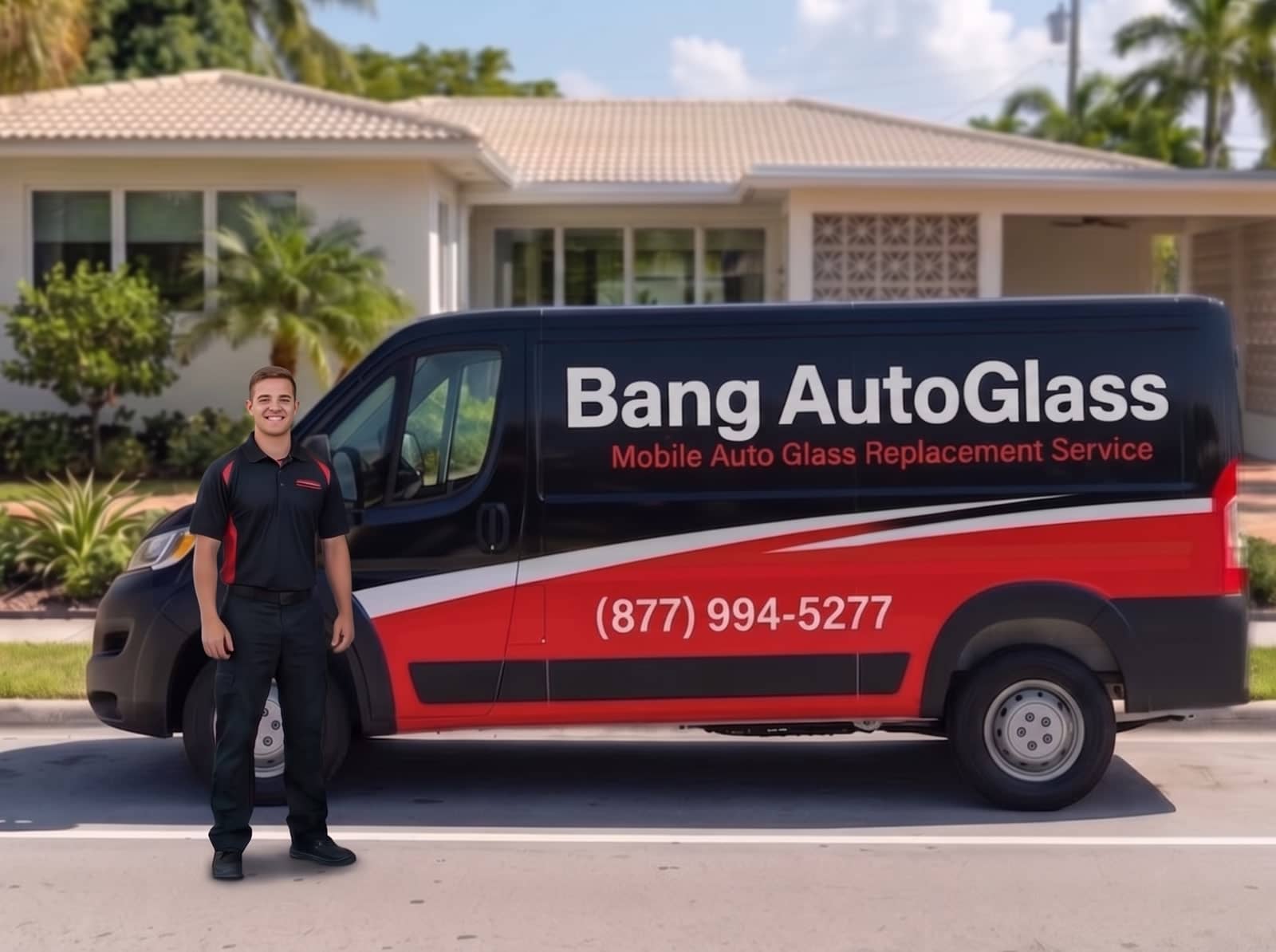
Bang AutoGlass is a mobile service operating in Arizona and Florida, which means a technician comes directly to your location — whether that is your home, your workplace, or wherever your vehicle happens to be — so you never have to arrange a drop-off or wait at a shop.
Appointment Timing
Most auto glass replacements take approximately 30 to 45 minutes for the installation itself. After the new glass is set, the urethane adhesive used to bond the windshield or other bonded panels requires approximately one hour to cure before the vehicle should be driven. This safe-drive-away period is determined by the adhesive chemistry and cannot be rushed — it ensures the glass is properly anchored before the vehicle is back on the road. If your Ioniq requires ADAS camera recalibration after a windshield replacement, the calibration process adds a short amount of additional time to the visit.
Next-day appointments are available when scheduling allows, so damage doesn't have to disrupt your week any longer than necessary.
The Day of Service
When the technician arrives, they will confirm the glass specification against your vehicle's trim and VIN, carefully remove the damaged pane, prepare the bonding surface, install the new OEM-quality glass with the appropriate primer and adhesive, and reconnect all relevant features — defroster connectors, antenna leads, sensor brackets, and any trim pieces. For windshields, the rain sensor optical gel pad is replaced as a standard part of the process. Once the work is complete, everything is inspected before the technician leaves.
Does Insurance Cover Hyundai Ioniq Auto Glass?
Comprehensive auto insurance typically covers glass damage, and depending on your policy and deductible, your out-of-pocket cost can be significantly reduced or even eliminated. Bang AutoGlass works with customers to help them understand their coverage and assists with the claims process — meaning we walk you through what information your insurer needs and support you every step of the way, so the process is as smooth as possible.
If you are unsure whether your policy covers auto glass or what your deductible situation looks like, gathering your insurance declarations page before calling to schedule is a helpful starting point. A number of factors — your deductible, the specific panel being replaced, whether ADAS calibration is involved, and your coverage type — all influence what the final cost picture looks like.
Choosing the Right Service for Your Ioniq
The Hyundai Ioniq is a thoughtfully engineered vehicle, and its glass is part of that engineering. Whether you are dealing with a chipped windshield on your hybrid commuter, a shattered door window on your plug-in, or a cracked sunroof panel on your Ioniq Electric, the right replacement respects the original specifications — acoustic interlayer, solar coating, sensor compatibility, antenna integration, and all.
- Identify the damaged panel — windshield, door, rear, quarter, or sunroof — and note your Ioniq's trim level and model year.
- Determine glass type — laminated (windshield, sunroof, possibly front doors on higher trims) or tempered (most door and rear glass); only laminated glass may be repairable, and only under the right conditions.
- Note any integrated features — ADAS camera, rain sensor, defroster, antenna, HUD, acoustic spec — so the replacement glass can be matched correctly.
- Check your insurance coverage — comprehensive policies often cover auto glass; get your policy details ready before scheduling.
- Schedule mobile service — a technician comes to you, uses OEM-quality glass, and backs the work with a lifetime workmanship warranty.
Understanding what each panel involves puts you in control of the process. When it is time to move forward, the goal is simple: restore your Ioniq's glass to the same standard it left the factory with — safely, correctly, and without unnecessary disruption to your day.