Why Every Pane of Glass on Your Hyundai Kona N Matters
The Hyundai Kona N is a compact performance SUV built for drivers who want sharp handling, spirited acceleration, and a refined cabin — and the glass that surrounds you plays a much bigger role in delivering all of that than most owners realize. From the wide windshield that houses your forward-safety cameras to the sleek rear glass that integrates your defroster and antenna, every pane is engineered for a specific purpose. When one is cracked, chipped, shattered, or fogged, understanding exactly what you're dealing with helps you make the right call quickly and safely.
This guide covers every major glass position on the Kona N: what each piece does, what type of glass it uses, when repair is a viable option versus when full replacement is the only path forward, and what the replacement process actually looks like when a trained technician comes to you.
Laminated vs. Tempered Glass: The Foundation of Everything
Before diving into each glass position, it helps to understand the two types of auto glass and why the distinction matters so much for repair and replacement decisions.
Laminated Glass
Your Kona N's windshield — and potentially the panoramic sunroof panel if equipped — is made from laminated glass. This construction bonds two layers of glass around a polyvinyl butyral (PVB) interlayer. When laminated glass is struck, it cracks but holds together rather than shattering outward. That interlayer is what keeps the windshield intact during a collision and is a critical part of your vehicle's structural safety in a rollover.
Because the glass holds together, small chips and short cracks in a laminated windshield can sometimes be repaired by injecting resin into the damage — restoring structural integrity and clarity without a full replacement. Whether a repair is appropriate depends on the size, depth, location, and type of the damage. Damage in the driver's direct line of sight, damage at the glass edge, or anything larger than a few inches typically calls for full replacement rather than repair.
Tempered Glass
All of the Kona N's door glass, rear glass, and quarter glass are tempered. Tempered glass is heat-treated to be several times stronger than standard glass, but when it does break, it shatters into small, relatively blunt cubes rather than sharp shards. That behavior is intentional — it reduces injury risk in a crash or rollover. The trade-off is that tempered glass cannot be repaired once it's cracked or broken. Replacement is always the answer.
Hyundai Kona N Windshield: Your Most Critical Glass Panel
The windshield does more than block wind. On the Kona N, it's the structural backbone of your vehicle's front-end rigidity, the mounting point for your rearview mirror, and — depending on trim and model year — the home of an ADAS forward-facing camera that powers several of Hyundai's SmartSense driver-assistance features.
ADAS Camera and Recalibration
If your Kona N is equipped with forward collision avoidance, lane-keeping assist, lane departure warning, or adaptive cruise control, those systems rely on a camera mounted at the top-center of the windshield. When the windshield is replaced, that camera must be recalibrated so it accurately reads lane markings, vehicles ahead, and road hazards at the correct distances and angles.
Calibration is performed using manufacturer-specified procedures — either static calibration (the vehicle is parked precisely and alignment targets are placed in front of the camera while a scan tool runs the process) or dynamic calibration (a technician drives the vehicle at set speeds while the system relearns), or a combination of both depending on the vehicle's specific requirements. This step is non-negotiable for safety: a camera that's off by even a small angle can cause the system to misjudge lane positions or braking distances. Calibration does add a short amount of time to the appointment, but it's a critical part of a proper windshield replacement.
The Rain and Light Sensor
Many Kona N trims include automatic wipers that activate when rain is detected. The rain/light sensor sits behind the rearview mirror and couples to the glass through an optical gel pad. That gel pad is a single-use component — it must be replaced every time the windshield is replaced. Reusing it can cause the sensor to malfunction, leading to erratic wiper behavior or automatic headlight faults. A thorough replacement always includes a new gel pad.
Solar and Acoustic Features
Depending on trim and model year, the Kona N's windshield may include a solar or IR-reflective coating that reduces heat buildup in the cabin — a genuinely useful feature given how intense sun exposure can be. Some models also use an acoustic PVB interlayer in the windshield to reduce wind and road noise, contributing to a quieter cabin at highway speeds. Replacement glass must match whichever of these features your original windshield has. Installing a plain substitute can compromise cabin comfort and climate performance — which is exactly why OEM-quality fitment matters.
Hyundai Kona N Door and Side Glass
The Kona N uses framed door glass on its front and rear doors. Door glass is tempered and runs up and down via a window regulator mechanism inside the door panel. If your window has stopped moving up or down, the problem may actually be a failed regulator rather than the glass itself — it's worth having both diagnosed before assuming a full glass replacement is needed.
When Door Glass Needs Replacement
Since door glass is tempered, any crack means replacement — there's no repair option. Common causes include a direct impact from a rock or debris, a break-in attempt, or a door slam with an object caught in the frame. Once shattered, the cubed safety glass will need to be cleared carefully before new glass is installed.
Frameless vs. Framed Door Glass
The Kona N uses conventional framed doors, which means the glass is fully surrounded by a door frame when closed — this is the standard design for most mainstream SUVs and provides good sealing and stability. Some performance coupes and premium models use frameless designs that auto-drop slightly when the door opens, but that's not a concern for the Kona N's design.
Acoustic Side Glass
On certain higher trims or model years, the front door glass may use laminated acoustic glass rather than standard tempered glass — a feature increasingly found on performance-oriented and premium vehicles to reduce road and wind noise. If your Kona N is equipped with this, replacement glass must match that acoustic specification. Your technician can verify the correct glass type for your specific configuration before ordering.
Hyundai Kona N Rear Glass: More Than Just a Window
The rear back glass on the Kona N is a large tempered pane — and like all tempered glass, it cannot be repaired once cracked or broken. But it also carries several integrated features that make the replacement more involved than swapping glass alone.
Defroster Grid and Antenna
The thin lines printed across the inside surface of your rear glass are the defroster grid. This grid heats up when you activate the rear defroster to clear fog, frost, or condensation. On the Kona N, the radio or GPS antenna may also be integrated into this same grid. Replacement glass must match all of these printed features and include the correct electrical connectors. A glass pane that lacks the proper grid pattern or connection points will leave you without a working defroster and potentially without signal.
Rear Wiper
The Kona N's rear hatch includes a rear wiper. During rear glass replacement, the wiper arm and mounting hardware are carefully removed and reinstalled. If the wiper itself or its motor shows wear, it's a practical time to address those issues as well.
Causes of Rear Glass Failure
Rear glass can fail from impact — a collision, cargo loaded against it, a hatchback closed too hard with an obstruction — or from a thermal stress fracture, which occurs when the glass heats unevenly (for example, from a defrost grid with a damaged circuit causing uneven heating). In any of these cases, replacement is the only solution.
Hyundai Kona N Quarter Glass
Quarter glass refers to the small, typically fixed pane positioned near the rear of the vehicle — behind the rear door and ahead of the tail. On the Kona N, this pane contributes to the vehicle's overall visibility envelope and helps complete the cabin seal. It's tempered glass and fixed in place (not operable).
Quarter glass panels are either bonded into position with urethane adhesive (often coming pre-assembled with their trim molding) or set in a gasket and trim channel, depending on the vehicle's design. The specific installation approach varies by model year and body configuration. Because this pane is bonded in some configurations, removal and replacement requires the same careful adhesive work as a windshield — it's not a simple pop-in job.
Though smaller than other glass positions, a cracked or broken quarter pane is not something to ignore. It compromises the cabin seal against weather, dust, and noise, and may affect structural rigidity depending on how it's bonded.
Hyundai Kona N Sunroof or Panoramic Roof Glass
Depending on trim level and model year, the Kona N may be equipped with a sunroof or moonroof panel. These panels are typically laminated glass — especially larger panoramic versions — which means they hold together if cracked rather than shattering. However, a cracked or damaged sunroof panel should still be replaced promptly.
Seals and Drains
Sunroof and panoramic roof panels rely on rubber perimeter seals and small drain channels at the corners to manage water. Over time, these seals can deteriorate or become clogged, leading to leaks that have nothing to do with the glass itself. When a sunroof panel is replaced, technicians inspect these seals and drains as part of the process. Addressing a clogged drain during a glass replacement can prevent a costly water intrusion issue down the road.
Solar Performance
Many panoramic roof panels include a tinted or solar-reflective coating to limit heat gain — particularly valuable in sun-intensive climates. Replacement glass should match the solar specification of the original panel to maintain the cabin's thermal comfort.
Signs It's Time to Replace Your Kona N's Auto Glass
- Windshield cracks spreading outward from an initial chip — especially if they're moving toward the edges or the driver's sightline
- Shattered or missing door, rear, or quarter glass — tempered glass cannot be repaired once broken
- A crack or break in the sunroof panel that compromises the seal or structural integrity
- Rear glass with a non-functioning defroster where the grid itself is damaged (not just a fuse issue)
- Chips or cracks impairing your line of sight through any pane — a safety concern that shouldn't wait
- Water intrusion or whistling around any glass pane, indicating a failed seal or improper fit
- ADAS warning lights after a windshield impact — a sign the camera or sensor coupling may have been compromised
What to Expect During a Mobile Auto Glass Appointment
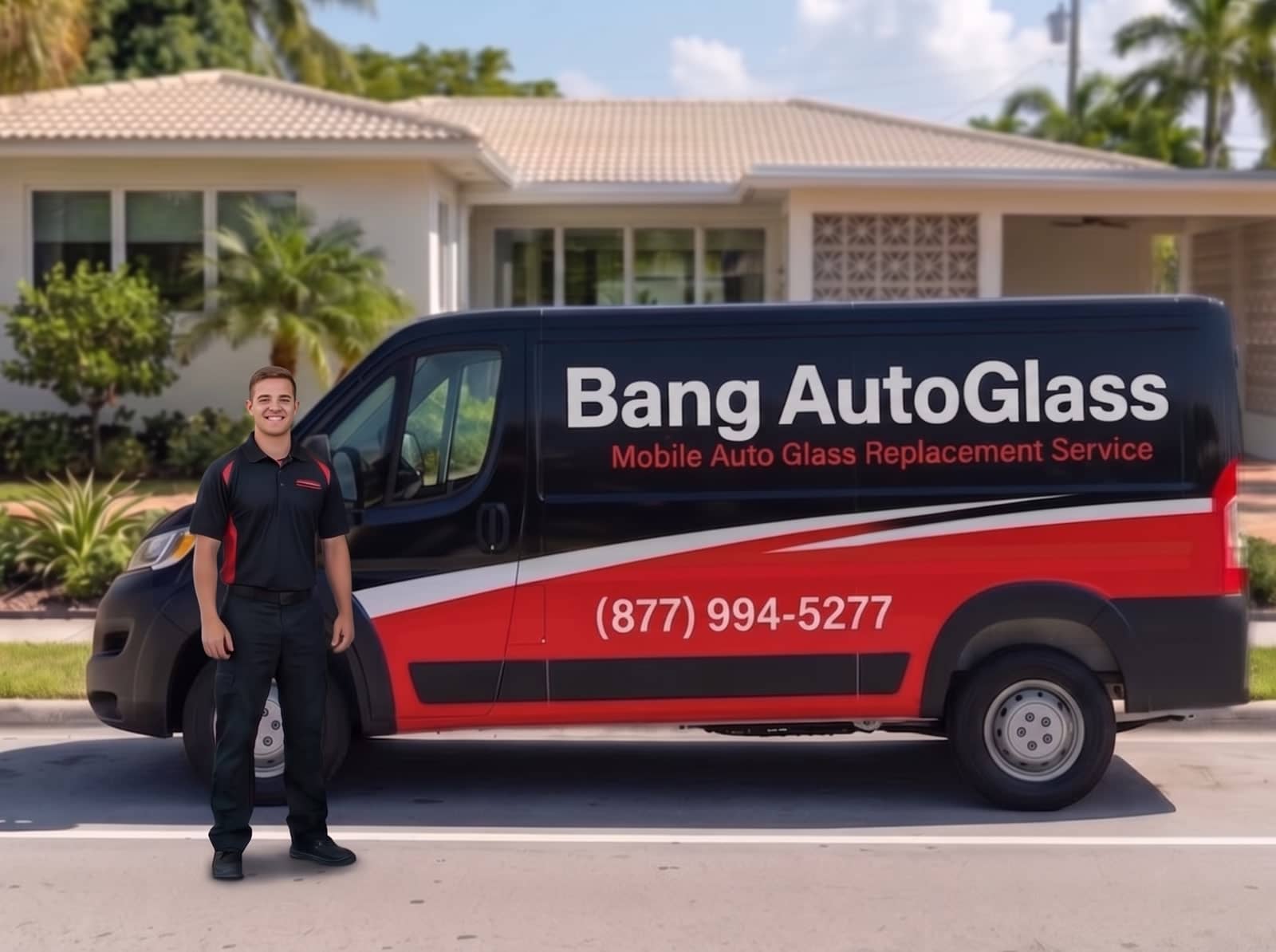
Bang AutoGlass is a mobile service operating in Arizona and Florida, which means a certified technician comes directly to your home, your workplace, or wherever your Kona N happens to be — no shop visit required.
Here's how a typical replacement appointment unfolds for a Kona N:
- Scheduling: Next-day appointments are available when possible. You choose a location that works for you — a flat, covered space is ideal for windshield work, but technicians are equipped to work in a variety of conditions.
- Glass removal and preparation: The damaged pane is carefully removed, and the frame or pinchweld is cleaned and prepped for the new glass. Any associated components — mirror brackets, sensor housings, trim molding — are handled with care.
- Installation: OEM-quality glass that matches your vehicle's original specifications — including any solar coating, acoustic interlayer, HUD compatibility, defroster grid, or sensor brackets — is set and bonded with professional-grade urethane adhesive.
- Cure time: For windshields and other bonded glass, the adhesive needs about one hour to cure before it's safe to drive. Most replacements take approximately 30 to 45 minutes to complete, after which the cure period begins. Exact timing can vary based on conditions and glass type.
- ADAS calibration (windshield only, if applicable): If your Kona N has a forward camera, calibration is performed according to Hyundai's specifications before the appointment is considered complete.
- Inspection and cleanup: The technician verifies all features — defroster, sensors, seals — are functioning correctly and clears any glass debris from the cabin or exterior.
OEM-Quality Glass and Your Lifetime Workmanship Warranty
Every replacement performed by Bang AutoGlass uses OEM-quality glass and materials — meaning the glass meets or matches the specifications of what came on your Kona N from the factory. This isn't just a matter of fit; it directly affects whether your ADAS systems calibrate correctly, whether your defroster and antenna work, whether your cabin stays as quiet as it should, and whether your vehicle performs structurally as designed.
Every replacement also comes backed by a lifetime workmanship warranty. If there's ever an issue with the installation itself — a seal failure, a rattle, a leak related to the work — it's covered. That warranty is part of every job, on every glass position, every time.
Does Your Insurance Cover Hyundai Kona N Auto Glass?
Many comprehensive auto insurance policies include glass coverage, and in some cases that coverage applies with no out-of-pocket cost to the driver. Bang AutoGlass will assist you with understanding your coverage and walking through the claims process — though the claim itself is filed by you as the policyholder. It's worth checking your policy before assuming you'll pay out of pocket, because coverage is more common than many drivers expect.
Factors that can influence the overall cost of a replacement — with or without insurance — include which glass position is being replaced, the features built into the glass (ADAS camera brackets, acoustic interlayer, solar coating, defroster grid), whether ADAS calibration is required, and your vehicle's specific trim and model year configuration.
The Right Glass Replacement Keeps Your Kona N at Its Best
The Hyundai Kona N is built to perform, and every element of its construction — including its glass — contributes to that. A windshield that doesn't match the original's solar coating makes the cabin hotter. A rear glass without the correct defroster grid leaves you blind in cold or foggy conditions. An uncalibrated ADAS camera after a windshield swap can cause safety systems to behave incorrectly. And any glass installed without proper adhesive technique is a structural liability.
Choosing a replacement service that understands the Kona N's glass specifications, uses OEM-quality materials, backs its work with a lifetime warranty, and comes to you — rather than making you arrange a tow or a rental — is the straightforward choice. Whether it's a chipped windshield, a shattered door pane, a cracked rear glass, or a damaged sunroof panel, the right repair starts with knowing exactly what you're dealing with and who to call.