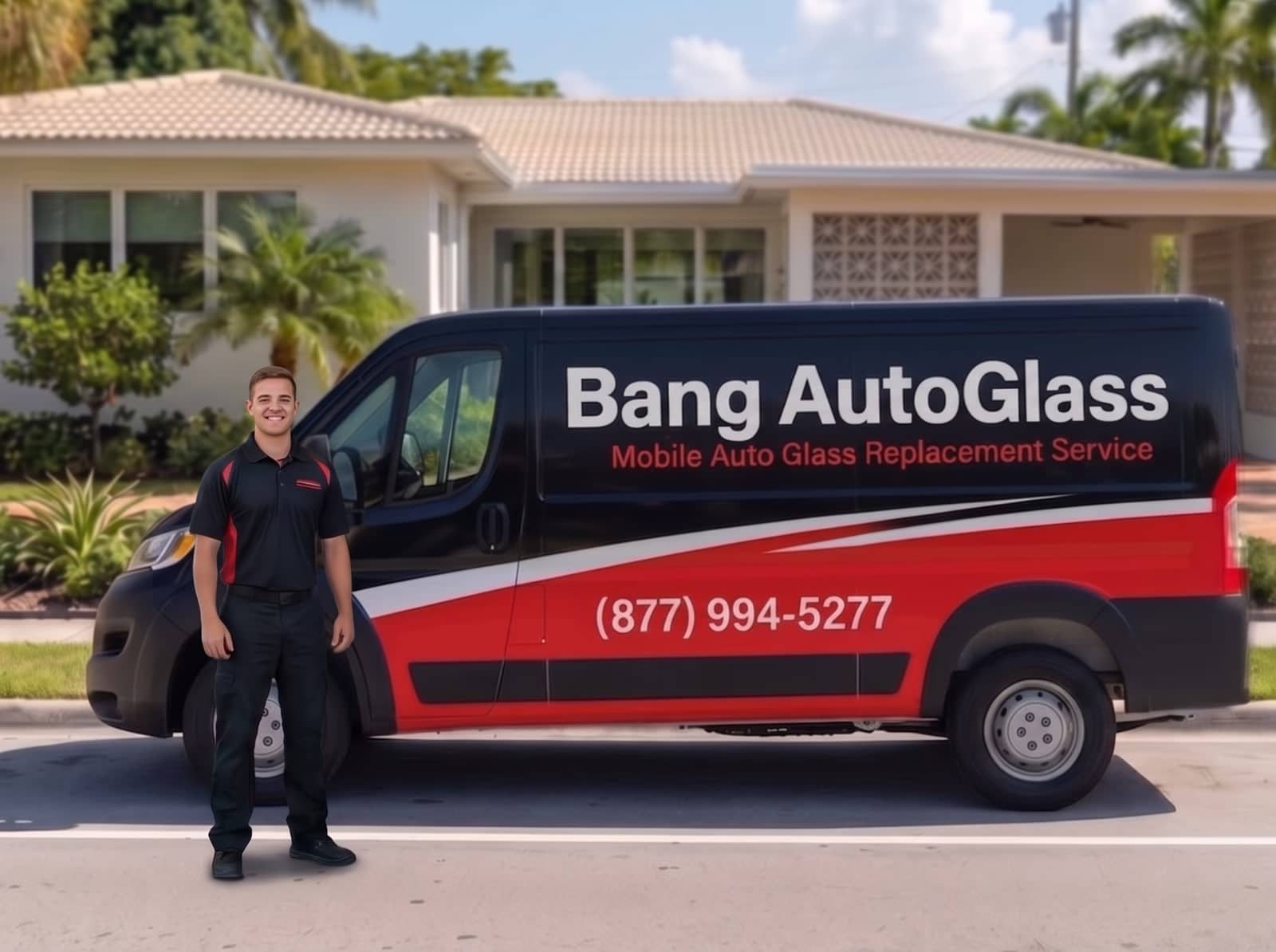
Volvo Windshield Replacement
Bang AutoGlass installs Volvo windshields on S60, S90, XC40, XC60, XC90, V60, and EX30 with OEM-spec laminated acoustic glass supporting Pilot Assist camera, rain sensor, and HUD on XC90. Mobile service in Arizona and Florida includes ADAS recalibration and a lifetime workmanship warranty.
Volvo Windshield Replacement: Premium Glass Service for Premium Swedish Engineering
When you drive a Volvo, you've made a commitment to safety, sophistication, and Scandinavian engineering excellence. So when your Volvo's windshield suffers damage from a flying rock, road debris, an accident, or sudden temperature changes, you need a windshield replacement service that respects the advanced engineering behind every pane of glass in your vehicle. At Bang AutoGlass, we specialize in Volvo windshield replacement using OEM-quality materials, proven installation techniques, and full ADAS recalibration to restore your Volvo's safety systems to factory specifications. Whether you drive an XC90, XC60, S60, V90, or one of Volvo's new electric models like the EX30 or EX90, our mobile auto glass technicians bring expert Volvo windshield replacement directly to your driveway, workplace, or wherever is most convenient.
Why Volvo Windshields Require Specialized Replacement
Volvo has built its reputation on being one of the safest automotive brands in the world, and the windshield plays a far greater role in that safety mission than most drivers realize. A modern Volvo windshield is not simply a piece of glass — it's a structural safety component packed with sensors, cameras, and advanced materials that work together to keep you protected on the road.
Advanced Safety Technology Integrated With the Glass
Most modern Volvos feature an array of cameras and sensors mounted directly behind the windshield. These components power Volvo's IntelliSafe suite, including City Safety automatic emergency braking, Pilot Assist semi-autonomous driving, Lane Keeping Aid, adaptive cruise control, traffic sign recognition, and forward collision warning. When the windshield is replaced, these systems must be precisely recalibrated to ensure they function exactly as Volvo engineered them. A windshield replaced without proper ADAS calibration is a windshield that may render some of your Volvo's most important safety features inaccurate or unreliable.
Acoustic Laminated Glass Construction
Volvo uses acoustic laminated windshield glass on most modern models. This specialized construction places a sound-dampening polyvinyl butyral (PVB) interlayer between two sheets of glass, dramatically reducing wind noise, road noise, and exterior sound intrusion. This is one of the reasons a Volvo cabin feels so refined and quiet, even at highway speeds. Replacing acoustic glass with standard glass will noticeably degrade cabin quietness, which is why we always source OEM-quality acoustic windshields for Volvo customers who originally had them.
Heated Windshield and Heads-Up Display Features
Many Volvo models, particularly those sold in colder climates, are equipped with heated windshields that quickly clear ice, frost, and condensation. Certain trim levels and configurations also include a heads-up display (HUD) projected directly onto the windshield, which requires specialized glass with a reflective coating. Our Volvo windshield replacement service identifies your exact configuration and installs glass that fully restores every original feature, including heating elements, HUD functionality, rain sensors, light sensors, humidity sensors, and antenna integration.
Signs Your Volvo Needs a Windshield Replacement
Not every chip or crack means replacement is necessary, but there are several clear signs your Volvo windshield has crossed the threshold from repairable to replaceable.
Cracks That Cannot Be Repaired
Any crack longer than approximately six inches, any crack that reaches the edge of the windshield, or any crack in the driver's primary line of sight typically requires a full Volvo windshield replacement rather than a chip repair. Cracks weaken the structural integrity of the glass and can spread rapidly with temperature changes or vibration.
Chips and Star Breaks in Critical Areas
Chips larger than a quarter, multiple chips clustered together, or any damage in the area where cameras and sensors are mounted behind the windshield generally require replacement. Even small chips in the ADAS sensor zone can interfere with the calibration and accuracy of your Volvo's safety systems.
Pitting, Hazing, and Distortion
Over years of driving, Volvo windshields can develop fine pitting from sand and road debris that scatters headlight glare at night and reduces visibility. If your windshield has become hazy, scratched, or distorted to the point that nighttime driving feels unsafe, replacement is the appropriate solution.
Volvo Models We Service for Windshield Replacement
Our technicians are experienced across the entire current and recent Volvo lineup, and we routinely perform windshield replacement on the following models and generations.
Volvo SUVs
The Volvo XC90, XC60, and XC40 are among the most common windshield replacements we perform. We also service the all-electric EX30 and the flagship EX90, both of which feature sophisticated sensor arrays and acoustic glass configurations that require precise installation. Each of these SUVs typically requires ADAS recalibration following a windshield replacement.
Volvo Sedans
The Volvo S60 and S90 sedans feature elegant rooflines and panoramic windshields with integrated camera housings. Our team handles these models with the care their refined engineering deserves, ensuring proper urethane bonding and seal integrity for the long term.
Volvo Wagons and Cross Country Models
Volvo's iconic wagons — the V60, V90, V60 Cross Country, and V90 Cross Country — combine cargo versatility with premium materials and advanced safety. Our Volvo windshield replacement process accounts for the slightly different glass dimensions and trim retention systems on these models.
Recharge Plug-In Hybrids and Fully Electric Models
For Volvo's Recharge lineup and the new fully electric EX30 and EX90, we use OEM-quality glass calibrated to support advanced driver assistance, over-the-air update compatibility, and integrated sensor arrays unique to electrified Volvos.
Our Volvo Windshield Replacement Process
When you choose Bang AutoGlass for your Volvo windshield replacement, you can expect a streamlined process designed around your time and convenience. Our typical glass replacement takes only 30 to 45 minutes from start to finish, followed by one hour of cure time for the urethane adhesive to set before the vehicle is safe to drive.
Initial Inspection and Quote
We start every Volvo windshield replacement with a clear conversation about your model year, trim level, and the specific features your windshield includes. This ensures we order the correct piece of OEM-quality glass with all the integrated technology your Volvo was originally equipped with, from rain sensors to acoustic interlayers to heating elements.
Next-Day Mobile Service Scheduling
We offer next-day appointments for most Volvo windshield replacements, and because we operate as a fully mobile service, we come directly to your home, office, or other convenient location. There's no need to take time off work or rearrange your day to drop your Volvo at a shop.
Professional Removal and Installation
Our technicians use Volvo-appropriate removal tools, including cold knives and fiber lines, to extract the damaged windshield without scratching the paint, damaging the pinch weld, or disturbing the surrounding trim. We then prepare the bonding surface, apply primer where required, and lay a precise bead of automotive-grade urethane before setting the new OEM-quality windshield in place with proper alignment to the body of your Volvo.
ADAS Calibration
After installation, we perform the required calibration on the camera and sensor systems mounted to the windshield. This step is critical for any modern Volvo, and skipping it can compromise the accuracy of City Safety, Lane Keeping Aid, Pilot Assist, and other IntelliSafe features.
Final Inspection and Cure Time
Before we consider the job complete, we inspect the entire installation, confirm that all sensors and features are functioning, and explain the one-hour cure time and the basic care steps you should follow during the first 24 hours of ownership.
ADAS Calibration After Volvo Windshield Replacement
ADAS calibration is one of the most important and frequently overlooked aspects of Volvo windshield replacement. Many lower-cost auto glass providers either skip this step or charge extra for it without explaining why it matters.
What ADAS Calibration Actually Does
The forward-facing camera and sensor cluster mounted behind your Volvo's windshield is calibrated at the factory to look at specific angles and read the road, lane markings, traffic signs, pedestrians, and other vehicles at exact tolerances. When the windshield is removed and replaced, even a fractional shift in camera position can throw those tolerances off, leading to inaccurate readings.
Volvo Safety Systems That Depend on Calibration
Pilot Assist, City Safety auto-braking, Lane Keeping Aid, Distance Alert, Driver Alert Control, Road Sign Information, and adaptive cruise control all rely on the front-facing camera mounted behind the windshield. Each of these features needs the camera to be precisely calibrated to function correctly after a windshield replacement.
Why Calibration Is Non-Negotiable
Driving a Volvo with miscalibrated ADAS is not just a comfort issue — it's a safety issue. A camera that's off by even a small margin can fail to detect a stopped vehicle in time, drift outside lane boundaries during Pilot Assist, or misread speed limit signs. Our Volvo windshield replacement service always includes the calibration step necessary to restore these systems to their factory-specified accuracy.
OEM-Quality Glass for Your Volvo
We exclusively use OEM-quality glass for every Volvo windshield replacement we perform. OEM-quality glass meets or exceeds the original specifications set by Volvo for thickness, optical clarity, acoustic damping, sensor compatibility, heating element placement, and edge tolerances. When your Volvo windshield is replaced with OEM-quality glass, your vehicle looks, sounds, and performs the way it did the day it left the dealership — and your ADAS systems will calibrate correctly the first time.
Mobile Volvo Windshield Replacement Service
One of the most appreciated aspects of working with Bang AutoGlass is that you don't have to drive a vehicle with a damaged windshield to a brick-and-mortar shop. Driving with a cracked or compromised windshield is dangerous, and in many states, it's also illegal. Our fully mobile Volvo windshield replacement service eliminates that risk entirely.
Convenience for Busy Volvo Owners
Volvo drivers tend to be people who value time, safety, and efficiency. Our mobile service is designed around those priorities. You don't need to take a vacation day, sit in a waiting room, or arrange a ride home. Schedule your next-day appointment, and we come to you.
Where We Provide Mobile Service
We perform Volvo windshield replacement at homes, apartment complexes, office parking lots, job sites, and anywhere else you can park your vehicle on a relatively flat surface with enough clearance for our technicians to work safely. As long as you have a place for the vehicle to sit during the one-hour adhesive cure time, we can complete the job on-site.
Insurance Claims for Volvo Windshield Replacement
Volvo windshield replacement is frequently covered under the comprehensive portion of an auto insurance policy, and in some states, glass coverage carries no deductible at all. We work seamlessly with all major insurance carriers and make the process as smooth as possible for our customers.
How We Assist With Your Insurance Claim
If you haven't already filed a claim with your insurance company, we'll guide you through the process by walking you through what information you'll need, what to say to the claims representative, and what to expect. We help you with the insurance claim from start to finish and make the process as smooth as possible. Once your claim is approved, we coordinate directly with your insurance company on the billing side so you only have to handle your deductible, if applicable.
Comprehensive Coverage and Deductibles
Most comprehensive insurance policies cover Volvo windshield replacement, including the cost of ADAS calibration. Depending on your state and policy, you may have a zero-deductible glass endorsement or a standard comprehensive deductible. We'll help you understand your specific situation so there are no surprises.
Cost of Volvo Windshield Replacement
Volvo windshield replacement cost varies based on the model, the features built into the original windshield, and whether ADAS calibration is required. Vehicles with heated glass, heads-up display, acoustic interlayers, and forward-facing cameras generally cost more than basic windshields without integrated technology. We provide transparent, upfront pricing before any work begins, and we'll happily walk you through what's included in your quote. For customers using comprehensive insurance, out-of-pocket costs are often limited to the deductible.
Our Lifetime Workmanship Warranty
Every Volvo windshield replacement we perform comes backed by our lifetime workmanship warranty. If you ever experience an issue related to the installation — water leaks, wind noise, adhesive failure, trim issues, or anything else tied to how we performed the work — we'll make it right for as long as you own the vehicle. This warranty reflects the confidence we have in our technicians, our installation process, and the OEM-quality materials we use on every Volvo we service.
Caring for Your New Volvo Windshield
A few simple habits in the hours and days following your Volvo windshield replacement will protect your investment and ensure the adhesive cures properly.
The First 24 Hours After Replacement
Avoid driving for at least one hour after the installation is complete to allow the urethane adhesive to fully cure. During the first 24 hours, try to keep the vehicle parked on a relatively level surface, leave a window cracked slightly to equalize cabin pressure if possible, avoid slamming the doors, skip the automatic car wash, and refrain from removing any retention tape that may have been applied to hold trim in place during the cure.
Long-Term Care for Volvo Windshields
Once the windshield has fully cured, normal Volvo ownership resumes. To keep your new windshield looking and performing its best, use quality glass cleaners that are ammonia-free if your windshield has any tinted bands or sensors, replace your wiper blades regularly to prevent micro-scratches, address chips and small impacts immediately before they spread, and avoid sudden extreme temperature changes such as blasting hot defrost onto a frozen windshield in winter.
Schedule Your Volvo Windshield Replacement Today
Your Volvo deserves windshield replacement service that matches the quality of the vehicle itself. At Bang AutoGlass, we deliver Volvo-specific expertise, OEM-quality materials, full ADAS calibration, a lifetime workmanship warranty, and the convenience of mobile service with next-day appointments. Whether you're driving an XC90 commuting through busy streets, a V60 Cross Country handling weekend adventures, or an EX30 charting the future of electric Volvo ownership, we're ready to restore your windshield to factory condition quickly and professionally. Contact Bang AutoGlass today to schedule your next-day Volvo windshield replacement and get back to enjoying the safe, quiet, and refined driving experience your Volvo was built to deliver.
Volvo Windshield Replacement — common questions
How long does a Volvo windshield replacement take?
Most Volvo windshield replacements take about 30-45 minutes to complete, plus time for the adhesive to set — about an hour is typical, and your technician confirms the exact safe drive-away time. If your Volvo has an advanced driver-assistance camera, ADAS calibration adds about 15-30 minutes.
Is the windshield replacement covered by insurance?
Many comprehensive insurance policies cover windshield replacement with little or no out-of-pocket cost. In Florida, comprehensive coverage waives the deductible for windshield claims. We can help you file or start your claim if needed.
What quality glass is used for my Volvo windshield?
Every Volvo windshield replacement uses OEM-quality glass and materials, backed by a lifetime workmanship warranty. Our fully-equipped technicians perform the same quality work whether we come to your home, work, or roadside location.
Is it safe to drive my Volvo right after windshield replacement?
You should wait about 1 hour after replacement for the adhesive to fully set before driving. Your technician will let you know when it's safe to drive and provide care instructions for the first 24 hours.
Where we do Volvo auto glass
Bang AutoGlass is a mobile auto glass company serving Arizona and Florida. We don't have a shop you drive to — we come to your home, your job, or wherever the car is sitting, with next-day appointments in most areas. In Arizona that means the whole Valley — Phoenix, Mesa, Scottsdale, Chandler, Gilbert, Tempe, Glendale and out to Tucson and Prescott. In Florida we cover Tampa Bay, Orlando and Miami, from St. Petersburg and Clearwater across to Kissimmee, Winter Park and Fort Lauderdale.
Browse every city we serve in Arizona and Florida, or read how coverage works under Arizona's glass statutes and Florida's § 627.7288.
Mobile auto glass — cities we serve
4.8★ on Google · 350+ reviews from AZ & FL drivers
“I needed my windshield replaced and they made the entire process easy. Bang AutoGlass is the best!”
“Top-notch auto glass service. They handled my windshield replacement quickly and professionally.”
“Bang AutoGlass made my windshield replacement simple from start to finish.”
Need Volvo Windshield Replacement?
We come to you across Arizona and Florida — often $0 with insurance.
We reply within minutes during business hours.