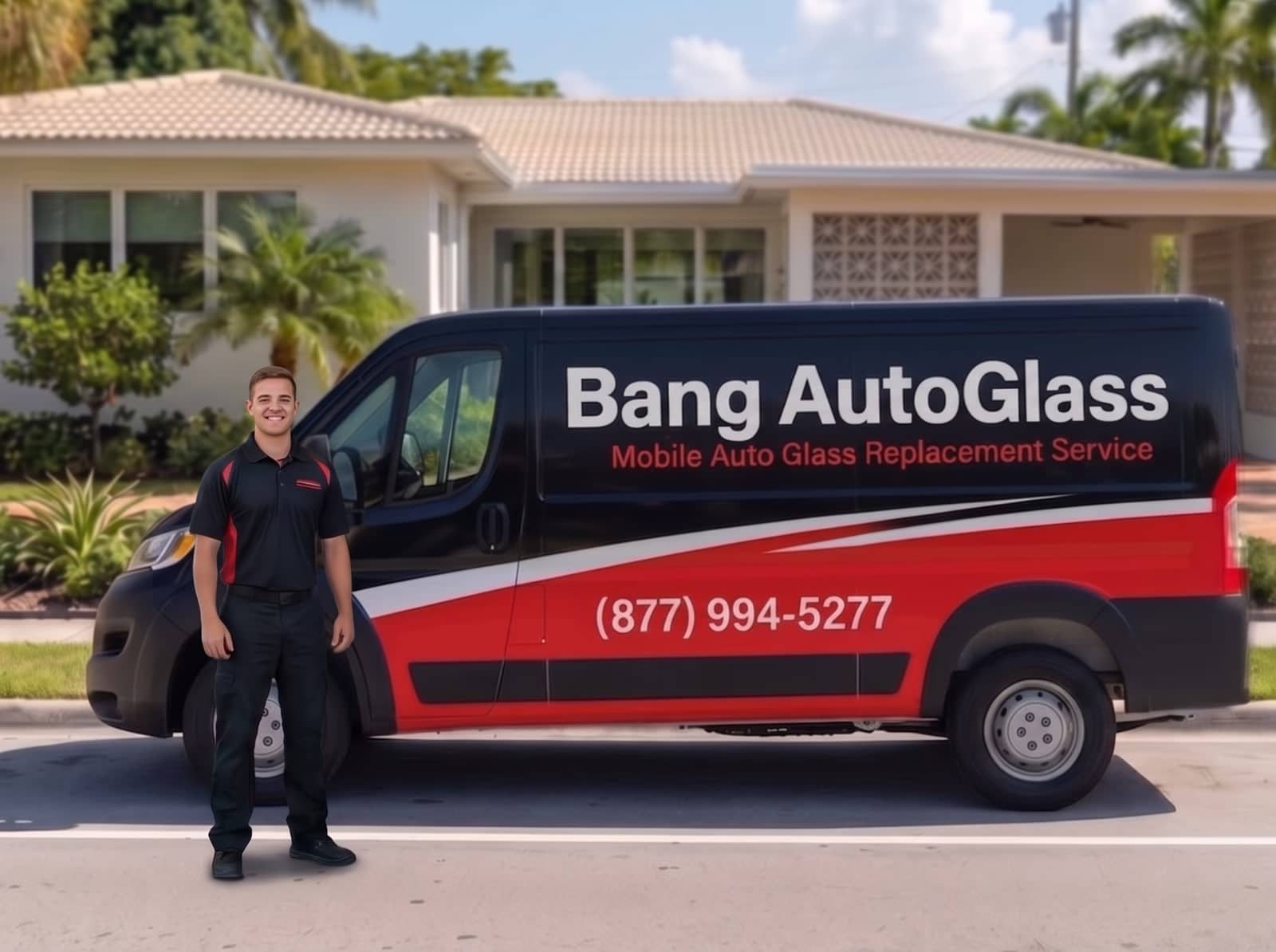
Genesis ADAS Calibration
Bang AutoGlass coordinates Genesis Highway Driving Assist II ADAS calibration after windshield service so Smart Cruise Control, Forward Collision-Avoidance Assist, Lane Keeping Assist, and Blind-Spot View Monitor read targets correctly on G80, G90, GV70, and GV80. Arizona and Florida mobile.
Genesis ADAS Calibration: Restoring Precision Safety After Windshield Replacement
When you replace the windshield on a Genesis vehicle, you are not simply installing a new piece of glass. You are disturbing the alignment of one of the most advanced driver-assistance ecosystems on the road today. Genesis ADAS calibration is the precise, software-driven process of realigning the forward-facing camera and supporting sensors that power Genesis Smart Sense, ensuring every lane-departure alert, automatic emergency braking event, and adaptive cruise adjustment happens exactly when and how the engineers in Namyang designed it to. At Bang AutoGlass, we treat Genesis ADAS recalibration as an inseparable part of any luxury windshield replacement, because the difference between a properly calibrated Genesis and an uncalibrated one can be measured in feet of stopping distance and in the trust you place in your vehicle every time you merge onto a highway.
Why Genesis ADAS Calibration Matters After Every Windshield Replacement
The forward camera on every modern Genesis sits behind the upper portion of the windshield, mounted in a precision bracket that is referenced to the glass itself. When the original windshield comes out and a new one goes in, even a one-millimeter shift in camera angle can translate to a several-foot error in how the vehicle perceives lane markings, pedestrians, and vehicles ahead at highway speed. Hyundai Motor Group, the parent company of Genesis, formally requires ADAS recalibration any time the windshield is replaced, the camera is removed, the suspension geometry changes, or wheel alignment falls outside of factory specifications. Skipping this step does not just void the camera's accuracy; it can void portions of the manufacturer warranty and create real liability if a safety system fails to intervene during a collision.
Genesis owners choose the brand for refinement and engineering integrity, and Genesis ADAS calibration after windshield replacement protects that investment. Our mobile technicians arrive with the OEM-grade scan tools, calibration targets, and software updates required to bring your Smart Sense suite back into specification before we hand the keys back.
Understanding the Genesis Smart Sense Suite
Genesis Smart Sense is the umbrella name for the brand's full ADAS package, and nearly every camera-driven feature in the suite depends on the forward camera mounted to the windshield. Recalibrating that single camera affects how a dozen different systems behave, which is why luxury OEMs are so strict about post-installation procedures.
Forward Collision-Avoidance Assist
Forward Collision-Avoidance Assist, or FCA, uses the windshield-mounted camera in concert with the front radar to detect vehicles, pedestrians, and cyclists. When calibration drifts, FCA may trigger late, trigger early, or in rare cases not trigger at all. Genesis ADAS calibration restores the precise angular reference the camera needs to identify potential collisions at the correct distance.
Lane Keeping Assist and Lane Following Assist
Lane Keeping Assist nudges the steering wheel when the camera detects you drifting toward a painted lane line, and Lane Following Assist actively centers the vehicle within marked lanes during highway driving. Both rely on the camera's ability to read pavement markings at precise angles. After a Genesis windshield camera calibration, these systems return to the smooth, confident behavior owners expect from the brand.
Highway Driving Assist
Highway Driving Assist, or HDA, is one of the standout features of the Smart Sense suite, blending adaptive cruise, lane centering, and navigation data into a Level 2 driver-assist experience. HDA cannot function correctly without a fully calibrated forward camera, and any mismatch will cause the system to disengage with a dashboard warning until calibration is restored.
Smart Cruise Control with Stop and Go
Adaptive cruise on Genesis vehicles uses both radar and camera input to track the vehicle ahead. A miscalibrated camera can cause Smart Cruise Control to misjudge closing distances, brake abruptly, or fail to resume from a stop. ADAS calibration on your Genesis returns this system to seamless operation.
Blind-Spot, Rear Cross-Traffic, and Surround View Systems
While many of these features rely on side and rear cameras, several of them cross-reference the forward camera's data during low-speed maneuvers and parking events. A complete Genesis ADAS recalibration verifies that the entire sensor network is communicating correctly before we release the vehicle.
Genesis Models We Calibrate
Bang AutoGlass services every current and recent Genesis model, and each one has its own calibration profile, target placement, and software procedure.
Genesis G70 ADAS Calibration
The G70 sport sedan uses a single forward camera and a front radar behind the badge. G70 ADAS calibration requires both static target placement and a dynamic road drive to teach the camera the new lane reference. The compact dimensions of the G70 demand particularly precise target placement.
Genesis G80 and Electrified G80 ADAS Calibration
The G80 flagship sedan, including the all-electric Electrified G80, runs a more elaborate Smart Sense Plus package with HDA 2 on later trims. G80 windshield camera calibration is one of the more involved procedures in the Genesis lineup because the camera works with three radar units and the navigation system to deliver predictive cornering behavior.
Genesis G90 ADAS Calibration
The flagship G90 sedan, particularly the redesigned generation, includes near-Level 3 features and the most sensitive camera bracket in the lineup. G90 ADAS calibration must be performed with the vehicle perfectly level, tire pressures set to factory spec, and the fuel tank within a specific fill range.
Genesis GV60 ADAS Calibration
The all-electric GV60 crossover introduces Face Connect and Fingerprint Authentication, but its forward driving systems still depend on the same camera calibration discipline. GV60 windshield calibration follows the latest Hyundai Motor Group dual-mode procedure.
Genesis GV70 and Electrified GV70 ADAS Calibration
The GV70 and its electric counterpart are among the most popular Genesis models on the road. GV70 ADAS calibration is required after every windshield replacement, and we frequently perform it as part of our mobile service for owners across the metro area.
Genesis GV80 ADAS Calibration
The three-row GV80 SUV uses an expanded Smart Sense package with extra parking and surround sensors. GV80 windshield camera calibration includes verifying that the forward camera correctly hands off data to the parking assistance system at low speeds.
Static Versus Dynamic Calibration for Genesis Vehicles
Genesis ADAS calibration is rarely a single-step procedure. Most modern Genesis models require both a static and a dynamic calibration sequence, and skipping either one will leave fault codes stored in the camera module.
Static calibration is performed with the vehicle parked on a perfectly level surface, facing a manufacturer-specific target board placed at an exact distance and height from the front of the vehicle. The scan tool walks the camera through a series of pattern recognitions, teaching it where straight ahead actually is. Lighting, target alignment, tire pressure, and vehicle load all influence the outcome, which is why we set up our static calibration environment with the same care a dealership service bay would.
Dynamic calibration completes the procedure on the road. A Genesis-experienced scan tool monitors the camera in real time while a technician drives the vehicle at specified speeds on well-marked roads, allowing the camera to learn lane markings, stationary objects, and ambient lighting conditions. Most Genesis models require fifteen to thirty minutes of dynamic driving to finalize the calibration.
Because nearly every current Genesis requires both procedures, plan for the calibration phase of your appointment to extend beyond the windshield replacement itself. Bang AutoGlass schedules the full sequence in one mobile visit whenever conditions allow.
How Bang AutoGlass Performs Genesis ADAS Calibration
We built our Genesis ADAS calibration workflow to match what you would expect from a luxury dealership while delivering it on your driveway, at your office, or wherever your Genesis is parked.
- We confirm the vehicle is on level ground, tire pressures are set to factory spec, and the windshield bonding has reached safe-drive-away condition.
- We mount the forward camera into its new bracket using the OEM-spec hardware and verify the bracket has fully seated against the new glass.
- We connect a Hyundai Motor Group compatible scan tool and pull a full pre-scan to document any pre-existing fault codes.
- We perform static calibration using the correct Genesis target board, distance, and height for the specific model and year.
- We complete dynamic calibration on a pre-mapped route that meets the speed, lane marking, and traffic-density requirements specified by Genesis.
- We run a post-scan, clear any procedural codes, confirm all Smart Sense features are operational, and document the calibration report for your records.
Every glass replacement we perform takes 30 to 45 minutes for the install, followed by a 1 hour adhesive cure window before the vehicle is safe to drive. Calibration is performed within or immediately after that window, depending on model requirements, so the entire visit is efficient without ever cutting corners.
Why OEM-Quality Glass Is Essential for Genesis Calibration
Not all auto glass is equal, and Genesis vehicles are particularly sensitive to the optical clarity, frit pattern, and bracket placement of the windshield itself. The forward camera looks through a specific region of the glass, and even minor distortion in that region can prevent calibration from completing or cause it to complete with reduced accuracy. Bang AutoGlass installs OEM-quality glass on every Genesis we service, matching the original optical specifications, acoustic interlayer, rain sensor pad, heated wiper park area, and camera bracket geometry the manufacturer specified. This commitment to OEM-quality materials is what allows our calibrations to pass on the first attempt and stay within spec for the life of the windshield.
Insurance Coverage and Claim Assistance for Genesis ADAS Calibration
Most comprehensive auto insurance policies cover both Genesis windshield replacement and the required ADAS calibration, often with little or no out-of-pocket cost depending on your deductible and your state. If you have not already started a claim, our team will walk you through every step of the process so you can file with confidence. We do not submit the claim on your behalf, but we assist you with the information your carrier will need, including the VIN, the damage details, the Genesis-specific glass part number, and the calibration line item that insurers expect to see on the estimate. Once your claim is approved, we coordinate directly with the insurer for billing whenever possible, so you can focus on driving rather than paperwork.
What Happens If You Skip Genesis ADAS Calibration
Some shops still treat ADAS calibration as optional after windshield replacement, and a small number of Genesis owners ask whether they really need it. The short answer is yes, and the longer answer involves both safety and resale value. An uncalibrated forward camera can produce any of the following outcomes:
- Lane Keeping Assist may pull the steering wheel toward the wrong side of the lane.
- Forward Collision-Avoidance Assist may brake late, brake early, or generate false alerts.
- Highway Driving Assist may refuse to engage or disengage unexpectedly at speed.
- Smart Cruise Control may misjudge following distance, especially in curves.
- Dashboard warning lights and stored fault codes will appear at the next service visit, lowering trade-in and resale value.
- Manufacturer warranty coverage for affected systems can be denied if calibration records are missing.
The cost and time of a proper Genesis ADAS calibration are small compared to any one of these outcomes, and that is why we never release a Genesis from our care without completing the full calibration sequence.
Mobile Genesis ADAS Calibration With Next-Day Availability
One of the reasons Genesis owners choose Bang AutoGlass is that we bring the dealership-level calibration experience to them. Our service is fully mobile, and we offer next-day appointments for nearly every Genesis windshield replacement and calibration request. We arrive with the targets, the scan tools, the OEM-quality glass, and the trained technicians needed to complete the work in a single visit, whether you are at home, at work, or at a job site. There is no need to leave your Genesis at a service center for a full day, and there is no shuttle ride back to the office while you wait. The convenience of mobile service does not require any compromise in calibration quality, because we set up the same controlled conditions a fixed shop would, right where your vehicle is parked.
Lifetime Workmanship Warranty on Every Genesis Calibration
Every Genesis windshield replacement and ADAS calibration we perform is backed by our lifetime workmanship warranty. If anything related to the installation or the calibration we performed develops an issue for as long as you own the vehicle, we will return and make it right. That warranty reflects how seriously we take the work and how confident we are in our process, our materials, and our technicians.
Frequently Asked Questions About Genesis ADAS Calibration
How long does a Genesis ADAS calibration take?
The windshield replacement itself takes 30 to 45 minutes, followed by a 1 hour adhesive cure window. Static calibration typically adds another 15 to 30 minutes depending on model, and dynamic calibration adds the same 15 to 30 minutes of road drive. Most full Genesis appointments wrap up in one mobile visit.
Can Genesis ADAS calibration really be done mobile?
Yes. With proper targets, level ground, controlled lighting, and a calibrated scan tool, mobile Genesis ADAS calibration meets the same specifications as a dealership procedure. We confirm conditions are right before we begin and reschedule if anything would compromise calibration accuracy.
When should my Genesis be recalibrated besides after windshield replacement?
Recalibration is also recommended after any front-end collision repair, suspension or alignment work that changes ride height, camera bracket replacement, or any dashboard warning related to the Smart Sense system.
Will my insurance cover Genesis ADAS calibration?
Most comprehensive policies cover both the windshield and the calibration. We assist you in filing your claim with your carrier and provide the documentation insurers need to approve the calibration line item.
Schedule Your Genesis ADAS Calibration With Bang AutoGlass
If your Genesis G70, G80, G90, GV60, GV70, or GV80 needs a new windshield, the ADAS calibration that follows is not a step to leave to chance. Bang AutoGlass delivers OEM-quality glass, dealership-grade calibration, lifetime workmanship warranty coverage, and the convenience of fully mobile service with next-day appointments. Reach out today using the contact information at the top of this page and let our technicians restore your Genesis to the precision, safety, and refinement it was built to deliver.
Genesis ADAS Calibration — common questions
What is ADAS calibration and why does my Genesis need it?
ADAS (Advanced Driver Assistance Systems) calibration realigns your Genesis's safety cameras and sensors after windshield replacement or collision. It ensures features like lane-keeping assist and automatic braking work correctly and safely.
How long does Genesis ADAS calibration take?
ADAS calibration typically adds about 15-30 minutes to your windshield replacement appointment. The total visit is roughly 1.5-2 hours, including the time for the adhesive to set before driving.
Is ADAS calibration covered by insurance?
ADAS calibration is included as part of your windshield replacement service. Florida law waives the comprehensive deductible on windshield replacement, and since calibration rides on that windshield claim, the full job—including calibration—is often covered with nothing out of pocket; in Arizona, the same holds if you elected the optional zero-deductible glass coverage.
What happens if I drive without ADAS calibration after windshield replacement?
Uncalibrated safety systems may not function correctly, potentially putting your vehicle and others at risk. Lane-keeping assist, automatic emergency braking, and other features could fail to respond properly in critical moments.
Where we do Genesis auto glass
Bang AutoGlass is a mobile auto glass company serving Arizona and Florida. We don't have a shop you drive to — we come to your home, your job, or wherever the car is sitting, with next-day appointments in most areas. In Arizona that means the whole Valley — Phoenix, Mesa, Scottsdale, Chandler, Gilbert, Tempe, Glendale and out to Tucson and Prescott. In Florida we cover Tampa Bay, Orlando and Miami, from St. Petersburg and Clearwater across to Kissimmee, Winter Park and Fort Lauderdale.
Browse every city we serve in Arizona and Florida, or read how coverage works under Arizona's glass statutes and Florida's § 627.7288.
Mobile auto glass — cities we serve
4.8★ on Google · 350+ reviews from AZ & FL drivers
“I needed my windshield replaced and they made the entire process easy. Bang AutoGlass is the best!”
“Top-notch auto glass service. They handled my windshield replacement quickly and professionally.”
“Bang AutoGlass made my windshield replacement simple from start to finish.”
Need Genesis ADAS Calibration?
We come to you across Arizona and Florida — often $0 with insurance.
We reply within minutes during business hours.