Rear & Back Glass Replacement in Arizona & Florida
Broken, cracked, leaking, or shattered rear glass can expose your vehicle to weather, dust, theft, road noise, and unsafe visibility. Bang AutoGlass provides mobile rear glass replacement in Arizona and Florida with OEM-quality materials, professional installation, fast appointments, and a lifetime workmanship warranty.
Why there's no repair
Back glass is always a replacement
Rear windshields are tempered glass, so they don't crack politely — they let go all at once and scatter through the trunk and back seat. Replacement is the fix when:
- The rear window shattered — heat stress, an impact, or a break-in
- There's a crack or chip anywhere in the back glass (damaged tempered glass can fail without warning)
- Defroster lines stopped working after the glass was damaged
There's no repair for tempered back glass. We install OEM-quality glass, reconnect the defroster grid and antenna, and vacuum up the scattered pieces — cleanup is part of the job.
Back glass, defroster grids and rear visibility
When your rear glass breaks, cracks, leaks, or shatters, it is more than an inconvenience. Your back window helps seal the cabin from heat, rain, dust, road noise, and debris while maintaining the visibility you need when reversing, changing lanes, parking, and driving in traffic. Bang AutoGlass provides mobile rear glass replacement throughout our Arizona and Florida service areas, bringing professional auto glass service directly to your home, workplace, apartment, dealership, fleet lot, or another convenient location.
Rear glass is also commonly called back glass, rear windshield, back window, or rear window glass. Unlike the front windshield, most rear windows are made with tempered safety glass, which is designed to break into small granular pieces instead of long sharp shards when damaged. Many rear windows also include built-in technology, including defroster lines, antennas, rear wiper hardware, privacy tint, heating elements, or sliding truck glass. Because of those features, rear glass replacement should be handled by a trained mobile auto glass technician using the correct glass, seals, moldings, adhesives, and installation process for your vehicle.
At Bang AutoGlass, most rear glass replacements take about 30–45 minutes to complete, followed by about one hour for the adhesive to dry before normal driving. We offer next-day appointments, OEM-quality materials, and a lifetime workmanship warranty with every replacement, so you can get your vehicle sealed, safe, and road-ready without losing your entire day.
Mobile Rear Glass Replacement Near You
Rear glass damage can happen suddenly. A rock can hit the back window on the highway. A storm can send debris into your vehicle. A break-in can leave shattered glass across the cargo area. Extreme heat can stress existing damage. A failed seal can create water leaks. Whether you drive a sedan, truck, SUV, van, work vehicle, rideshare vehicle, or family car, broken rear glass should be replaced quickly to protect the inside of your vehicle and restore safe visibility.
Bang AutoGlass is a mobile auto glass service, which means you do not have to drive with a shattered back window or spend time waiting at a shop. Our technician comes to your location with the correct tools and replacement materials, removes the damaged glass, cleans the affected area, installs OEM-quality rear glass, and seals the vehicle properly.
Why Rear Glass Replacement Matters
A damaged back window leaves your vehicle exposed to weather, theft, dust, road noise, insects, and interior damage. In Arizona, dust storms, road gravel, dry heat, and monsoon weather can make a broken rear window even more urgent. Arizona transportation officials regularly warn drivers about the danger of monsoon dust storms because visibility can drop quickly and driving conditions can become hazardous.
In Florida, heavy rain, tropical storms, high winds, and rapidly changing weather can turn a damaged rear window into a bigger problem fast. The Florida Department of Highway Safety and Motor Vehicles notes that severe weather increases driving danger and that heavy rain, high winds, flooding, and low visibility require extra caution from drivers.
If your rear glass is cracked, shattered, missing, leaking, loose, or no longer clear, replacement helps restore the cabin seal, visibility, comfort, and security of your vehicle.
Common Reasons Rear Glass Needs to Be Replaced
Rear glass is different from a small windshield chip. Because most rear windows are tempered safety glass, they usually cannot be repaired once broken. A damaged rear window often needs full replacement, especially when the glass has shattered, the defroster grid is damaged, the seal is compromised, or the glass is no longer structurally secure.
Common causes of rear glass damage include:
- Road debris, rocks, gravel, and highway impacts
- Vehicle break-ins or attempted theft
- Storm debris, falling branches, hail, or high winds
- Extreme heat, rapid temperature changes, or existing stress points
- Rear-end accidents or body damage near the hatch, trunk, or frame
- Failed seals, water leaks, rust, or poor previous installation
- Damaged defroster lines, antennas, rear wiper mounts, or slider hardware
Even if the damage looks minor, rear glass issues can quickly become worse. A small crack can spread, a weak seal can leak, and missing glass can expose the vehicle interior to water, dust, and sun damage.
Rear Glass, Back Glass, and Rear Windshield: What Is the Difference?
Most customers use the terms rear glass, back glass, rear window, and rear windshield interchangeably. In service terms, they usually refer to the same part: the glass panel at the back of the vehicle. The exact design depends on the vehicle. Some rear windows are fixed glass panels bonded into the body. Some trucks have sliding rear windows. Some SUVs and hatchbacks have rear wipers, defroster grids, antennas, and trim pieces. Some luxury vehicles may include special acoustic, heated, or privacy glass features.
Tempered Safety Glass
Most back windows are made from tempered glass. Tempered glass is strengthened through heat or chemical treatment and is designed to break into small pieces when it fails. That is why a rear window often shatters completely instead of leaving one simple crack. This is also why rear glass replacement is usually the correct solution instead of repair.
Defroster Lines and Built-In Features
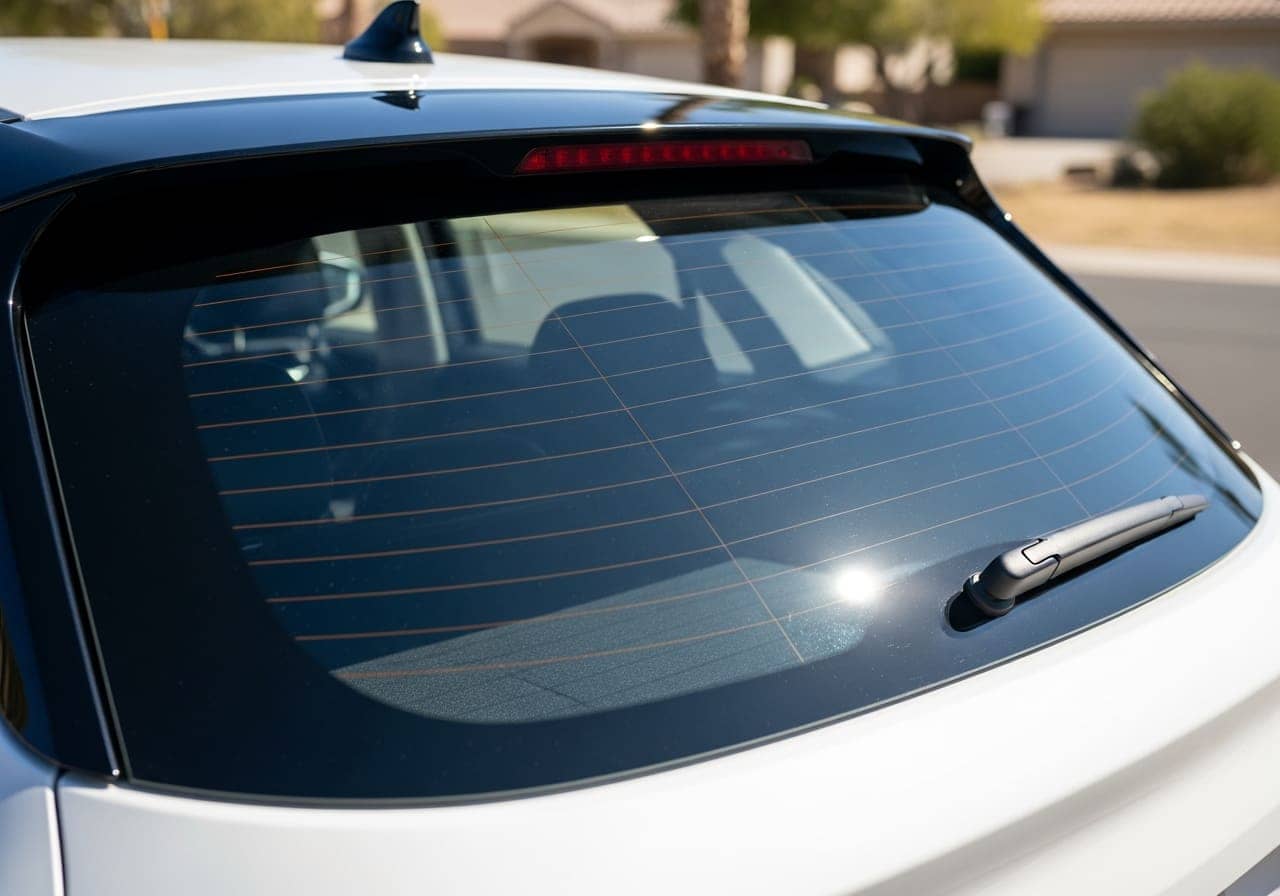
Those thin lines across the rear window are usually part of the rear defroster system. They use electrical current to warm the glass and help clear fog, moisture, and light frost. Many rear windows may also include embedded antennas, rear wiper mounts, brake light access, privacy tint, or sliding mechanisms. During replacement, the technician must account for these features so the new glass fits properly and functions as intended.
Why OEM-Quality Rear Glass Matters
Rear glass must fit the vehicle opening correctly, match the required curvature and dimensions, and work with the vehicle’s existing moldings, trim, defroster connectors, and hardware. Federal glazing rules require replacement glazing for vehicles to meet applicable safety requirements, and FMVSS 205 is intended to reduce injuries from impact, maintain necessary transparency for driver visibility, and reduce the risk of occupant ejection through vehicle windows in collisions.
Bang AutoGlass uses OEM-quality materials for rear glass replacement. That means your vehicle receives high-quality replacement glass and installation materials designed to restore proper fit, clarity, and performance.
Rear Glass Replacement in Arizona
Arizona drivers deal with unique auto glass conditions. Desert roads, freeway debris, dry heat, construction zones, gravel, and seasonal monsoon storms all contribute to glass damage. A broken rear window in Arizona can also allow dust and heat to enter the vehicle quickly, making the interior uncomfortable and harder to protect.
Arizona law also gives drivers important insurance options for damaged safety equipment. Arizona Revised Statutes § 20-264 states that insurers writing private passenger auto insurance with comprehensive coverage must provide, at the insured’s option, complete coverage for repair or replacement of damaged safety equipment without regard to a deductible. The statute defines safety equipment to include glass used in the windshield, doors, and windows, as well as glass, plastic, or other material used in vehicle lights.
Arizona Visibility and Rear Window Safety
Arizona also restricts objects or materials on windshields, side windows, and rear windows when they obstruct or reduce the driver’s clear view. The law includes rear windows in visibility-related language, with certain exceptions for vehicles equipped with proper outside mirrors.
For Arizona drivers, replacing broken rear glass quickly helps restore visibility, protects the interior from dust and heat, and helps keep the vehicle ready for daily driving.
Rear Glass Replacement in Florida
Florida drivers face a different set of auto glass challenges. Heavy rain, humidity, tropical weather, high winds, storm debris, coastal conditions, and busy highways can all make damaged rear glass more urgent. A broken or leaking back window can let water into the trunk, cargo area, headliner, seats, electronics, and interior panels. During severe weather, a missing or shattered rear window can make the vehicle unsafe and uncomfortable to drive.
Florida’s well-known no-deductible glass statute is specific to windshield damage under comprehensive coverage. Florida Statute § 627.7288 states that the deductible provisions of a covered policy do not apply to damage to the windshield of a covered motor vehicle. Because the statute text specifically refers to windshields, rear glass coverage may depend on the details of your comprehensive policy, your deductible, and your insurance carrier. Bang AutoGlass can still help Florida customers understand the replacement process and provide the information needed for a rear glass service quote.
Florida Visibility and Weather Conditions
Florida law also addresses obstructions to a driver’s view. Under Florida Statute § 316.2004, a person may not drive with signs, posters, or other nontransparent material on the windshield, side wings, or side or rear windows if it materially obstructs, obscures, or impairs the driver’s clear view of the highway or an intersecting highway.
When Florida weather changes quickly, visibility and vehicle sealing matter. Replacing damaged rear glass helps keep rain out, restores rear visibility, and protects the vehicle interior from moisture-related damage.
Our Rear Glass Replacement Process
Bang AutoGlass makes rear glass replacement simple. First, we identify the correct rear glass for your vehicle using the year, make, model, body style, and any built-in features such as defroster lines, privacy tint, antennas, wipers, sliders, or trim. Then we schedule a mobile appointment at a convenient location in your Arizona or Florida service area.
When our technician arrives, the damaged glass is carefully removed. If the rear window shattered, loose glass is cleaned from the window opening and surrounding area. The technician prepares the bonding surface, checks the fit, applies professional-grade adhesive, installs the OEM-quality replacement glass, reconnects applicable components, and verifies the seal and alignment.
Most replacements take about 30–45 minutes to complete, followed by about one hour for the adhesive to dry. The Auto Glass Safety Council explains that minimum drive-away time is the period a vehicle should remain stationary after auto glass installation so the adhesive can properly bond, and that this time can vary based on adhesive type, weather, and other conditions.
Aftercare for Your New Rear Glass
After rear glass replacement, it is important to give the adhesive time to cure. Avoid slamming doors, driving too soon, washing the vehicle too aggressively, or putting pressure on the new glass before the recommended dry time has passed. Our technician will let you know when the vehicle is ready to drive and whether there are any special instructions for your specific vehicle.
For the best long-term results, keep the rear glass clean, avoid scraping the defroster lines, report any leaks quickly, and inspect the rear window after storms, accidents, or impacts. If your vehicle has a rear defroster, wiper, antenna, or slider, make sure those components are working properly after installation.
Why Choose Bang AutoGlass for Rear Glass Replacement?
Bang AutoGlass is built around convenience, quality, and service. We are mobile, so we come to you. Most glass replacements take 30–45 minutes, and we provide clear guidance on the adhesive dry time before you drive. We offer next-day appointments whenever available, use OEM-quality materials, and include a lifetime workmanship warranty with every replacement.
Mobile Service That Saves Time
You should not have to rearrange your whole day to replace a broken rear window. Our mobile rear glass replacement service is designed for busy drivers, families, workers, fleets, dealerships, and anyone who needs fast auto glass service without unnecessary downtime.
Quality Installation for Arizona and Florida Drivers
Arizona heat and dust can test the quality of an installation. Florida rain and humidity can test the seal. That is why proper preparation, adhesive application, fitment, and cleanup matter. Bang AutoGlass focuses on doing the job correctly the first time, using OEM-quality materials and professional installation practices.
Lifetime Workmanship Warranty
Every replacement comes with a lifetime workmanship warranty. That gives customers confidence that the installation was performed with care and that Bang AutoGlass stands behind the work.
Schedule Rear Glass Replacement Today
If your back glass is broken, cracked, shattered, leaking, or missing, schedule mobile rear glass replacement with Bang AutoGlass. We provide convenient service in Arizona and Florida, next-day appointments when available, OEM-quality materials, and a lifetime workmanship warranty. Get your vehicle sealed, clear, secure, and ready for the road with professional rear glass replacement from Bang AutoGlass.
What happens at your appointment
From booking to drive-away
- 1
Book — new appointments 24/7
Any time, by phone, text, or the form. Next-day availability in most areas; installs run Mon–Sat, 8am–6pm.
- 2
We verify your coverage, free
Before any work, we confirm exactly what your policy covers, then file the claim start to finish and bill your insurer directly. All insurance companies are accepted.
- 3
Mobile install at your location
Home, work, or roadside — most jobs take 30–45 minutes.
- 4
ADAS recalibration when your vehicle needs it
If a camera sits behind the glass, we recalibrate it to factory spec as part of the job.
- 5
Lifetime workmanship warranty
Every install is guaranteed for as long as you own the vehicle.
Cost & coverage
What does rear glass replacement cost?
There’s no honest flat price — the cost depends on:
- Your vehicle's make, model, and year
- Defroster grid, embedded antenna, and hatch-versus-sedan glass
- Factory tint and heating elements
The better question is what youpay — and this glass is often covered by comprehensive insurance. Florida’s windshield deductible waiver (Fla. Stat. § 627.7288) is windshield-only, so your normal deductible applies there; in Arizona, the optional zero-deductible glass coverage insurers must offer (A.R.S. § 20-264) reaches windshield, door, and window glass — often $0 when your policy includes it. We verify your coverage free before any work, file the claim start to finish, and bill your insurer directly — all insurance companies accepted. More on how glass insurance works, or the state specifics for Arizona and Florida.
General info, not legal or insurance advice — coverage varies by policy. We confirm your exact coverage free before any work.
Glass quality & warranty
OEM-quality glass, guaranteed for as long as you own the car
Back glass is tempered, and on most vehicles the defroster grid and antenna are baked into the glass itself. We install OEM-quality glass with the right grid for your vehicle, then reconnect and test the defroster and antenna before we leave.
And every install carries the Bang lifetime workmanship warranty — if a workmanship issue ever shows up, we make it right, for as long as you own the vehicle.
What’s included with your Rear Glass Replacement
- Defroster and antenna reconnection
- Complete glass cleanup
- OEM-quality replacement glass
- Lifetime workmanship warranty
Auto glass services
Rear glass replacement by make
Defroster grids, embedded antennas, hatch versus sedan glass — the details differ by make. Pick yours for the specifics.
Rear Glass Replacement — common questions
Does insurance cover rear glass replacement?
Often, yes — comprehensive coverage typically covers glass. Note that Florida's windshield deductible waiver (Fla. Stat. § 627.7288) is windshield-only, so this glass takes your normal deductible there. In Arizona, the optional zero-deductible glass coverage insurers must offer (A.R.S. § 20-264) reaches windshield, door, and window glass — often $0 when your policy includes it. General info, not legal or insurance advice — coverage varies by policy. We confirm your exact coverage free before any work.
How much does rear glass replacement cost?
It depends on your vehicle and the glass, so we don't quote flat prices sight-unseen. What we do first — free — is verify your insurance coverage; if your policy covers the glass, we file the claim and bill your insurer directly.
How long does rear glass replacement take?
Most jobs take 30–45 minutes, and next-day appointments are available in most areas. Installs run Mon–Sat 8am–6pm; you can book a new appointment 24/7.
Do you come to me?
Yes — we're mobile-only. Home, work, or roadside across 200+ cities in Arizona and Florida. There is no shop to visit.
Will my defroster work after replacement?
Yes — the defroster grid and any embedded antenna are part of the new glass, and we reconnect and test both before we leave.
Do you file the insurance claim for me?
Yes — we verify coverage free before any work, file the claim start to finish, and bill your insurer directly. All insurance companies are accepted.
What kind of glass do you use?
OEM-quality glass matched to your exact make and model — and every install is backed by a lifetime workmanship warranty for as long as you own the vehicle.
Why did my back glass shatter into small pieces?
Back glass is tempered — designed to break into small granular pieces instead of large shards. That's safer, but it means the damage can't be repaired; replacement is the only path.
Rear Glass Replacement guides
Straight answers about rear glass replacement — what to expect, how insurance works, and how to keep your glass in top shape.
Jun 1, 2026
Rear Defroster Stopped Working? Grid Lines, Tabs, and What's Actually Repairable
The pattern of what still clears tells you exactly what failed: one fogged stripe is a broken grid line you can fix with conductive paint, a dead half points to a connector tab, and a totally dead grid is usually a fuse, relay, or ground. Only destroyed glass needs replacement.
Read articleMay 26, 2026
Truck Sliding Rear Window Replacement: What You Need to Know
A truck's sliding rear window is a bonded, moving, often powered assembly, so real damage means replacing the unit rather than repairing the glass. Here is how manual and power sliders differ, what fails them in Arizona and Florida, and why the rear-glass insurance math is not the windshield math.
Read articleMay 19, 2026
Will Your Replacement Rear Glass Match the Factory Tint on Your SUV?
Factory privacy glass is dyed into the panel, so a correctly sourced replacement arrives already the right shade. The mismatch SUV owners actually see is almost always faded aftermarket film, a frit band, or sun-bleached moulding on the windows around it.
Read articleApr 2, 2026
Is It Safe to Drive With Broken Glass? A Window-by-Window Urgency Guide
Whether you can keep driving depends entirely on which window broke. This guide sorts windshield, door, quarter, rear and sunroof glass by real urgency, explains the laminated-versus-tempered split that drives every decision, and covers what Arizona and Florida coverage actually pays for.
Read articleRear Glass Replacement — cities we serve
4.8★ on Google · 350+ reviews from AZ & FL drivers
“I needed my windshield replaced and they made the entire process easy. Bang AutoGlass is the best!”
“Top-notch auto glass service. They handled my windshield replacement quickly and professionally.”
“Bang AutoGlass made my windshield replacement simple from start to finish.”
Ready for rear glass replacement?
We come to you across Arizona and Florida — often $0 with insurance. New appointments 24/7 · Installs Mon–Sat 8am–6pm · Hablamos español.
We reply within minutes during business hours.