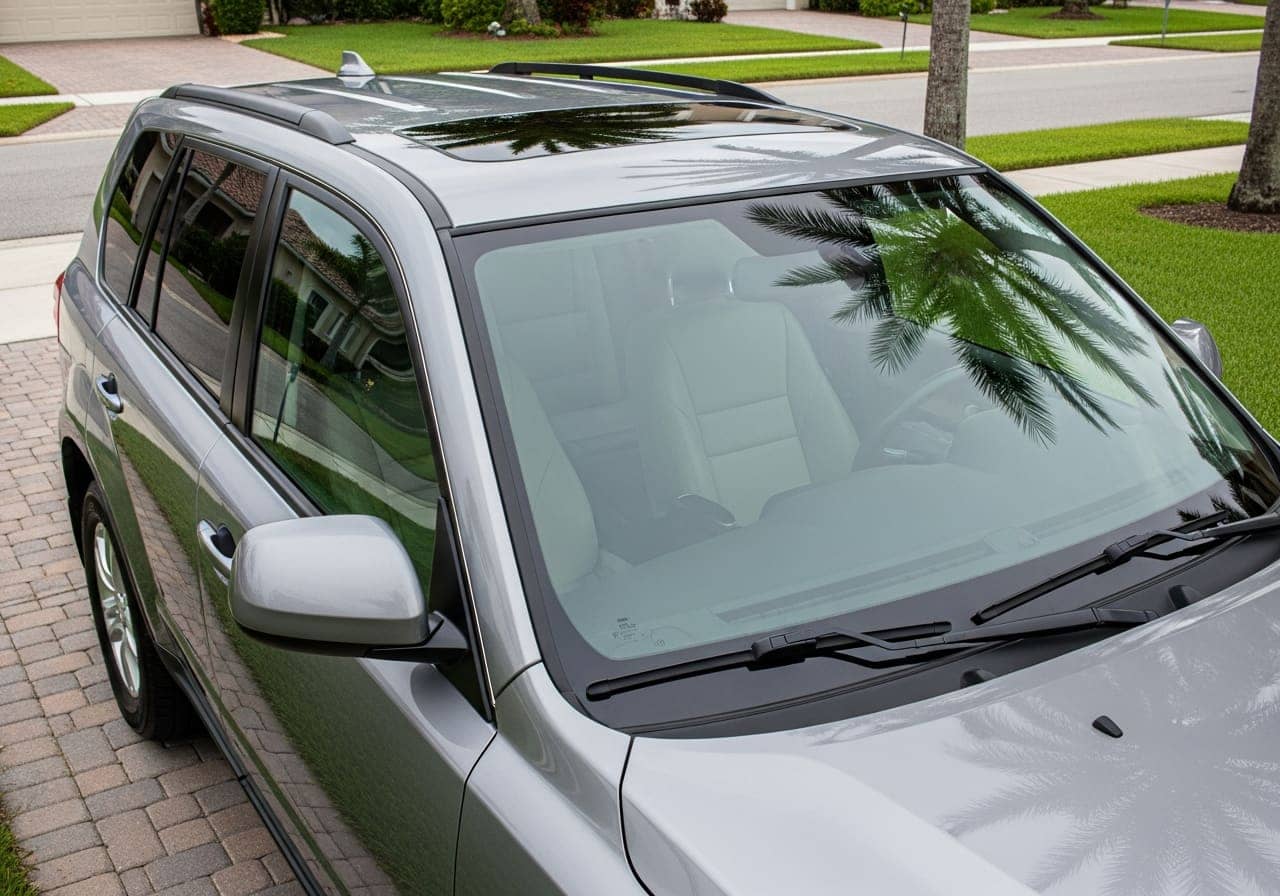
Windshield Replacement in Arizona & Florida
Bang AutoGlass provides mobile windshield replacement in Arizona and Florida using OEM-quality glass, proper installation methods, ADAS guidance, insurance claim support, next-day appointments, and a lifetime workmanship warranty so you can get back to safer, clearer driving with confidence.
Repair or replace?
When replacement is the safe call
Some chips are small enough to live with for a while — but windshield damage spreads, and Arizona heat and Florida sun make it spread faster. These are the signs the glass is past the point of repair:
- A crack in your line of sight — even a short one distorts light at night
- Any crack that reaches the edge of the glass (edge cracks spread fastest)
- Damage bigger than a few inches, or several chips clustered together
- A chip or crack that has already started spreading or “spidering”
- Heavy pitting or sandblast haze that scatters glare
Small chips can sometimes be repaired — but when damage sits in your view, reaches an edge, or is spreading, replacement is the safe call. That's what we do: OEM-quality glass installed at your location, backed by a lifetime workmanship warranty.
What a proper windshield replacement involves
When your windshield is cracked, shattered, leaking, or too damaged to repair, replacing it is not just about restoring the look of your vehicle. Your windshield is a major safety component that supports visibility, cabin protection, airbag performance, and the structural safety envelope of the vehicle. A properly installed windshield helps protect the driver and passengers, supports safe visibility, and helps your vehicle perform the way it was designed to during everyday driving and emergency situations.
At Bang AutoGlass, we provide professional mobile windshield replacement service for drivers in both Arizona and Florida. Whether your glass was damaged by Arizona road debris, desert heat, monsoon storms, Florida rain, highway rocks, or sudden impact damage, our team helps you get back to clear, safe driving with convenient mobile service, OEM-quality materials, and a replacement process built around your vehicle’s needs.
Professional Windshield Replacement for Cracked, Broken, or Unsafe Auto Glass
A windshield replacement is needed when the damage is too large, too deep, too widespread, or too poorly located for a safe repair. Small rock chips can often be repaired when they are caught early, but long cracks, edge cracks, damage in the driver’s primary viewing area, shattered glass, stress cracks, and damage near camera or sensor areas often require a full windshield replacement.
Windshield damage should never be ignored. A small chip can spread quickly when exposed to vibration, heat, moisture, pressure changes, or rapid temperature swings. In Arizona, extreme heat and seasonal monsoon conditions can make glass damage worse. Arizona’s monsoon season can bring heavy rain, hail, high winds, dust storms, flash flooding, and extreme heat. In Florida, severe rain and storm conditions make clear visibility especially important, and driving with compromised auto glass can make already dangerous road conditions even harder to handle.
Why Your Windshield Matters More Than You Think
Many drivers think of the windshield as just a window, but modern auto glass is part of the vehicle’s safety system. It helps protect the cabin from debris, supports clear forward visibility, contributes to crash protection, and works with other vehicle systems. A damaged windshield can reduce visibility, distract the driver, interfere with wiper performance, and affect the way certain safety features operate.
The glass itself also matters. Automotive replacement glass must be selected carefully so it fits the vehicle correctly and supports the features built into that specific year, make, model, and trim. That is why choosing a professional windshield replacement company is important. The job is not only about removing old glass and placing a new one; it is about matching the right glass, preparing the frame correctly, using the right adhesive system, and allowing the vehicle to meet proper dry-time requirements before normal use.
Signs You May Need Windshield Replacement
You may need a windshield replacement if your vehicle has:
- A crack that keeps spreading across the windshield
- Glass damage in the driver’s line of sight
- A crack that reaches the edge of the windshield
- Multiple chips, star breaks, or impact points
- Damage near ADAS cameras, sensors, or mirror mounts
- A windshield leak, wind noise, or poor previous installation
- Shattered, severely pitted, or structurally compromised glass
- A chip or crack that failed a repair attempt
- A windshield that no longer gives you clear, safe visibility
Windshield Replacement in Arizona
Arizona drivers deal with some of the toughest glass conditions in the country. Rock chips are common on highways, desert roads, construction routes, and busy city streets. Dust storms, gravel, extreme sun exposure, and sudden summer weather can all contribute to windshield damage. During monsoon season, Arizona drivers may face heavy rain, hail, wind, flash flooding, dust storms, and reduced visibility.
If you drive in Phoenix, Tucson, Mesa, Scottsdale, Tempe, Chandler, Glendale, Gilbert, or surrounding Arizona areas, a damaged windshield can become more than an inconvenience. Heat can put extra stress on already damaged glass, and fast temperature changes from air conditioning or outdoor heat can help cracks spread. Replacing the windshield promptly protects your visibility, helps preserve vehicle safety systems, and keeps your car looking clean and road-ready.
Arizona Windshield Insurance Coverage
Arizona has a specific insurance rule for damaged vehicle safety equipment. Insurers writing private passenger auto insurance with comprehensive coverage must provide, at the insured’s option, complete coverage for the repair or replacement of damaged safety equipment without regard to a deductible. Safety equipment can include glass used in the windshield, doors, and windows, as well as material used in vehicle lights.
In simple terms, Arizona drivers may have zero-deductible glass coverage if they selected that option on their comprehensive policy. It is not automatically included on every policy, so drivers should check their coverage. Bang AutoGlass can help customers understand the general process, but your insurance company controls your policy terms, claim approval, and coverage details.
Windshield Replacement in Florida
Florida drivers face a different set of windshield problems. Heavy rain, coastal humidity, storms, hurricane-season debris, highway traffic, and daily sun exposure can all affect auto glass. Clear visibility is especially important during Florida downpours, and safe driving depends on having a windshield that is clean, stable, properly installed, and free from major cracks or obstructions.
For drivers in Miami, Fort Lauderdale, Orlando, Tampa, Jacksonville, West Palm Beach, Naples, and surrounding Florida communities, windshield damage should be addressed quickly. A cracked windshield can make glare worse, distort your view, interfere with wiper performance, and create a distraction while driving. When a repair is not enough, a full windshield replacement restores the glass surface and helps return the vehicle to a safer condition.
Florida Windshield Insurance Coverage
Florida is known for its windshield deductible rule. In many cases, if a motor vehicle insurance policy includes comprehensive coverage or combined additional coverage, the deductible may not apply to covered windshield damage.
That means many Florida drivers with comprehensive coverage may qualify for windshield replacement without paying their standard deductible for covered windshield damage. Coverage can still depend on your active policy, your insurer, and claim eligibility, so it is always best to confirm your details before scheduling service. Bang AutoGlass can assist with the general glass claim process and help make the replacement experience easier from start to finish.
Mobile Windshield Replacement That Comes to You
A damaged windshield is already frustrating. You should not have to rearrange your entire day just to get it fixed. Bang AutoGlass is a mobile service, which means we bring windshield replacement to your home, workplace, apartment, fleet location, or another approved service location.
With mobile auto glass replacement, a technician removes the damaged windshield, prepares the bonding surface, installs the new glass, applies the correct adhesive system, and confirms that the vehicle is ready according to the proper dry-time requirements. Most glass replacements take about 30 to 45 minutes to complete, followed by about 1 hour for the adhesive to dry. Your technician will let you know when the vehicle is ready and any simple aftercare steps you should follow.
Mobile windshield replacement is especially helpful in Arizona and Florida because both states have weather and driving conditions that can make windshield damage urgent. In Arizona, it helps drivers avoid operating a vehicle with spreading cracks during extreme heat or dusty conditions. In Florida, it helps drivers get service without driving through rain or traffic with compromised visibility. Bang AutoGlass also offers next-day appointments, making it easier to get your windshield replaced quickly without waiting around for an opening far in the future.
ADAS Calibration After Windshield Replacement
Many newer vehicles have Advanced Driver Assistance Systems, often called ADAS. These systems may use cameras and sensors mounted near or behind the windshield to support features such as lane departure warning, forward collision warning, automatic emergency braking, adaptive cruise control, and lane keeping assistance. Recalibration is often necessary after windshield replacement, especially when a vehicle has ADAS cameras or sensors mounted on or near the windshield.
ADAS calibration matters because the windshield is part of the camera’s viewing path. Even a small change in glass position, camera angle, bracket placement, or optical alignment can affect how the system reads the road. Depending on the vehicle, calibration may be static, dynamic, or both. Static calibration is usually performed with targets and equipment in a controlled setup. Dynamic calibration may require the vehicle to be driven under specific conditions so the system can relearn the road environment.
If your vehicle has ADAS, windshield replacement should include a calibration review. Bang AutoGlass helps drivers understand when calibration may be required so safety systems can function as intended after the new windshield is installed.
OEM-Quality Replacement Glass and Materials
Not every windshield is the same. Modern windshields may include rain sensors, heated glass, acoustic layers, solar coatings, heads-up display areas, antenna elements, camera brackets, lane assist camera windows, mirror mounts, and other built-in features. The correct replacement glass must match the vehicle’s year, make, model, trim, and technology package.
Bang AutoGlass uses OEM-quality materials for windshield replacement, helping provide the fit, clarity, and performance drivers expect from a professional auto glass service. The right glass and materials depend on your vehicle, insurance approval, availability, budget, and feature requirements. A professional technician should verify the correct part before installation so your replacement windshield works with your vehicle’s safety systems, visibility features, and accessories.
Every windshield replacement from Bang AutoGlass also includes a lifetime workmanship warranty. That means our work is backed for the long term, giving customers confidence that their replacement was completed with care, proper installation practices, and attention to detail.
What to Expect During the Windshield Replacement Process
The windshield replacement process starts with identifying your vehicle and confirming the correct glass. The technician reviews the damage, checks sensors or cameras, protects the vehicle interior and exterior, and removes the old windshield. The pinch weld area is cleaned and prepared so the new urethane adhesive can bond properly. The new windshield is set into position, checked for fit, and allowed to dry properly before the vehicle returns to normal use.
Most windshield replacements take 30 to 45 minutes to complete, then about 1 hour for the adhesive to dry. This dry time is important because the windshield must be bonded strongly enough before the vehicle is driven or used normally. Your technician will give you the proper timing and aftercare instructions based on the vehicle and installation.
After installation, your technician may give aftercare instructions. These can include leaving retention tape in place for the recommended time, avoiding car washes right away, not slamming doors, keeping the dashboard clear, and waiting until the vehicle is ready to drive. Following those instructions helps the adhesive cure properly and protects the quality of the installation.
Insurance Claims for Windshield Replacement
Bang AutoGlass works with drivers who want help understanding the windshield insurance claim process. Insurance coverage depends on your state, your carrier, your policy, your deductible, your comprehensive coverage, and the specific claim. Arizona and Florida both have glass-related rules, but they work differently. Arizona drivers may have access to optional no-deductible safety equipment coverage through comprehensive insurance, while Florida drivers with comprehensive coverage may qualify for windshield replacement without paying their standard deductible for covered windshield damage.
Whether you are paying out of pocket or using insurance, the goal is the same: replace the damaged windshield correctly, protect your vehicle, restore visibility, and get you safely back on the road.
Schedule Windshield Replacement with Bang AutoGlass
If your windshield is cracked, broken, leaking, or unsafe to drive with, Bang AutoGlass is ready to help. We provide mobile windshield replacement for drivers in Arizona and Florida with next-day appointments, OEM-quality materials, insurance claim assistance, and support for modern vehicles with ADAS technology.
Most replacements take about 30 to 45 minutes to complete, followed by about 1 hour for the adhesive to dry. Every replacement also includes a lifetime workmanship warranty, so you can feel confident knowing the installation is backed by our commitment to quality.
Do not wait for a small crack to spread or for damaged glass to become a safety issue. Contact Bang AutoGlass today to schedule windshield replacement, request a quote, or get help with your Arizona or Florida auto glass insurance claim. Clear glass means safer driving, better visibility, and greater confidence every time you get behind the wheel.
Windshield repair vs. replacement — which one do you need?
A small rock chip — smaller than a quarter, away from the edges, and out of the driver's line of sight — can sometimes be repaired. Bang AutoGlass focuses exclusively on full windshield replacement rather than chip repair, and if a repair is genuinely the better fix for your glass, we'll tell you so up front. In practice, most damage that reaches us calls for replacement: a crack longer than a few inches, a chip that has spread from the edge of the glass, pitting or damage across the driver's view, or any break near the camera and sensor zone behind the mirror.
Insurance changes the math, too. With comprehensive coverage, a full replacement is often $0 out of pocket in our two states — Florida waives the windshield deductible entirely (Fla. Stat. § 627.7288, windshield only), and Arizona's optional full-glass coverage (A.R.S. § 20-264) removes it as well if your policy includes it. When your coverage qualifies, there is rarely a reason to settle for a repair blemish in your line of sight.
What affects windshield replacement cost?
For most insured drivers the honest answer is: nothing — with the coverage described above, windshield replacement is often $0 out of pocket, and we verify your exact policy for free before any work. When a quote does vary, these are the factors that move it: the glass itself (acoustic, solar, heated, or heads-up-display windshields are built differently), whether your vehicle's ADAS camera needs recalibration after the new glass goes in — we handle that as part of the job — the moldings, clips, and rain-sensor hardware your model uses, and how quickly OEM-quality glass for your exact year and trim can be sourced. Tell us your vehicle and we'll give you a clear, free quote before anything is scheduled.
What happens at your appointment
From booking to drive-away
- 1
Book — new appointments 24/7
Any time, by phone, text, or the form. Next-day availability in most areas; installs run Mon–Sat, 8am–6pm.
- 2
We verify your coverage, free
Before any work, we confirm exactly what your policy covers, then file the claim start to finish and bill your insurer directly. All insurance companies are accepted.
- 3
Mobile install at your location
Home, work, or roadside — most jobs take 30–45 minutes.
- 4
ADAS recalibration when your vehicle needs it
If a camera sits behind the glass, we recalibrate it to factory spec as part of the job.
- 5
Lifetime workmanship warranty
Every install is guaranteed for as long as you own the vehicle.
Cost & coverage
What does windshield replacement cost?
There’s no honest flat price — the cost depends on:
- Your vehicle's make, model, and year
- Glass features — rain sensors, acoustic interlayers, heads-up display, heating elements
- Whether your vehicle needs ADAS calibration after the glass is set
The better question is what youpay — and with insurance, it’s often $0. Arizona insurers must offer zero-deductible full glass coverage (A.R.S. § 20-264), and Florida comprehensive coverage waives the deductible for windshield replacement (Fla. Stat. § 627.7288 — windshield only). We verify your coverage free before any work, file the claim start to finish, and bill your insurer directly — all insurance companies accepted. More on how glass insurance works, or the state specifics for Arizona and Florida.
General info, not legal or insurance advice — coverage varies by policy. We confirm your exact coverage free before any work.
Glass quality & warranty
OEM-quality glass, guaranteed for as long as you own the car
A windshield is laminated glass — two sheets bonded around a plastic interlayer, so the glass holds together on impact and helps support the roof and the passenger airbag. It's structural, which is why the install matters as much as the glass.
We install OEM-quality laminated glass matched to your exact vehicle, set with premium urethane adhesives, and we make sure it cures properly before the car is driven.
And every install carries the Bang lifetime workmanship warranty — if a workmanship issue ever shows up, we make it right, for as long as you own the vehicle.
What’s included with your Windshield Replacement
- OEM-quality glass and adhesives
- Mobile installation at home, work, or roadside
- Lifetime workmanship warranty
- ADAS calibration available when needed
Auto glass services
Windshield replacement by make
Rain sensors, cameras, acoustic interlayers, heads-up displays — windshield features differ by make. Pick yours for the specifics.
Windshield Replacement — common questions
How much does windshield replacement cost in Arizona or Florida?
It depends on your vehicle and glass features, but with insurance it's often $0: Florida law (Fla. Stat. § 627.7288) waives the comprehensive deductible for windshield replacement, and Arizona insurers must offer zero-deductible full glass coverage (A.R.S. § 20-264). We verify your exact coverage free before any work. General info, not legal or insurance advice — coverage varies by policy. We confirm your exact coverage free before any work.
Is windshield replacement really $0 with insurance?
Often, yes — if your policy qualifies. In Florida, comprehensive coverage waives the windshield deductible (windshield only; other glass takes your normal deductible). In Arizona, if your policy includes the zero-deductible glass coverage insurers must offer, glass is often $0. We confirm before scheduling, free.
How long does windshield replacement take?
Most jobs take 30–45 minutes, and next-day appointments are available in most areas. Installs run Mon–Sat 8am–6pm; you can book a new appointment 24/7.
Do you come to me?
Yes — we're mobile-only. Home, work, or roadside across 200+ cities in Arizona and Florida. There is no shop to visit.
Do I need ADAS calibration after windshield replacement?
If your vehicle has a windshield-mounted camera (lane-keeping, automatic emergency braking), it must be recalibrated after replacement. We recalibrate to factory spec when the vehicle needs it.
Do you file the insurance claim for me?
Yes — we verify coverage free before any work, file the claim start to finish, and bill your insurer directly. All insurance companies are accepted.
What kind of glass do you use?
OEM-quality glass matched to your exact make and model — and every install is backed by a lifetime workmanship warranty for as long as you own the vehicle.
Can a cracked windshield be repaired instead of replaced?
Small chips can sometimes be repaired, but cracks in the driver's view, cracks reaching the glass edge, or spreading damage call for replacement — that's what we do, with OEM-quality glass and a lifetime workmanship warranty.
Windshield Replacement guides
Straight answers about windshield replacement — what to expect, how insurance works, and how to keep your glass in top shape.
1 / 2
Windshield Replacement — cities we serve
4.8★ on Google · 350+ reviews from AZ & FL drivers
“I needed my windshield replaced and they made the entire process easy. Bang AutoGlass is the best!”
“Top-notch auto glass service. They handled my windshield replacement quickly and professionally.”
“Bang AutoGlass made my windshield replacement simple from start to finish.”
Ready for windshield replacement?
We come to you across Arizona and Florida — often $0 with insurance. New appointments 24/7 · Installs Mon–Sat 8am–6pm · Hablamos español.
We reply within minutes during business hours.